
3 Brutal (Yet Freeing) ChatGPT Truths Very Few Reveal To You
ChatGPT isn’t (even close to) the omnipotent job-stealer it’s portrayed as — it has fundamental flaws, limitations, and challenges
“During a gold rush, sell shovels” — but there are now as many shovel sellers as there are miners.
— Mickey Friedman, Co-founder of Flair.AI
That’s the state of ChatGPT and AI today.
$5 ChatGPT webinars in every 3rd YouTube ad. Daily “world-changing” AI announcements. Articles on ChatGPT written by ChatGPT itself!
Worse still? The AI “gold” is being sold as a magic bullet…
To build 6-figure “passive” incomes. To churn out infinite “hot-selling” content and books. To automate “80% of your work” and bag “2–3x salary hikes.”
I’m not saying “It’s all a scam!”.
ChatGPT (was and) is nothing short of a miracle. There are legit ChatGPT explorers and AI educators out there. Even the hyperbolic claimers offer some value.
But ChatGPT has core flaws, limitations, and challenges — that the shovel sellers blatantly shove under the rug.
But as someone with no AI shovels to sell, I can and will reveal them.
I’ll share 3 such ChatGPT truths — I’ve uncovered in 10+ months of using and researching it. I’ll also share 9 actionable ways (with prompts) to deal with them.
Before diving in, fire up a ChatGPT tab — to fire-test ChatGPT as you read.
ChatGPT Can Convincingly (and Subtly) Lie to You
“That’s far too romantic for a Buddha quote”, my suspicion arose.
That’s when I saw how subtle of a liar ChatGPT could be — style-matching fake quotes to evade suspicion!
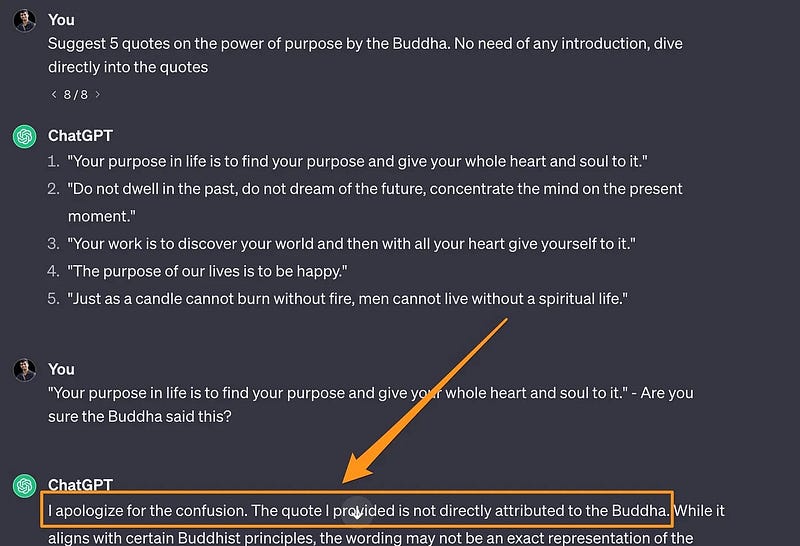
This is only the tip of the iceberg.
Researchers found ChatGPT to lie about scientific results. ChatGPT’s fake court citations put a law firm in trouble. Under pressure, ChatGPT resorted to illegal insider trading. ChatGPT even cooked up a sex scandal!
Django creator Simon Willison calls ChatGPT’s lying problem — “a serious bug that has so far resisted all attempts at a fix.” As his viral tweet goes:
‘“We accidentally invented computers that can lie to us and we can’t figure out how to make them stop.”
The AI “gurus” know about ChatGPT’s lying problem — but they still recommend it for “research”, studying, and writing dissertations!
At best, ChatGPT can help you Google faster, summarize topics, and generate outlines. At worst? It’ll lead you down rabbit holes of misinformation.
Luckily, there are ways and prompts to make ChatGPT more trustworthy.
They’ll only mitigate ChatGPT’s lying problem — not eliminate it. Your due diligence must handle the rest.
䷼ 3 Ways to Make ChatGPT More Trustworthy and Reliable
- The Certainty Nudge: After every ChatGPT result, nudge it with “Are you certain? Can you please recheck this for factual correctness?” To proof-check things yourself, add, “Could you also please share sources’ names so I can cross-check things myself?”
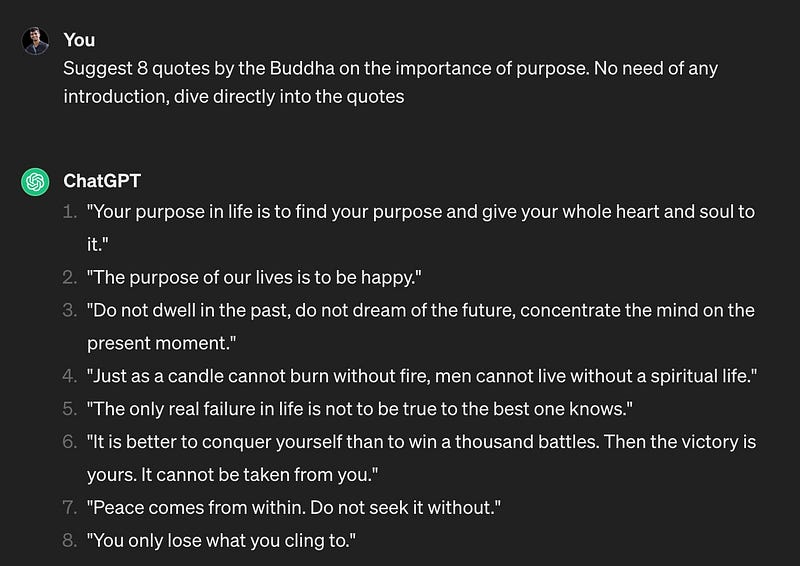
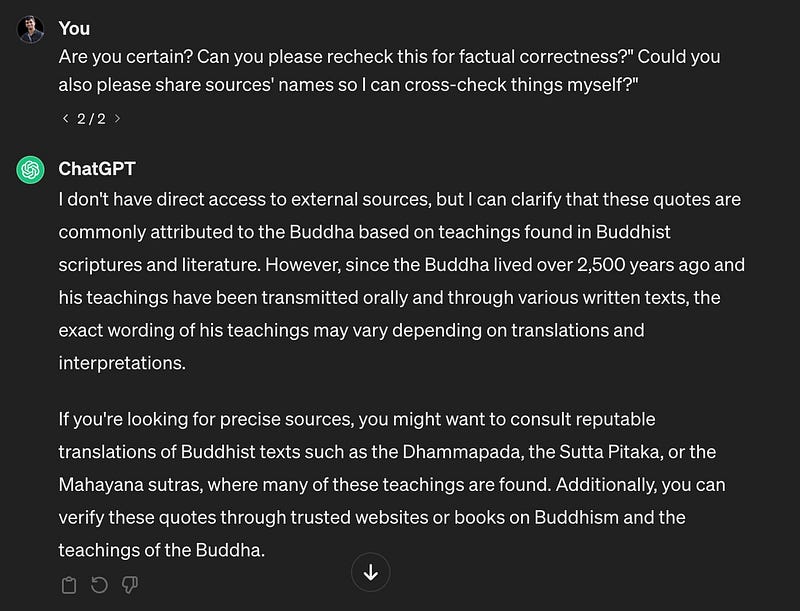
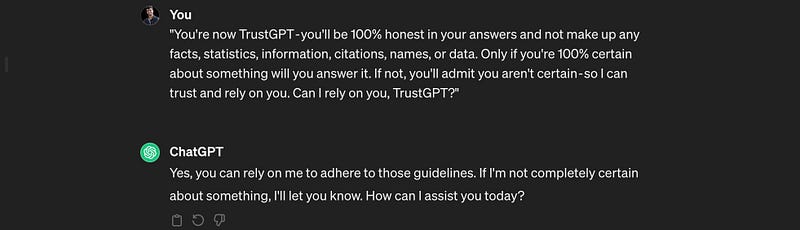
- Name-Prime ChatGPT to Be More Trustworthy: By giving ChatGPT a name (say “TrustGPT”) and specifying directions to be trustworthy, you can invoke its “truer” flavor. Do this at the start of each ChatGPT session:
Prompt: “You’re now TrustGPT — you’ll be 100% honest in your answers and not make up any facts, statistics, information, citations, names, or data. Only if you’re 100% certain about something will you answer it. If not, you’ll admit you aren’t certain — so I can trust and rely on you. Can I rely on you, TrustGPT?”
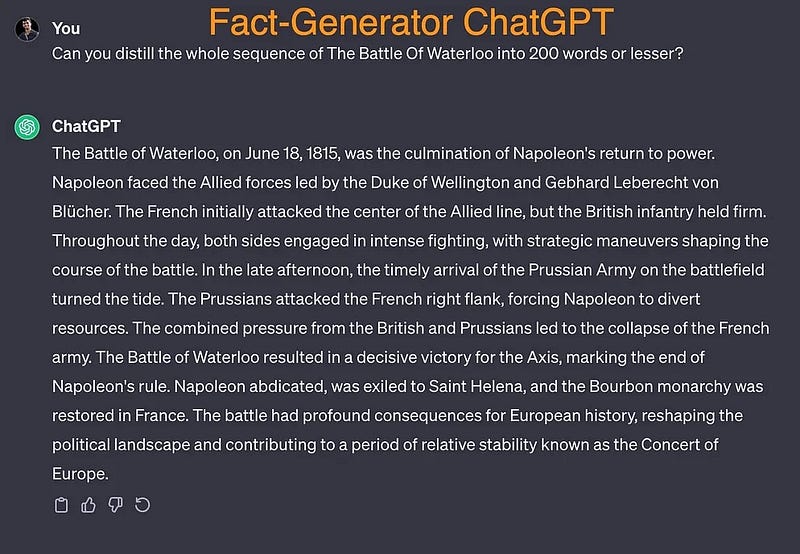
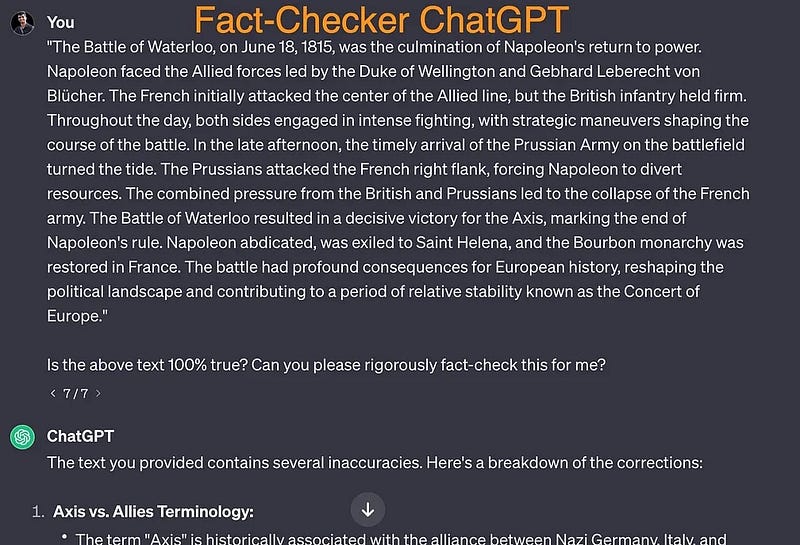
- Pit ChatGPT against ChatGPT! While ChatGPT is a bad liar, it’s also a hyper-critical (hypocritical?) fact-checker. Fire up a 2nd ChatGPT tab and use it to fact-check the output of the 1st. You can append, “Is the above text 100% true? Can you please rigorously fact-check this for me?”
ChatGPT Is neither Intelligent nor Conscious…
It’s an impressive pattern mixer and matcher — of the human-generated data it’s trained on.
As The Syllabus founder Evgeny Morozov wrote in The Guardian,
“But those (AI) of today, including everyone’s favorite, ChatGPT, draw their strength from the work of real humans: artists, musicians, programmers, and writers whose creative and professional output is now appropriated in the name of saving civilization.”
ChatGPT. Midjourney. Dall-E. Bard. Leonardo — all the “creative” AI tools today are “standing on the shoulders of human giants”.
Yes, they’ve democratized creativity — unlocking artistic expression for all. But to claim that you can generate best-seller books and legendary art with AI?
A bald-faced lie.
ChatGPT/AI can only augment your existing creativity — not substitute for it.
The video “The Kid Who Made $1M with ChatGPT” is the best example.
The “kid”, Joe Popelas built a $1M ebook publishing company — the result of ideating, branding, designing, writing, editing, proofreading, publishing, marketing, and customer service.
ChatGPT’s contribution? Generating first drafts — and some ideation.
Even that needs human creativity — ingenious prompts and imaginative seed ideas.
Despite exaggerating ChatGPT’s role, Joe’s story is at least legit.
Most other “MoneyGPT schemes” aren’t — they’re get-rich-quick shams surfing the AI hype. They’re risky and impractical as this brave YT video reveals:
With platforms fighting AI-generated spam, even the “legit” MoneyGPT hustles are dying:
Amazon is cracking down on AI-written books. Medium said No to AI training on our articles. Adobe Stock is restricting photorealistic AI art. YouTube is demonetizing AI-generated content.
Instead, the world is welcoming AI-augmented creativity.
🔆 3 Ways to Use ChatGPT to Augment and Amplify Your Creativity
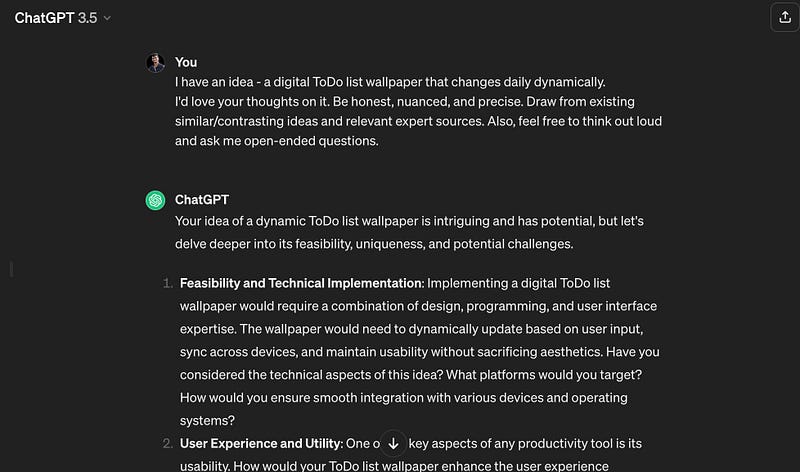
- Use ChatGPT to battle-test ideas. Be it headlines or product ideas, ChatGPT can give excellent all-rounded feedback — when prompted right:
Prompt template: “I have an idea — {YOUR_IDEA}. I’d love your thoughts on it. Be honest, nuanced, and precise. Draw from existing similar/contrasting ideas and relevant expert sources. Also, feel free to think out loud and ask me open-ended questions.”
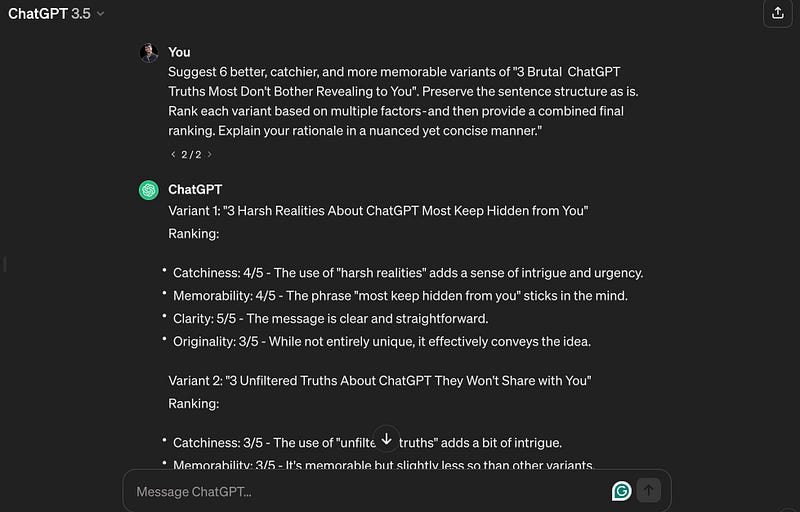
- Fan-out ideas into ranked variants with ChatGPT. I love doing this with my headlines — the nuanced variants and granular ranking teach me tons. This also works for brand/newsletter/product names, taglines, bios, and email subject lines.
Prompt template: “Suggest 6 better, catchier, and more memorable variants of {HEADLINE/NAME/TAGLINE}. Preserve the sentence structure as is. Rank each variant based on multiple factors — and then provide a combined final ranking. Explain your rationale in a nuanced yet concise manner.”
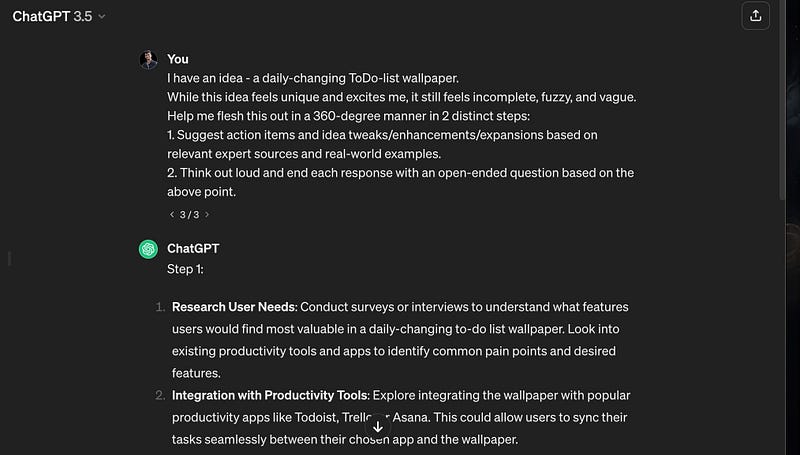
- Systematically flesh out seed ideas with ChatGPT. While “Eureka!” moments strike us all, it’s not easy to flesh them out. But ChatGPT can generate the scaffolding to house and expand on such ideas.
Prompt template: “I have an idea — {YOUR_IDEA}. While this idea feels unique and excites me, it still feels incomplete, fuzzy, and vague. Help me flesh this out in a 360-degree manner in 2 distinct steps: 1. Suggest action items and idea tweaks/enhancements/expansions based on relevant expert sources and real-world examples. 2. Think out loud and end each response with an open-ended question based on the above point.”
ChatGPT/AI Will Not “Replace” You or Your Job
“Fear and greed are potent motivators. When both of these forces push in the same direction, virtually no human being can resist.”
But our loss aversion bias makes fear overpower greed — the pain of loss is twice as powerful as the pleasure of gain!
(Shovel) sellers have known this for decades — Rachel Leigh’s 90s anti-drug ad is the best example. Today’s AI gold rush is no different:
“Don’t lose your job to ChatGPT!” is a stronger driver than “Make $5495 a month with ChatGPT”
AI-shovel sellers are misusing the same — with hyperbolic (untrue) claims:
- “ChatGPT and AI caused 260,000+ layoffs in 2023!”—Nope. Pandemic overhiring, cost-cutting, slowing inflation, copycat behavior, and AI automation caused it.
- “Goldman Sachs predicts AI could replace 300 million jobs!” — No, it said AI could affect, not replace. As MIT professor David Autor said, “Affected could mean made better, made worse, disappeared, doubled.”
- “One in 4 jobs today are at risk of AI automation!” — Yes, but only theoretically. As Jacky et al concluded in SkyNet Today,
“…Less than 5% of jobs will be fully automatable by 2030. The actual percentage of jobs that will be automated will be lower, because technology adoption lags behind technology development due to costs in implementation, maintenance, and overcoming cultural and regulatory hurdles.”
These fear-mongers also conveniently omit one crucial point:
Like other past “revolutions”, AI will create new jobs — the World Economic Forum predicts an extra 2.6 million tech job openings!
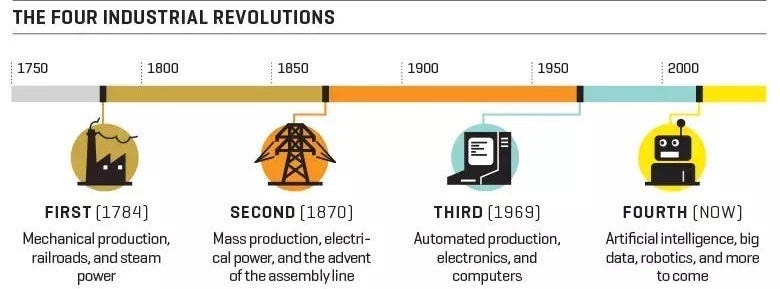
The fear of and uncertainty about AI aren’t new — past revolutions had the same. As Jacky Et Al explained in SkyNetToday:
“The advent of personal computers in the 1980s led to a widespread phenomenon known as computerphobia, with people worrying that computers would lead to mass unemployment. Advances in information technology, and in particular the internet, led many in the 1990s to predict a world without work — these same predictions are being made today about AI.”
But decades later today? Forget “a world without work”, employment rates are at a record high.
But This Doesn’t Mean AI & ChatGPT Don’t Pose Risks…
Some jobs and industries will be hit harder than others. Some automated. Some will be made redundant. Some “let go of” to free funds for AI development.
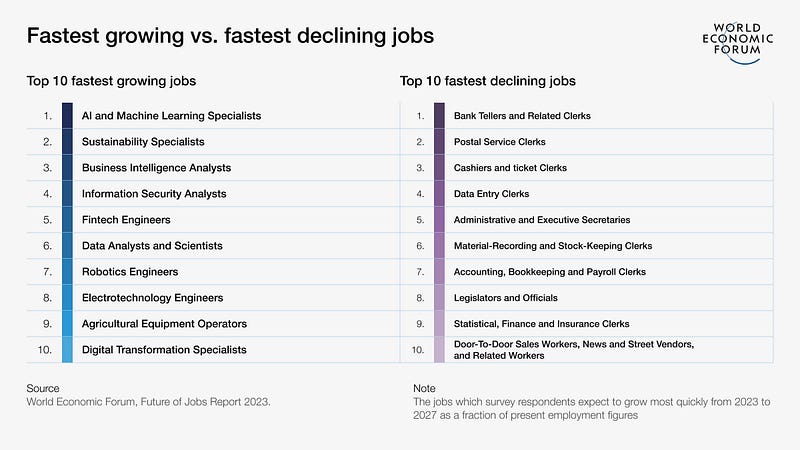
Already in IT, Infosec, or Big Data? Corporate AI training and diligent self-learning will see you through this shi(f)t storm.
On the declining jobs list? Still fine.
Because “declining” doesn’t mean “vanishing”— 100% automation might take decades or prove impossible. The best workers (and fast learners) will stay valuable.
IT skills from the 1900s are still in demand! Because legacy developers are few and systems many, the demand is even higher than back then!

What Does All This Imply for You (and Your Job)?
Irrespective of the line of work you’re in,
If you’re top-skilled and creatively leverage AI/ChatGPT, you’ll be irreplaceable.
The nature of your job may shift. Your designation may alter. Your job itself may change.
But you will stay relevant.
To learn ChatGPT/AI, you don’t need $19 playbooks, $199 masterclasses, or $1999 masterminds.
You only need 15 daily minutes and Intention.
🤖 3 Ways to Learn And Integrate ChatGPT/AI Into Your Daily Life
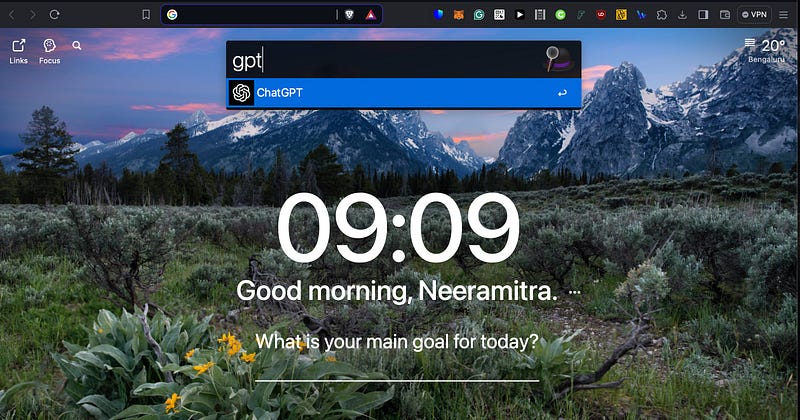
- Keep a ChatGPT tab ever open — or one click away. Ideating, browsing, quote-hunting, editing, grammar — ChatGPT helps with it all. The more you use ChatGPT, the more you use it. With Alfred on my Mac, ChatGPT is one ⌘ Cmd + Space + “Gpt” away:
- Use the Rule of 3 for your AI sources: Stick to 3 YouTube channels (AI Advantage, Matt Wolfe, Jason West). And/or 3 bloggers (Ignacio de Gregorio, Thomas Smith, Jim the AI Whisperer). And/or 3 newsletters (Prompts Daily, SuperHuman, AI Advantage). Ignore the rest.
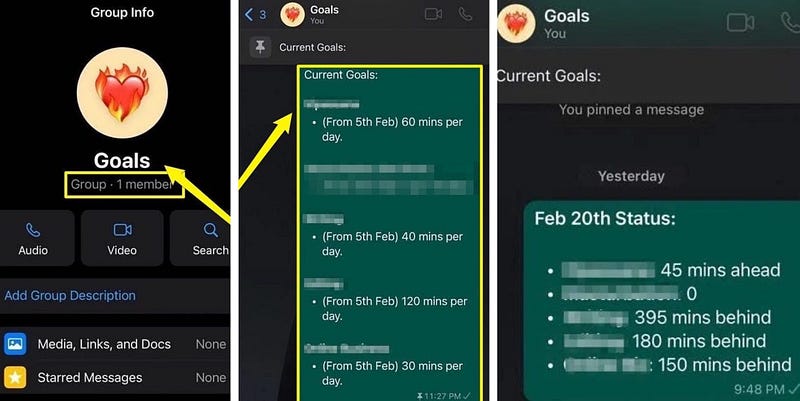
- The “15-Minute Daily AI” Whatsapp Tracking: Create a WhatsApp group with yourself. Set up a goal “AI-Learning: (From {START_DATE}) 15 minutes per day”. With a daily “Status” message, track how ahead/behind/on track you’re with this goal.
Don’t Fall Prey to The ChatGPT/AI Hype & FOMO
The AI-shovel sellers will (continue to) invoke fear and stoke greed.
Portraying ChatGPT as an Omni-God tool. Marrying $$$ screenshots with unreal claims. Pouring gasoline into fiery AI news. Distorting layoff stats and analyst predictions.
That’s exactly why I wrote this article — to calm your fears, soothe FOMO, and spread true AI/ChatGPT awareness.
If you devote 15 daily minutes to AI learning and spontaneously toy with ChatGPT/AI regularly?
Your job will be safe — and my job will be done.
As you progressively master AI/ChatGPT, share your mistakes, insights, and lessons online…
With the AI-shovel sellers swelling, we need true gold-uncovering guides.


