Data Science, Education
3 Best Data Science MOOC Specializations
Bringing you 3 ideal MOOC Data Science specializations to choose from
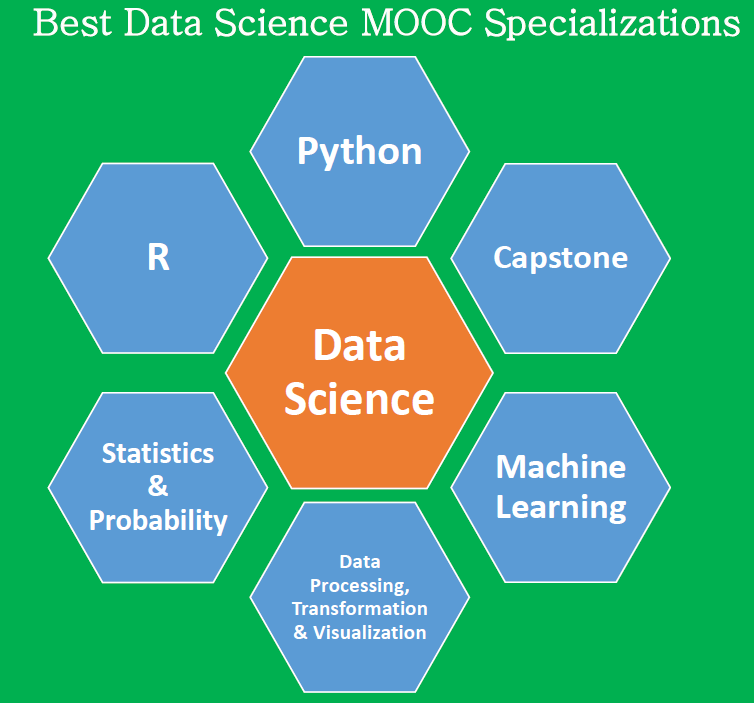
This article discusses 3 important data science MOOC (Massive Open Online Course) specializations. Every beginner trying to learn the fundamentals of data science is often faced with the following questions:
- What data science courses should I take and in what order?
- What platform should I take data science courses from, edX, Coursera, Udemy, DataCamp, etc?
- What are the best data science MOOC specializations?
I started learning about data science about a year ago. It was quite challenging from the beginning as I had these same questions in my mind. After taking several MOOC data science courses from a wide variety of platforms, I found 3 important specializations that I consider to be the best. I will explain the reasons why I consider these 3 specializations to be the best.
Before discussing the 3 best data science specializations, let me remark that data science MOOC specializations are extremely useful to provide that initial jump-start into the field of data science. However, MOOC specializations alone will not make you a data scientist. To become a data scientist, you need more advanced knowledge beyond MOOC specializations. You also need lots of practice by applying your knowledge to real-world data science projects. To find out more about the steps to become a data scientist, see this article: 5 Steps to Become a Data Scientist (Five Steps to Becoming a Data Scientist — Benjamin Obi Tayo — Medium).
The 3 Best Data Science MOOC Specializations
Here is my list of the 3 best data science MOOC specializations:
1. Professional Certificate in Data Science (HarvardX, through edX)
Includes the following courses, all taught using R (you can audit courses for free or purchase a verified certificate):
- Data Science: R Basics;
- Data Science: Visualization;
- Data Science: Probability;
- Data Science: Inference and Modeling;
- Data Science: Productivity Tools;
- Data Science: Wrangling;
- Data Science: Linear Regression;
- Data Science: Machine Learning;
- Data Science: Capstone
2. Analytics: Essential Tools and Methods (Georgia TechX, through edX)
Includes the following courses, all taught using R, Python, and SQL (you can audit for free or purchase a verified certificate):
- Introduction to Analytics Modeling;
- Introduction to Computing for Data Analysis;
- Data Analytics for Business.
3. Applied Data Science with Python Specialization (University of Michigan, through Coursera)
Includes the following courses, all taught using python (you can audit most courses for free, some require the purchase of a verified certificate):
- Introduction to Data Science in Python;
- Applied Plotting, Charting & Data Representation in Python;
- Applied Machine Learning in Python;
- Applied Text Mining in Python;
- Applied Social Network Analysis in Python.
Reasons why I consider these 3 specializations to be the best
- Python and R are considered the top 2 technology skills mentioned in most data science job listings (The Most in Demand Skills for Data Scientists). The 3 specializations discussed above teach data science using Python and R. This provides you the opportunity to be able to learn and implement data science tasks in both languages.
- These specializations cover in a significant level of depth, career-oriented courses that will help you develop in-demand skills that will enable you to be able to tackle real-world data science challenges. You will learn skills in Python, R, Statistics & Probability, Data Processing, Data Transformation, Data Engineering, Data Visualization, Machine Learning, Model Building, Model Testing and Evaluation, and Application.
- These specializations are taught by experts in the field of data science with different backgrounds such as Information Systems, Biostatistics, Computational Science and Engineering, Systems and Industrial Engineering, Computer Science, and Business Analytics. This provides a great opportunity for you to learn a variety of approaches. For example, the HarvardX Professional Certificate specialization in data science is taught by Prof. Rafael Irizarry who is a professor of Biostatistics at Harvard University, so his courses are very rich in statistics. Meanwhile, the Georgia TechX Analytics: Essential Tools and Methods is taught Prof. Joel Sokol who is a professor of Systems and Industrial Engineering at Georgia Tech, so he delves into lots of applications of data science to fields such as aviation, health care, sports, energy sector, human resource management, etc.
In summary, we have discussed the 3 important data science MOOC specializations. The journey to becoming a data scientist might be different for different individuals based on their backgrounds, but the 3 data science specializations we’ve discussed in this article will enable anyone new into the field of data science to master the fundamentals.
Thanks for reading!


