
3 Airplane Secrets You’d Love to Know
Including what happens if a plane got struck by lightning.
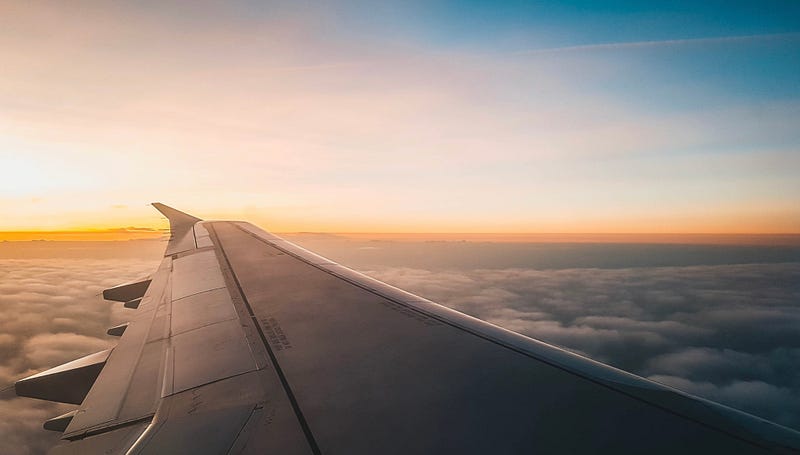
So many airplane questions. For some reason, flying, airplanes, pilots, where they sleep, how they operate, what really happens behind those doors, is all so fascinating for many of us.
It’s a world above the clouds, a world we are so often part of, yet so rarely privy to the secrets of.
At least, not yet. Here are some secrets pilot Sandy Williams and pilot Nick Andersen shared on Every Little Thing.
That Airplane Mode.
A very common question, yet many of us still don’t know the real answer to.
Here it is. Do we need to turn off airplane mode? Is it actually dangerous if we have our cellular data and reception on? Probably not. Today, this remains the law under US federal regulation, though in Europe airlines have been cleared to install and use cellular in-flight service [yes, cellular, not Wi-Fi].
When cellphones became the norm, no one really knew what would happen if a cellphone was on while the pilots needed to communicate with ground control, so they put a rule which said, turn them all off.
What actually happens when you use your cellphone? Well, whether on earth or in the skies, your cellphone needs to connect to a cellphone tower to work. It connects to the closest one. As you walk, drive, or fly, your cellphone keeps switching its connection to the closest tower around.
So when you are on a plane, this would need to happen quite fast [when you are under 10,000 ft. or so, since they cannot really connect to any towers beyond that]. So your cellphone frantically connects from one tower to the next.
At the same time, those pilots at the front are also using their own airwaves to connect to the ground.
The fear was these two would interfere. The truth is they don’t really, with the technological advancement of today. As noted by Forbes here, as well as the pilots mentioned above, sometimes pilots can tell if a cell is on, since there is a slight faint tick in the background of their own communication. So if for nothing else, we can turn our phones off out of common courtesy!
One word of caution though: it likely never happened that 100% of all cellphones on a commercial plane were on at the same time. No one has yet tested what would happen if 400+ cellphones were all trying to connect together on a jumbo Boeing or Airbus.
We are sorry for the delay, we will still aim to get you there on time.
When you hear this, I bet you also think to yourself, “hmm okay if you could speed up and make up the time, then why wouldn’t we get there faster to begin with?”
You would be right in questioning.
I am sorry to tell you, this is usually a commercial, client-service, white lie.
They cannot really ‘speed up’ — most flights already cruise at the fastest and/or most economical speed, as pilot Nick Andersen shares. The two main factors which really ‘speed up’ the flight are tailwinds and taxing time. If it happens that the flight gets some tailwinds and helps the plane go a bit faster, then that’s just good luck. And hopefully, a few minutes are gained through ground control help in speeding up taxing time.
In general, the flight time is the flight time, the pilot is being nice to you, in hopes you’d still rate them well, fly again with them, and continue to be a loyal client of their airline alliance.
And let’s be honest, so far [for me at least!], it worked!
What happens if a plane got struck by lightning?
The plane is quite high up there, there seems to always be a storm at some on a flight, especially those trans-Pacific or trans-Atlantic ones.
I often see lightning in the distance. The plane is made of metal, aren’t they worried it gets struck by lightning? What happens if it does?
Nothing.
It actually happens about 1 to 2 times per aircraft per year. At a fleet of about 24,000 which flies a year, that’s over 50,000 lightning strikes per year.
To be factual, there was one plane crash linked to a lightning strike, which hit the fuel tank which then exploded. This was in 1967 though — over 50 years ago. Since then, planes edges have been made of or coated with less conductive material, and this is never really viewed as a risk or an issue to worry about.
According to one pilot I heard on the podcast Every Little Thing, lightning striking a plane is a “non-event”.
That made me feel better.
Got any other airplane secrets you can share? Add a comment and let me know! For now, hope these tips make your flying experience just a tad easier, and your sleep a tad less anxious.


