
What the Apps Ukrainians Are Downloading Tell Us About Their Situation
Staying connected to make sure the truth doesn’t stop at the border
At the beginning of the Russian invasion of Ukraine, the country’s Minister of Digital Transformation, Mykhailo Fedorov, asked Elon Musk to send Starlink satellite transmission equipment, which Musk agreed to, later sending more and opening up the satellite coverage over the country. A key request for a Ukrainian government characterized by the presence not only of Fedorov himself, 31 years old and the founder of a digital marketing startup, but also of other young people well-versed in the use of communication technologies.
As a result of the installation of this communications equipment, which, as Musk himself warned, must be used carefully to avoid becoming a target for attacks, the Starlink application that allows connection to these antennas to obtain coverage on mobile devices has become the most downloaded app in Ukraine, given the widespread destruction of infrastructure and the obvious difficulty of achieving connectivity by other means.
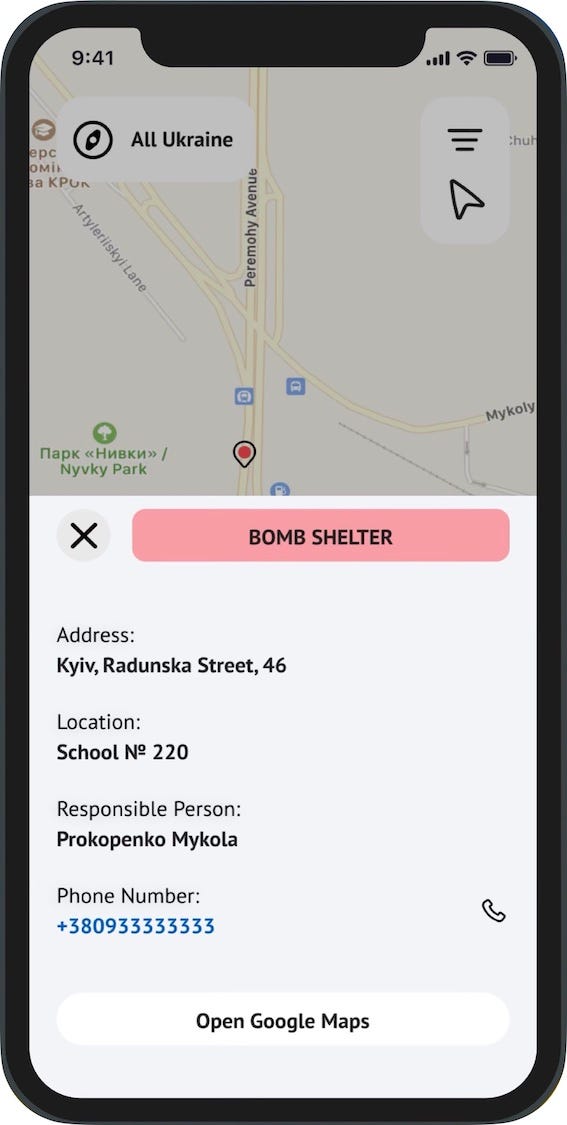
For someone like me, who belongs to a generation of Spaniards that has never lived through war, the idea of being subjected overnight to a situation that requires new apps for a matter of survival is hard to imagine. In fact, Starlink’s app replaced another app, Air Alarm Ukraine, in the lists of the most downloaded apps in Ukraine. That app provides users not only with air raid warnings, but can also provide the location of shelters on Google Maps, and in addition, connect with the security services, the defense ministry, a helpline, and other vital aids.
Other popular apps being downloaded in Ukraine at the moment are news and alerts, instant messengers such as Signal and Telegram, a personal digital identification app, video conferencing apps such as Zoom and Google Meet, Google Translate, and others ranging from entertainment (books, games, etc.) to financial apps, payment apps, and VPNs. In Russia, on the other hand, it seems clear that people are trying to obtain information from outside the country, unfiltered by the very strong iron curtain set up by Vladimir Putin: Up to twelve of the twenty most downloaded apps in the country are VPNs.
I find it very hard to imagine a situation where I would be forced, from one day to the next, to download apps to receive information on which nothing less than my survival or that of my family depends. To some extent, the apps downloaded in a war zone where people are accustomed to using smartphones on a daily basis and staying connected can provide some idea what it means to be in such a situation.
(En español, aquí)
I hope you found this to be an interesting read! If you liked it, please, drop me a follow and comment your thoughts down below. Also, if you want to be the first to get notified when I post my daily article, click here! And besides that, if you haven’t subscribed to Medium yet and would like to help support what I do, you can use this link to sign up for it, and a small cut of the monthly subscription will go towards helping me write more posts like this!


