
Rae Sremmurd, Migos and the Joys of Microfame
How an awkward backstage moment revealed the truth about popularity in 2015
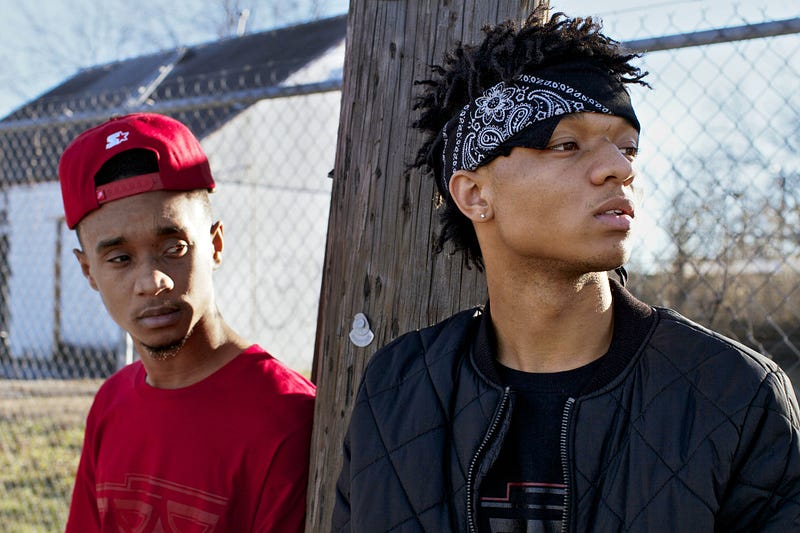
In mid-December, I accompanied Rae Sremmurd to BET Studios, in New York City, where the young, Mississippi-based rap duo was slated to tape a performance for the network’s 106 and Party New Year’s Eve special.
The purpose of my being with them was a profile, published in the January 17th issue of Billboard (you can read the article here), and in the process of hanging out with the two brothers—Slim Jxmmi (pronounced Jimmy) and Swae Lee—there was one awkward moment.
Walking down the hall, on their way to the stage, the photographer Johnny Nunez, legendarily known in hip-hop circles for his friendly rapport and knowledge of just about everyone, purportedly there to take behind-the-scenes shots for the network, brought his camera up to his face in an attempt to catch the group in a candid shot.
“Migos!” he yelled, trying to get their attention, citing the name of a different upstart rap outfit, a trio from Atlanta.
Jxmmi and Lee both scrunched their faces up, disturbed by his obvious error.
“We’re Rae Sremmurd!” one of them yelled back. If they were embarrassed—I’d have been embarrassed, for sure—they tried not to show it.
Nunez smiled and laughed a bit, playing down his error, then snapped a few photos before moving on in the opposite direction down the cold, cavernous corridor.
Rae Sremmurd made their way to the stage and probably didn’t think about being mistaken for Migos ever again.

If you pay any attention to rap at all, it’s very hard to mistake Rae Sremmurd for Migos. The group members look nothing alike, their music is only vaguely similar, and although they are both popular, by established, quantifiable metrics—things like radio play, YouTube views, etc.—Rae Sremmurd is significantly more well-known than Migos.
But look a little closer, and maybe that’s not the case. You get the sense that despite the popularity of their two most-identifiable singles, “No Flex Zone” and “No Type,” plus appearances on Jimmy Fallon and multiple write-ups in the New York Times, a lot of people probably still don’t know who the members of Rae Sremmurd really are. Fans may know the songs, but their connection to the group ends there.
When we spoke later in the day, back at their hotel, they said that they thought Nunez, whom they didn’t know previously, was just joking with them. But then, after thinking about it more, they said that he probably was serious, and that he really didn’t know who they were.
And that was okay with them. People didn’t quite know them yet, but they would.
Certainly Migos, no matter how you might feel about them or their music, has been an inescapable presence in hip-hop over the past year. Their influence has been so pronounced, that even someone like Gwen Stefani has injected the Migos flow into her latest comeback attempt. It’s not uncommon on social media to see comparisons that are occasionally serious, but often tongue-in-cheek, of Migos with The Beatles. That’s to say nothing of their music, which is seemingly enjoyed by millions.
And yet for whatever that’s worth, the members of Migos, like Rae Sremmurd, are probably not quite as famous as their new media metrics might suggest. There is still this unknowing sensibility about them, like their online ubiquity only transmits to whomever is dialed in to Migos central. If you wanted to ignore them, you could. They are not at that inescapable Miley Cyrus level of annoying yet.

On New Year’s Eve, in the midst of a subdued celebration, the television was turned on. We flicked back and forth between ABC, NBC and FOX, and when we realized our options for music entertainment were Taylor Swift, Miley Cyrus and Pitbull, we demurred and turned to BET.
When Migos took the stage, I blurted out:
“This is like seeing the Beatles on Ed Sullivan.”
I wasn’t even thinking about how tweetable a statement like that was, but it was a legitimate, halfway joking, ridiculous observation. Except, I don’t know if anyone besides us was actually watching the show, and were they, if they even knew who was performing on their screen.
In November, after 14 years, BET announced that 106 and Park, one of the last music countdown shows on television, would be signing off for good. The show’s final televised episode aired on December 19th, and when I was at the taping, a cloud of uncertainty hung in the air. The network says it will keep it around for tentpole event purposes, like award shows and things of that nature, plus develop an online version at some point, but when that will happen is anyone’s guess.
The bigger question for BET will be, how do you make people care? Certainly, 106 and Park had an audience. On the day of the taping, kids were lining up outside the studio, screaming for the artists as they arrived. But the power of the show, the thing it called upon to get stars in the door and onto its couch, was the fact that it aired on TV.
Television may be dwarfed by the amount of eyeballs readily-available online, where presumably most of the fans of the artists who perform on 106 and Park live, but it still harbors an old-school mystique, an allure. It is, after all, still television.
Nobody gets excited about being on the Internet, because we’re all already on the Internet.
Back in 1968, Andy Warhol made his famous quote about fame. “In the future,” he said, “everyone will be world-famous for 15 minutes.” I don’t know if world-famous is accurate, because maybe now everyone is only initially famous to themselves and their network—their Instagram followers, perhaps—but there is a level of fame that can be attained, meager as it might be, that makes people feel like they are far more famous than they are.
It was a Friday night, around 9 PM, and because we needed to continue the interview for the Billboard story, I was sitting in the Hudson Hotel lobby, waiting for Rae Sremmurd to arrive. There is something that resembles a small nightclub inside the Hudson—all nightclubs in New York City are inside hotels nowadays, weirdly enough—and while I waited, the DJ, whoever he/she was, played a cornucopia of popular rap hits. It was like an endless playlist of Drake, Rick Ross and French Montana.
Before long, Jxxmi came up on the escalator that lead to the reception area, then Lee did. They were excitable and animated, with loud voices and child-like mannerisms, having just come from a surprise appearance at another artist’s concert nearby. We stood in the lobby for a few minutes, chopping it up, observing the scenery, the fashionable folks milling about, filing on into the nightclub, where they would at some point dance to, drink to, and maybe hook up to, one of Rae Sremmurd’s songs.
But as far as I can tell, nobody in that lobby gave us a second look.
If you enjoyed reading this, please click “Recommend” below. This will help to share the story with others.
Paul Cantor mailing list: sign up here, Twitter @PaulCantor. Don’t miss a beat! Follow Cuepoint: Twitter | Facebook