
Good Fountain of Turnips Is a Digital Nomad Hotspot and I Don’t Know Why
The baffled impression of a local
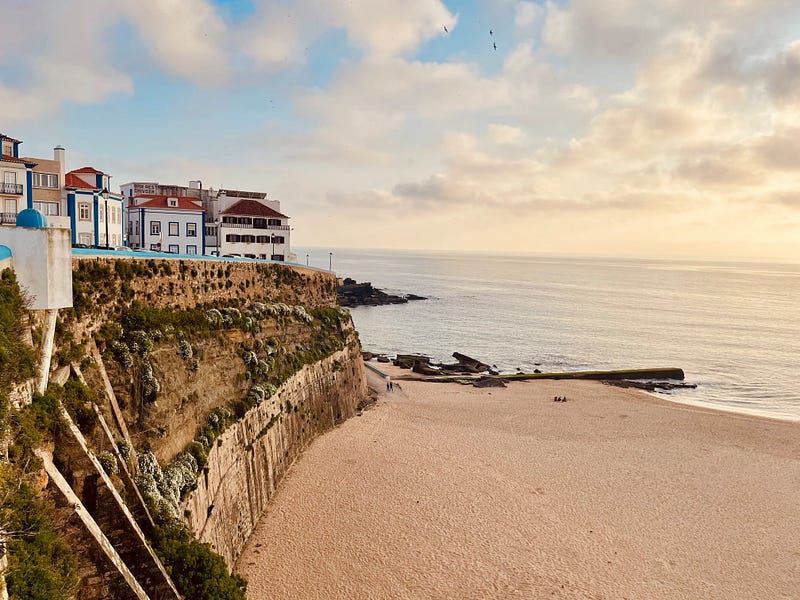
Digital nomads who can afford to splurge a little may wish to consider the trendy area of Fonte Boa dos Nabos where real estate prices range from 1,800€ to 11,000€ per month.
I read this sentence in an article about Ericeira, a little seaside town 10 km away from my hometown in Portugal.
My brain tied a knot.
For several reasons:
- Fonte Boa dos Nabos is in the middle of nowhere, a completely irrelevant village, where nothing happens. At least a couple of years ago it was like this.
- Rents range from 1,800€ to 11,000€. Very few of my friends here even make 1,800€ per month, and the minimum salary in Portugal is 705€.
- The whole thing becomes even more ridiculous if you speak Portuguese and understand the name of this village. Literally, it means “Good fountain of turnips” — true story.
I grew up by the sea, in an area 40 km from Lisbon. Back then, this was the land of dullness.
Cinema?
You have to go to Lisbon.
Trendy cafes?
Lisbon.
Vegetarian food?
Lisbon.
Any event other than boring tiny village religious festivities?
Lisbon.
For the most part of the past 10 years, I lived abroad. But I just returned home a couple of months ago, only to discover that this is an entirely different place.
Now, Ericeira is the place.
Portugal ranks as one of the top digital nomads' destinations and Ericeira itself is #16 in the top 100 places in the world.
Do you know how when you’re traveling abroad, people ask you where you’re from? If you come from a little town, you answer the number of kilometers that separates your village from the nearest big city. At least that’s what I’ve always done. Nobody knew where Ericeira was.
I bet that now if I go to Germany and say “Ericeira” I will hear:
“I’ve been there 3 times, can’t wait to go back”.
But why?
It’s hard to see your hometown through the eyes of a foreigner. Everything is fresh for them but everything is…home for you.
I acknowledge that things feel different around here. I definitely don’t need to go to Lisbon anymore to have a delicious veggie dinner. I can go to a co-working space and write surrounded by foreign accents.
And there are meet-ups. Meet-ups. In a place where meeting up used to be like “hey, I’m having a house party, bring your friends”.
If I can get past the initial weirdness of thinking of my hometown as a digital nomad hotspot, I come to two contradictory conclusions:
- I love it
- I hate it
Why I Love It
As I said, I spent most of the last decade living abroad.
I always felt a bit misplaced in my hometown and its new version makes me feel a bit more comfortable. Slightly. Foreigners and locals might share the same spaces but still live in different worlds.
But it’s refreshing to see everything Ericeira has to offer now. Even though it’s tailored for digital nomads and tourists, I, as a local can take advantage of it. I can go out and feel I’m in a more international environment, which I love. Foreigners helped develop my hometown.
But it comes at a cost.
Why I hate it
The answer to why I hate it was right at the beginning of this article.
The price of rents here.
The price of everything.
My sister is 28 and lives with our parents because she can’t afford to rent or buy an apartment in the place where she grew up (I was lucky enough to have bought a place before the hype).
I can only go for dinner half the times I did before because now the price of a meal is double what it used to be.
There was a local farmer who sold really good organic produce and my parents used to shop there. They had to start going somewhere else because it became too expensive. The nomads discovered it.
The Moral Case of Geo-Arbitrage
I’m not blaming digital nomads.
I was them at some point.
I traveled through the Balkans indulging in everything with my former British salary. I moved to Budapest and lived there for a year while working for a French company (while studying, eventually I got a job at a Hungarian company).
It’s the power of geo-arbitrage.
It can be extremely unfair and it can provide you with awesome life experiences. You just need to be on the right side of things.
I don’t claim to have any answers for what should change — that is if anything should change at all.
For now, I have only questions:
- How can we make sure everyone can afford to live in the place where they grew up?
- How can locals have a good quality of life, regardless of the influx of foreigners?
- How can local communities benefit from a place becoming a digital nomad hotspot?
- Should we even care about such moral questions?
Takeaway
There is something uncanny to seeing your hometown, the most boring place on Earth, suddenly become the place where everyone wants to be.
For me, these streets, these beaches, and these eateries are loaded with history. Every time I go out, I’m a teenager again and I can’t see anything with fresh eyes.
My partner lives here but comes from another part of the country. Slowly, I’ve been discovering my hometown through the eyes of someone who sees it like digital nomads do: an exciting, trendy place to be. As weird as it feels at first, eventually you get there.
It’s amazing to be a digital nomad. It’s just a little weirder on the other side.
If you want more travel stories, consider joining my monthly newsletter.