avatarJ3

Free AI web copilot to create summaries, insights and extended knowledge, download it at here

3412

Abstract

00/1*7wqzPEl8N7ZLpNAPNLFf6Q.png"><figcaption></figcaption></figure> <figure id="fd32"> <div> <div>

            <iframe class="gist-iframe" src="/gist/giljr/df3628c49a98254caf56f6e7683b0be7.js" allowfullscreen="" frameborder="0" height="undefined" width="undefined">
          </div>
        </div>
    </figure></iframe></div></div></figure><p id="9db7">Up there I’m using this Board: ULN2003 28BYJ-48 Stepper Motor &amp; Arduino Uno IDE 1.8.5. The ideal result is?</p><div id="9114"><pre><span class="hljs-attribute">Better</span> solution: @waitingTimeOf_2s@<span class="hljs-number">5</span>v resuts <span class="hljs-number">14</span>.<span class="hljs-number">5</span> rpm Max</pre></div><h1 id="a221">Code II &amp; LAB II</h1><figure id="fa2e"><img src="https://cdn-images-1.readmedium.com/v2/resize:fit:800/1*HQgg4sknBBzL6SMAODKPpw.png"><figcaption></figcaption></figure>
    <figure id="828f">
        <div>
          <div>
            
            <iframe class="gist-iframe" src="/gist/giljr/e4353d4106386b47b61cb23e6747277d.js" allowfullscreen="" frameborder="0" height="undefined" width="undefined">
          </div>
        </div>
    </figure></iframe></div></div></figure><p id="833e">Up there I’m using:<a href="https://www.adafruit.com/product/81"> Adafruit Motor/Stepper/Servo Shield for Arduino kit — v1.2</a> &amp; 28BYJ-48 Stepper Motor &amp; Arduino Uno IDE 1.8.5. See comments above for the result:).</p><p id="0cb3">Of the settings available in the Adafruit Motor shield library, check which one fits best for the 28BYJ48 5v Stepper Motor and results in a higher RPM;)

In order to pass the test the stepper must complete the lap three times at least in both directions; then we put in a single direction and manually measured the RPM (see video); note that all the figures are on the maximum possible limit”] Above the specified values the motor will stall:/ (see it for yourself).</p><p id="ab45">Realize that we can get to 24 RPM, but we will have problems with motor heating in exchange for a fall in its useful life. Not an intelligent option, right?</p><div id="1167"><pre><span class="hljs-attribute">Better</span> solutiuon: <span class="hljs-number">500</span>speed@<span class="hljs-number">5</span>v resuts <span class="hljs-number">15</span> rpm Max</pre></div><h1 id="6fe7">Code III & LAB III</h1><p id="6a6f">I drew a circuit with <a href="https://www.arduino.cc/documents/datasheets/H-bridge_motor_driver.PDF">L293D Motor Drive DIP 16 Pin IC</a>; the code simply makes the motor spin at 24 RPM without stopping. The code is trivial, but what is important is the connections below;</p><figure id="99f2"><img src="https://cdn-images-1.readmedium.com/v2/resize:fit:800/1*9KncxufURvMrhqSaHJ3XMA.png"><figcaption></figcaption></figure><figure id="82e7"><img src="https://cdn-images-1.readmedium.com/v2/resize:fit:800/1*9gyhtsAV2blemxGP50WFyw.png"><figcaption></figcaption></figure> <figure id="435b"> <div> <div>

            <iframe class="gist-iframe" src="/gist/giljr/9e921f1cc6d0fa58f0a6a90a09408421.js" allowfullscreen="" frameborder="0" height="undefined" width="undefined">
          </div>
        </div>
    </figure></iframe></div></div></figure><p id="0f83">Up there I removed the L293D chip from 

Options

the Adafruit board and plugged in a breadboard. It was an emergency, I already provided the online chip …</p><div id="c993"><pre><span class="hljs-attribute">Unique</span> Solution: <span class="hljs-number">24</span>RPM@<span class="hljs-number">12</span>v</pre></div><div id="611b"><pre>So, <span class="hljs-keyword">in</span> conclusion, <span class="hljs-keyword">of</span> <span class="hljs-keyword">the</span> options presented, L293D solo results <span class="hljs-keyword">in</span> <span class="hljs-keyword">a</span> higher RPM: <span class="hljs-number">24</span> RPM <span class="hljs-keyword">at</span> <span class="hljs-number">12</span> v</pre></div><figure id="9cb6"><img src="https://cdn-images-1.readmedium.com/v2/resize:fit:800/1*XhF7whB53oKZpUuAmLMOfA.gif"><figcaption>Using the L293D solo results in a higher <b>RPM: 24 RPM</b> at 12 v</figcaption></figure><p id="eca6">And That’s it!</p><p id="3a24">Let me know what you guys think…I see you guys in the next episode;)</p><p id="0599">Thank you for the visit!</p><p id="c079"><a href="https://drive.google.com/open?id=1GsOVhP_oVEH1TiUlYbQbDTD7YTMSzqWX">Download All Files For This Project</a></p> <figure id="c9df"> <div> <div> <img class="ratio" src="http://placehold.it/16x9"> <iframe class="" src="https://cdn.embedly.com/widgets/media.html?src=https%3A%2F%2Fwww.youtube.com%2Fembed%2FJd6KJZxv2j4%3Ffeature%3Doembed&amp;url=http%3A%2F%2Fwww.youtube.com%2Fwatch%3Fv%3DJd6KJZxv2j4&amp;image=https%3A%2F%2Fi.ytimg.com%2Fvi%2FJd6KJZxv2j4%2Fhqdefault.jpg&amp;key=a19fcc184b9711e1b4764040d3dc5c07&amp;type=text%2Fhtml&amp;schema=youtube" allowfullscreen="" frameborder="0" height="480" width="854"> </div> </div> </figure></iframe></div></div></figure><h1 id="7b7c">Credits & References</h1><p id="8fdd"><a href="https://learn.adafruit.com/adafruit-motor-shield">Adafruit Industries Learning System</a></p><p id="637a"><a href="https://github.com/giljr/Ardu_Serie/">GitHub</a></p><p id="d683"><a href="http://www.jangeox.be/2013/10/change-unipolar-28byj-48-to-bipolar.html">Jangeox’ blog</a></p><p id="a624"><a href="https://cdn-learn.adafruit.com/downloads/pdf/all-about-stepper-motors.pdf">All About Stepper Motors</a> PDF-format by Adafruit</p><h1 id="a821">Related Posts</h1><p id="db45"><a href="https://readmedium.com/uln2003-28byj-48-stepper-motor-f1cc5357eff"><b>ULN2003 & 28BYJ-48 Stepper Motor</b></a> — 7-ch Darlington Sink Driver — .6A@50v peak — Ardu-Serie#61</p><p id="d057"><a href="https://readmedium.com/adafruit-motor-shield-v1-v2-2fa1430edaf9"><b>Adafruit Motor Shield v1 & v2</b></a>–4 DC Motors or 2 Stepper Motor or 2 Servos — 1.2A@25v & 3.2A@15v peak — Ardu-Serie#54</p><p id="5908"><a href="https://readmedium.com/stepper-motors-precise-position-control-4b7b079ca9a4"><b>Stepper Motors</b><b> Precise Position Control</b></a> — The Great Benefit of Stepper Motors — No-H-Bridge or Closed Loop Needed — Ardu_Serie#51</p><p id="0c37"><a href="https://readmedium.com/quick-intro-to-motor-drivers-322e4929db44"><b>Quick Intro To Motor Drivers</b></a> — An Overview How-to’s For Hobbyist Guide — Ardu_Serie#47</p><p id="486c"><a href="https://readmedium.com/arduino-pro-mini-flashing-5c3c899ea76c"><b>Arduino Pro Mini — Flashing</b></a> — Having Trouble Flashing ProMini? Ardu_Serie#67</p></article></body>

28BYJ-48 5v Stepper Motor — How Many RPM Can I Spin This Thing?

RPM Configurations & Industrial Conveyor Belt — ArduSerie#68

Hello, I had to configure to the maximum RPM of the 28BYJ-48 Stepper Motor … but it only ran below 30 RPM :/

conclusion: this type of motor is used for cameras, air-conditioners, scanners etc when one wants certain accuracy rather than speed; for a design of a Industrial Conveyor Belt I think it is more suitable a simple DC motor; but this is subject to another post; Suggest, please, I'd love to hear suggestions:)
I want to use it for a prototype of an Industrial Conveyor Belt (very similar to the photo below…well, not really:/) but the speed of this type of stepper is very low … anyway, I have studied all the possible configurations of 28BYJ-48 Stepper Motor available for hobbyists and now I share it with you :)
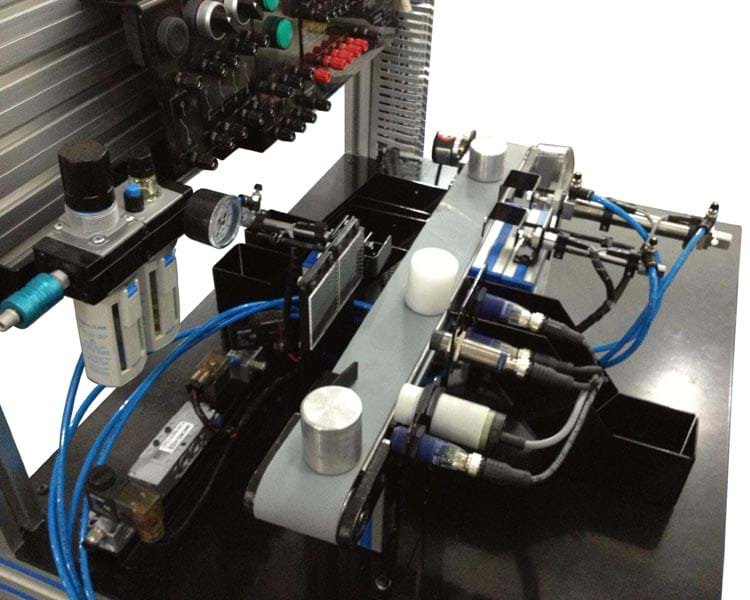
A Top Test Bench for Industrial Conveyor Belt (see vivacity.com.br)

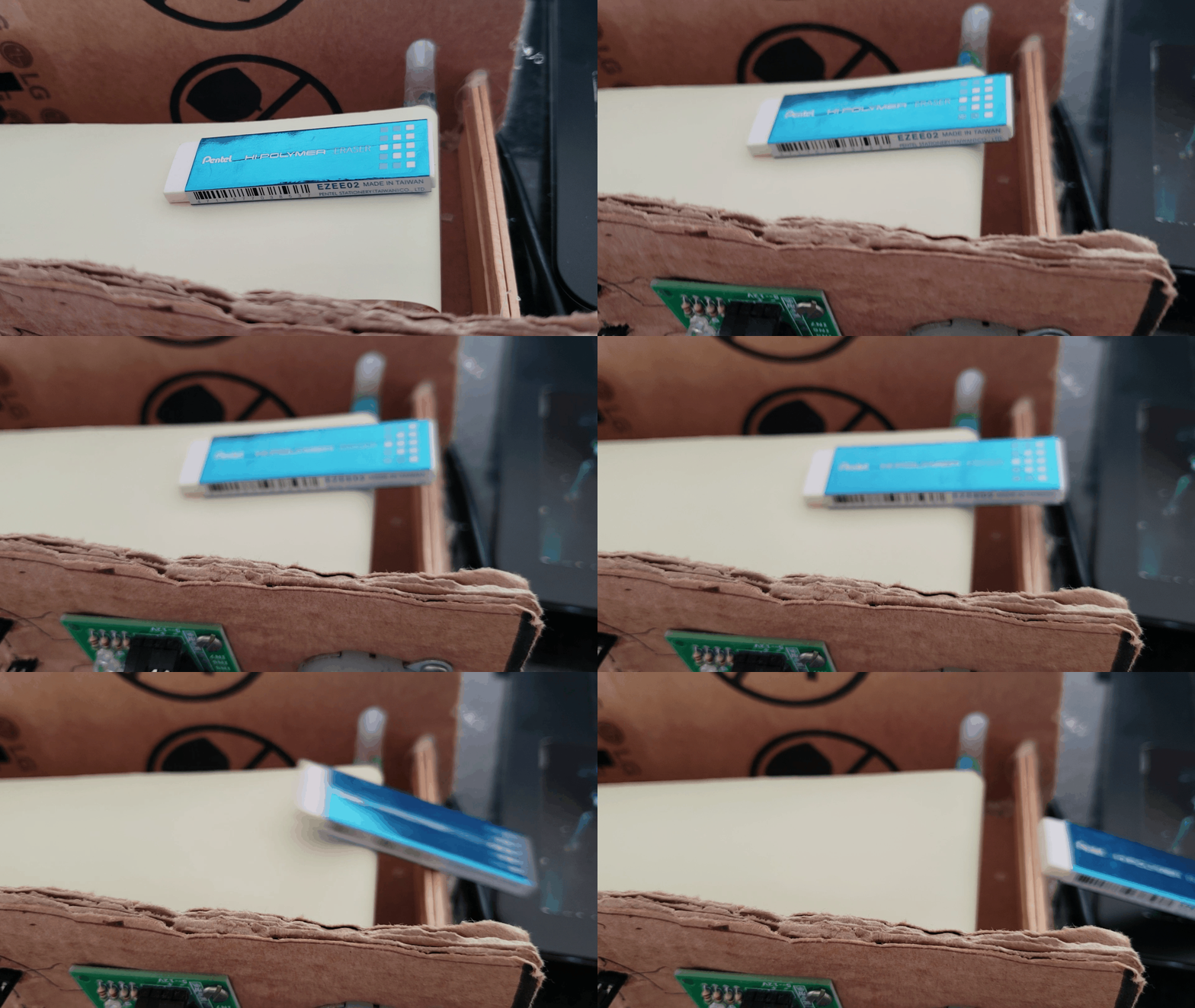
My test bench for an industrial Conveyor Belt prototyping is a lot more humble…. Simple and ordinary. Sorry, it is not an engineering masterpiece. We’re just doing the initial explorations, me and my son …see video lab:)
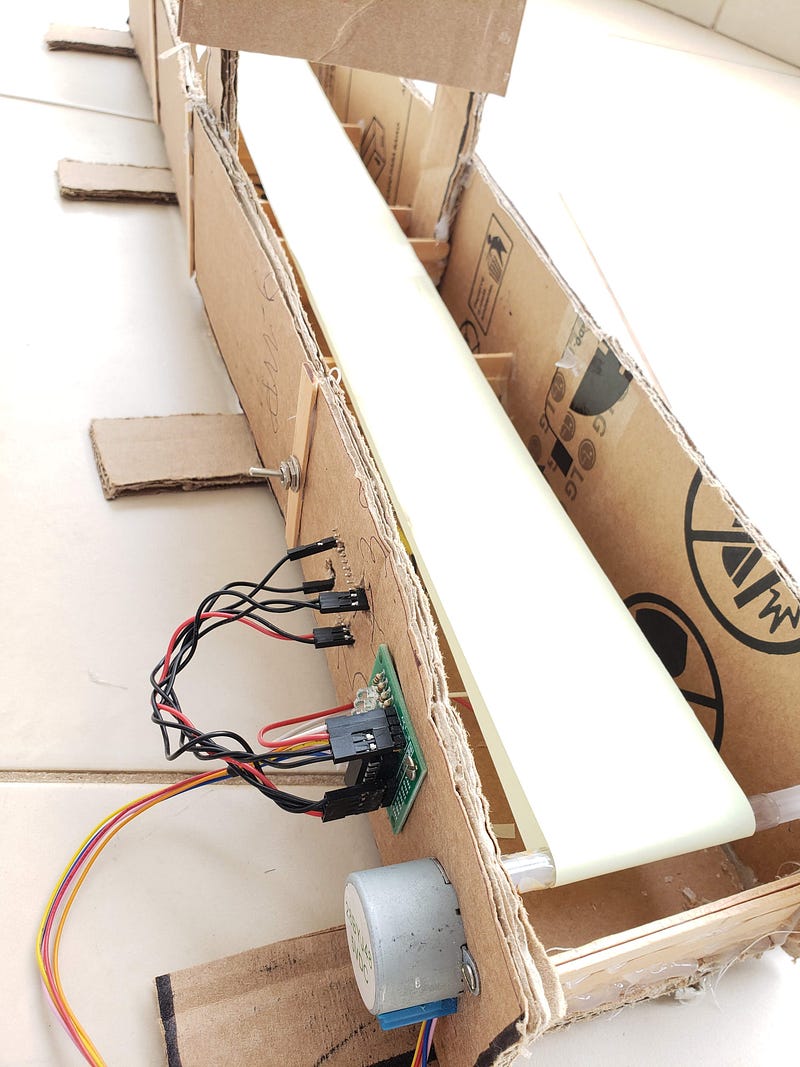
I used: Cardboard, board for ULN2003 and 28BYJ-48 5v Stepper Motor, Thermal Printer Paper Rolls, Arduino Pro Mini, and hot glue.

Well, now I want the speed compatible with the speed of an old Turntable CD Vinyl Vitrola Vintage… remember its speed is 33 and a half RPM; but, just not:/ it does not reach a mere 30RPM:/ It’s frustrating!
Anyway here are the codes with the hardware and software configurations I used (in case you want to repeat the experiment there in your atelier:)

Code I & LAB I
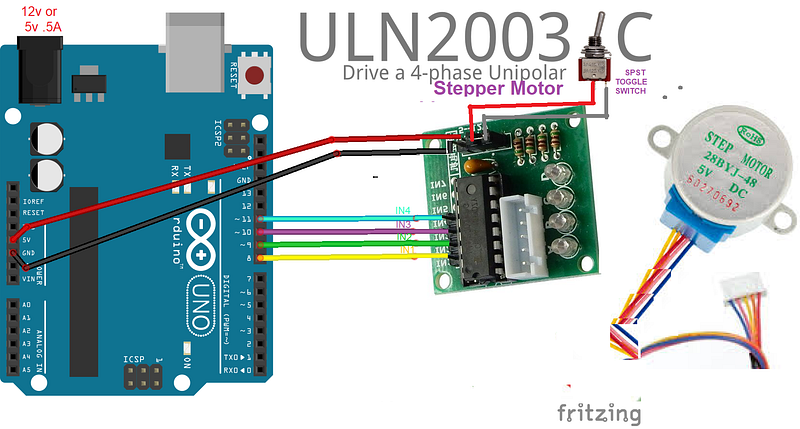
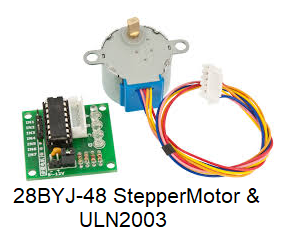
Up there I’m using this Board: ULN2003 28BYJ-48 Stepper Motor & Arduino Uno IDE 1.8.5. The ideal result is?

Better solution: @waitingTimeOf_2s@5v resuts 14.5 rpm Max

Code II & LAB II

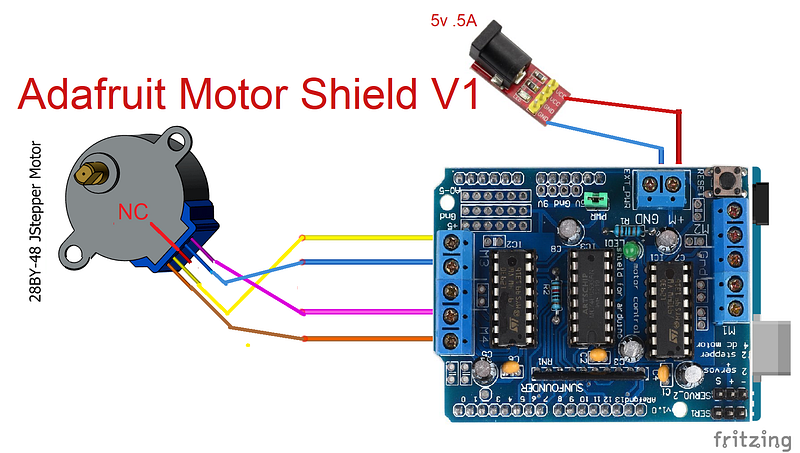
Up there I’m using: Adafruit Motor/Stepper/Servo Shield for Arduino kit — v1.2 & 28BYJ-48 Stepper Motor & Arduino Uno IDE 1.8.5. See comments above for the result:).

Of the settings available in the Adafruit Motor shield library, check which one fits best for the 28BYJ48 5v Stepper Motor and results in a higher RPM;) In order to pass the test the stepper must complete the lap three times at least in both directions; then we put in a single direction and manually measured the RPM (see video); note that all the figures are on the maximum possible limit”] Above the specified values the motor will stall:/ (see it for yourself).

Realize that we can get to 24 RPM, but we will have problems with motor heating in exchange for a fall in its useful life. Not an intelligent option, right?

Better solutiuon: 500speed@5v resuts 15 rpm Max

Code III & LAB III

I drew a circuit with L293D Motor Drive DIP 16 Pin IC; the code simply makes the motor spin at 24 RPM without stopping. The code is trivial, but what is important is the connections below;
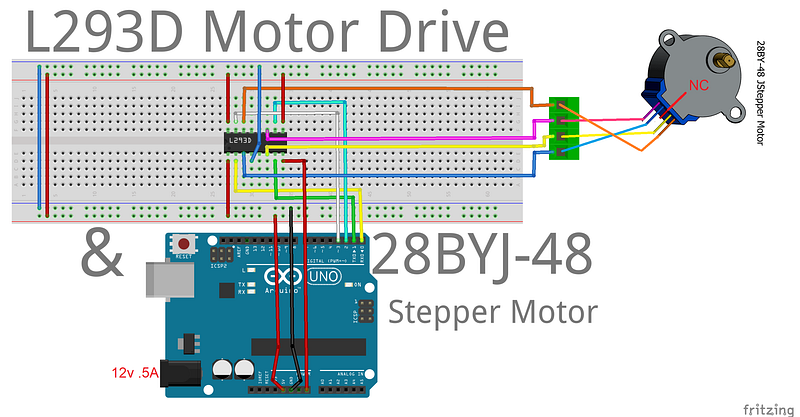
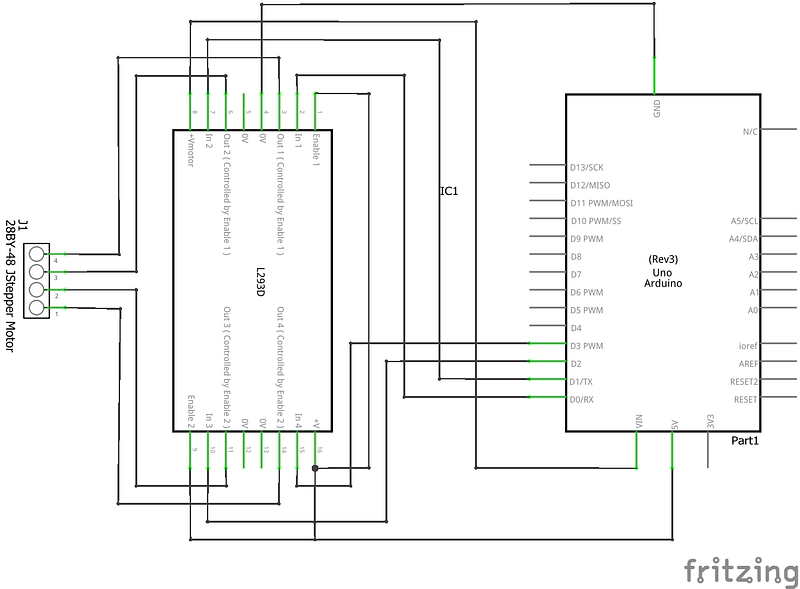
Up there I removed the L293D chip from the Adafruit board and plugged in a breadboard. It was an emergency, I already provided the online chip …

Unique Solution: 24RPM@12v
So, in conclusion, of the options presented, L293D solo results in a higher RPM: 24 RPM at 12 v
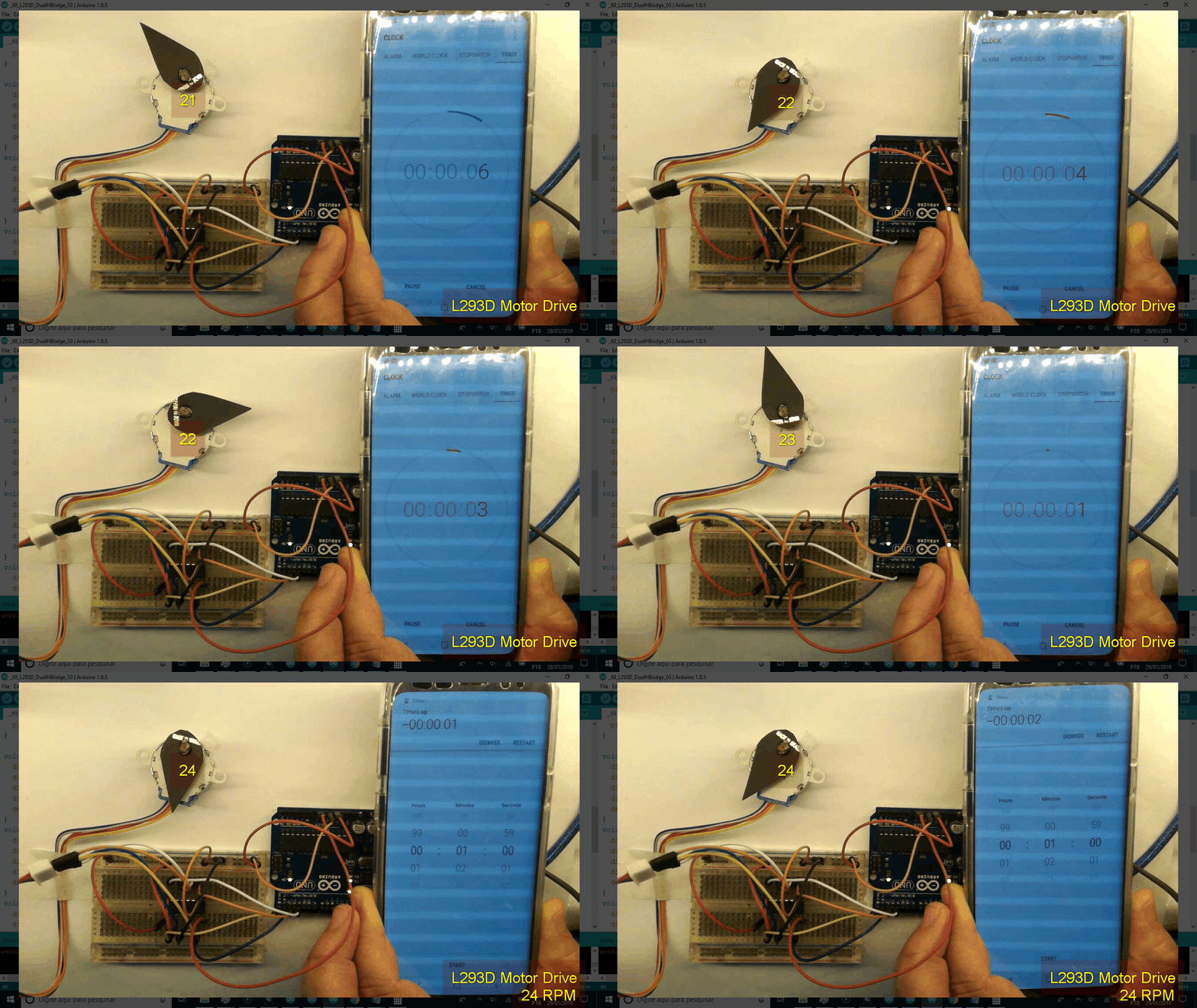
Using the L293D solo results in a higher RPM: 24 RPM at 12 v

And That’s it!

Let me know what you guys think…I see you guys in the next episode;)

Thank you for the visit!

Download All Files For This Project

Credits & References

Adafruit Industries Learning System

GitHub

Jangeox’ blog

All About Stepper Motors PDF-format by Adafruit

Related Posts

ULN2003 & 28BYJ-48 Stepper Motor — 7-ch Darlington Sink Driver — .6A@50v peak — Ardu-Serie#61

Adafruit Motor Shield v1 & v2–4 DC Motors or 2 Stepper Motor or 2 Servos — 1.2A@25v & 3.2A@15v peak — Ardu-Serie#54

Stepper Motors Precise Position Control — The Great Benefit of Stepper Motors — No-H-Bridge or Closed Loop Needed — Ardu_Serie#51

Quick Intro To Motor Drivers — An Overview How-to’s For Hobbyist Guide — Ardu_Serie#47

Arduino Pro Mini — Flashing — Having Trouble Flashing ProMini? Ardu_Serie#67

28byj 48 Stepper Motor
Industrial Conveyors
Rpm Challenge
L293d
Arduino Pro Mini
Recommended from ReadMedium