avatarMichael Hunter, MD

Free AI web copilot to create summaries, insights and extended knowledge, download it at here

10747

Abstract

ntary.</h1><p id="468a">Why is being sedentary bad? One reason that sedentary behavior is a health risk is that it can lead to weight gain.</p><p id="2cf8">Obesity is a risk factor for at least <a href="https://cancer.ca/en/cancer-information/reduce-your-risk/move-more-sit-less/how-sedentary-behaviour-increases-your-risk-of-cancer">11 cancer types</a>.</p><figure id="f30f"><img src="https://cdn-images-1.readmedium.com/v2/resize:fit:800/1*_VfFsieiRv0BALXCIhxObA.jpeg"><figcaption>The author is out for a hike in the Olympic Mountains of the Pacific Northwest United States.</figcaption></figure><p id="d6e9">Here are some ways I avoid being too sedentary:</p><ul><li>I move around if I am using my mobile phone.</li><li>I stand or stretch during meetings (I am always surprised that I am the only one!).</li><li>I stand and move while watching recreational games.</li><li>I walk to my colleagues to chat rather than phoning or messaging them.</li><li>I replace screen time with social or strolling time.</li><li>Avoid risky behavior: Pesticide exposure.</li></ul><h1 id="1005">8. Avoid risky behavior: Pesticide exposure.</h1><p id="e508">Numerous investigations into the correlation between <a href="https://www.ncbi.nlm.nih.gov/pmc/articles/PMC2231435/">pesticide exposure</a> and <a href="https://www.cancer.org/cancer/types/non-hodgkin-lymphoma/about/what-is-non-hodgkin-lymphoma.html">non-Hodgkin lymphoma</a> and <a href="https://www.mayoclinic.org/diseases-conditions/leukemia/symptoms-causes/syc-20374373">leukemia</a> consistently revealed positive associations.</p><p id="6608">Researchers discovered the most consistent associations were for <a href="https://www.ncbi.nlm.nih.gov/pmc/articles/PMC2231435/">brain and prostate cancer</a>.</p><p id="af39">Several studies demonstrated dose-response relationships, while a handful successfully pinpointed specific pesticides linked to these conditions.</p><h1 id="a0e4">9. Avoid risky behavior: Ultra-processed foods.</h1><p id="998f">I try not to consume ultra-processed foods. They are associated with a <a href="https://www.thelancet.com/journals/lanepe/article/PIIS2666-7762(23)00190-4/fulltext">higher risk</a> of upper digestive tract cancer (including of the mouth, throat, and esophagus).</p><p id="0f32" type="7">In the United States, a 2019 study estimated some 71% of the food supply may be ultra-processed.</p><p id="7db9">A <a href="https://www.thelancet.com/journals/lanepe/article/PIIS2666-7762(23)00190-4/fulltext">2023 study</a> showed that animal-based products increased risk by 1.1 times among ultra-processed food subgroups. Artificially and sugar-sweetened beverages raised risk by a similar amount.</p><p id="2766">The researchers did not link ultra-processed breads and cereals (or plant-based alternatives) with a higher cancer risk.</p><h1 id="3689">10. Avoid risky behavior: Radiation exposure.</h1><p id="453b">As a radiation oncologist, I am proud of how we have helped achieve improvements in the long-term survival of children with cancer.</p><p id="5ad7">Today, <a href="https://www.cancer.org/cancer/types/cancer-in-children/key-statistics.html">85 percent of children</a> with cancer survive five years or more. This number is a huge increase since the mid-1970s when the 5-year survival rate was about 58 percent.</p><figure id="fe48"><img src="https://cdn-images-1.readmedium.com/v2/resize:fit:800/0*y-ll1cg_m0IbCUCQ"><figcaption>Photo by <a href="https://unsplash.com/@senjuti?utm_source=medium&amp;utm_medium=referral">Senjuti Kundu</a> on <a href="https://unsplash.com?utm_source=medium&amp;utm_medium=referral">Unsplash</a></figcaption></figure><p id="3dfb">Yet, I am horrified: Radiation can increase cancer risk, especially among children. We are increasingly pulling back on the use of radiation therapy for pediatric cancer, but there is another risk you should know about.</p><p id="91c2">Children are considerably more sensitive to radiation than adults. Some diagnostic scans contain radiation. CT scans are a good example.</p><p id="de6c">It is important to stress that the absolute cancer risks associated with CT scans are small.</p><p id="68ff">The lifetime cancer risk of cancer due to CT scans for children, estimated using projection models based on nuclear bomb survivors, is about <a href="https://www.cancer.gov/about-cancer/causes-prevention/risk/radiation/pediatric-ct-scans">one case of cancer for every 1,000 people</a> who have a scan (with a maximum incidence of about one case of cancer for every 500).</p><p id="1da6">Fortunately, today, we have pediatric scanning protocols that use lower doses of radiation in the CT scan. We are also more careful in not using CT imaging when possible (for example, for many with appendicitis).</p><h1 id="98b1">11. Avoid risky behavior: Practice safe sex.</h1><p id="325a">Another effective cancer prevention tactic is to avoid risky behaviors that can lead to infections that, in turn, might increase the risk of cancer. For example:</p><ul><li><b>Practice safe sex.</b> Limit the number of sexual partners and use a condom. The greater the number of sexual partners in a lifetime, the greater the chances of getting a sexually transmitted infection, such as HIV or HPV.</li><li>People who have AIDS or HIV have a higher risk of cancer of the anus, liver, and lung. HPV is most often associated with cervical cancer, but it might also increase the risk of cancer of the anus, penis, throat, vulva, and vagina.</li></ul><h1 id="d0e3">12. Avoid risk behavior: Don’t share needles.</h1><p id="39d0"><b>Don’t share needles.</b> Injecting drugs with shared needles can lead to HIV, as well as hepatitis B and hepatitis C — which can increase the risk of liver cancer. If you’re concerned about drug misuse or addiction, seek professional help.</p><h1 id="6ee4">13. Get screened: Colorectal cancer.</h1><p id="a43d">Colon and rectal cancers are a leading cause of morbidity and mortality, especially in the Western world.</p><p id="e38a">Colorectal cancer screening leads to a <a href="https://www.ncbi.nlm.nih.gov/pmc/articles/PMC6769059/#:~:text=Combining%20the%20four%20randomised%20trials,CI%3A%200.78%E2%80%900.90">modest reduction</a> in colorectal cancer mortality.</p><figure id="8bf7"><img src="https://cdn-images-1.readmedium.com/v2/resize:fit:800/1*qhNYFPgHaoFMd4lh9lGyfQ.jpeg"><figcaption>Colonoscopy. Adobe Stock Photos.</figcaption></figure><p id="9c2f">The <a href="https://www.uspreventiveservicestaskforce.org/uspstf/recommendation/colorectal-cancer-screening">U.S. Preventative Services Task Force</a> recommends for those aged 45 to 75. The USPSTF recommends that clinicians selectively offer screening for colorectal cancer in adults aged 76 to 85 years.</p><p id="1fa0">The net benefit of screening all persons in this oldest age group is small.</p><h1 id="406b">14. Get screened: Breast cancer.</h1><p id="3791">First, I know that breast self-examination cannot detect all cancers, even though the most common symptom is a lump. The cancer can develop without any outward symptoms.</p><p id="5f6b">If you discover an unusual mass or a troubling change in the breast, notify your healthcare provider immediately.</p><p id="7183">Early detection saves lives.</p><p id="b2ad">The main <a href="https://www.ncbi.nlm.nih.gov/pmc/articles/PMC8796062/#:~:text=The%20primary%20benefits%20of%20mammography,morbidity%20of%20breast%20cancer%20treatment">mammography benefits</a> screening are a reduction in breast cancer mortality, years of life lost due to breast cancer, and morbidity of breast cancer treatment.</p><p id="a1f8">Here are the results of a meta-analysis of randomized trials:</p><figure id="5dad"><img src="https://cdn-images-1.readmedium.com/v2/resize:fit:800/1*eLo0sCHeKvCtL140GylW0g.png"><figcaption>Adapted from <a href="https://pubmed.ncbi.nlm.nih.gov/26756588/">U.S. Preventive Services Task Force</a>.</figcaption></figure><h1 id="5805">15. Get screened: Oral cancer.</h1><p id="1ece"><a href="https://www.mayoclinic.org/tests-procedures/oral-cancer-screening/about/pac-20394802">Oral cancer screening</a> is an exam performed by a dentist or doctor to look for signs of cancer or precancerous conditions in your mouth.</p><p id="124e">The objective? To identify mouth cancer early, when <a href="https://www.cancer.net/cancer-types/oral-and-oropharyngeal-cancer/statistics#:~:text=If%20the%20cancer%20is%20diagnosed,relative%20survival%20rate%20is%2069%25">cure rates are higher</a>.</p><p id="622f">Most dentists do a mouth exam as a part of a routine dental visit. Medical organizations disagree on whether healthy individuals without risk factors for mouth cancer need oral cancer screening.</p><p id="cbb8">I like the idea of mouth exams, especially given the rise of non-smoking, non-alcohol-related tonsils and the base of tongue tumors. <a href="https://www.mountsinai.org/locations/head-neck-institute/cancer/oral/hpv-faqs#:~:text=The%20oropharynx%20includes%20the%20tonsils,cancer%20is%20caused%20by%20HPV16">Human papillomavirus infection</a> is the main cause of such cancers nowadays.</p><h1 id="2e30">16. Get screened: Cervix cancer.</h1><p id="58fd">For my patients, I follow the <a href="https://www.cancer.org/cancer/types/cervical-cancer/detection-diagnosis-staging/cervical-cancer-screening-guidelines.html#:~:text=Cervical%20cancer%20testing%20(screening)%20should,test%20alone%20every%203%20years.">American Cancer Society (ACS)</a> guidelines for cervix cancer screening:</p><ul><li>Women 25 to 65 should have a human papillomavirus (HPV) test every five years. If you cannot have an HPV test, the ACS recommends an HPV test in combination with a <a href="https://www.healthline.com/health/pap-smear">Papanicolaou</a> (Pap) test every five years or a <a href="https://www.healthline.com/health/pap-smear-pap-test-what-to-expect/">Pap test</a> every three years.)</li><li>Screening can stop after age 65 as long as all tests over the preceding ten years have been normal and there’s no history of a pre-cancer or cervical cancer diagnosis in the past 25 years.</li><li>Screening stops after a hysterectomy (uterus removal) that removes the cervix unless the surgery was a part of <a href="https://www.healthline.com/health/cervical-cancer-treatments/">treatment for cervical cancer</a> or as cervical cancer prevention.</li><li>Anyone at high risk of cervical cancer should speak with their doctor about getting screened more frequently.</li></ul><h1 id="1a19">17. Get screened: Lung cancer.</h1><p id="d128">You may benefit from <a href="https://www.fredhutch.org/en/patient-care/prevention/lung-cancer-early-detection/screening.html?gclid=CjwKCAiA4smsBhAEEiwAO6DEjde1cYzjeb3RgNMyP7770P6MxJKnVHovHdkrntvDja1X2CbQUTAzXhoC3rMQAvD_BwE"

Options

lung cancer screening</a> if you are 50 to 80 years old and currently smoke (or quit in the last 15 years).</p><p id="9c3c">In addition, you should have smoked an average of at least one pack per day for 20 years (or two packs a day for ten years).</p><figure id="59fe"><img src="https://cdn-images-1.readmedium.com/v2/resize:fit:800/1*Bs_lDufV1P6FvYE3I0awIg.jpeg"><figcaption></figcaption></figure><p id="e015">Additional lung cancer screening criteria are available at the Fred Hutchinson Cancer Center <a href="https://www.fredhutch.org/en/patient-care/prevention/lung-cancer-early-detection/screening.html?gclid=CjwKCAiA4smsBhAEEiwAO6DEjde1cYzjeb3RgNMyP7770P6MxJKnVHovHdkrntvDja1X2CbQUTAzXhoC3rMQAvD_BwE">site</a>.</p><h1 id="b153">18. Get vaccinated: HPV.</h1><p id="c2eb"><a href="https://www.who.int/news-room/fact-sheets/detail/human-papilloma-virus-and-cancer#:~:text=HPV%20infection%20causes%20about%205,compared%20to%20women%20without%20HIV">Human papillomavirus</a> is a group of 200 viruses. While they do not cause problems for the vast majority of us, infection with some high-risk types can cause genital warts or cancer.</p><p id="9891">For nine out of 10 individuals, the body controls the infection by itself. However, persistent infection with <a href="https://www.thelancet.com/journals/langlo/article/PIIS2214-109X%2819%2930488-7/fulltext">high-risk HPV types can cause cancers</a> of the vulva, vagina, penis, anus, and mouth/upper throat regions.</p><p id="7d02">HPV infection causes about <a href="https://www.who.int/news-room/fact-sheets/detail/human-papilloma-virus-and-cancer#:~:text=HPV%20infection%20causes%20about%205,compared%20to%20women%20without%20HIV">five percent</a> of cancers worldwide. Fortunately, vaccination against HPV can reduce the risk of these cancers.</p><p id="367d">Since the introduction of the HPV vaccine, cervix pre-cancer lesions, genital warts, and HPV infections <a href="https://www.cdc.gov/hpv/parents/vaccine/six-reasons.html#:~:text=HPV%20vaccination%20is%20cancer%20prevention,the%20infections%20that%20cause%20them">have dropped</a>. Infections with HPV types that cause most HPV cancers and genital warts have dropped 88 percent among teen girls and 81 percent among young adult women.</p><div id="1bb0" class="link-block"> <a href="https://www.cdc.gov/vaccines/vpd/hpv/hcp/recommendations.html"> <div> <div> <h2>HPV Vaccination Recommendations</h2> <div><h3>The HPV vaccine is recommended for girls and boys ages 11 and 12. Any HPV vaccine can be given to girls. Either the…</h3></div> <div><p>www.cdc.gov</p></div> </div> <div> <div style="background-image: url(https://miro.readmedium.com/v2/resize:fit:320/0*jd-JDLSmRl_S0Uwr)"></div> </div> </div> </a> </div><h1 id="dbeb">19. Be proactive: Sleep.</h1><p id="6ccf">Sleep is a priority for me. I know that <a href="https://www.hopkinsmedicine.org/health/wellness-and-prevention/health-risks-of-poor-sleep">chronic insufficient sleep</a> may increase my likelihood of developing dementia, heart disease, type 2 diabetes, and obesity.</p><p id="ee3f">Is there a connection between lack of sleep and cancer risk? Long-term sleep disruptions <a href="https://www.hopkinsmedicine.org/health/wellness-and-prevention/lack-of-sleep-and-cancer-is-there-a-connection">may raise the risk</a> of some cancers.</p><p id="5dc5">Our bodies have a biological clock or circadian rhythm. This internal clock regulates sleep and numerous other functions.</p><figure id="b237"><img src="https://cdn-images-1.readmedium.com/v2/resize:fit:800/0*rb9rgSfFGfjpswIs"><figcaption>Photo by <a href="https://unsplash.com/@mpho_mojapelo?utm_source=medium&amp;utm_medium=referral">Mpho Mojapelo</a> on <a href="https://unsplash.com?utm_source=medium&amp;utm_medium=referral">Unsplash</a></figcaption></figure><p id="f393">Still, nocturnal exposure to light over the years may reduce melatonin levels, promoting cancer growth. Some believe <a href="https://blogs.cdc.gov/niosh-science-blog/2021/04/27/nightshift-cancer/">night shift work</a> is probably carcinogenic.</p><p id="9324">However, the sleep disruption and cancer risk connection is <a href="https://www.ncbi.nlm.nih.gov/pmc/articles/PMC6249821/">controversial</a>.</p><p id="a29f"><i>If you are a night shift worker</i></p><p id="aa51">If you are a <a href="https://blogs.cdc.gov/niosh-science-blog/2021/04/27/nightshift-cancer/">night shift worker</a>, work to get enough sleep. Eat well and exercise regularly. Avoid tobacco use, and avoid excessive alcohol.</p><p id="a914">Of course, all of us should be doing these things.</p><h1 id="7b9f">20. Be proactive: See your primary care provider.</h1><p id="0a92">I plead guilty to not always getting in to see my primary care provider. But over the last several years, I have had routine check-ups.</p><p id="18b5">Your primary care provider can be an excellent resource for determining optimal cancer reduction strategies, including screening.</p><h1 id="97e6">21. Be proactive: Move more and sit less.</h1><p id="96db">I exercise regularly. I know that physical activity is associated with a lower risk of cancer.</p><p id="2c0f">There is strong evidence that being physically active <a href="https://www.wcrf.org/wp-content/uploads/2021/02/Physical-activity.pdf">decreases the risk</a> of postmenopausal breast cancer, uterus cancer, and colorectal cancer.</p><figure id="62dc"><img src="https://cdn-images-1.readmedium.com/v2/resize:fit:800/1*A5ICWJPCoXx86SwUfFSQRw.jpeg"><figcaption>Physical activity decreases the risk of certain cancers. Adobe Stock Photos.</figcaption></figure><p id="7378">How much do you need to do to reduce cancer risk? It may be much less than you think.</p><p id="d869">An <a href="https://www.cnn.com/2023/07/28/health/one-minute-exercise-cancer-wellness/index.html#:~:text=Adults%20who%20incorporated%20about%204%C2%BD,of%20cancer%2C%20the%20study%20found">observational study</a> (meaning lower-level evidence) showed that adults who incorporated about 4½<b> </b>minutes of vigorous activity in short one- or two-minute bouts had a nearly one-third (30 percent) lower cancer incidence rate.</p><p id="84dd">I agree with the <a href="https://www.cdc.gov/physicalactivity/basics/adults/index.htm">U.S. Centers for Disease Control and Prevention</a> recommendations:</p><p id="2f2b" type="7">Adults need 150 minutes of moderate-intensity physical activity each week and two days of muscle-strengthening activity.</p><p id="2e56"><b>Remember:</b> No matter how much you move, some activity is better than none.</p><h1 id="77bd">22. Be proactive: Maintain a healthy weight.</h1><p id="e764">It can be challenging to maintain a healthy weight. Still, you may be surprised to learn that being overweight or obese is associated with a <a href="https://www.cdc.gov/cancer/obesity/index.htm">higher risk of 13 cancer types</a>.</p><p id="b7ac">These cancers comprise <a href="https://www.cdc.gov/cancer/obesity/index.htm">40 percent</a> of all cancers diagnosed in the United States annually.</p><h1 id="f224">23. Be proactive: Eat more healthy foods.</h1><p id="6358">I am trying to improve my diet.</p><p id="779d">But, it is challenging to research the relationship between food and cancer risk. Many studies are observational and do not represent high-level evidence.</p><p id="cdf6">Here’s the <a href="https://www.mdanderson.org/prevention-screening/manage-your-risk/diet.html">M.D. Anderson Cancer Center</a> (U.S.) approach:</p><p id="c042" type="7">“Pack every meal with healthy and nutritious foods by filling at least two-thirds of your plate with vegetables, whole grains, fruits, and beans. Nuts and seeds are good, too. The remaining third of your meal is meat, fish, or animal products like cheese and eggs, or plant-based proteins like tofu.”</p><h1 id="907b">24. Be proactive: High risk? Consider genetic counseling and risk-reducing strategies.</h1><p id="167e">I am fortunate: There is virtually no cancer history in my family line.</p><p id="42bf">If cancer seems to be a recurring issue in your family, or if you or your relatives have had cancer at a young age or more than one type of cancer, it might be a good idea to consider talking to a <a href="https://www.ncbi.nlm.nih.gov/books/NBK115516/#:~:text=Why%20see%20a%20cancer%20genetic,counseling%20and%20perhaps%20genetic%20testing">genetic counselor</a>.</p><p id="a752">These experts can help you understand if there’s a possibility that certain cancers are running in your family due to genetic factors.</p><p id="95aa">They might also suggest genetic testing, which involves checking your genes for changes that could increase cancer risk.</p><figure id="066b"><img src="https://cdn-images-1.readmedium.com/v2/resize:fit:800/0*Su5QfwJIqeTwuept"><figcaption>Photo by <a href="https://unsplash.com/@nixcreative?utm_source=medium&amp;utm_medium=referral">Tyler Nix</a> on <a href="https://unsplash.com?utm_source=medium&amp;utm_medium=referral">Unsplash</a></figcaption></figure><p id="fea3">This information can be valuable in making decisions about your and your family's health.</p><h1 id="6d39">25. Be proactive: If high-risk, know your screening options.</h1><p id="bb16">If you are at high risk for getting cancer — for example, you have a breast cancer gene mutation (for example, BRCA1 or 2) that makes it likely you will develop breast cancer — you might consider risk-reducing strategies.</p><p id="a036">For example, a woman with a deleterious BRCA mutation might choose to remove her ovaries and tubes. She might also add a breast MRI to her mammogram screening.</p><h1 id="2470">Final Thoughts — 25 Ways to Reduce Your Cancer Risk</h1><p id="0da9">I know that no specific lifestyle maneuver is guaranteed to prevent cancer. But adopting a healthy lifestyle can help you reduce your risk for cancer and several other chronic diseases.</p><p id="f358">How many of the 25 ways to reduce your cancer risk do you practice?</p><div id="a5b1" class="link-block"> <a href="https://drmichaelhunter.medium.com/subscribe"> <div> <div> <h2>Get an email whenever Dr. Michael Hunter publishes.</h2> <div><h3>undefined</h3></div> <div><p>undefined</p></div> </div> <div> <div style="background-image: url(https://miro.readmedium.com/v2/resize:fit:320/0*r9oo3hl1wr-q9HYA)"></div> </div> </div> </a> </div><p id="2f50">Thank you for reading <i>“25 Ways to Reduce Your Cancer Risk.”</i></p></article></body>

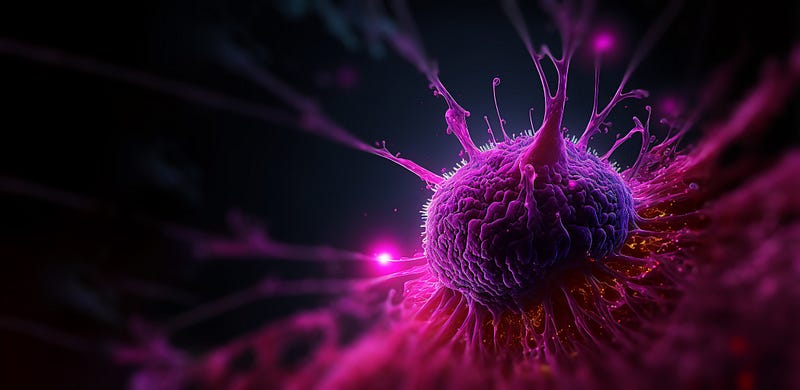
Cancer cell with tumor microenvironment. Adobe Stock Photos.

25 Ways to Reduce Your Cancer Risk

From walking to going to the dentist.

Every day, I meet with patients who have cancer. Several years ago, I was feeling a little down about it. Don’t get me wrong: I still get joy from helping people.

But a little voice kept reminding me of the missing part of the cancer management equation: Risk reduction. There is no doubt that I can do more.

I decided to do a couple of things. First, I would add a risk-reducing component to my dialogs with my dear patients.

Second, I would blog about wellness, focusing on evidence-based ways to reduce the risk of getting (or dying from) cancer.

Now, if you know me, you know that I have boundless energy. And that I am extraordinarily disciplined.

Incorporating risk-reducing strategies — 25 ways to reduce your cancer risk

I decided to write a wellness blog post every day. That was over 1,000 pieces ago. You may have read some of the pieces, such as this one:

I also wrote a series of books on breast, colorectal, and lung cancer. But my work is not nearly done.

Small lifestyle changes to improve longevity and health can lower cancer risk.

Four in 10 cancers may be preventable. 25 ways to reduce your cancer risk.

An estimated four in 10 cancers are preventable through modifiable risk factors.

I hope today’s piece inspires you. I suspect you are already doing many things right.

Let’s get to my top 25 evidence-based ways of reducing cancer risk, offered in no particular order. I will group the hacks by category.

1. Avoid risky behavior: Smoking.

I’ll start with something you already know. According to the U.S. Centers for Disease Control, Cigarette smoking is associated with 80 to 90 percent of lung cancer deaths in the United States.

Photo by Pickled Stardust on Unsplash

But did you know that pipe or cigar use can also increase cancer risk?

Or that cigarette smoking causes cancer of the mouth and throat, voicebox (larynx), esophagus, stomach, colon, rectum, liver, pancreas, lung, trachea, bronchus, kidney, bladder, and cervix, and blood (acute myeloid leukemia)?

Exposure to secondhand smoke increases the risk of developing and dying from heart disease. It also increases the risk of having (and dying from) a stroke.

2. Avoid risky behavior: Secondhand smoke exposure.

When I think about tobacco, secondhand smoke exposure does not frequently come to mind.

The U.S. National Cancer Institute offers that secondhand smoke from the cigarettes, pipes, or cigars of others can cause lung cancer. In the U.S., secondhand smoke causes 7,330 deaths from lung cancer and 33,950 deaths from heart disease annually.

3. Avoid risky behavior: Drinking too much alcohol.

Many of my Seattle-area patients drink, typically wine.

Alcohol consumption is associated with several cancer types, including head and neck, esophagus, liver, breast, and colorectal cancer.

Are the risks of light drinking high for an individual?

For example, moderate drinking may increase a woman’s breast cancer risk by a relative 1.2 times. If her risk had been 10 percent, it would have been 12 percent, an absolute increase of two percent.

Photo by Klara Kulikova on Unsplash

I will note that moderate alcohol use lowers the risk of kidney cancer and non-Hodgkin lymphoma.

The U.S. government’s Dietary Guidelines for Americans, 2020–2025, offers that individuals who don’t drink alcohol should not start drinking for any reason.

People who drink alcohol do so in moderation by limiting consumption to two standard drinks or less in a day for men and one drink or less in a day for women.

4. Avoid risky behavior: Toxin exposure.

Workplace toxins can increase cancer risk. Examples of toxic substances include:

For many of these, the risk is much higher among those who smoke.

5. Avoid risky behavior: Air pollution exposure.

You are probably not surprised that air pollution is associated with an increased risk of mortality for lung cancer. Up to 250,000 lung cancer deaths globally are related to pollution.

But you may be surprised to learn that pollution is also linked to breast, liver, and pancreas cancer.

Photo by Thijs Stoop on Unsplash

I was surprised to learn the magnitude of the increase is not small, at least for those exposed to ambient fine particulate matter with an aerodynamic diameter of less than 2.5 micrometers (known as PM2.5).

6. Avoid risky behavior: Excessive sun.

To be clear: We need vitamin D for health. That said, exposure to ultraviolet (UV) radiation causes early skin aging and damage that can lead to skin cancer.

The author chilling in Hawaii with a hat and sunscreen.

Here’s how I protect my skin from excessive sunlight:

  • I wear hats. Although I wear various ones, I should wear wider-brim ones in Hawaii, the Bahamas, or other sun-drenched places. The baseball cap I wear in the photo protects only parts of my skin.
  • I wear UV-blocking sunglasses, first to look cool and second to block ultraviolet radiation from the skin around my eyes.
  • I use sunscreen products with a sun protection factor (SPF) of at least 15. I try to apply the product’s recommended amount to uncovered skin 30 minutes before heading outside and apply again every two hours or after sweating or swimming.
  • I probably should wear long sleeves and pants, but I am willing to accept some skin cancer risks.

Remember: The sun’s rays are strongest between 10:00 a.m. and 4:00 p.m. They can go through windshields, windows, clouds, and light clothing.

7. Avoid risky behavior: Being sedentary.

Why is being sedentary bad? One reason that sedentary behavior is a health risk is that it can lead to weight gain.

Obesity is a risk factor for at least 11 cancer types.

The author is out for a hike in the Olympic Mountains of the Pacific Northwest United States.

Here are some ways I avoid being too sedentary:

  • I move around if I am using my mobile phone.
  • I stand or stretch during meetings (I am always surprised that I am the only one!).
  • I stand and move while watching recreational games.
  • I walk to my colleagues to chat rather than phoning or messaging them.
  • I replace screen time with social or strolling time.
  • Avoid risky behavior: Pesticide exposure.

8. Avoid risky behavior: Pesticide exposure.

Numerous investigations into the correlation between pesticide exposure and non-Hodgkin lymphoma and leukemia consistently revealed positive associations.

Researchers discovered the most consistent associations were for brain and prostate cancer.

Several studies demonstrated dose-response relationships, while a handful successfully pinpointed specific pesticides linked to these conditions.

9. Avoid risky behavior: Ultra-processed foods.

I try not to consume ultra-processed foods. They are associated with a higher risk of upper digestive tract cancer (including of the mouth, throat, and esophagus).

In the United States, a 2019 study estimated some 71% of the food supply may be ultra-processed.

A 2023 study showed that animal-based products increased risk by 1.1 times among ultra-processed food subgroups. Artificially and sugar-sweetened beverages raised risk by a similar amount.

The researchers did not link ultra-processed breads and cereals (or plant-based alternatives) with a higher cancer risk.

10. Avoid risky behavior: Radiation exposure.

As a radiation oncologist, I am proud of how we have helped achieve improvements in the long-term survival of children with cancer.

Today, 85 percent of children with cancer survive five years or more. This number is a huge increase since the mid-1970s when the 5-year survival rate was about 58 percent.

Photo by Senjuti Kundu on Unsplash

Yet, I am horrified: Radiation can increase cancer risk, especially among children. We are increasingly pulling back on the use of radiation therapy for pediatric cancer, but there is another risk you should know about.

Children are considerably more sensitive to radiation than adults. Some diagnostic scans contain radiation. CT scans are a good example.

It is important to stress that the absolute cancer risks associated with CT scans are small.

The lifetime cancer risk of cancer due to CT scans for children, estimated using projection models based on nuclear bomb survivors, is about one case of cancer for every 1,000 people who have a scan (with a maximum incidence of about one case of cancer for every 500).

Fortunately, today, we have pediatric scanning protocols that use lower doses of radiation in the CT scan. We are also more careful in not using CT imaging when possible (for example, for many with appendicitis).

11. Avoid risky behavior: Practice safe sex.

Another effective cancer prevention tactic is to avoid risky behaviors that can lead to infections that, in turn, might increase the risk of cancer. For example:

  • Practice safe sex. Limit the number of sexual partners and use a condom. The greater the number of sexual partners in a lifetime, the greater the chances of getting a sexually transmitted infection, such as HIV or HPV.
  • People who have AIDS or HIV have a higher risk of cancer of the anus, liver, and lung. HPV is most often associated with cervical cancer, but it might also increase the risk of cancer of the anus, penis, throat, vulva, and vagina.

12. Avoid risk behavior: Don’t share needles.

Don’t share needles. Injecting drugs with shared needles can lead to HIV, as well as hepatitis B and hepatitis C — which can increase the risk of liver cancer. If you’re concerned about drug misuse or addiction, seek professional help.

13. Get screened: Colorectal cancer.

Colon and rectal cancers are a leading cause of morbidity and mortality, especially in the Western world.

Colorectal cancer screening leads to a modest reduction in colorectal cancer mortality.
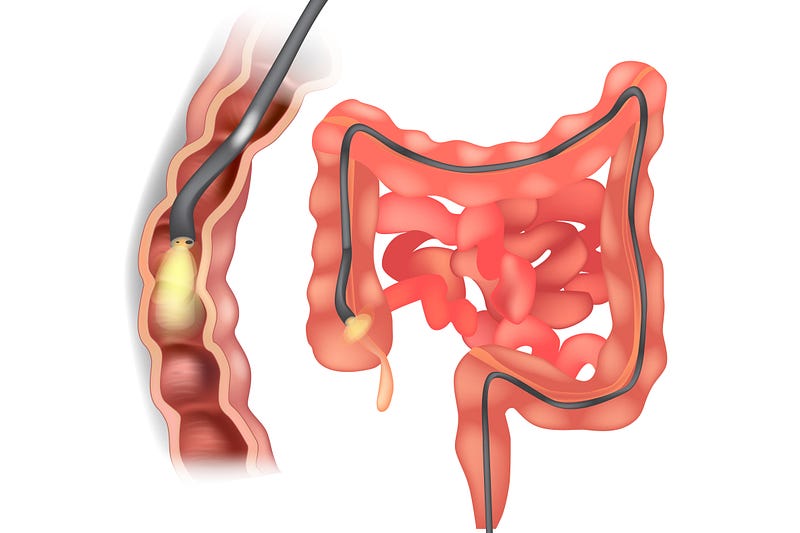
Colonoscopy. Adobe Stock Photos.

The U.S. Preventative Services Task Force recommends for those aged 45 to 75. The USPSTF recommends that clinicians selectively offer screening for colorectal cancer in adults aged 76 to 85 years.

The net benefit of screening all persons in this oldest age group is small.

14. Get screened: Breast cancer.

First, I know that breast self-examination cannot detect all cancers, even though the most common symptom is a lump. The cancer can develop without any outward symptoms.

If you discover an unusual mass or a troubling change in the breast, notify your healthcare provider immediately.

Early detection saves lives.

The main mammography benefits screening are a reduction in breast cancer mortality, years of life lost due to breast cancer, and morbidity of breast cancer treatment.

Here are the results of a meta-analysis of randomized trials:
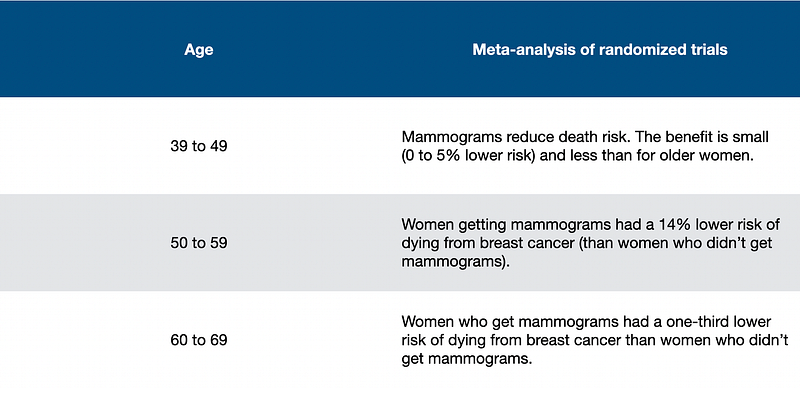
Adapted from U.S. Preventive Services Task Force.

15. Get screened: Oral cancer.

Oral cancer screening is an exam performed by a dentist or doctor to look for signs of cancer or precancerous conditions in your mouth.

The objective? To identify mouth cancer early, when cure rates are higher.

Most dentists do a mouth exam as a part of a routine dental visit. Medical organizations disagree on whether healthy individuals without risk factors for mouth cancer need oral cancer screening.

I like the idea of mouth exams, especially given the rise of non-smoking, non-alcohol-related tonsils and the base of tongue tumors. Human papillomavirus infection is the main cause of such cancers nowadays.

16. Get screened: Cervix cancer.

For my patients, I follow the American Cancer Society (ACS) guidelines for cervix cancer screening:

  • Women 25 to 65 should have a human papillomavirus (HPV) test every five years. If you cannot have an HPV test, the ACS recommends an HPV test in combination with a Papanicolaou (Pap) test every five years or a Pap test every three years.)
  • Screening can stop after age 65 as long as all tests over the preceding ten years have been normal and there’s no history of a pre-cancer or cervical cancer diagnosis in the past 25 years.
  • Screening stops after a hysterectomy (uterus removal) that removes the cervix unless the surgery was a part of treatment for cervical cancer or as cervical cancer prevention.
  • Anyone at high risk of cervical cancer should speak with their doctor about getting screened more frequently.

17. Get screened: Lung cancer.

You may benefit from lung cancer screening if you are 50 to 80 years old and currently smoke (or quit in the last 15 years).

In addition, you should have smoked an average of at least one pack per day for 20 years (or two packs a day for ten years).

Additional lung cancer screening criteria are available at the Fred Hutchinson Cancer Center site.

18. Get vaccinated: HPV.

Human papillomavirus is a group of 200 viruses. While they do not cause problems for the vast majority of us, infection with some high-risk types can cause genital warts or cancer.

For nine out of 10 individuals, the body controls the infection by itself. However, persistent infection with high-risk HPV types can cause cancers of the vulva, vagina, penis, anus, and mouth/upper throat regions.

HPV infection causes about five percent of cancers worldwide. Fortunately, vaccination against HPV can reduce the risk of these cancers.

Since the introduction of the HPV vaccine, cervix pre-cancer lesions, genital warts, and HPV infections have dropped. Infections with HPV types that cause most HPV cancers and genital warts have dropped 88 percent among teen girls and 81 percent among young adult women.

19. Be proactive: Sleep.

Sleep is a priority for me. I know that chronic insufficient sleep may increase my likelihood of developing dementia, heart disease, type 2 diabetes, and obesity.

Is there a connection between lack of sleep and cancer risk? Long-term sleep disruptions may raise the risk of some cancers.

Our bodies have a biological clock or circadian rhythm. This internal clock regulates sleep and numerous other functions.

Photo by Mpho Mojapelo on Unsplash

Still, nocturnal exposure to light over the years may reduce melatonin levels, promoting cancer growth. Some believe night shift work is probably carcinogenic.

However, the sleep disruption and cancer risk connection is controversial.

If you are a night shift worker

If you are a night shift worker, work to get enough sleep. Eat well and exercise regularly. Avoid tobacco use, and avoid excessive alcohol.

Of course, all of us should be doing these things.

20. Be proactive: See your primary care provider.

I plead guilty to not always getting in to see my primary care provider. But over the last several years, I have had routine check-ups.

Your primary care provider can be an excellent resource for determining optimal cancer reduction strategies, including screening.

21. Be proactive: Move more and sit less.

I exercise regularly. I know that physical activity is associated with a lower risk of cancer.

There is strong evidence that being physically active decreases the risk of postmenopausal breast cancer, uterus cancer, and colorectal cancer.

Physical activity decreases the risk of certain cancers. Adobe Stock Photos.

How much do you need to do to reduce cancer risk? It may be much less than you think.

An observational study (meaning lower-level evidence) showed that adults who incorporated about 4½ minutes of vigorous activity in short one- or two-minute bouts had a nearly one-third (30 percent) lower cancer incidence rate.

I agree with the U.S. Centers for Disease Control and Prevention recommendations:

Adults need 150 minutes of moderate-intensity physical activity each week and two days of muscle-strengthening activity.

Remember: No matter how much you move, some activity is better than none.

22. Be proactive: Maintain a healthy weight.

It can be challenging to maintain a healthy weight. Still, you may be surprised to learn that being overweight or obese is associated with a higher risk of 13 cancer types.

These cancers comprise 40 percent of all cancers diagnosed in the United States annually.

23. Be proactive: Eat more healthy foods.

I am trying to improve my diet.

But, it is challenging to research the relationship between food and cancer risk. Many studies are observational and do not represent high-level evidence.

Here’s the M.D. Anderson Cancer Center (U.S.) approach:

“Pack every meal with healthy and nutritious foods by filling at least two-thirds of your plate with vegetables, whole grains, fruits, and beans. Nuts and seeds are good, too. The remaining third of your meal is meat, fish, or animal products like cheese and eggs, or plant-based proteins like tofu.”

24. Be proactive: High risk? Consider genetic counseling and risk-reducing strategies.

I am fortunate: There is virtually no cancer history in my family line.

If cancer seems to be a recurring issue in your family, or if you or your relatives have had cancer at a young age or more than one type of cancer, it might be a good idea to consider talking to a genetic counselor.

These experts can help you understand if there’s a possibility that certain cancers are running in your family due to genetic factors.

They might also suggest genetic testing, which involves checking your genes for changes that could increase cancer risk.

Photo by Tyler Nix on Unsplash

This information can be valuable in making decisions about your and your family's health.

25. Be proactive: If high-risk, know your screening options.

If you are at high risk for getting cancer — for example, you have a breast cancer gene mutation (for example, BRCA1 or 2) that makes it likely you will develop breast cancer — you might consider risk-reducing strategies.

For example, a woman with a deleterious BRCA mutation might choose to remove her ovaries and tubes. She might also add a breast MRI to her mammogram screening.

Final Thoughts — 25 Ways to Reduce Your Cancer Risk

I know that no specific lifestyle maneuver is guaranteed to prevent cancer. But adopting a healthy lifestyle can help you reduce your risk for cancer and several other chronic diseases.

How many of the 25 ways to reduce your cancer risk do you practice?

Thank you for reading “25 Ways to Reduce Your Cancer Risk.”

Health
Wellness
Fitness
Cancer
Medicine
Recommended from ReadMedium