
25 Cooking Terms From A to Z: Beginning With P to Z ~ Part 4
Continuing the 4-part article series discussing cooking terms that newbie cooks should get to know. This is Part 4. This is the final article in this series.
Part 4: Cooking Terms From P to Z
20) profiterole
21) silver dragées
22) steep
23) truss
24) water bath
25) zabaglione

♦ Profiterole
♦ Profiterole: A profiterole is a small cream puff, served as an appetizer, hors d’oeuvre or dessert. It can be filled with a sweet or savory mixture. Although most people prefer the sweet. One chef made the cream filling with passion fruit. People find many reasons to serve a profiterole. It could show up as desert on a table set for Ramadan. For sure they will show up during the Christmas holiday season. Several could be placed on a plate, each one with a candle and used to celebrate a birthday. It’s not required but for the sweet profiterole, people love to cover them in chocolate. No worries. You can make them gluten-free.
♦ Silver dragées
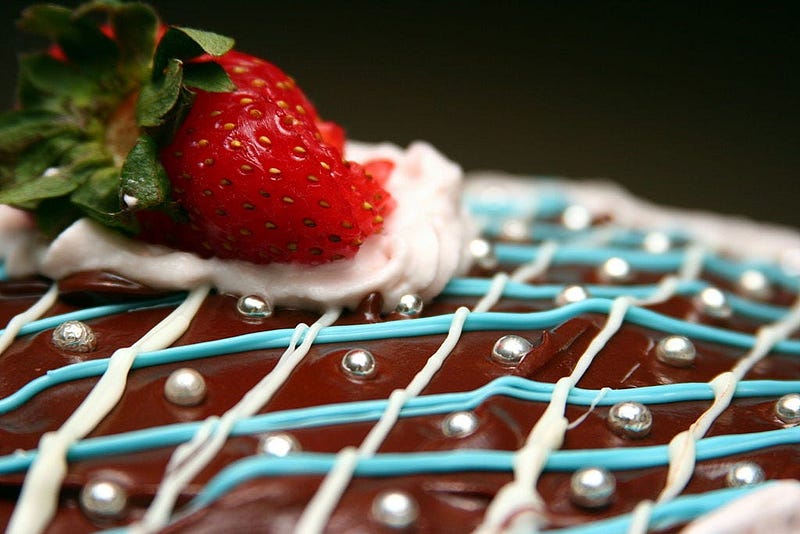
♦ Silver dragées? No. They are not silver baby dragons. But a good fantasy writer could work with that idea. They are candies. And evidently, a good cook or chef already worked with the idea. That’s why we know of tiny ball-shaped silver-colored candies that are called silver dragées. These treats also used to show up around Christmas time. Used to. But no more. Well! They show up but with a warning.
FOOD WARNING!! The US FDA banned silver as a food coloring additive.
What??!! When?? Uuhh … it’s been banned since 1906. But just in case you weren’t in the information loop, you can read all about it at Silver sprinkle dragees are not safe to eat, says FDA | Today.com.
So! Even though they are not baby dragons who will grow up to become big dragon … BEWARE OF THE DRAGÉES!!
♦ Steep
♦ Steep: Anybody who drinks tea knows what “steep” means. Nevertheless, there is a food blog I frequently visit for all kinds of information on cooking techniques and for recipes, etc. So in this article, this cooking term is being used an an excuse to direct you, the reader, to this marvelous website. If you are a loyal food blog reader you probably have already visited. If not, then … per Spruce Eats, the definition of steep is “To allow dry ingredients, such as coffee, tea, or spices, to soak in a liquid until the liquid takes on the flavor of the dry ingredient.” That’s plain enough. If you’re preparing a dish or a drink and you see the word “steep” … you know what to do. Stay at that site and you can learn about tea-infusion as well.
♦ Truss
♦ Truss: Ever watch a chef preparing poultry or a roast and they take a string or twine along with some scissors and tie up the meat! The correct cooking term for that activity is “truss”. No fuss. Just truss. According to Food & Wine you can use dental floss to truss. No really! There’s a video where the chef is teaching you how to do that.
♦ Water Bath
♦ Water Bath is a French culinary cooking term and it sounds so much nicer when you say it in French. Bain-Marie (pronounced ban-ma-ree). If you’re cooking, doesn’t that sound much nicer than “water bath”?
A water bath, is not be confused with an ice bath, even though both cooking techniques use water. An ice bath is intended to stop the cooking. A water bath is used to gently cook a certain food. If you Google the phrase “food cooked using water bath technique”, the organic search results will include “sous-vide”. If you go to YouTube and put the words “water-bath, cooking” in the search box, “sous-vide” will still show up in the search results.
This particular “water bath” story was not found on the Internet. Although after I tell you via this article, perhaps people will be able to search for it.
When I was a newly wed, many moons ago, my cooking skills were “below average”. However, I had invited my sister and her friend to dinner and I wanted to make a good impression. I slaved in the kitchen for an entire day! I don’t even remember what the meal was that I cooked because it was the dessert that I baked that impressed my sister’s friend the most.
Here’s what happened. Another friend told me that if I used an instant cake mix, I should add a box of instant pudding into the batter. My friend assured me that the cake would be very moist. So I put a box of instant pudding in the instant cake mix batter.
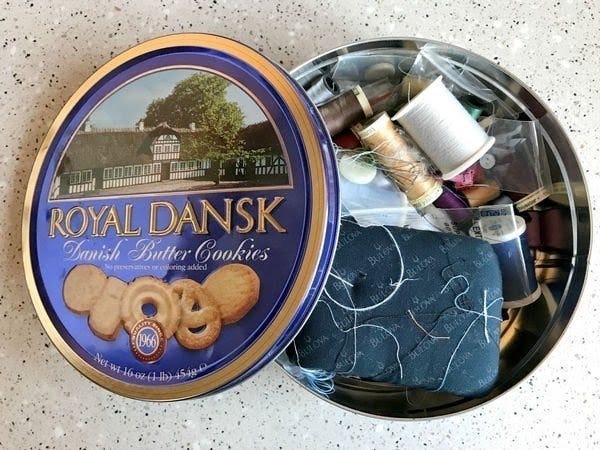
Did I say I was newlywed at the time? Yes, I did. Sometimes newlyweds don’t always have proper pots and pans for baking. For my cake pan, I used an empty cookie can. Do you know the can that the Danish butter cookies come in? (Image below.) If you know what I’m referring to, then you know that you eat up all the cookies but you always keep the can. Because the can be used again and again and again, for anything and everything … except … most people don’t use it for baking! Yes, I know it was a cookie can and not a cake-baking pan. But it was round, I was a newlywed, and it was what I had, so used it!
Long story short. Since I knew it was not a “real” baking pan, I was afraid that if I just stuck it in the oven at 350 degrees, the bottom of the cake would burn. So I had a square pan that was large enough for me to sit the round can inside. I put the round can filled with the cake batter into the square pan and then I poured water into the square pan. In short, even though I did not know what I was doing, the technique I used was a “water bath”.
My sister and her friend were very impressed with the meal. My sister said that her friend had a sweet tooth and that no meal was ever complete without dessert. So I allowed my sister’s friend to cut the cake that I had baked in the cookie can.
She cut the cake and exclaimed … gleefully I might add … “There’s pudding at the bottom of this cake!”
I was shocked! I had no idea the cake would come out that way! (O.o)
So if anybody ever asks me if I know what a water bath is … I’m like … “Oh yes! I know!!”
(Just a little foodie humor and a true story. Hope you enjoyed it.)
♦ Zabaglione
♦ Zabaglione: This is the last cooking term in the article for this series. After that story about the water bath, you’re probably glad to have reached The End.
Zabaglione is a dessert and it’s made with wine and beaten eggs. I often hear the chefs say when they’re cooking a dish “If you don’t want to use wine (or liqueur), just use broth.” That substitution rule does not apply when making Zabaglione. You either use wine or opt for a different dessert. It’s Italian so I’m sharing the cooking video of one of my favorite YouTube chefs, Laura Vitale. She described this dessert as halfway between a pudding and a mousse.

Are you a newbie cook? Hope this helps.
♦
Official blog Food Ways Presented by Everyday Exotic Spices.


