
My Aging Body . . .
From caring how it looks to caring more how it functions.
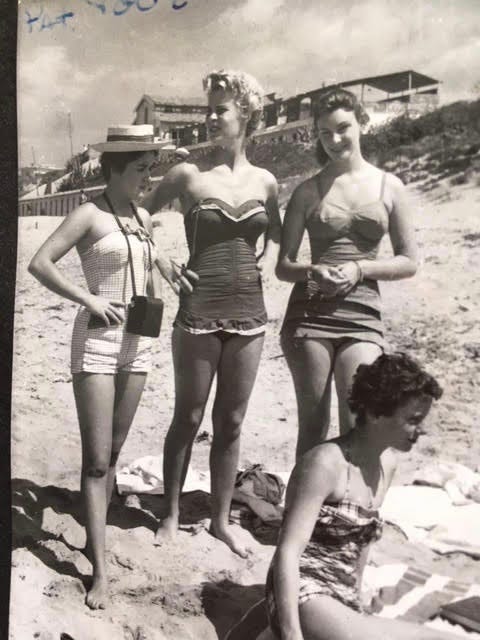
Ithink it was around the age of 13 or 14 when I started to believe that my body was flawed. By the time I was 16 (above, left), I continued to be critical of how it looked: too short, boobs too small, tummy not flat enough. It became important to try to approximate the “standard,” represented by my good friend Tove, the stately blond in the middle: tall, perfectly proportioned, a head-turner in every room she walked into. No way. I felt short, dark, more like a troll.
My adolescence was riddled with diets, sit-ups and dissatisfaction. I knew no woman who appeared to be exempt of this self-scrutiny (even Tove) and self-criticism. There was an inordinate amount of time spent on trying to perfect the way we looked according to this standard and not a lot of time spent on appreciating the way we actually looked.
I somehow made it through several decades being attractive enough to date a whole bunch of guys, marry (a couple of times), have children, and be interested in finding uses for my body other than as an ornament.
The turning point, at least in my belief system, occurred when I was in my 40s. I had been teaching at a private girls’ high school (now there was a good place to observe the ravages of this twisted obsession with looks! As one person commented: “You won’t find anorexia among the poor.” Bulemia was almost de riguer among the wealthy teenage girls.).
I taught, among other things, photography, and was assigned the task of photographing the faculty for the yearbook. I made a practice of giving each faculty member an 8x10 print of the photograph of themselves, thinking that this gift would be met with appreciation and gratitude. But I was hurt and dismayed to find that when I would hand the person the print, he or she would make some kind of horror-stricken face and make a comment about how “awful” they looked.
Standing in front of my sink one day doing dishes, I was wallowing in my righteous indignation and hurt that these teachers should be so ungrateful when I had the thought: “Well, how are you when it comes to photographs of yourself?” Uh-oh. Not great.
And then, like a flash of lightening, it was as if I heard the Voice of God booming from above saying: “How DARE you! How dare you be critical and ungrateful for this miracle of divine engineering I’ve given you, a body that’s relatively pain free, that has blood that circulates and a heart that beats predictably and eyes that see, ears that hear and a voice that can hum to a baby and scream against injustice and offer thanks for this incredible gift. How dare you!”
From then on, I’ve been far more focused on appreciating my body, and it has served me well. I am still grateful, although age is forcing me to face what I’ve suspected all along, that life is, primarily, about loss. A lesson we have to learn or we can’t be ready for what comes next, and there’s always a “next.”
Some of the physical losses I’ve had to accept in recent years are harder than others. Most of my life I’ve been a pianist . . . taught for 36 years, performed, was director of a community school of music for awhile. About eight years ago, I had a double ear infection after never having had an ear infection in my life.
These ear infections left me with hearing loss that require two hearing aids. Hearing aids make treble tones unpleasantly tinny for me, and the irony of being a musician that can’t hear enabled me to instantly identify with Beethoven (and appreciate the twisted sense of humor of the hearing aid manufacturer who has the hearing aids play the first four notes of Beethoven’s 5th Symphony when the batteries get low!)
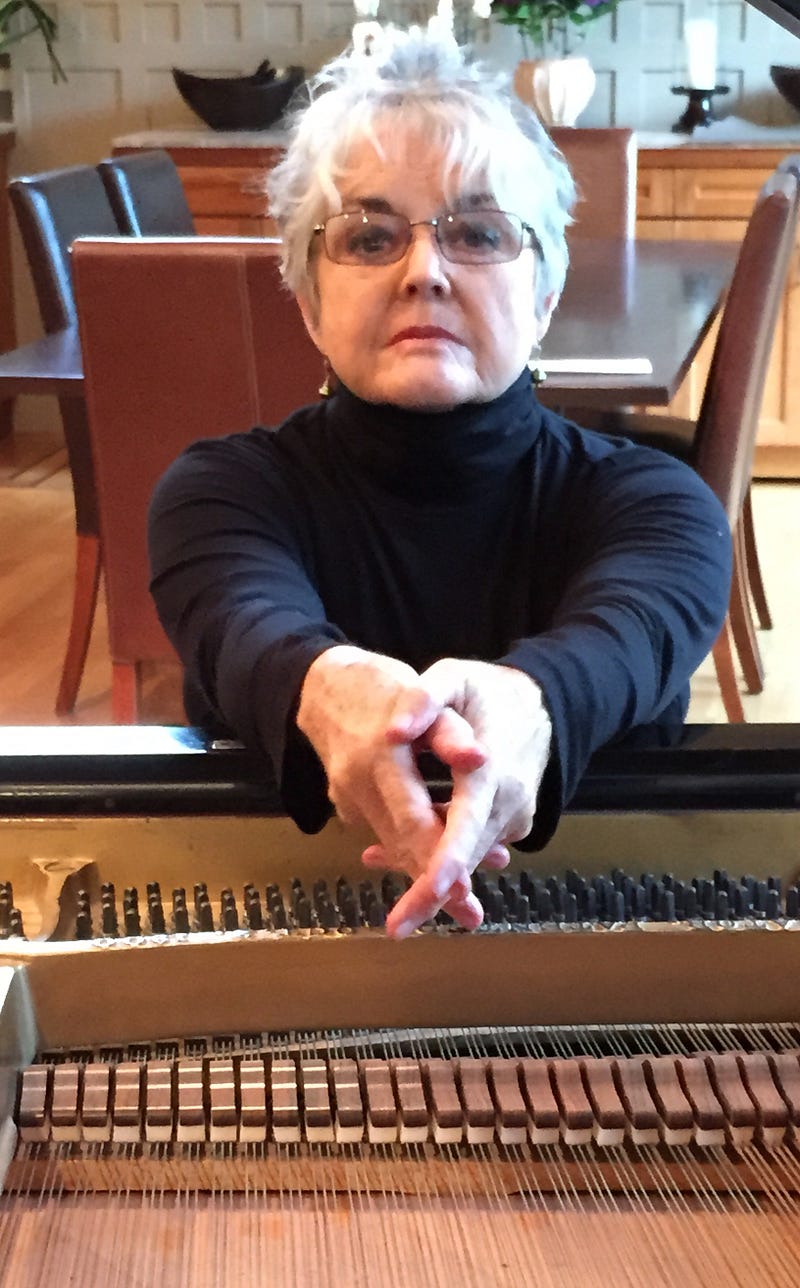
Aging has necessitated increasingly frequent episodes of acceptance. Joint pain revealed the need for a bionic right hip, MRIs revealed expansive arthritis at sacral, lumbar, thoracic and cervical levels and pesky plaque deposits have required surgery for an arterial stent and carotid artery endarterectomy.
I have a team consisting of a Primary Care Physician, cardiologist, neurologist, dermatologist, rheumatologist, orthopedist and psychotherapist. I feel great in spite of a nasty bout with Lyme disease for two years some time ago and vitamin B6 toxicity which produced peripheral neuropathy, both of which have subsided or disappeared.
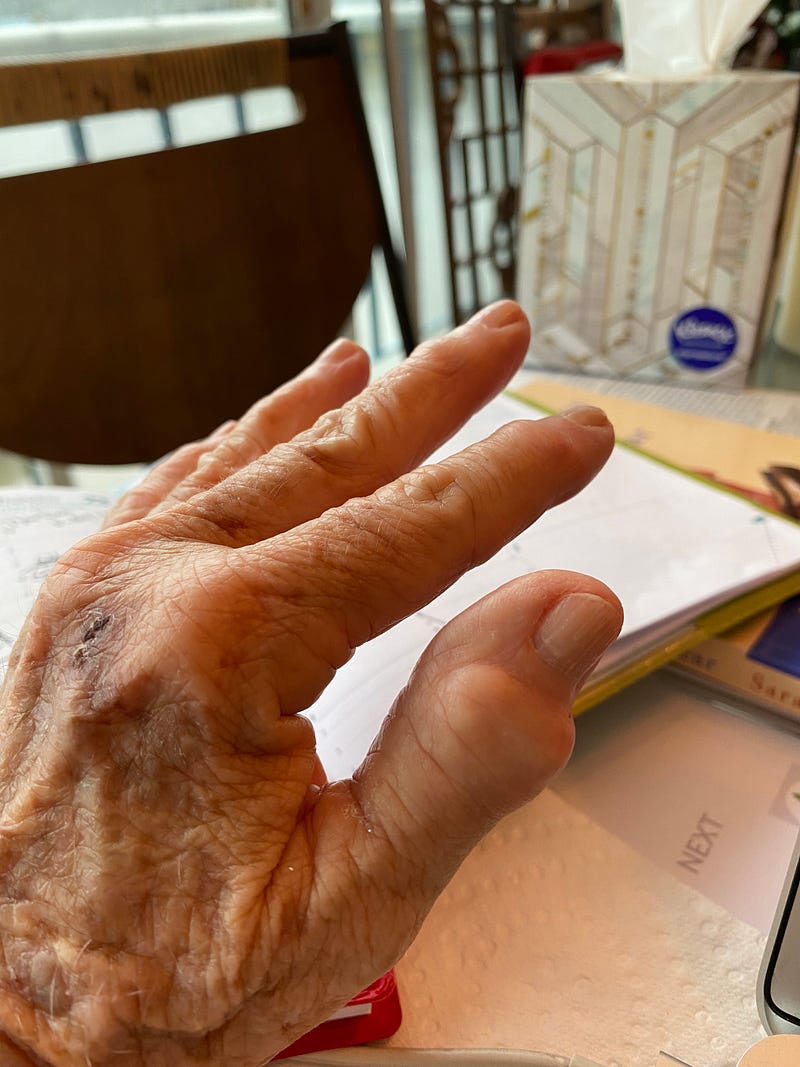
The latest loss is a little harder to take: in the period of one month, my thumbs first, then other fingers, have developed nodes that make playing the piano, my solace and comfort for the past 80 years, difficult.
So slowly, slowly, I learn about loss. Attachment. Acceptance. And still . . . I can say what I hope will be my dying words:
“Thank you.”


