21st century Leaders — From A to Z
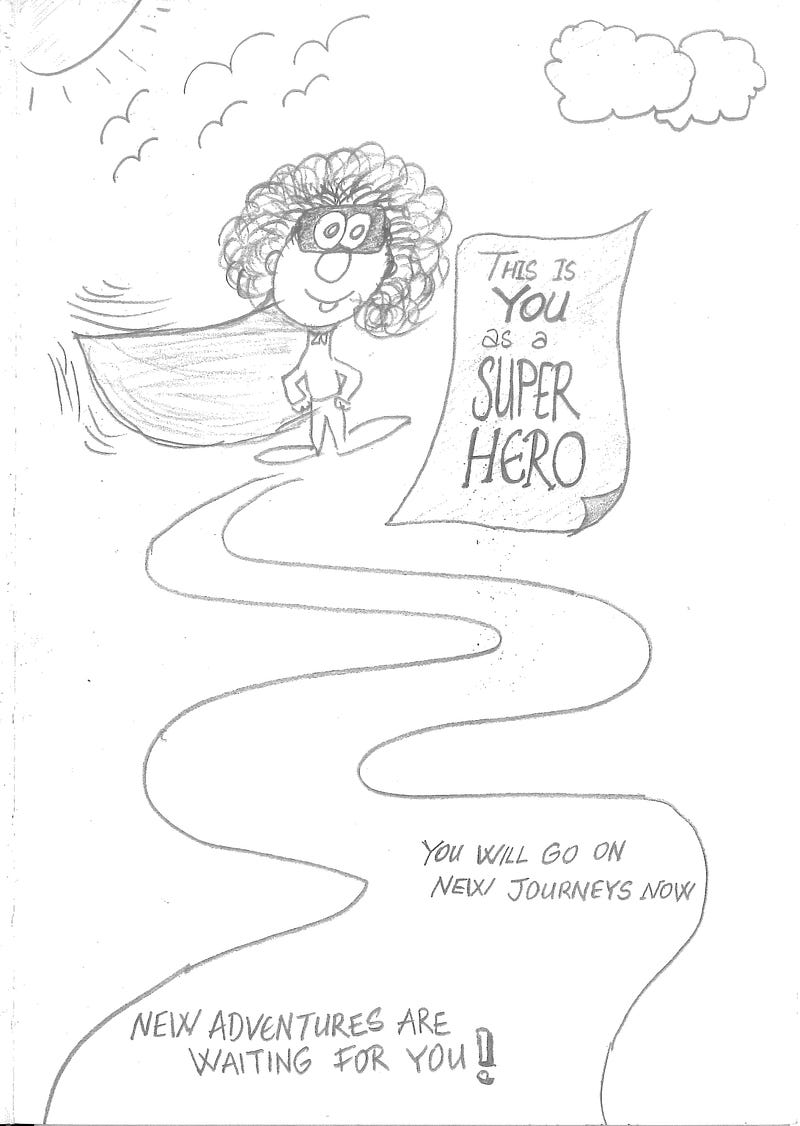
Leaders of tomorrow are expected to be super-heroes — there has never been more pressure on leadership
21st century is an uncharted territory for leaders who are setting sail for new horizons:
Artificial intelligence, trade wars, globalization, climate emergency, hyper-competition, digitalization, mergers and acquisitions, disruptive technological advances, an interconnected and volatile world economy, workforce mobility, and cultural diversity.
Organizations and leaders are continuously resorting to new anchors and new flags to navigate these uncharted territories of change:
Open innovation, mass collaboration, corporate social responsibility, business ethics, workplace spirituality, global talent management, digital creativity, sustainability, quantum thinking, and design thinking; to name a few.
As a result of these shifts, the old leadership models based on competition and hierarchy that served us in the past are not well suited to the global complexity, rapid change, and multifaceted challenges of the new era.
We need new leaders — 21st century leaders — who can embrace the unique challenges of the 21st century.
Think about Elon Musk and the impossible expectations placed on him.
Below are the heart-sets and mind-sets that characterize (what is expected from) 21st century leaders — from A to Z.
AUTHENTIC:
21st century leaders feel deeper responsibility and show genuine concern for people around them. They engage in meaningful, courageous, authentic, inspiring conversations with people. They genuinely care about other people and they lead from the heart. They are facilitators whose role is to create safe spaces where people can relate to one another authentically. They engage in constant self-questioning and self-discipline, demonstrated by constantly being alert for the “ego trap” (selfishness, arrogance, false pride, and egoism).
BENEVOLENT:
21st century leaders leave a legacy for people around them. They want to leave the world a better place. They try to create a caring community with strong and trusting relationships. They have a sense of dedication and devotion for their community. They foster shared humane values to build a common future of wellbeing, prosperity, and compassion.
CREATIVE:
21st century leaders use creative tension and new ideas to foster positive change. They see intentionally, know intuitively, and develop the right hemisphere of the brain. They demonstrate non-traditional and non-linear thinking patterns. They utilize reflective and artistic spaces, reflect through music and art, and encourage people to do so. In the words of Blaine Lee, “The great leaders are like the best conductors — they reach beyond the notes to reach the magic in the players.”
DYNAMIC:
21st century leaders are ready for the dynamism inherent in the business world — they are ready for a fast-paced journey of constant change, evolution, and potential conflict. They are not afraid to try out new things, stretch their thinking, and push their abilities. They go beyond their comfort zones and convenience, and they always force themselves to pursue new challenges.
EMPHATIC:
21st century leaders strive to understand and empathize with others. They have a deep desire of special bonding with other people at work. They recognize people for their special and unique spirits. When they are listening, they get in touch with one’s own inner voice and seek to understand what one’s body, spirit, and mind are communicating. They have phenomenal qualities of empathy, emotional intelligence, passion, and spirit to be able to inspire and lead people.
FLEXIBLE:
21st century leaders demonstrate greater flexibility and competence in dealing with new challenges. They balance competing demands and tradeoffs. They design flexible work arrangements. Finally, they practice empowerment by not telling their people how to do things, but letting them to excel with their performance.
GLOBAL:
21st century leaders work well with culturally different people, who may have different motivations, work styles and values. They feel confident overcoming language or cultural barriers. They value the richness of diversity in the global village. They find new ways to honor and respect the very real pluralism of ideologies, cultures, ethnicities, religions, lifestyles, and identities that exist in the world.
HARMONIOUS:
21st century leaders nurture and support harmonious relationships in their workplaces. They recognize that respecting differences can foster growth and creativity. They develop harmonious relationships are based on trust and mutual responsibility.
INNOVATIVE:
21st century leaders are innovators and dreamers. They dare to dream up new possibilities for the organization. They know that imagination is more important than knowledge. They design and create blueprints for better products, better services, and better workplaces. They act as advocates and pioneers of new ideas, values, and lifestyles in the world of work.
JUST:
21st century leaders demonstrate equity. They try to put equity at the center of business through just decision making based on merit and performance. They stand up for what’s right with ultimate integrity and they pioneer principled thinking. They feel indifference towards being rewarded; since they do not expect any gifts, or returns in response to own efforts or service.

KEEN:
21st century leaders function in a mode of appreciative inquiry. They reach out, touch and inspire organizational citizens to make a difference in the world. They help people to envision and discover a shared vision for common good.
LOVING:
21st century leaders show that they love people around them. They engage the hearts of their colleagues. They develop trusting relationships, listen with attention, and take people’s feelings into consideration. They create compassionate workplaces that foster human linkages and lasting friendships.
MULTICULTURAL:
21st century leaders appreciate and value multiplicity of cultures in the workplace. They respect diverse people, build trust, and communicate openly. They believe that creativity and excellence are enhanced through diversity of cultures, perspectives, and lifestyles.
NURTURING:
21st century leaders are committed to nurturing people. They care about the growth of each and every individual in the organization. They recognize the responsibility to nurture the personal, professional, and spiritual growth of employees. They expect the best from people and celebrate individual and group success.
OPEN:
21st century leaders build open communication, mutual trust, and a sense of collective ownership in the organization. They create and maintain a free flow of information and facilitate fluidity and flexibility in group processes. They create supportive and open environments that facilitate the sharing of information and value each person’s contribution.
PRINCIPLED:
21st century leaders have a principled stance and a rich moral fiber. They have a clear sense of long-term vision and shared humane values. They have strength of character which is felt miles away. They walk their talk and are aligned with their core values. They demonstrate responsibility, accountability, and transparency in their actions. In turn, people trust, respect and listen to them.
QUANTUM:
21st century leaders have a quantum perspective and a holistic understanding of human systems. They recognize the spiritual connectedness of all life. They enhance the quality of life and preservation of nature by understanding the interdependent relationship between human and natural systems. They take the whole system into account with all its cyclicality, interdependence, and complexity; thus they can view most situations from a more integrated position.
REFLECTIVE:
21st century leaders are self-aware and reflective. In the middle of all pace and struggles, they first slow down and reflect. They take a deep breath and pause. They reflect on themselves and the meaning of work. They acknowledge and use “mistakes” as opportunities to learn and reflect. They are in a constant search for a deeper sense of meaning, self-discovery, and self-awareness. Finally, they integrate and balance body, mind, heart, and soul at work. They try to achieve balance in emotional, spiritual, and physical aspects of life; recognizing the connectedness of all life.
SERVANT:
21st century leaders act as servants for people around them. They are committed to serving the needs of others. They ensure that other people’s needs are being served. They choose partnership over hierarchy; empowerment over dependency; and service over self-interest. They embody and model the search for wholeness, love, peace, and fulfillment; emphasizing social and spiritual responsibility toward the community and the world.
TRANSFORMATIONAL:
21st century leaders initiate change transforming themselves, their groups and institutions. They inspire employees to be fully engaged, creative and energetic. They create positive environments that propel their organizations to new levels of success. They follow Mahatma Gandhi’s advice: “We must be the change we wish to see in the world.”
UNIVERSAL:
21st century leaders have a universal philosophy of connectedness and compassion. They strive to create a supportive environment where people can thrive and live in peace with one another. They want to create communities of reciprocal care and shared responsibility where every person matters and each person’s welfare and dignity is respected.
VISIONARY:
21st century leaders seek to nurture their abilities to “dream great dreams.” They understand the lessons from the past, the realities of the present, and the likely consequences of their decisions for the future. They view most situations from a more integrated, holistic position. They synthesize, map, and understand the big picture; by using systems thinking and building connections among the parts.
WISE:
21st century leaders have wisdom and integrity. They interpret the universe and their own roles therein. They articulate with authority, eloquence, and depth of insight. They engage in constant questioning and reflection to make responsible and conscious choices that benefit all stakeholders and future generations. They have an ability to synthesize and bridge gaps, paradoxes, and different forms of thinking. They can easily transcend paradoxes or reconcile differences through higher-order thinking.
YEARNING:
21st century leaders are full of dynamism, courage, and positive energy. They go against the crowd. They are eager to venture out of their comfort zones and take risks inherent in managing change. They take the road less traveled. They have the courage to be first, to be different, to speak out, to act, and to fail.
ZEALOUS:
21st century leaders are passionate agents of positive change. They are effective in inspiring and mobilizing people. They have a sense of idealism conveyed through powerful stories and metaphors. They revive a sense of civic vibrancy or engagement lacking in the lives of many people. They have very strong patience and resilience at times of crisis or challenge. Last but not least, they are in a constant striving and search for a more benevolent and transcendent self (i.e. a more tolerant, considerate, sincere, and compassionate self).

21st century leadership is not and should not be ‘business as usual’.
I call for a larger vocabulary of leadership which is enriched and nurtured by different traditions and disciplines of humanity; much larger than the conventional paradigm dominated by efficiency and power, and driven by short term goals and profit maximization.
I dream of conceptualizing leadership performance in much broader terms than efficiency; such as legacy, fulfillment, contribution, positive impact, and service.
Our leadership dictionary needs new definitions, fresh and creative thinking, and a more interdisciplinary outlook.
We should feel more comfortable in borrowing terms and concepts from the worlds of arts, humanities, spirituality, and philosophy.
Leadership in the twenty first century will be about embracing followers as whole persons acknowledging them not only with their cognitive faculties, but also with their social, emotional, physical and spiritual faculties.
Leadership in the twenty first century will be about engaging hearts, minds and spirits of employees.
Leadership in the twenty first century will be about sharing enthusiasm, love, concern, dedication, and passion for making a positive difference in the lives of people.
We need more inspiring stories and cases of 21st century leaders to analyze patterns of extraordinary moments or events in their lives.
Fahri Karakas is the author of Self-making Studio. You can explore more here.


