The Profit Motive Drove Us to the New World but It Can’t Drive Us to Colonize Space
The economics of space colonization
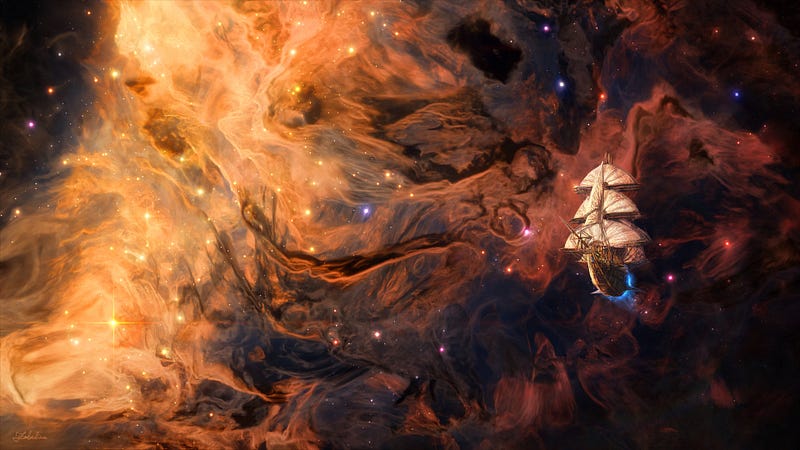
The inner solar system is home to virtually unlimited resources, but they cannot benefit us here on Earth. An influx of precious and rare-Earth metals into the world markets will cause prices to collapse, and with the astronomical cost of extraction, the enterprise is not worth it.
Earth’s dwindling resources cannot sustain our lifestyle much longer because the creation of wealth is linked to the destruction of our habitat. The world’s economy is so intimately entwined that even so-called clean industries contribute to climate change by enabling polluters — which could not exist without high-tech and finance.
Moving all contaminating activities to space has been proposed before, but no profit is to be made. Billionaires will not pool their resources to clean the environment that their activities had a hand in poisoning. Our short-term profit system won’t absorb the cost of cleaning our planet.
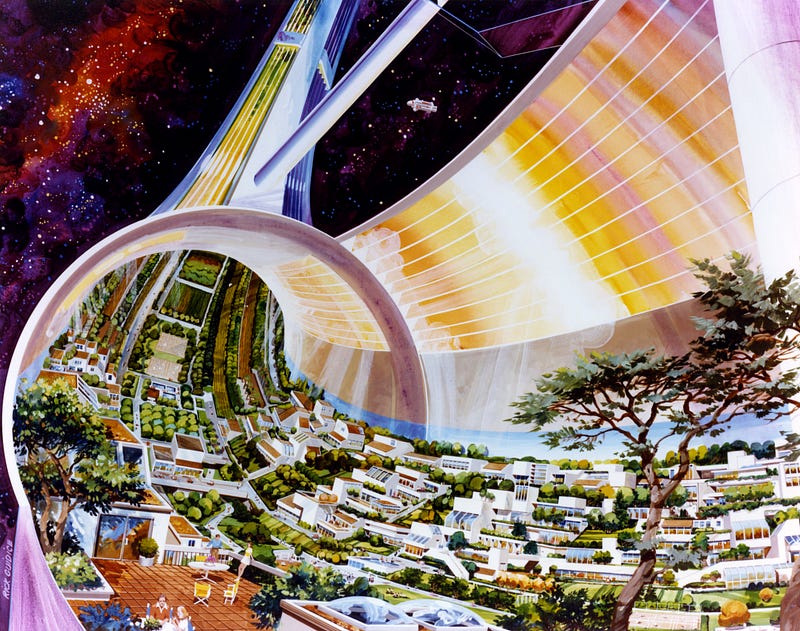
Eventually, we’ll be able to house more people inside rotating habitats around the sun than all “habitable” planets in the entire Milky Way.
Colonizing the high frontier
As life continues to get harder and dicier on Earth, people might start venturing into space. The incentive of a better life will drive them, just as it lured many of the original settlers to the New World. But to conquer the high frontier, whose benefits will not materialize for generations, a new economic paradigm is needed.
Space-bound infrastructure combined with a vast influx of resources will lead to new industries and discoveries. Innovation will spark technologies and materials only possible in zero gravity, propelling the human race forward.
But if people are expected to work 80-hour weeks with the gains going to an entrenched ruling class few will come, and even fewer will stay once they realize they’ll never get a chance to become part of the elite.
Only true egalitarianism will allow a permanent and stable society to coalesce. When survival isn’t an ever-present worry, individuals can focus their creative brainpower and become productive members of society.
“A hundred years ago, it was the poor and destitute, or refugees, who sought to live in space. Now it’s…everybody! Impoverished middle-class families, tired of living paycheck to paycheck in backbreaking poverty-trap jobs, are flocking to space and seeking a piece of the post-scarcity society…just as people like me once flocked to the United States in search of the American Dream” — Excerpt from my novel K3+
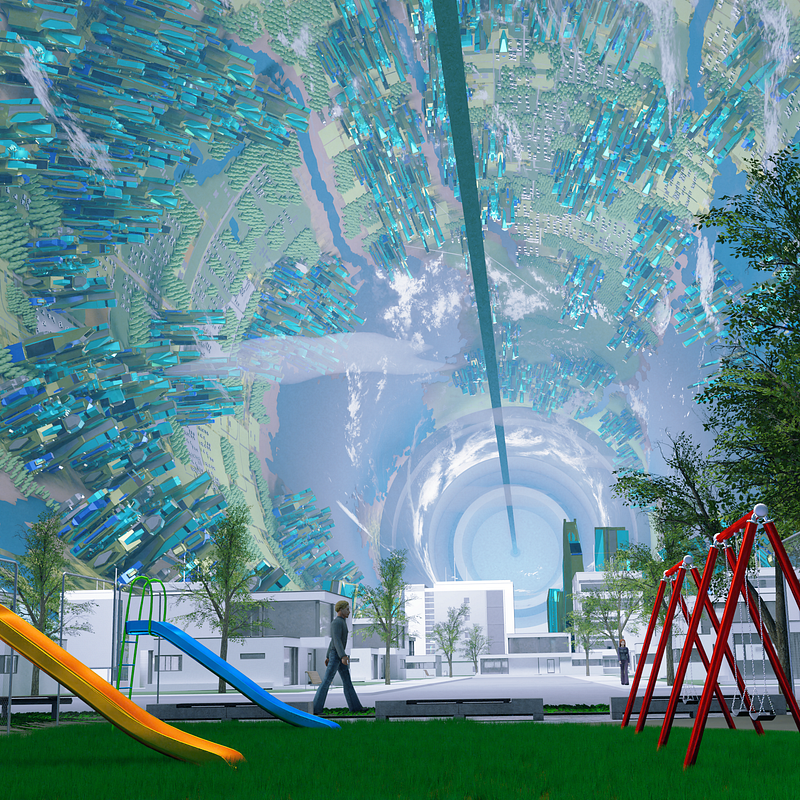
What will people do in a society with easy access to far more energy and raw materials than can be used, and where most of the production is automated?
Space dwellings
Rather than attempting to tame the harsh environment of Mars, which will claim many lives, we must build rotating habitats closer to Earth where there’s plenty of solar energy. These cylindrical structures that perfectly replicate our planet’s gravity and atmospheric conditions require no adaptations to the human body allowing people to live in space far more comfortably than on the red planet.
The first few of these habitats will be small thousand-inhabitant colonies of researchers and engineers. Within a century, they will pave the way for constructing island-sized settlements capable of housing millions each.
Although the infrastructure required to build such megastructures will take decades to develop, the construction of subsequent habitats will proceed at a much faster pace.
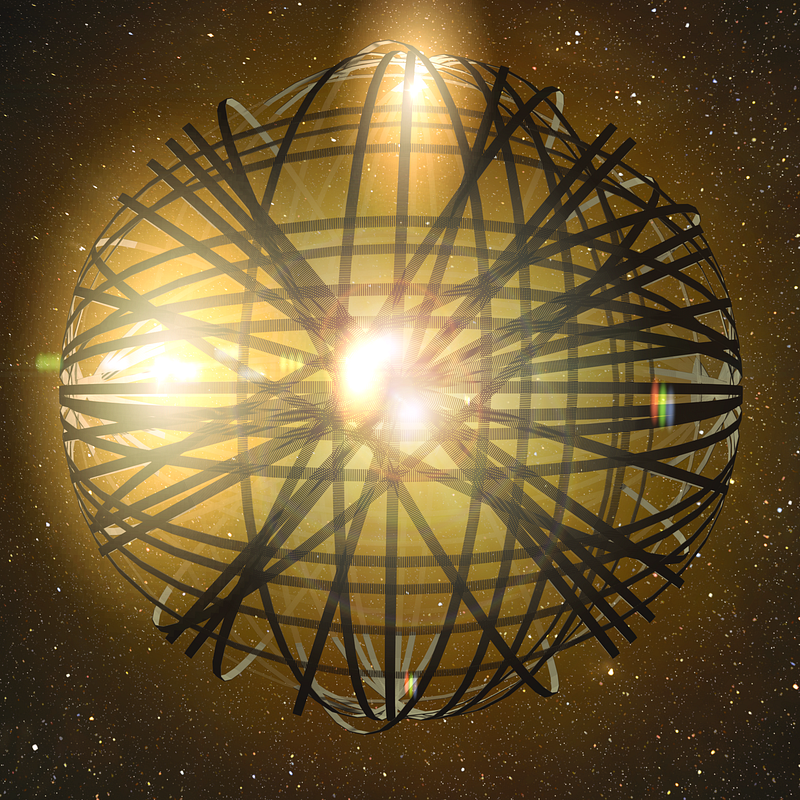
Within a few centuries, newly developed technologies and materials will enable the construction of continent-sized rotating habitats, each capable of housing billions. Eventually, we’ll be able to house more people inside rotating habitats around the sun than all “habitable” planets in the entire Milky Way.
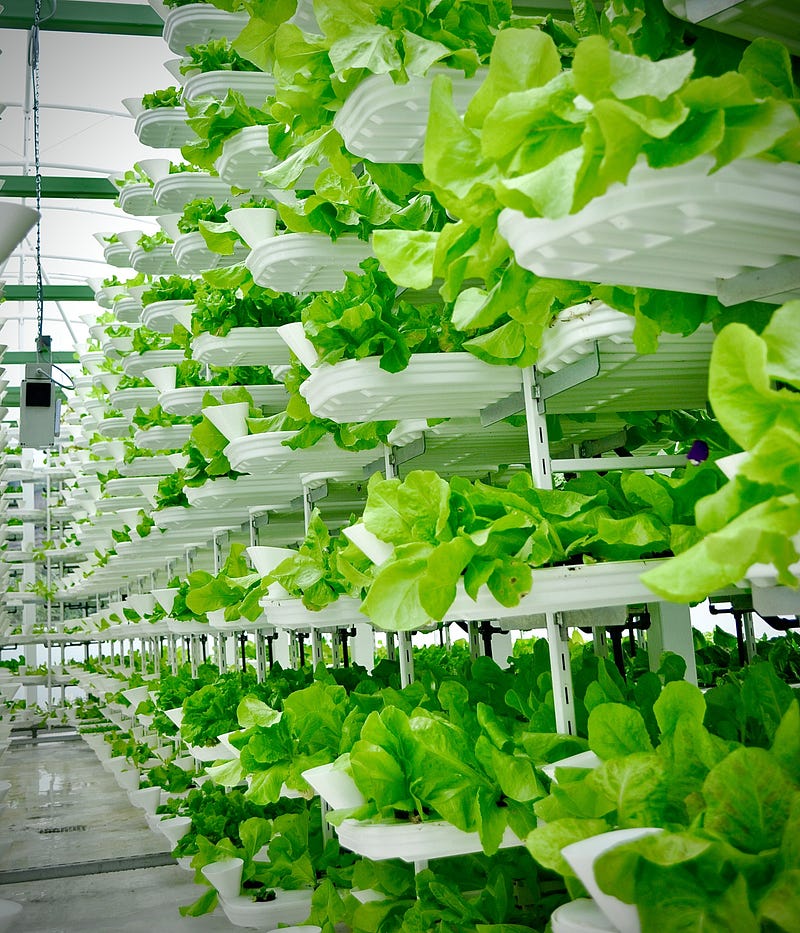
Vertical farming with aeroponic irrigation holds the key to feeding billions with a fraction of water and farmland.
The case for trillion people population
It’s widely believed that immortality will become a reality within decades. With fewer deaths, our population will grow even faster. What would you do if living forever in a twenties-looking body, immune to age and disease, was commonplace? If resources are not a constraint, and there are no government-imposed restrictions, most will have larger numbers of children.
Many of the greatest geniuses in human history — Faraday, Ramanujan, Fraunhofer, and Pauling, to name a few — rose from abject poverty. Which begs the question of how many other geniuses were left behind never having the opportunity to reach their full potential?
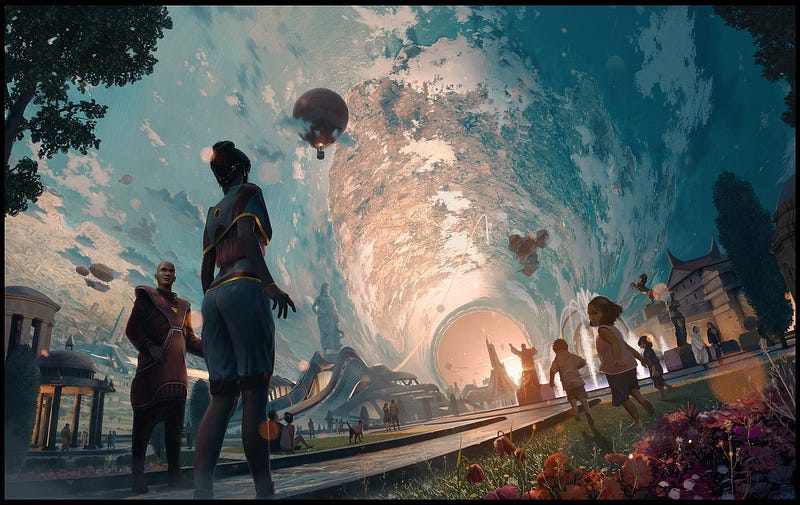
Imagine the contributions a trillion people will make in a post-scarcity civilization. Discoveries leading to new technologies that will make life even better, amazing works of art, answers to the most fundamental questions about the universe, no wars nor crime.
“The design of new dishes and inebriating beverages had become a form of art. Billions were dedicated to it. With so many ways collagen crosslinks could be arranged to bind protein, food development was taken a step beyond DNA enhancement. Engineered protein derivates that weren’t purely animal or vegetable anymore, but with irresistible taste and texture, had been created.” — Excerpt from my novel K3+
Post-scarcity economics
What will people do in a society with easy access to far more energy and raw materials than can be used, and where most of the production is automated? There’ll still be a need for a limited number of jobs in which creativity is a valuable skill: fashioning new designs, overseeing production, government, healthcare, education, and maintenance.
Rather than allowing large swaths of the population to struggle, which will lead to crime and unrest, it makes sense that basic needs — like housing, food, and healthcare — become part of the individual bill of rights.
If people no longer need to work for a living many will spend their time in recreational activities but a sizable segment of the population will create works of art, make scientific discoveries, or dedicate their lives to study and improve themselves.
Building enough rotating habitats in space to house billions will take centuries but our civilization might not last that long.
Space enabling technologies
Vertical farming with aeroponic irrigation holds the key to feeding billions with a fraction of water and farmland. We are beginning to grow a variety of animal products (including meat, fish, poultry, and dairy) in vitro without raising, enslaving, or sacrificing other living beings.
Closed-loop technologies allow cities to reclaim water for human consumption and recycle air onboard the International Space Station. The ESA is already working on the next-generation closed-loop system that will recycle all human waste. It will take in exhaled air and other human secretions, then use bacteria, algae, and plants to produce drinkable water and breathable oxygen.
Within decades, these technologies will mature and scale to allow the creation of self-sufficient ecosystems in space capable of sustaining millions — with vast amounts of energy from the sun.

The challenges ahead
Our chaotic economic system has created staggering inequality levels, even higher than the middle ages, making this the most pressing issue of our times.
The financialization of the global economy drives businesses to buy their own stock or speculate in risky assets like bitcoin instead of producing goods and services needed to move civilization forward. When profit-making supersedes everything, investing in people and new technologies to innovate takes a back seat. The lack of profitability has held us back from building housing in space for many decades now.
Building enough rotating habitats to house billions will take centuries but our civilization might not last that long. The clock is running out for the human species as we continue to destroy our habitat for the sake of profits.
There’s a definite possibility that we are the first technologically advanced civilization in this corner of the cosmos. If so, don’t we have a responsibility to survive and expand through our region of space?
While 80 percent of the world lives on less than ten dollars a day, the universe awaits with answers to our terrestrial predicaments. What we seem to lack is the ability to unite and take the first step.
What does the future of humanity hold?
My dystopian novel K3+ is a roadmap to the future based on today’s technology. How do we survive our current dystopia to save Earth and build a post-scarcity spacefaring civilization?


