
2040: We Have to Fight Against Insignificance
3 mind-expanding facets of our jobs, society, and lifestyle in the future
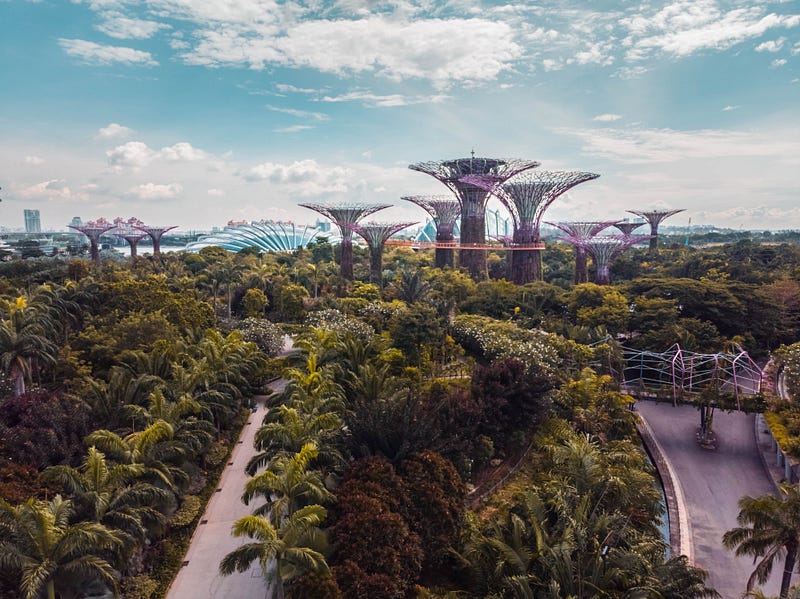
According to the INHERIT project, there will be significant changes in how we will live our lives in the future.
The project conducted primary research about our experience in 2040. It came to the following conclusions:
- Our life will be between realities, as everything will be digital, connected, and personalized;
- The focus of our society will rely on a “one for all, and all for one”;
- The “less is more to me”-philosophy will increase — as robust centralized systems will lead to less material ownership;
- A closed-loop economy emphasizes services over product ownership in a “circular community.”
These studies are great to read but share only little practical advice for you and me. We have to dig deeper into this scenario, as it is one of the most crucial topics.
The development of current technologies is no longer overseeable. Even with the newest technology, we, as human beings, cannot see with great accuracy in the future.
The global GDP will grow by $15.7 trillion by 2030, thanks to AI (Artificial Intelligence). The number of AI startups grew 14 times over the last two decades. Already 77% of the devices we use feature one form of AI or another.
Through AI, we are getting better at predicting the future and probably also at changing it. Let us hope for the better.
So what can we do in our quest to develop our dream lives?
#1 Future jobs
In late 2018, Alpha Zero managed to win against the strongest chess-program. And it did take Alpha Zero only hours to learn chess. Unlike older chess programs, Alpha Zero used neuronal networks and AI.
It did not rely on formerly played chess games, as the older chess-programs. It learned chess from the baseline. And it came up with entirely new ideas on how to play the game.
Professional chess players like Gari Kasparov described this as a “remarkable achievement […]. We always assumed that chess required too much empirical knowledge for a machine to play so well from scratch, with no human knowledge added at all.”
And you can look in almost any area of your life. The technology is surrounding and guiding us. You may want to take a closer look at “The Social Dilemma.” What does this mean for you and me?
Jack Ma, the founder of Alibaba, and also scientists found out:
“Everything that can be digitalized, will be digitalized!” & “Artifical intelligence & robots will kill many jobs!”
We cannot keep up with the development of software and neuronal networks. We have to look somewhere else to find our purpose. Current jobs, such as bus drivers, cashiers, or even bank employees, will become redundant.
Autonomic driving, cryptocurrencies, and big-data-analytics will develop new fields of jobs. But not every person will have the capabilities nor the possibilities to adapt accordingly.
In a study carried out by McKinsey&Company, the consultancy firm highlighted these facts. According to AI technology statistics, robotics could replace about 800 million jobs. It would make about 30% of occupations extinct. With this significant shift, nearly 400 million people will have to adapt and change and careers.
Thus, we need to find jobs that contribute to our own lives in a meaningful way. And even authors, creative artists, and alike are not in safe heavens. There is already music orchestrated by AI that sounds appealing to many listeners.
The real question should be: what do I like to contribute that adds value to my life and society?
Jobs in coaching, health care, psychology will stay prominent. Their help for society is immediately seeable. But as we cannot all become coaches, we have to think about new fields.
And I also believe that we are excellent at developing new fields. My parents are scratching their heads when looking at the job applications I showed them. Even so, their parents did the same when my parents asked them. Yet, the acceleration rate is higher.
The best advice almost every leader can give is to stay flexible. It follows the quote of Confucius:
“To see what is right and not do it is the worst cowardice.”
Do not think like the former generations who stayed with one company until their retirement. Your CV won’t look like a straight line anymore. And as you are well educated and also strong-minded, you indeed can develop new ideas about your future.
Otherwise, you could not read these lines. But do you also care about the ones less fortunate?
How can we deal with them, or what can we do for them? How will society look like in the future?
#2 Future society
As more and more people are losing their jobs, different solutions have to be found. Otherwise, the gap between the rich and poor will widen even more.
Among all G7 nations, the USA had and still has the highest income inequality. And this development accelerates every year. With AI, technology advancing, and new business concepts, the wealth gap is likely to widen, instead of narrowing.
Famous philosophers, like Richard David Precht, and Yuval Noah Harari, give advice here. They believe the solution lies within the unconditional basic income. Especially Harari, with his newest piece, “21 Lessons for the 21st Century”, is a vivid supporter of it.
Finnland has tried this concept in the form of an experiment in 2017–2018. Researchers are still assessing the results.
In Finnland, the government selected 2000 unemployed people by chance. These persons aged between 25 and 58 had received 560 Euro on a monthly base. The government did not ask any question on what they would spend it. They did not have to pay any taxes.
In exchange, they did not receive any unemployment aid and could earn as much extra money as they would like to.
Some people created their own business as they would have some form of security net to fall back. The volunteers also highlighted:
- the reduced stress,
- less bureaucracy,
- and an enhanced health situation.
Still, the concept is not wholly analyzed. The success stories might not rely solely on the unconditional basic income. Factors like improved access to easy money, and lower boundaries, were also essential to the success stories.
It was the first and considerably cheap experiment of its kind. Many countries need to follow to widen the database.
In the view of many scientists, this type of concept could help society and the individual being. Famous (spiritual) teachers feel the same way. It would allow people to try new things or businesses without fearing to go bankrupt.
Besides, many employees would finally quit their hated jobs. They would start what they want to do deep in their hearts. It alone would enhance the way we would interact with each other.
Could you imagine living in a society where every person would love what he is doing? You would only see people smiling while you were buying bread, talking to authorities, or developing new ideas with teachers.
#3 Future Lifestyle
With the “less is more for me” and the “circular cycle,” producing companies have to rethink their businesses. In Germany, most industries focus on car production. Volkswagen (VW) is one of the largest car producers worldwide.
During COVID-19, VW experienced a drop in sales of 40%. Still, this drop can increase further.
And this does not only result from the unforeseeable consequences of the virus.
The youngest generation is less likely to buy cars for themselves. They look for other solutions, like car-sharing or Uber.
Uber, which is one of the biggest transportation service provider, does not even own one of the cars. And you can find business cases like these almost anywhere. When we take a look into social media, more and more people do not pay for the product, as they are the product.
These twists are coming slowly, as Jaron Lanier put it:
“It’s the gradual, slight, imperceptible change in your own behavior and perception that is the product!”
People are acting differently every single day. And they are not aware of this. My lifestyle dramatically changed when I step back and analyze it for a moment. I just have to take a close look at my household or my job. Nothing was there, 20 years ago, besides the buildings.
People can now enjoy things my grandparents could not dream of. Just think of entertainment like augmented reality, hovercrafts, or even space traveling.
My grandparents were the ones believing in John F. Kennedy’s philosophy: “We choose to go to the Moon” from 1962. And by 1969, the USA did it. But what happened in the meantime, and up to 2020? Every single development was quicker than the one before.
The last polymath, or universal man, lived in the 19th century. Afterward, the level of wisdom has risen to new levels that no one can overlook.
No one? No! Today, a small glimpse at google helps to answer almost any question. Life gets more comfortable, and at the same time, more complex. Every country is connected to the others, as every being is also connected to the next one.
But we are not only connected through technology. As we found out the brutal way, we build a symbiosis health-wise and on the economic side. So, our future lifestyle also has to reflect these new interactions and interdependencies.
We have to care more for each other, instead of less. A more of “myself/I” will not guide us in the right direction. You should instead ask yourself what you could do now to be the most significant gift for your surrounding.
Ongoing thoughts
Our problem does not lie in technology; it is our usage that might create problems. We always were better at developing new technologies instead of using them correctly.
According to Harari, we are great at building walls against people but bad at making firewalls against algorithms. With the technology on the advance, people are no longer fighting against exploitation alone. We are fighting against insignificance.
To prepare yourself for the future, you may want to ask yourself the following questions:
- Which jobs do I want to have in the future?
- Which society do I want to live in, and how can I change myself and my nearest surrounding accordingly?
- How do I want to live in the future?
It is up to us to develop solutions to significant tasks.
And as you know from tree alleys, the one person that plants the seed does not see the final tree. Still, this person started the whole process.
I wish you an incredible journey!