
2024 Election Controversy: Will History Repeat with Another Imprisoned Candidate?
A Century Later: Will the 2024 Presidential Race Mirror Debs’ Defiant Bid?
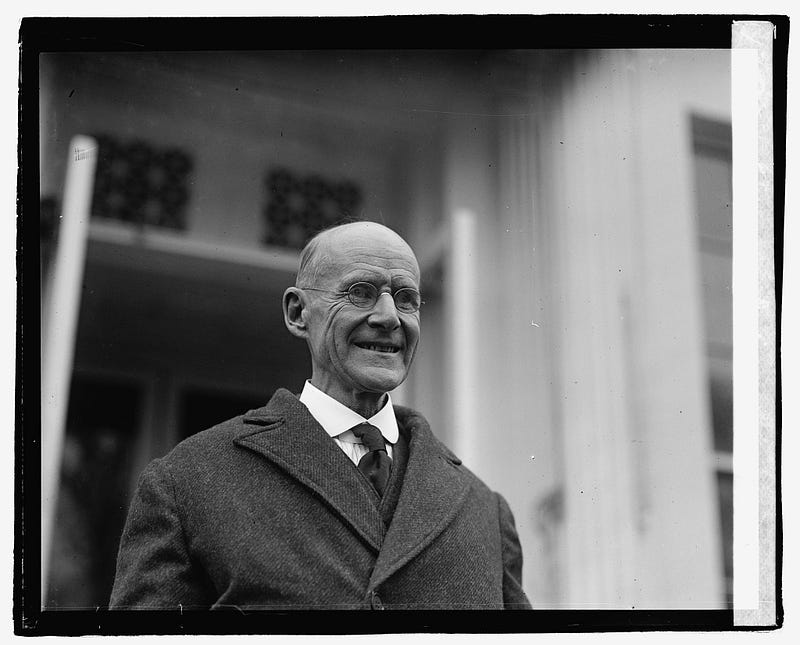
There’s a possibility that one of the major party candidates for President in 2024 will be in prison. Eugene V. Debs was a labor leader who ran for president on the Socialist ticket. Although imprisoned for opposing American entry into World War I, he ran for the fifth time in 1920 and garnered more than 900,000 votes in a notable test of democratic institutions in the United States.
The 1920 American presidential election was notable for several reasons. It ended the “Progressive Era” that had been inaugurated by President Theodore Roosevelt and was extended by President Woodrow Wilson on the domestic front. In foreign policy, it endorsed the “return to normalcy” campaign theme of Republican candidate Warren Harding in reaction to American participation in World War I and Wilson’s failed effort to join the new League of Nations. It was the first of three consecutive landslide victories for the Republican candidates.
Less well remembered from that campaign is that a third-party candidate serving time in a federal prison won more than 900,000 votes, or over 3 percent of the total cast. Eugene V. Debs ran as the candidate of the Socialist Party, of which he had been a principal founder, for the fifth and final time. Debs made statements from behind bars, while devoted supporters did their best to publicize his positions in favor of the working class.
Debs was employed as a railroad fireman from his youth in Indiana, became active in his trade union, and then organized the broader-based American Railway Union, which conducted the historic Pullman Strike in 1894. For his leading role in that strike in defiance of a federal court injunction, he served six months in prison and emerged, in his own words, as a “dedicated socialist.” Putting words into action, he organized the Socialist Party of America and, beginning in 1900, became its perennial candidate for president.
Like socialists in Europe, those in America emphatically opposed involvement in World War I. But after almost three years of neutrality, the United States did enter the war against Germany. Debs and other socialists continued their outspoken opposition, even in the face of the Espionage Act of 1917, which, among other provisions, banned interference with the military draft.
The Wilson Administration vigorously prosecuted those who spoke publicly against the war on the grounds that such speech discouraged young men from fulfilling their obligations to serve. Knowing that Debs would speak at a Socialist gathering in June 1918, the Justice Department placed an agent and a stenographer in the crowd. When he made his expected remarks decrying the sacrifice of the working class to satisfy the political aims of the ruling class, he was arrested and charged with violating the Espionage Act. The stenographic record was powerful evidence in an era preceding videos.
Debs was tried and convicted in September 1918 while the war continued, declaring in his own defense that his words had been true and that he would stand by them. After his appeal on free speech grounds was denied by the Supreme Court four months after the Armistice, he began serving a 10-year term. The following year, as noted above, he made his fifth unsuccessful try for the White House from his cell in the Atlanta Federal Penitentiary.
When Harding was elected, the loyal supporters of Debs felt the new president would be sympathetic to someone who had opposed a war that American voters seemed to have repudiated. They asked Harding to pardon him, and he did so at Christmas 1921, freeing him after less than three years. The passionate Socialist leader died in 1926, widely respected for his devotion to his principles.