avatarMj Jens

Free AI web copilot to create summaries, insights and extended knowledge, download it at here

3318

Abstract

with your values and aspirations.</p><p id="b01d">First, consider what your long-term goals are. What aspirations do you have? What do you ultimately want out of life?</p><p id="5aee">Long-term goals are 1–10 years out; basically, any goal that you think will take more than a year is a long-term goal.</p><p id="71d9">After you have a list of long-term goals, you will want to break them down into smaller goals, especially the ones you want to work on first.</p><h2 id="9a84">Short-Term Goals</h2><p id="3994">Short-term goals are the ones you <b>CAN</b> <b>Realistically</b> accomplish <b>in the next 12 months.</b></p><p id="4b34">Aim for 3–5 goals for the year.</p><p id="7687">You can further break them down into milestones and/or projects. Milestones and projects are a new process for me in 2024. I am aiming for 12 milestones, one for each month of the year. For each milestone, I will create a monthly project.</p><p id="958e" type="7">“Plan your next move because every step contributes towards your goal.” ― Sukant Ratnakar, author and motivational speaker</p><p id="e261">This year, I am also being very detailed in my goal-setting. Planning as much of each goal and project as possible is something I find extremely helpful.</p><p id="a193"><b>To help in creating a plan for each short-term goal, it is helpful to think about:</b></p><ul><li>The outcome.</li><li>The process.</li><li>Your performance.</li><li>And lastly, the milestones.</li></ul><p id="0686">When creating a plan, you will think about the milestones last because, after thinking about the outcome, process, and performance, it will be easier to see the natural steppingstones from a bird's-eye view of the goal from start to finish.</p><p id="f444">But after you have the milestones defined, it will be the first thing you schedule into your calendar.</p><figure id="e6e0"><img src="https://cdn-images-1.readmedium.com/v2/resize:fit:800/0*VcZdL-NCtgAN7FQe"><figcaption>Photo by <a href="https://unsplash.com/@brett_jordan?utm_source=medium&amp;utm_medium=referral">Brett Jordan</a> on <a href="https://unsplash.com?utm_source=medium&amp;utm_medium=referral">Unsplash</a></figcaption></figure><h1 id="7de3">Breaking Down Your Short-Term Goals</h1><h2 id="70b4">Process Objectives: Activity-Oriented Thinking</h2><p id="b179">Your process defines the small, measurable, and controllable actions that help you achieve the larger objectives. These are the habits you are focused on starting.</p><p id="b26f"><b>Examples of process actions are:</b></p><ul><li>Read 10 pages per day, or more</li><li>Eat fewer than 1,400 calories per day</li><li>Write a to-do list every morning</li></ul><p id="f762">The habits defined in the process lead to the performance target of your goal.</p><h2 id="4789">Performance Objectives</h2><p id="6f11">The performance focuses on doing certain activities well.</p><p id="6c91">Your performance is where you are developing the process objectives into skills that will help to improve an area of your life and achieve your outcome objective.</p><p id="4039"><b>Examples of performance targets are:</b></p><ul><li>Read more than last year. Increase knowledge (objective)</li><li>Get fit. Increase health, strength, and stamina (objectives)</li><li>Be more productive. Increase efficiency and output (objective

Options

s)</li></ul><p id="1d12">Your performance target for improvement leads into the outcome, or key objectives, you will gain as a result of achieving the goal.</p><h2 id="e381">Outcome Objectives</h2><p id="20d1">The outcome is the desired result you hope to get when you achieve your goal. You can think of this as the key objective you are working towards.</p><p id="8d08">Each short-term goal should only have 2–3 key objectives, max. If there are more, consider breaking down the goal into more than one project.</p><p id="fe56"><b>Examples of key objectives are:</b></p><ul><li>Read 2 books per month</li><li>Lose 20 pounds this year</li><li>Get organized for the day every morning</li></ul><h1 id="bf86">Milestones, Projects, and Tasks</h1><p id="68be">Milestones are natural steps from the start to the finish of each short-term goal.</p><p id="1840">To get from one milestone to another, you are creating a project.</p><p id="7e41">Each project is broken down into tasks—basically the habits you identified in the activity-focused process part of each goal.</p><p id="af91">These tasks and activities are daily, weekly, and monthly habits that make up a plan to follow.</p><p id="206f">When you plan it all out, you can also schedule things on a timeline for the year, keeping you on track to reach the goals you set for yourself.</p><h1 id="8b59">Final Words</h1><p id="ba99" type="7">“Always have a plan, and believe in it. Nothing happens by accident.” ― Chuck Knox, former NFL head coach</p><p id="de04">I know this seems like a lot of work, but when you think about each of the parts I described above, a plan for how you can and will achieve each goal really does come together well. It creates a very specific goal and a well-defined plan for how you will achieve it.</p><p id="87ae">To help you set your goals I created a <a href="https://jens61.gumroad.com/l/zudryc">Notion template</a>. It walks you through all the steps so you can not only set your goals but also create the plan—the projects, milestones, and tasks—needed to achieve each goal.</p><p id="dffb">You can check it out <a href="https://jens61.gumroad.com/l/zudryc">here</a> and if you use the discount code "Goals," you get $3 off.</p><p id="7af5"><b><i>Thank you for reading!</i></b></p><p id="4824"><a href="http://www.medium.com/@mj.jens"><b>Follow me</b></a> for more on productivity, habits, personal development, creativity, writing, and mindset. And join me on <b>Twitter <a href="https://twitter.com/mj_jens0">@mj_jens0</a></b></p><p id="d731"><b><i>Enjoy the article? Clap 👏🏽 & Comment 🗨️ to let me know</i></b><i>. <b>If you want to read more like this or have a question</b>, leave a comment.</i></p><h2 id="7f5b">Notion Template Sneak Peak</h2><figure id="44be"><img src="https://cdn-images-1.readmedium.com/v2/resize:fit:800/1*VwVffSxwMFKgwsILyrdU_g.png"><figcaption>Notion Template Screen capture by Author</figcaption></figure><figure id="7cb3"><img src="https://cdn-images-1.readmedium.com/v2/resize:fit:800/1*fhd2km4-T43Cf4mvB8kYQg.png"><figcaption>Notion Template Screen capture by Author</figcaption></figure><figure id="8204"><img src="https://cdn-images-1.readmedium.com/v2/resize:fit:800/1*aP1rmL4XkLPbIH2YdcOotw.png"><figcaption>Notion Template Screen capture by Author</figcaption></figure></article></body>

2024 Blueprint: Breaking Down Goals

Breakdown goals to help you achieve what you want in 2024.

Photo by Felipe Furtado on Unsplash

As I work through planning my 2024, I have been sharing the why and how behind what I am doing.

The fourth step, which I am sharing with you today, is all about goals.

The why behind setting goals is simple:

If you don’t set a destination and plan your course, your actions each day will have no intentionality or purpose behind them.

“Never mistake motion for action.” — Earnest Hemingway

When you set and work towards your goals, you are creating a life on purpose—taking action—versus letting life just happen and reacting to the circumstances you find yourself in—going through the motions of life.

In this article, I will talk about:

  • Setting short- & long-term goals
  • Breaking your goals down into milestones, projects, key objectives, and tasks
  • Plus I’ll link to an article that helps you thoroughly write out your goals

(If you are not a member yet, you can read this article for free with this link.)

Setting Long- & Short-Term Goals

There are a few different goal-setting techniques out there. But there are 5 that I really prefer and recommend using because they are more than just the goal statement; they break the goal down into the actionable steps you need to take.

You can read about them here:

When you break goals down into actionable steps, it feels more manageable, and there is no question about what to do because you have already laid out the plan.

Long-Term Goals

The beginning of the new year is a typical time to think about the goals you have in life.

Goals that resonate with your interests and aspirations are more likely to motivate you, so keep your goals aligned with your values and aspirations.

First, consider what your long-term goals are. What aspirations do you have? What do you ultimately want out of life?

Long-term goals are 1–10 years out; basically, any goal that you think will take more than a year is a long-term goal.

After you have a list of long-term goals, you will want to break them down into smaller goals, especially the ones you want to work on first.

Short-Term Goals

Short-term goals are the ones you CAN Realistically accomplish in the next 12 months.

Aim for 3–5 goals for the year.

You can further break them down into milestones and/or projects. Milestones and projects are a new process for me in 2024. I am aiming for 12 milestones, one for each month of the year. For each milestone, I will create a monthly project.

“Plan your next move because every step contributes towards your goal.” ― Sukant Ratnakar, author and motivational speaker

This year, I am also being very detailed in my goal-setting. Planning as much of each goal and project as possible is something I find extremely helpful.

To help in creating a plan for each short-term goal, it is helpful to think about:

  • The outcome.
  • The process.
  • Your performance.
  • And lastly, the milestones.

When creating a plan, you will think about the milestones last because, after thinking about the outcome, process, and performance, it will be easier to see the natural steppingstones from a bird's-eye view of the goal from start to finish.

But after you have the milestones defined, it will be the first thing you schedule into your calendar.
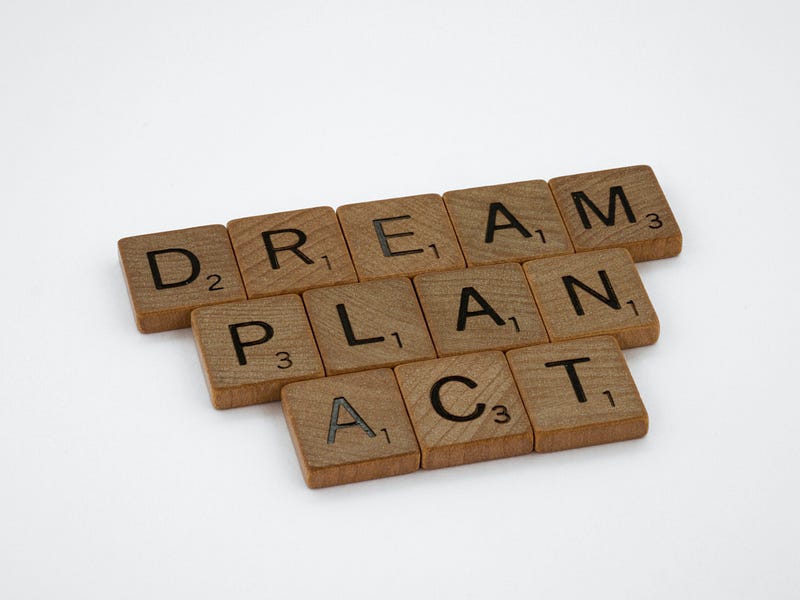
Photo by Brett Jordan on Unsplash

Breaking Down Your Short-Term Goals

Process Objectives: Activity-Oriented Thinking

Your process defines the small, measurable, and controllable actions that help you achieve the larger objectives. These are the habits you are focused on starting.

Examples of process actions are:

  • Read 10 pages per day, or more
  • Eat fewer than 1,400 calories per day
  • Write a to-do list every morning

The habits defined in the process lead to the performance target of your goal.

Performance Objectives

The performance focuses on doing certain activities well.

Your performance is where you are developing the process objectives into skills that will help to improve an area of your life and achieve your outcome objective.

Examples of performance targets are:

  • Read more than last year. Increase knowledge (objective)
  • Get fit. Increase health, strength, and stamina (objectives)
  • Be more productive. Increase efficiency and output (objectives)

Your performance target for improvement leads into the outcome, or key objectives, you will gain as a result of achieving the goal.

Outcome Objectives

The outcome is the desired result you hope to get when you achieve your goal. You can think of this as the key objective you are working towards.

Each short-term goal should only have 2–3 key objectives, max. If there are more, consider breaking down the goal into more than one project.

Examples of key objectives are:

  • Read 2 books per month
  • Lose 20 pounds this year
  • Get organized for the day every morning

Milestones, Projects, and Tasks

Milestones are natural steps from the start to the finish of each short-term goal.

To get from one milestone to another, you are creating a project.

Each project is broken down into tasks—basically the habits you identified in the activity-focused process part of each goal.

These tasks and activities are daily, weekly, and monthly habits that make up a plan to follow.

When you plan it all out, you can also schedule things on a timeline for the year, keeping you on track to reach the goals you set for yourself.

Final Words

“Always have a plan, and believe in it. Nothing happens by accident.” ― Chuck Knox, former NFL head coach

I know this seems like a lot of work, but when you think about each of the parts I described above, a plan for how you can and will achieve each goal really does come together well. It creates a very specific goal and a well-defined plan for how you will achieve it.

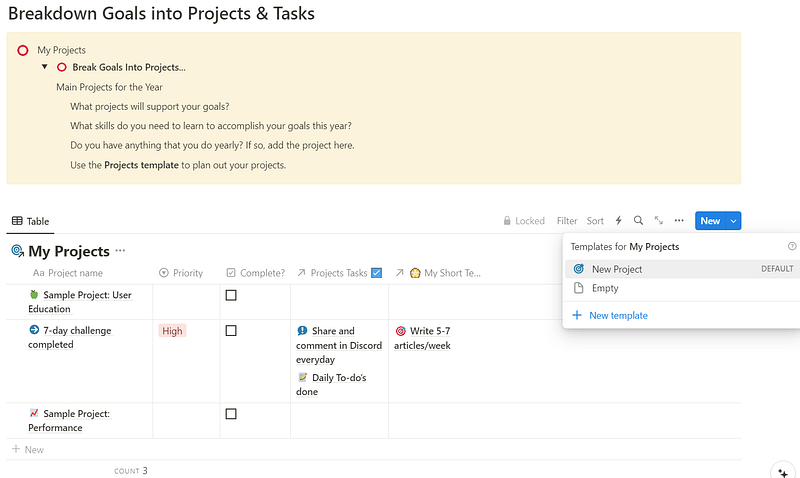
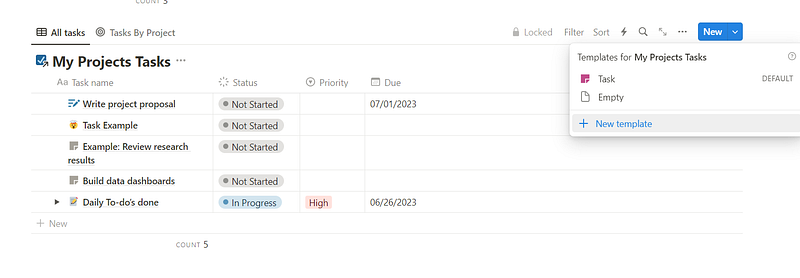
To help you set your goals I created a Notion template. It walks you through all the steps so you can not only set your goals but also create the plan—the projects, milestones, and tasks—needed to achieve each goal.

You can check it out here and if you use the discount code "Goals," you get $3 off.

Thank you for reading!

Follow me for more on productivity, habits, personal development, creativity, writing, and mindset. And join me on Twitter @mj_jens0

Enjoy the article? Clap 👏🏽 & Comment 🗨️ to let me know. If you want to read more like this or have a question, leave a comment.

Notion Template Sneak Peak
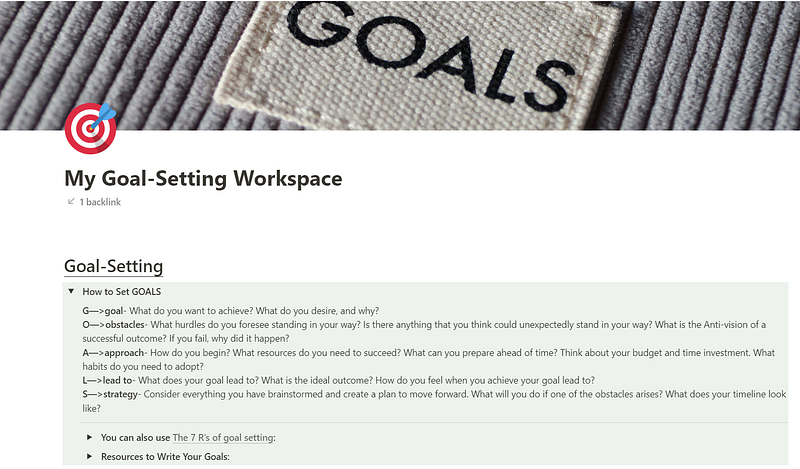
Notion Template Screen capture by Author
2024
Goal Setting
Notion
Year In Review
Planning
Recommended from ReadMedium