2 Year-old Boy Who Smoked 40 Cigarettes A Day
Indonesia’s Tobacco Epidemic is turning many kids into chain-smokers.
There is no minimum age limit at which the cigarette could be sold, meaning you could find a smoker of any age, ranging from the smallest to the oldest citizens of the country.
Even though the GDP is pretty low, the highest expenditure of each household is cigarettes.
It is of no doubt that it is a matter of great concern, not only economically but also a matter of grave health issues across the country.
It wouldn’t be wrong to say that Indonesia was witnessing the rise of a significant pandemic if the situation was not addressed promptly.
A toddler who smoked 40 cigarettes a day
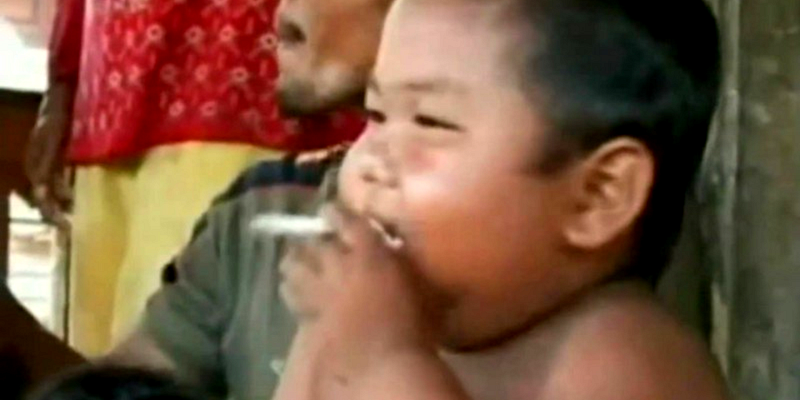
A toddler who barely learned to talk smoked 40 cigarettes a day. When his parents stopped him from doing so, he threw tantrums of the worst kind — like banging his head into the wall or throwing things around.
He talked about his head being fuzzy or having a weird taste in his mouth; all he could think about was that sweet roll of paper between his lips.
These were the typical withdrawal symptoms from cigarettes, especially for someone who smoked forty per day — but was it normal for a two-year-old?
Sadly, yes. This is only one of the many cases of the children of Indonesia, where smoking is so prevalent that it’s readily available to a child who doesn’t know what he’s getting into.
Thankfully Ardi has recovered from this awful habit and is faring well. Still, there are only so many children who have already become chain smokers due to the easygoing laws of the country concerning the habit.
Dihan, The Six-Year-Old Chain Smoker
At the age of six, Dihan smokes three packs of cigarettes a day. Dihan’s cough was worsening, his mood swings were getting more dangerous, and he was always sick. His parents stated Dihan has taken it down a notch after a check-up with a doctor.
Interestingly, the parents didn’t realize the little boy was using his pocket money to buy cigarettes instead of candies but didn’t act on it since child smokers are pretty standard in Indonesia.
But can you blame them? In a household where his father packed and sold cigarettes and was a chain smoker, who could Dihan have looked up to?
Due to the easygoing laws concerning cigarettes, it is readily available for sale, where heed isn’t paid to the buyer’s age, just the revenue of their nasty business.
Although laws have been made and the current president is quite aggressive concerning the anti-narcotic movement.
Surveys have shown that the condition has typically worsened over the years, offering a significant rise in the number of child smokers aged 5–11.
No real effort has been made to implement the laws made on paper, resulting in the situation that Indonesia is facing today.
Now, the parents see no problem in seeing their two sons, Dihan at the of six and Januar at the age of three, smoking.
Unfortunately, this is the case for millions surrounding their homes, and till now, there has been no one to end the country’s wild and dangerous narcotic processes.
Tobacco Epidemic In Indonesia
Indonesia is the smoking capital of the world. In this place, almost 70 percent of men and 5 percent of women use tobacco regularly; consequently, more than 200,000 people die every year from tobacco-related diseases.
Smoking affects not only the person smoking but also the people around them. In Indonesia, more than 95 million non-smoking people are exposed to this smoke regularly.
This exposure to second-hand smoke causes more than 25,000 deaths among the non-smoking people of Indonesia each year
Almost 80 percent of Indonesian smokers use kreteks, a clove-flavored cigarette; on average, an Indonesian household spends nearly 12 percent of its income on tobacco and related products.
This smoking epidemic is not only costing lives, but it is also being crazy hefty in Indonesians’ pockets.
According to data, Indonesians spend more than 1 billion U.S dollars on tobacco-related illnesses each year.
Young Smokers Of Indonesia
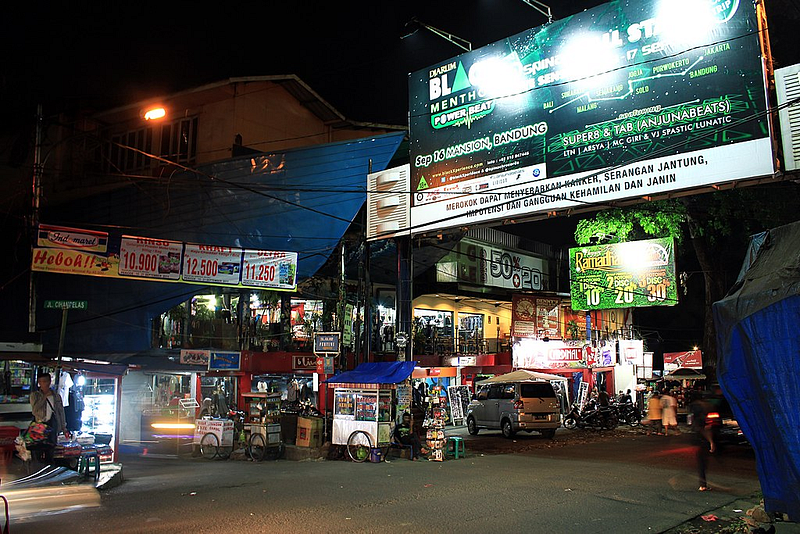
People of Indonesia start smoking cigarettes at a very young age due to the wide availability of cigarettes and their low price.
Due to the low prices and governments’ weak tobacco control policies, three out of five Indonesian youngsters aged between 13 and 15 are exposed to cigarette advertisements. With no strict laws in place, these gaspers can easily be bought.
Tobacco companies spend vast sums of money on their advertisements, and research that the Australia-Indonesia center conducted showed that only 11 retail stores out of 1,000 didn’t have any tobacco-related ads. Out of every ten retailers, 7 had banners that promoted cigarettes.
The researchers found out that more than 75 percent of the retailers admitted to selling cigarettes to minors and also sold loose cigarettes, which are cheaper to buy than an entire pack of cigarettes, making them more accessible to children.
Selling single cigarettes is banned in most parts of the world. Furthermore, every nine out of 10 schools have a cigarette selling outlet within 250 meters which also plays its role in the smoking epidemic.
Aggressive promotions by the tobacco syndicate, cheap cigarette prices, and ease of access were added to give the perfect concoction to spoil any society, not only Indonesia.
Weak Tobacco Control Policies
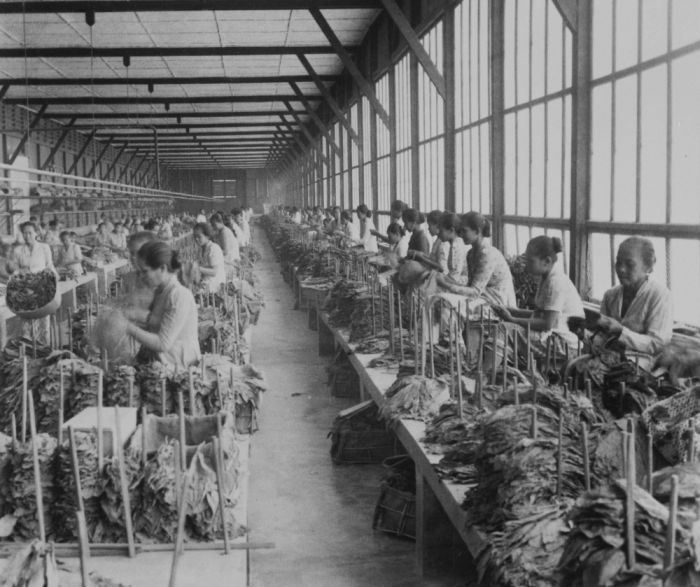
With over 100 million smokers, Indonesia is the world’s second-largest market for smoking goods. It is the only country that hasn’t signed the world health organization global tobacco control treaty.
The Indonesian health ministry is tobacco consumption by at least 30 percent by 2025. Furthermore, the government plans to reduce smoking pervasiveness among children in the years to come.
However, so far, the government of Indonesia has failed to protect its children from the aggressive promotional campaign and hasn’t taken any steps to counter it.
The country has failed to enforce any ban on tobacco firms that are promoting illness and selling cigarettes to children.
Even the duty on tobacco-related products hasn’t been revised, and the tobacco industry remains on the government’s excise list.
Indonesia is still far behind other countries in embracing effective measures to control tobacco.
Due to the government’s weak tobacco control policies, the country gets almost 16.5 million new smokers who are aged between 10 to 19 every year.
Final words
Tobacco companies substantially influence Indonesian political parties, and if any of these parties come into power, their policies are also made under this influence.
Enforcing and adhering to the World Health Organization Framework Convention on Tobacco Control (WHO-FCTC) will facilitate the Indonesian government to shift the imbalance of power toward public health stakeholders.
The Indonesian government will need to make drastic changes to their policies towards tobacco, the process of change will be long and maybe painful for some, but in the end, it will be worth it.
More from the author: