
2 storytelling hacks for standout branding
Branding for entrepreneurs is harder than branding for big companies.

When I taught Marketing 101 a long time ago, we talked about branding consumer products like paper towels, detergent, and frozen peas. Big companies needed big brands to stand out on a supermarket shelf. Consumer products companies need big brand personalities because they’re basically all alike. It’s up to the marketing agencies to create personalities for them.
Today’s small service businesses don’t work this way. They can’t brand like soft drinks or beer. They reinforce their genuine personalities through copywriting, based on a foundation of storytelling. .
Here are 2 ways you can use a story to stand out and stay visible, even in a crowded market:
(1) Brand yourself by telling a story that resonates with your clients and captures the way you connect with your audience.
A career coach claims, “Everybody thinks you need one resume. Actually you need several, each one tailored to specific jobs.
“ I’ve got a new way to help people write resumes, using innovative technology and a network of former HR executives. We’re especially helpful to career-changers who need multiple versions of their resume, without waiting months for a revision and spending thousands on each one.”
Notice that this story also shows how to brand on a client’s backstory.
The client’s backstory begins with a problem. It then goes on to discuss why the clients can’t solve te problem themselves. Why do they need you?
Finally, the backstory talks about what they tried so far. This is the part that’s most often overlooked, but it could be the most important.
Learn more about client backstories by clicking here.
(2) Choose your brand adjectives to match your story archetype.
What’s a story archetype and how do you know yours? Look it up here.
Google “brand adjectives” and you’ll find long, long lists of adjectives recommended or branding your small business.
There’s just one problem. They don’t all work for everyone.
Do you feel comfortable with state-of-the-art slang and strong words that aren’t allowed on network television?
Do you have a light, humorous touch that permeates your most serious content?
Or do you come across like a wise old wizard, an approachable college professor, or a zealous advocate who inspires others to action?
One of my favorite experts writes in a style that only a Celebrity archetype could pull off. Frankly, every so often it screeches like chalk on a blackboard. She uses abbreviations, slang, and jargon.
Her tone combines Valley Girl, chirpy cheerleader, and old-fashioned schoolteacher … she’s definitely an original.
But she’s got a following, and I grit my teeth and follow her courses because she’s that good.
Just a few examples of brand adjectives:
Role Models might describe themselves as caring, helpful, reliable, genuine, “boy next door” or “girl next door,”
Educators might describe themselves as analytical, authoritative, witty, clear, collaborative, frank, or knowledgeable.”
Innovators use positioning worlds like original, unique, current, industrious, futuristic, one-of-a-kind, or excellent
And if you’d like to learn more on this topic, get your FREE download: From Story To Standout Brand: The Workbook.
You might also refer to this free training: 10X Your Visibility By Telling Stories
For more options — free and paid — visit my website. I offer consulting as well as classes. Everything marketing for the solopreneur.
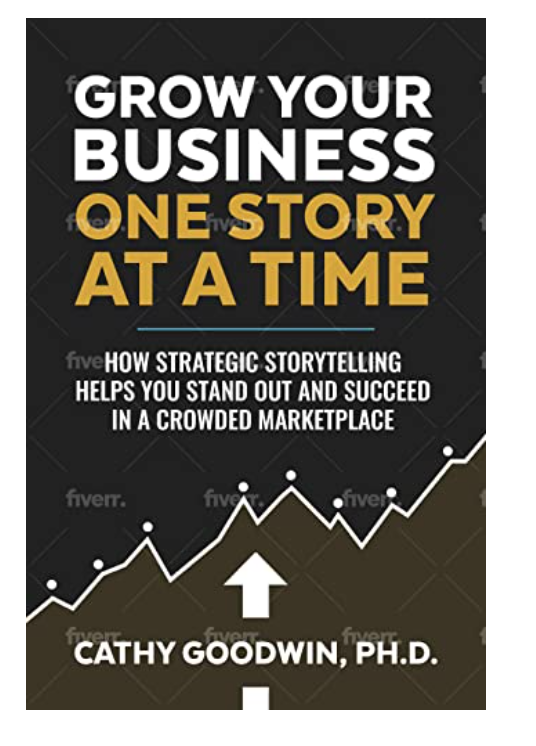
And if you like what you’re reading, consider buying my book about storytelling: Build Your Brand One Story At A Time. Your purchase enables me to keep writing.
Originally published at https://cathygoodwin.com.


