
Inclusion Creates a World Where all People Learn Acceptance
#2 Life Lessons from the Children
“Love is always bestowed as a gift — freely, willingly and without exception. We don’t love to be loved; we love to love.” — Leo Buscaglia
I enjoy watching youth interact with each other. Generally, they are kind and compassionate. The press regularly reports bullying and the problems associated with it but rarely balances the news with acts of kindness that occur daily in public schools. I’ve often wondered if our culture changed to focus on good deeds instead of bad, eliminate spotlighting students who negatively act out for attention and elevate students who show kindness if the world would be a better place.
As a middle school administrator, I spend way too much time on discipline. Though a major component of my job description, I found myself giving more attention to negative behaviors instead of promoting good. Over time the negative interactions began to taint my spirit and darken my mood. I replay one memory in my mind when I need to be reminded that people are basically good.
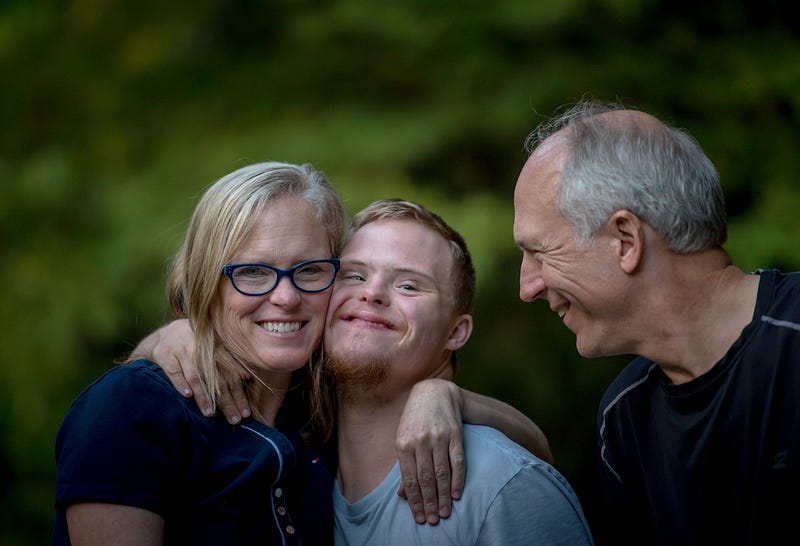
An image of Joey flashes in my mind when I desire reassurance that simple acts of kindness make the world a better place. Joey had downs syndrome. The simplest of daily functions challenged him. He was one of a kind and didn’t fit the mold. His contagious smile grew bigger when he waved at peers. As he walked between classes and peers waved at him, they showed that kindness is cool. Often the cliché, “his smile lit up the room” is used to describe happy people. However, in Justin’s case this statement clearly represented his impact on others.
Whenever I visited a classroom with Joey in attendance, I watched with pleasant surprise as students accepted hem. He did well in math and numbers fascinated him. Understands it was easier than people because they were concrete and absolute. As I watched his group present their answer to the class during a presentation he stood in the background grinning. He seldom spoke for the group but everyone knew he supported the group as they did him. Each student grew stronger as they collaborated and participated in the process
However, sometimes to clear up confusions Joey’s explanations of the formulas simplified terms so others could understand. Though he shied away from the spotlight, sometimes his input proved invaluable as students took notes and nodded their heads. His inclusion increased opportunities for all students.
In English class, Joey required a book with the text enlarged. I remember thinking it was worth the extra cost to watch him read a passage aloud. An assistant helped Joey understand difficult material, again another budget expenditure but I had not doubt it was money well spent as I watched the assistant have him pause and explain what he read. Reading the words is not as difficult for Justin as understanding the content. With some interventions, he gained confidence that increased his comprehension.
During a group discussion of a story about bullying, Joey shared how it feels to be teased and made fun of by peers. I watched as all members of the group affirmed and agreed with his honesty.
At an assembly that hosted staff/student basketball game, Joey asks to play. The coach paused, turned to the team and asked the players. They cheered at the idea, clapped for the new teammate, and patted him on the back. During the game, Justin was given the ball seven times in 20 minutes. When he made a shot the student body erupted with excitement as they observed empathy and compassion in action.
As the team huddled at the end of the game, they changed Joey’s name. Joey said, “Thank you.” His smile communicated appreciation beyond words.
With the knowledge that there are many sides to every story and interpretations of events change based on a person’s perspective, I use writing to process my own thoughts and emotions. As an outsider looking in, I am aware that my observations create an idealistic view; however, sometimes focusing on the positive helps me survive.
From my numerous interactions with Joey, these poems emerged. The names are changed for confidentiality but the information is a compilation of the information I gathered throughout the unfolding of events. Joey’s story reveal the positive side of a situation; the poems reveal reality.
Katie DeCroix
Boys can be so mean! Did you hear What Donny said about Joey? Someone told me He called him a retard. I told my mom. She said I can’t hang with him anymore Like I would want to What a creep!
Joey works so hard to fit in It’s just that people don’t understand him — They don’t even try! He’s smart, you know He can do math problems in his head — better than me. Kids just think he’s stuck-up because he’s so smart He’s my brother so I love him
He never looks up from the ground. Or makes eye contact — Ever. When he mumbles, it is hard to hear And he talks so fast his words run together, Everyone should try harder. I just wish he didn’t repeat everything Multiple times - All the time
Kids would like him better If he wasn’t so annoying In the halls, Joey runs into people He smiles and walks right into them. It is so embarrassing that sometimes I just look the other way because I Wouldn’t know what to say when they laugh. He’s not a retard!
Ben Thaire
Walking through the halls “Hi, Bennie” “Yo. Ben” Someone nods recognition. I nod Girls stare Some seem to accuse; Others look like they own me I avoid eye contact
On the field, I am part of a team My number is greeted with chants “Been there! Done That!” “Ben Thaire! Done That!” To them At that moment I am important
But Joey’s smile is sincere, Inviting and friendly I want to check in with him. He calls me his peer tutor I call him friend
Joey DeCroix
I like skool. Learning is fun. Kids smile and laugh. The halls are crowded. When I Solve math problems. Kids write down the ansers Donny winked at me His friends smiled. I like skool. I like to share. It makes people smile. Ms. Thompson said, “The inverse of F(x) = 2x+3 is F-1(y) = (y-3)/2 That made me smile. She Is a good teacher. Ben is funny. Everyone says, “Ben their don tat”. Kids are fun.
Matt Colt
I am not ALWAYS right Just usually So why should I listen to Katie She is just a girl A smart girl — maybe - But a girl
She wants to go out with me but can’t accept the fact that I called it right Joey is slow in the head Everyone thinks it What’s so bad about saying it aloud?
It’s not like it hurts his feelings Yeah, he has feelings but he’s a little short in the brain department Katie, she has brains but She’s not rational, not logical She’s an emotional thinker
After her refusing to go out- twice, I’m not asking again She’ll see what a mistake she’s making She’ll come pleading to me I’ll accept her apology
Poetry comes from Locker’s Speak, a compilation of students’ thoughts and response to life experiences.
In the classroom, I observed human experiences that demonstrated the possibilities for humans to share pain and joy. I learned the art of being fully human demands we accept life with open arms and embrace whatever and whoever comes our way.
As a teacher, I believed my job was to educate children. By the time I retired, I understood education is the process of learning to live life to the fullest while sharing compassion.


