
2 Big Problems With the Education System: How to Learn Effectively?
Will education help our careers?
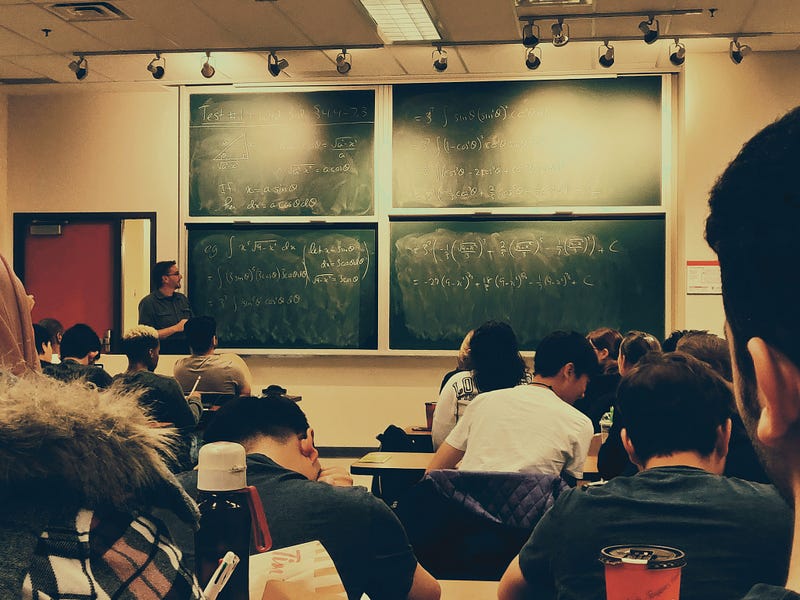
Do you feel you’re spending tons of time studying something at school that you never use in your work?
Do you realize you pick up essential knowledge at your job rather than school?
There are some issues with the education system, and this article will focus on two big problems. More importantly, effective study strategies will be proposed for each situation.
A practical study system will help you stand out in your career. It has helped me a lot. I hope you find it helpful as well.
Problem #1: Schools don’t teach the right thing
Elon Musk says that the education system is not teaching the right thing.
Teachers only teach the knowledge (WHAT). But a good education should teach the problem (WHY).
Here is Elon Musk’s suggestion for study:
“Let’s say you are trying to teach people about how engines work, a more traditional way of teaching will be teaching you all about screwdrivers and wrenches. You will have courses on screwdrivers and courses on wrenches .. this is a very difficult way to do it. A much better way would be like, here is the engine. Now let’s take it apart. How we’re going to take it apart? It would be best if you had a screwdriver. That’s what the screwdriver is for. You need a wrench. That’s what the wrench is for. Then a very important thing happens, which is that the relevance of the tools becomes apparent.”
You need a problem to solve first before learning anything.
But our education system is doing the opposite:
Students must follow the pre-designed curriculum (same for everyone), attend class at a fixed time, do assignments, and take tests. This circle repeats itself again and again until you graduate. To be noticed, most students’ time is spent ONLY on learning. Are you aware of why students get bored with classes? Because they don’t know why they study these? Maybe the motive to be present in class is that they need to graduate.
There are two issues regarding such a system: students are not studying effectively because of vague purpose, and the other is that much knowledge in schools is out of age.
No one teaches you why you should learn math; what can you do with it? You need to understand why you should know the tool or what to use it for.
Study Framework #1: Adopting a top-bottom strategy
Instead of the bottom-top strategy (learn first and think about where to use it), the top-bottom approach (having a problem to solve -> picking up the knowledge and tools to solve the problem) is an effective one to get you ahead.
Having a problem to solve first, build a project around it, and start to execute and focus on the project's requirements and integrate the most relevant knowledge or tools. Don’t worry about how much knowledge you need before starting your project because a perfectionist mindset will never get you started on anything.
It’s not a problem to only know very little about a new project as you will grow a lot during this new project.
It’s not a problem that you are scared of taking on a project you are unfamiliar with.
But it’s a big problem that you never start doing.
Training yourself to tangle any new problem or project when you feel uncomfortable indicates you have a growth mindset. You’re unstoppable regardless of any challenge in your life or career.
Problem #2: Schools don’t teach how to use your knowledge effectively
Schools focus on grades. The curriculum is designed to help you get a degree because rates are significant and helpful for non-sense reasons. A+ student should be the goal of every student, teacher, and parent, even though companies or societies have not interested in whether you are A+ or C+. But universities need that to determine your “exceptional” ability as a student.
But even if you get an A+, you won’t feel fulfilled as an individual. You are only giving what the school needs; the examination is the only place you use what you learn in classes. The education system is not designed to prepare you for the real world except for the tests.
Education, including colleges or universities, is not preparing you to face real-world problems, at least not a practical option. Many educators don’t know what else they could pass on to their students besides school homework and grades.
Schools don’t care whether you have to use the knowledge best or where to put it into practice because that’s not their job. But I don’t mean teachers are bad. I think every teacher wants the best for their students. But they are limited by the education system under which helping students get high grades is the way to prove their worth as a teacher.
Do you use the knowledge gained from University at your job?
We often hear that many people work at their jobs without using any knowledge from universities. I don’t know about you, but I worked as a software developer with a medical education background. I hope I will build a project integrating my medical knowledge someday.
Do you need a degree to become successful?
Elon Musk says a degree isn’t ‘evidence of exceptional ability.’
Here is an inspiring story about my best friend’s career as a successful entrepreneur:
My best friend, my university classmate, started her company in Shanghai immediately after graduation. By then, I pursued a different path — studying and studying until I finished my Ph.D.
According to the standard criteria, she used to be a “not-good” student. She was always creative in something, trying something “strange,” which annoyed the teachers. Although we are close friends, I was not interested in her “abnormal” style as it was contrary to my value of being a “good” student. You know, the “A+” student title thing.
But my mindset about education and success changed around five years ago when I realized she was running a successful startup company. In contrast, I was still busy looking for a job with nearly no experience and knowledge of the outside world.
At that time, she traveled to several European countries for her business. She invited me to join her company as I lived in the Netherlands. That experience opened my eyes to the entrepreneur’s world, which differed from an employee's.
When it comes to entrepreneurship, I am now where she was ten years ago. She is financially independent in Shanghai (if curious, you could check out the housing price and living expenses in this city), but I need to rely on my family’s financial help. More importantly, she is not limited by a 9 to 5 job as she can travel anywhere and anytime. Her work style inspired me a lot to start my startup business last year till now.
Study Framework #2: Living a Purpose-driven Life
What you should focus more on in school depends on your goal:
If you want to pursue an academic career, you might need to be a “good” student, as I did before. Somehow during my long-term “student” career, I thought I was interested in a postdoc position following my Ph.D. study. But actually, I was blindly following the academic career path — Ph.D. and postdoc and associate professor and professor.
If you want to start your business after graduation, focus on business-related knowledge and skills rather than the school curriculum and examination results. Focus your energy and efforts on the most important thing for you. Better surround yourself with successful business people.
Learn to be an effective learner.
An effective learner is learning less than you can but putting what you learn into practice as much as possible.
Digital life comes with overwhelming information and data. But information, knowledge, or tools that are useful to other people are not necessarily benefiting you. Therefore, you will miss helpful information and get trapped by rubbish if you are not mindful of your attention.
Adopting a project or problem-based learning approach is the most effective way to prevent you from getting overwhelmed by the external world. It will help you navigate your life and career.
In addition, if you want to live a happy, fulfilled, and successful life, be clear about your purpose.
Living a purpose-driven life helps you direct your energy, mind, body, and spirit to where you want to go. I wish I had known this at the start of my university. Then I started my business career much earlier.
I hope this article inspires you to become a more effective learner. If you are mindful of becoming an effective learner, you will figure out the best framework for your day-to-day learning process.


