
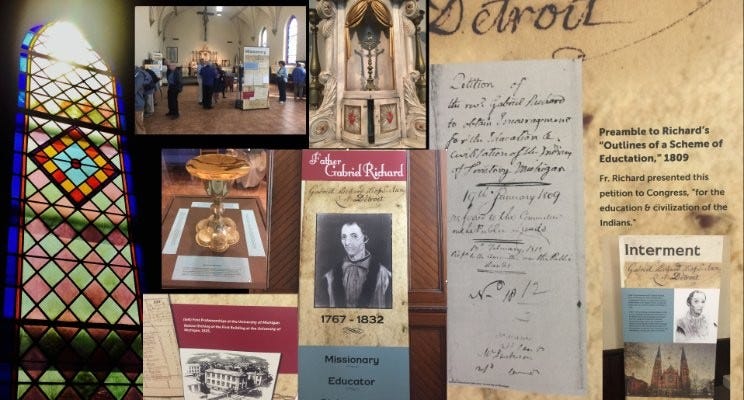
1st ‘Michigan Man’ Gabriel Richard Saved Lives, Founded the University of Michigan — and Rebuilt Detroit
The first “Michigan Man” and true U-M hero died battling a cholera epidemic.
He co-founded the University of Michigan, was called “ the second founder’ ‘ of a destroyed Detroit, brought Michigan its first printing press, newspaper, and highway, served in Congress, and united different races, cultures, and faiths. Many believe he was a saint.
Most Michigan students and fans know little to nothing about his life as we celebrate the bicentennial of his legacy.
Catholic Father Gabriel Richard, who founded U-M with Presbyterian Rev. John Monteith, is barely mentioned as Michigan celebrates its 1817 vision and work (20 years before the Michigan Territory became a state).
U-M’s main Ann Arbor campus is filled with buildings named after Michigan presidents, donors, and sports figures, but none honor Father Richard or Rev. Monteith. The founders are typically only mentioned briefly in historic overviews. However, their images also grace a wall of U-M presidents in the Michigan Union and a web page from U-M’s Detroit Center.
To truly understand a society, look at what its people revere and celebrate: culture means the cult of what we worship. Today’s Detroit and Ann Arbor pour millions into gleaming shrines to sports and business, but what about the founder who made Michigan’s bicentennial as well as the rebirth of Detroit possible?
Founders: Role models for brands and causes
To truly understand an organization, a true brand or cause, it is best to learn about its founders: The vision of Henry Ford still permeates Ford Motor Co., the story of George Washington inspires Washington, D.C., and the life, death, and resurrection of Jesus Christ is the essence of the Church He and his followers founded.
The story of Father Richard still shapes the Michigan culture (even though few know the story of what he did during his short lifetime).
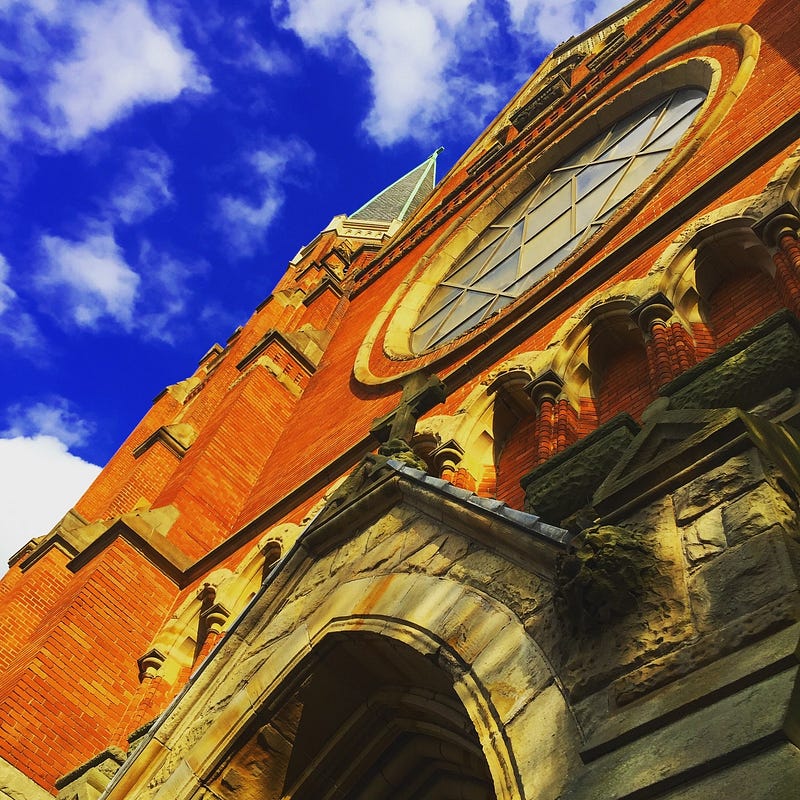
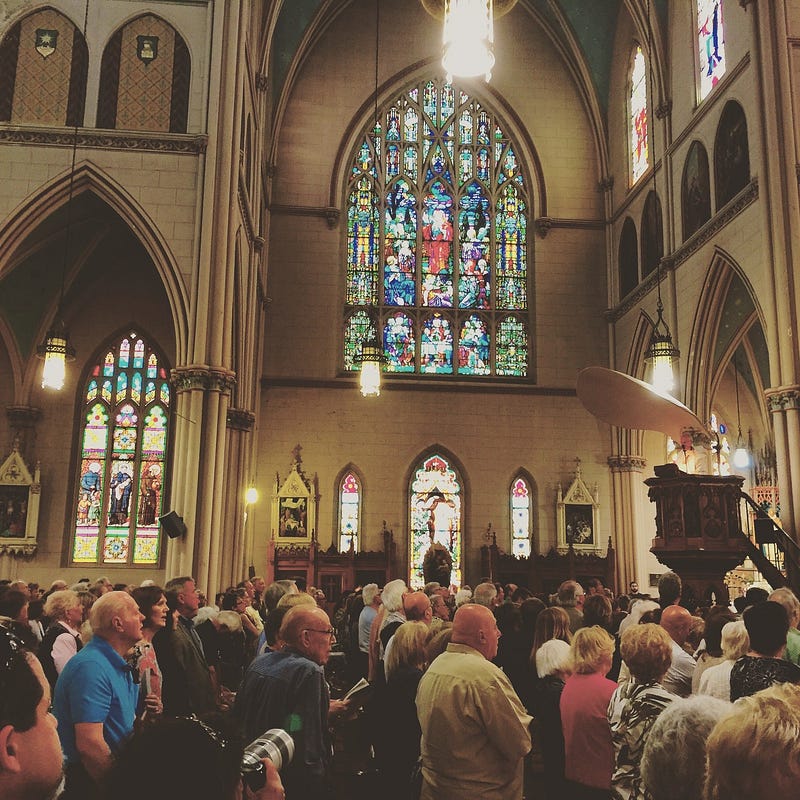
Ste. Anne de Détroit, the second oldest continuously-operated Roman Catholic parish in the United States (which Fr. Richard served as pastor from 1802–32), this week unveiled a large exhibit on Fr. Richard and his enduring legacy as an Educator, Missionary, and Civic Leader.
As the first visitors entered the exhibit Sunday, many kept saying one after another, “I didn’t know he founded the University of Michigan!’’
Government/Church Partnership created a great Public University with a national mission. Few know a federal judge, a Presbyterian minister and a Catholic priest from France came together to form one of the nation’s first and most respected public universities. They might recognize the Richard name from the Michigan public elementary and Catholic high schools bearing his name.
But few know what he actually did.
Gabriel Richard: The first Leader and Best
Michigan’s Leaders and Best legacy are embodied in the story of Fr. Richard. When my fellow Wolverines call themselves “Victors Valiant,” they might want to talk about their most worthy role model:
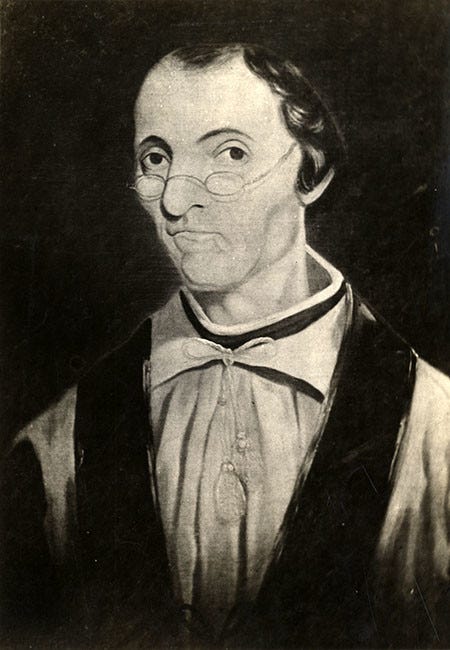
Immigrant Missionary unites many cultures and faiths. Centuries before his University became a global voice for diversity, Father Richard was a priest who escaped his native France as a Missionary and educator in the New World. He arrived in Detroit in 1798 at age 31. By 1804, he was opening his first Michigan school, training four young women teachers (the first teacher training organized in the old Northwest Territory).
School for all. Four years later, he began “a school for all’’ open to the children of the U.S. settlers and Indian tribes alike. By 1807, local Protestants asked him to preach to them, so he focused his Protestant services on subjects where Catholics and Protestants were like-minded. In 1825, he established the first classes for the Deaf.
His legacy continues today. On Sunday, Fr. Richard’s successor, Monsignor Chuck Kosanke, was organizing the parish’s first annual Rendez-vous, celebrating the Native American and French-Canadian heritage of the Ste Anne community.
Like Fr. Richard, Monsignor Kosanke is a dynamic, widely known, and respected leader who brings together a host of different peoples, including Detroit’s growing Mexicantown community. The parish sits next to the Ambassador Bridge connecting Detroit to Canada. As Sunday’s Homily and Mass, was spoken in both French and English, emphasized: “From many, one.’’
Rebuilding, reorganizing, and rebranding Detroit a century after its birth. After an 1805 fire destroyed Detroit. Fr. Richard raised funds to rebuild and redesign Detroit. A third of the residents were ready to leave, but he organized relief efforts and persuaded people to stay and rebuild.
Trial under Fire. The Detroit fire hit on June 30, 1805, just 19 days after Chief Federal Judge Augustus Woodward arrived from Washington, D.C. Woodward mapped out today’s “spoke plan” for a new Detroit where the main road through the center of the rebuilt Detroit would be named after the judge, today’s Woodward Avenue, M- 1. The 1805 municipal flag and current seal feature the motto written by Fr. Richard: “Speramus meliora; resurget cineribus” or “We hope for better things; it will arise from the ashes.”
Deal maker: Judge Woodward, Rev. Monteith (who lived in Detroit for five years from 1816–21), and Fr. Richard developed the 1817 plan for U-M modeled after the University of France in Richard’s native land. Monteith was named president and Fr. Richard vice president with all 13 of the original professorships being divided between Monteith and Fr. Richard.

The legislation authorizing the University passed Aug. 26, 1817, and the cornerstone was laid on September 24. Just five days later, as a tribute to Fr. Richard’s service to Native Americans, the native Chippewa, Odawa, and Potawatomi tribes ceded 3,840 acres of land, with half earmarked for supporting the new University and the other half for the support of Fr. Richard’s Ste. Anne’s.
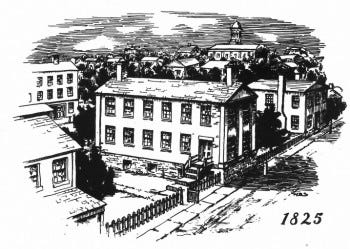
The University Act of 1821 reorganized the University (originally dubbed the Catholepistemiad or University of Michigania) as the more popular University of Michigan. Montieth moved to Ohio that year, but Fr. Richard served on the U-M board until his death in 1832. Five years after Fr. Richard’s death, U-M was reorganized in Ann Arbor 20 years after its founding. Despite failed efforts to argue the Ann Arbor campus was a separate school through the years, courts ruled the two campuses were each part of one single university, and the seal has said “1817'’ ever since.
Developer of culture and the economy: Fr. Richard’s first letter to President Thomas Jefferson sought support for his schools and the native Indian tribes. In 1809, he published the first newspaper west of the Allegheny Mountains and the first prayer books.
While Monteith established the first Detroit library, Fr. Richard amassed his own collection of 247 books (now housed at U-M) and brought the first organ to Michigan (in pieces more than 800 miles).
Fr. Richard was elected to a term as Michigan’s territorial representative to the U.S. Congress in 1823, where he presented 16 petitions to Congress in his first two months and secured funding for the first Detroit to Chicago highway (now known as Michigan Avenue and U.S.-12).
He also greatly rebuilt and expanded Ste. Anne built a new stone church that preceded the current church.
Distancing yourself from Founders fails
Many founders downplayed: Fr. Richard’s contemporary and counterpart, President Thomas Jefferson, founded his own state university, the University of Virginia in Charlottesville, Va., just two years after Fr. Richard founded the University of Michigan. Jefferson and Fr. Richard would die just six years apart.
When Jefferson wrote the epitaph for his own grave, he didn’t mention being the third President of the United States. Still, he wished to be remembered as the Author of the Declaration of Independence, the Statute of Virginia for Religious Freedom, and “Father of the University of Virginia.’’
In recent months, some critics have called for removing or modifying tributes to Jefferson (because he owned slaves). University of Virginia President Teresa Sullivan was criticized in a fall 2016 petition signed by 469 students and professors who felt “deeply offended’’ by Sullivan’s quoting the UVa. founder who has long been considered one of America’s greatest Founding Fathers.
Sullivan, a devout Catholic who previously served as U-M Provost, countered, “Quoting Jefferson (or any historical figure) does not imply an endorsement of all the social structures and beliefs of his time… UVA is still producing leaders for our Republic, and from backgrounds that Mr. Jefferson could not have anticipated in 1825… All of them belong at today’s UVA, whose founder’s most influential and most quoted words were ‘… all men are created equal.’ Those words were inherently contradictory in an era of slavery, but because of their power, they became the fundamental expression of a more genuine equality today.”
The Gabriel Richard Legacy
The power of words and deeds. History does indeed provide the building blocks for future progress. Fr. Richard, like other martyrs, grew in stature each time he was humbled, belittled, or imprisoned. Perhaps his work takes on new meaning for those who have not previously learned of its significance.
Hero, Saint, or both? During the War of 1812, British troops captured Fr. Richard and demanded his loyalty to them in their war with the United States. His “eloquence and influence’’ talked Indians out of torturing his fellow prisoners. He refused to take an oath of allegiance to the British, telling them his loyalty was to the United States and “Do with me as you please.’’ He inspired other Frenchmen to follow his example.
Chief Tecumseh of the Shawnee Tribue refused to support the British until Fr. Richard was released.
Fr. Richard was twice nominated by U.S. Bishops to become the first Bishop of Detroit, but Michigan did not yet have an established Diocese. In 1831, he was planning to establish what would have been Michigan’s first seminary.
Unfortunately, Fr. Richard died the following year while ministering to victims of a widespread cholera epidemic. More than 2,500 people (greater than the entire population of Detroit at the time) attended his funeral.
A century after his death, during the 1930s, 40s, and ’50s, Detroit honored Fr. Richard with all-day celebrations. In 1960, an unsuccessful effort to save Detroit’s old City Hall (opened in 1871 and leveled in 1961) included a plea to move Fr. Richard’s body there.
A 1936 Detroit tribute to Fr. Richard read: “The world is filled with men and women who have neglected the talents Almighty God has given them… As a priest, pioneer, and patriot, he was one of the most courageous and many-sided men America has ever known. To his mind, his most notable accomplishment was his part in the development of Americanism in the formative years of this state and nation.”
Tomorrow marks 185 years since his death on Sept. 13, 1832. A cholera plague spread through Detroit from July to September of that year. He ministered to victims daily then finally became the last Detroiter to die of the epidemic.
As he died, he received the Blessed Sacrament a final time and then said, “Lord, now let thy servant depart in peace, according to thy Word.’’
Originally published at https://www.linkedin.com.