
19th Century Authors, And What They Can Teach You
The writing process of some of the worlds most valued writers
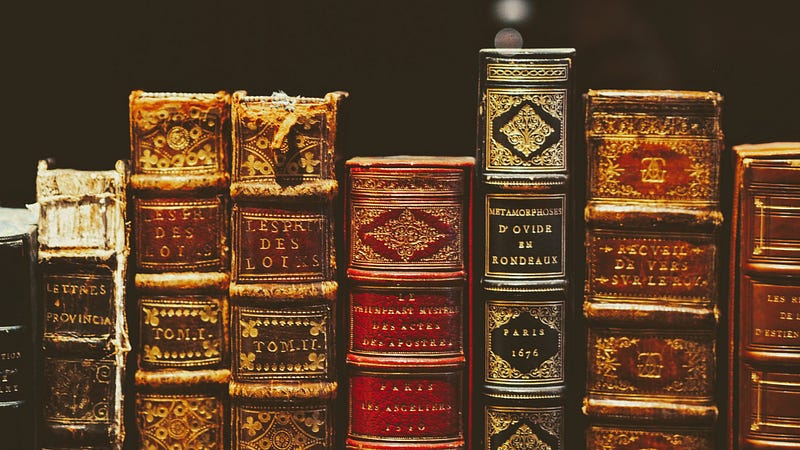
Since the dawning of time, writing has existed. All forms of writing, from cave drawings to poetry — we have expressed ourselves through words. While we each have our own way of portraying a message, It is always beneficial to not only read others’ work but to sharpen new tools to add to our box.
Let’s go over some of the world’s most adored authors and see how they created an essence that has lasted so long.
Mark Twain
Samuel Langhorne Clemens, known by his pen name Mark Twain, was an American author who created two of the world's best-known masterpieces, “The adventures of Huckleberry fin” and “The adventures of Tom Sawyer.” Ernest Hemmingway mentioned Twain‘s work as, “All modern American literature comes from one book by Twain called, “Huckleberry Finn,”
So I’m sure that there must be a lot to learn from Mark Twain’s writing process. Let’s go over some of his quotes and break them down.
“Substitute “damn” every time you’re inclined to write “very.” Your editor will delete it, and the writing will be just as it should be.” -Twain-
Here, Mark Twain is instructing that the use of unnecessary words, such as “very,” is devaluing your work. It’s a hard habit to break, but vital.
“Write without pay until somebody offers to pay.” -Twain-
Twain offers this bit suggesting the obvious; if we are writing for money alone, then you aren’t capable of writing your best work — your heart isn’t in it. I am sure most of us on here have tried to catch the “Covid-19” wave to get some traffic to our blogs, but is it what you wanted to write about? Sometimes, I like to write in my notebook of anything that comes to mind with no real purpose of the message, just to remind myself that I love writing because it’s my form of expression, not only a form of income.
“The more you explain it, the more I don’t understand it.” -Twain-
Here, Twain gives insight on “trying too hard.” We don’t need to provide Webster’s definition to every word we use, getting the point across should be short and sweet.
Alexandre Dumas
Alexandre Dumas, author most known for “The Count of Monte Cristo,” was right, a man of many talents. He wrote plays, novels, stories, and even a cookbook. Dumas was the master of diversity. The advice you should take from that is to write everything! If it pays or not, broaden your horizons and explore writing techniques, you may not have known you even had!
To the power of volume — Dumas even had co-writers! its said that he pushed out so many pieces of work, because he hired others to fill in the blanks of stories he started, so that he can work on another project. Due to the law of probability, the more you produce, the higher the chances of being seen.
Dumas wrote stories filled with adventure, captivating tales that drug you on a journey; he must have had an incredible life to be able to portray such quality. He must have had a natural flair for dramatics if you can bankrupt yourself, twice, maintain 40 mistresses, and marry one of the biggest actresses of that era.
Take a lesson from Dumas and seize the day. An adventurous life style will lead to adventurous writing, think of all the ideas you can accumulate!
Charles Dickens
Before he was a writer, Charles Dickens was a newspaperman, part-time investigative journalist, part-time critic, and much more expertise. Dickens created masterpieces such as “Great Expectations” and “Oliver Twist.” Let’s go over a few of his tips on writing.
Charles Dickens lived an adventurous life, having moved around a lot, in and out of school, experiencing life as a journalist — he has done it all.
“I think you are too ambitious, and that you have not sufficient knowledge of life or character to venture on so comprehensive an attempt.” Dickens.
Don’t write about what you don’t know about. To write intelligently and efficiently, you must understand what message you are trying to convey.
I hope, when you see it in print, you will not be alarmed by my use of the pruning-knife. -Dickens-
Pruning your work, much like a plant, gives room for growth, and an absolute freshness we need as writers. Doing too much is doing too little.
Rudyard Kipling
Kipling was one of the most popular writers in the world. In 1907, Kipling being 41 years old, won the Nobel Prize in Literature (the first English language writer awarded the prize and still its youngest in history.
It is said that Rudyard Kipling was a messy man and that his desk, he’d prefer, was always covered with pens, paper, and Ink. What I took from this was to focus less on the prim and proper display of your writing quarters, and focus more on the writing itself.
While Kipling did prefer a messy station, he was very particular about his writing utensils, much like we should be — No one wants to write on an old, slow laptop, or scribble notes down with a cheap pen. Kipling preferred Indian ink, the darkest black. “The magic lies in the Brush and the Ink,” he said —he even had an “ink boy” who lived with him, in charge of grinding fresh, premium ink. His desk was also covered with boxes of cleaned pen nibs, rubber bands, and clips — and stacks of written ideas strewn throughout his office. So, perhaps investing in the quality of supplies improves our quality of writing — I know when I get new paper and pens, the first thing I want to do is test it out.
Kipling would often go on long strolls too, as he called it, “hatch” ideas — often retreating to his desk to spend hours writing. Also, spending hours in his daybed waiting for ideas to pop up — he seemed to value the mental process of naturally coming up with ideas, instead of stressing and forcing his brain to work its magic. Kipling used nature, adventure, and time, to allow his ideas to “hatch” into beautiful, well-written masterpieces. We should all take a page from his book, and allow ourselves to create magic with our words by indulging in nature and silence from time to time.
J.R.R. Tolkien
Tolkien was the magnificent creator of, “The Lord of the rings,” with that in mind, one can determine that Tolkien must have an array of advice and inspiration behind his writing process.
When it came to laying the groundwork, Tolkien was the master. Tolkien would spend years drawing maps and creating characters for his stories, even for the plot itself – he would make little sketches to keep his idea alive and active. Seems pretty insane, yet, promising. I decided to sketch a few basic ideas with a previous article of mine, and low and behold, it helped me imagine and piece together the structure of my essay in a much more sufficient way. It was quite fun, I must add.
Tolkien often proclaimed that vanity was useless; he mentioned that his books were creations from his head, and was very humble about his genius. In Tolkien’s opinion, The Hobbit was published by “accident”; he passed it around to a few friends, one of his friends being C.S. Lewis. We, as writers, tend to take great pride in our work and often get displeased when we don’t get as much feedback, if any, at all when we publish a piece. Let us remember; we should write for the sheer joy of creating fantastic content because it is who we are, not what we are.
Tolkien’s interests, at first, were purely scientific. He also enjoyed studying and creating his languages, having built entire cultures based on them, as seen in “The Lord of the rings.” In a letter to Christopher Bretherton dated July 16th, 1964, Tolkien writes, “…But I was also interested in traditional tales (especially those concerning dragons), and writing (not reading) verse and metrical devices…”
Tolkien wrote what he loved, what he was passionate about, he let his magical tales flow from his imagination, through his heart, and onto paper. Sometimes, as writers, we try and write what we know will sell — what we know people will clap for, even if it's not what we are passionate about. If we only write about what’s “hot this season,” our stories will fall flat, on a bed of mundane, “one size fits all,” essential articles.
Put your heart into it.
Tolkien: “There was a curious local character, an old man who used to go about sweeping gossip and weather-wisdom and such like. To amuse my boys, I named him Gaffer Gamgee, and the name became part of family lore to fix on old chaps of the kind. At that time, I was beginning on The Hobbit. The choice of Gamgee was primarily directed by alliteration; but I did not invent it. It was caught out of childhood memory, as a comic word or name. It was the name when I was small (in Birmingham) for ‘cotton-wool.”
Tolkien drew inspiration from real-life people and established amazing characters from watching and conversing with friends, and even strangers. While some of us tend to write about technical stuff as opposed to fairy tales, we can draw a lot of inspiration from friends and family that can be beneficial to our outlook on writing.
conclusion
There is a reason these are classics, and a reason the author’s essence has stayed intact for years. Being open to the writing process of others is essential and beneficial to our growth.
It has been shown that the research and adaption of unconventional writing habits, create flawless and lasting results in all forms of writing.
Explore new and old strategies for creating valuable content. The end game is to learn and grow, obtain confidence and structure within our writing.