
1918 Pandemic ‘Infected’ Literary Imaginations
Writers on Loss, Illness and Dealing with Fear
Recently, Walden Pond Books, an independent, family-owned bookstore in Oakland, CA, published a pandemic reading list with this introduction:
“Writers have long employed plagues and epidemics (historical and imagined) as the background or subject of their fiction. The perspectives vary as do the genres — from historical novels to science fiction…”
The settings, too, range from the from the Black Death in the Middle Ages to AIDS and Ebola in Africa, smallpox and cholera in South America and the world-wide 1918 influenza pandemic.
Because we turn to literature to help us understand the human condition, I’ve compiled a list of quotes from books written during or about the so-called 1918 “Spanish influenza.” It’s the outbreak that most closely echoes our own experience with COVID-19 — both quickly spread worldwide with deadly consequences. One day we’ll have our own “coronavirus literature” to reflect back on, but for now let’s see what’s been said before.
One parenthetical note: The 1918 influenza outbreak is often referred to as the “forgotten pandemic.” Though far more people died as a result of the flu, their suffering was largely overshadowed by the cataclysmic events of the Great War, which itself claimed some 8–9 million casualties.
For the writers coming of age in the Twenties, World War I was the central experience of their lives. But it can’t be said no one was paying attention.
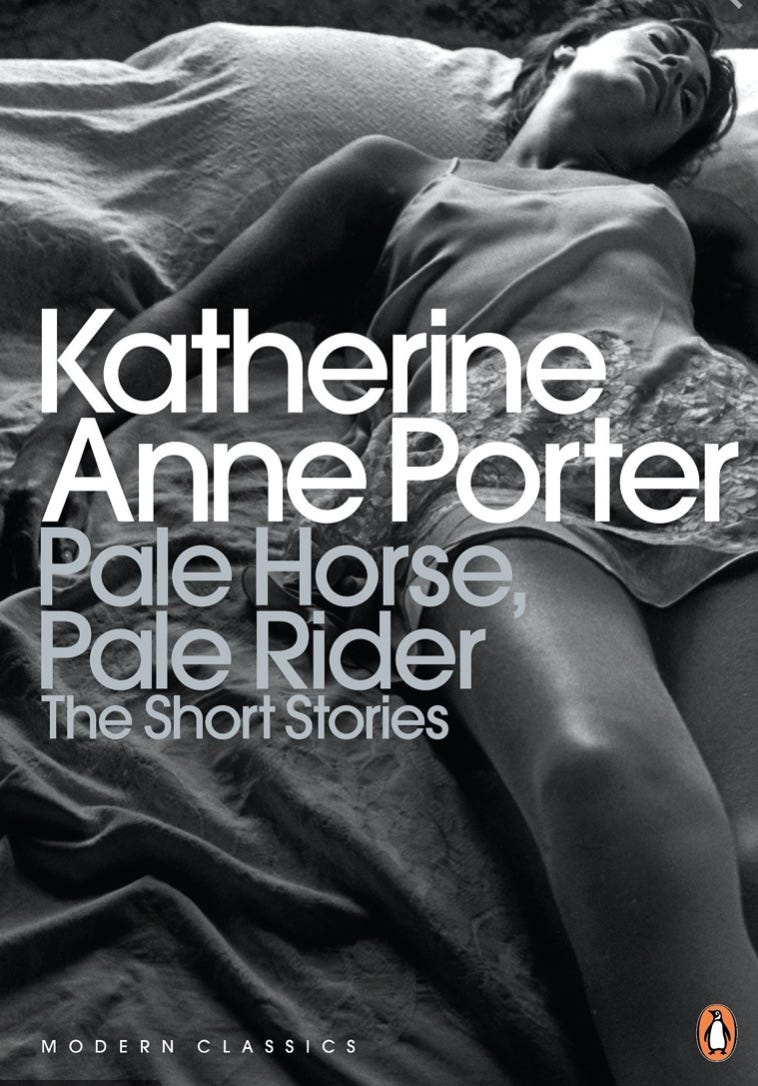
Pale Horse, Pale Rider
“Death always leaves one singer to mourn.”
The line is a quote from Katherine Anne Porter’s 1939 novel about the 1918 influenza pandemic, spoken by Miranda, the main character who has just recovered from the virus.
For Porter, the flu was personal. She almost died. The obit was drafted and her family was planning her funeral. It’s a cold reminder of the toll our own terrible pandemic is taking on those left to mourn.
Porter told the Paris Review (Katherine Anne Porter, the Art of Fiction №29), the experience “just simply divided my life — cut across it like that. So that everything before that was just getting ready, and after that I was in some strange way altered, ready.”
Remembering Porter’s novel, we wonder what books and stories will emerge from the current pandemic, with its shelter-in-place restrictions and economic hardships, its selfless essential workers and its angry protesters.
One of Ours
In her Pulitzer Prize–winning novel (1922), Willa Cather describes the horror and isolation of a sailor’s death from influenza while at sea:
“From the end of the corridor Claude had heard the frightful sounds that came from his throat, sounds like… a man in strangulation — and indeed, he was being strangled… A few moments later he died in perfect dignity…like a brave boy giving back what was not his to keep…”
The poignancy of Cather’s account is heightened with the young sailor’s burial at sea, where his body sinks without “even a splash.”
Mrs. Dalloway
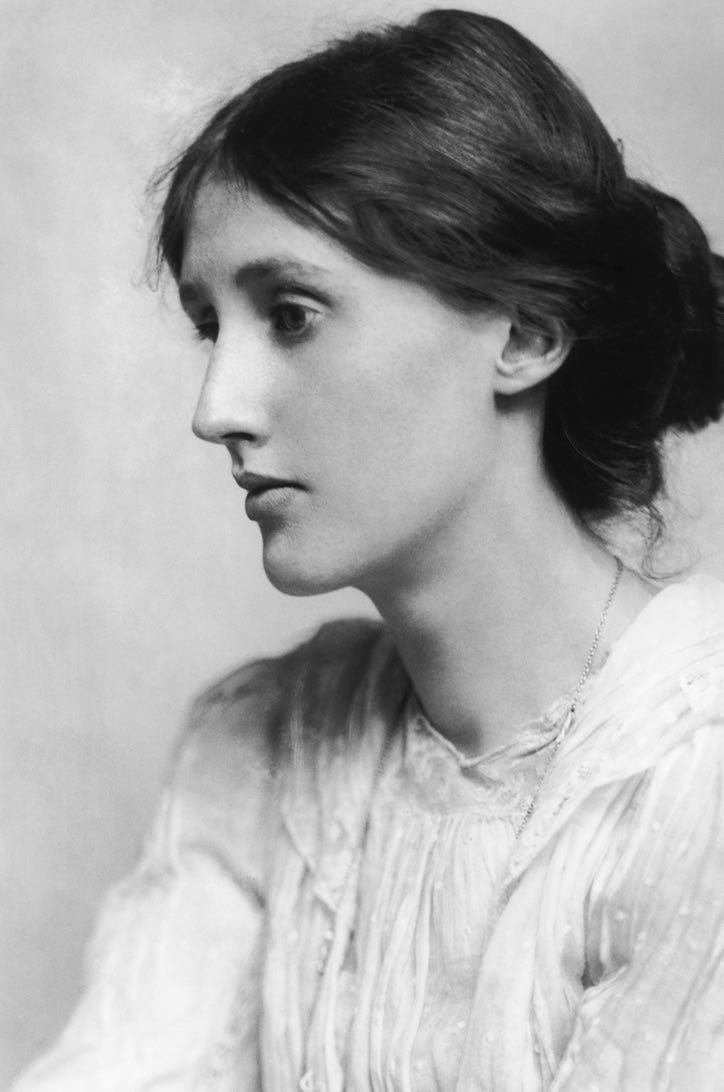
In 1925, Virginia Woolf’s title character, Clarissa Dalloway, has herself just recently recovered form influenza:
“(O)ne feels even in the midst of the traffic, or waking at night, Clarissa was positive, a particular hush, or solemnity; an indescribable pause; a suspense (but that might be her heart, affected, they said, by influenza)”
But even there, it’s the lingering trauma of war we remember from the book.
Woolf recognized the problem, writing in a 1926 essay:
“English, which can express the thoughts of Hamlet and the tragedy of Lear, has no words for the shiver and the headache…Novels, one would have thought, would have been devoted to influenza; epic poems to typhoid; odes to pneumonia, lyrics to toothache.”
One theory is that the influenza that killed so many millions was too close, too, frightening to contemplate, disease too insidious to pin down as “the enemy.” By the late 1920s-early 1930s, writers began to look back at the epidemic with the benefit of time and distance.
Look Homeward Angel
In Thomas Wolfe’s highly autobiographical novel, published in 1929, he writes that Ben lay in bed “bitterly twisted below the covers, in an attitude of struggle and torture.”
The character of Ben, based on Wolfe’s brother who died from pneumonia brought on by the flu, is gasping for air:
“And the sound of this gasping — loud, hoarse, rapid, unbelievable, filling the room, and every moment in it — gave to the scene its final note of horror.”
The Doctor’s Son
John O’Hara’s short story, published in 1935, closely follows his experiences as a teen during the pandemic. At one point, the narrator recalls his father’s attempts to find time for sleep during the worst days of the pandemic:
“At first he would get it by going to his office, locking the rear office door, and stretching out on the floor or on the operating table. He would put a revolver on the floor beside him or in the tray that was bracketed to the operating table. He had to have the revolver, because here and there among the people who would come to his office, there would be a wild man or woman, threatening him, shouting that they would not leave until he left with them, and that if their baby died they would come back and kill him…(B)ut it really did no good as far as my father’s sleep was concerned; not even a doctor who had kept going for days on coffee and quinine would use a revolver on an Italian who had just come from a bedroom where the last of five children was being strangled by influenza.”
O’Hara foreshadows today’s ambivalence toward wearing masks. The doctor and his son know the flu is an airborne disease that spreads quickly through crowds of people, but even so, stopped wearing their masks:
“It was too much of a nuisance to put them on and take them off … and also it was rather insulting to walk in on a group of people with a mask on your face when nobody in the group was wearing one.” (See “Choosing Not to Wear a Face Covering Doesn’t Make You Tough”
They Came Like Swallows
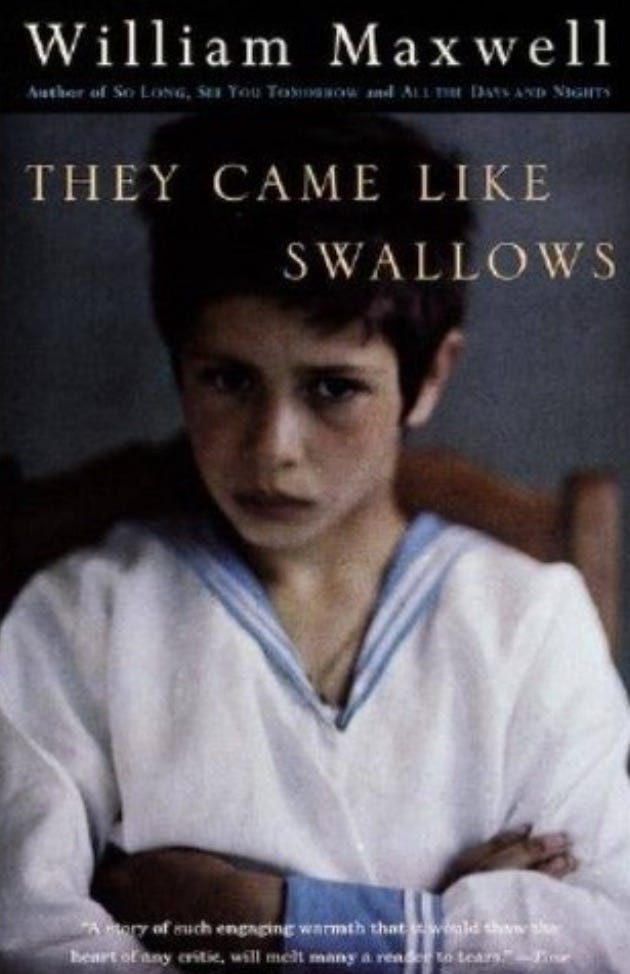
When author and New Yorker fiction editor William Maxwell was a child, his mother died of the 1918 flu. His 1937 novel is about a Midwestern family that falls ill when the flu reaches their town.
In one scene, the father is reading a newspaper article about the epidemic to his wife and children at breakfast:
“Ordinarily the fever lasts from three to four days and the patient recovers . . . . As in other catching diseases, a person who has only a mild attack of the disease may give a very severe attack to others . . . .”
Later, when one of the children is ill, the mother tells her other son:
“Your brother has the influenza, Robert. You may not have noticed it, but he has. And now that they’ve closed the schools to keep the epidemic from spreading, it stands to reason that you’ll be much better off at home.” (“Will he?” we worry, knowing the virus is now so close.)
For more pandemic books
For more books on the 1918 and other pandemics and plagues, visit Walden Pond Books, The Guardian, and the New York Times, search for “Your Quarantine Reader.”


