
OpEd: Our Black Children Are Not Experiments!
Columnist Jakeia Person analyzes the affect of mental health and its impact on Black Americans currently, while also providing historical reference dating back to the culture’s shaky relationship with the healthcare industry overall.

The general population of Black Americans will not accept mental health because the very same ones who experimented on the children of color are still professionals in the system they must trust.
I would wonder why a person of color would look at me as if I’m talking Glossolalia, or speaking in tongues, when I tell them I attend sessions with a psychotherapist.
Psychotherapy for myself has been a therapeutic exercise to understand how my subconscious networks with my conscious behaviors. Seeing a psychotherapist has taught me to manually change subconscious patterns to enhance my everyday thoughts. I may tell this to a person of color and usually what follows is this: Why do you go to a psychotherapist? Were you assigned to one by a court or guardianship system?
Why was it such a disheartening statement to hear from my own — when I told them I sought, needed, professional help for my day to day struggles?
But of course, the stigmatism of Mental Health has been caused from the prejudiced faith of racist white individuals, praising the genes of white supremacy.
I can’t look at my own in disgust from their beliefs.
But in order for Black Americans to trust the mental healthcare system, we must reveal and clarify the damage psychiatric racism has become.
The trauma of discrimination in professional structures is still an underlying issue that society still faces today that needs major reconstruction.

In the 1980s, United States and European Scientists would find distorted ploys to deem the intelligence of minorities (Black, Native Americans, and Hispanics) as inferior to the intelligence of the white race. Federal funding was approved to disperse these programs dissecting the behaviors of minorities, especially with impoverished neighborhoods.
Methods of these psychiatric research proposals were shooting up children of color with psychotropic drugs and others associated with valvular heart disease; attempts at demonstrating electroshock to dismiss the so-called hereditary violent attitude, or negritude (the consciousness of the value of black culture, heritage, and identity). And even using psycho-surgery on Black Americans as young as five to melt areas of their brain to monitor their emotions and behaviors.

In 1992, Dr. Frederick K. Goodwin, then director of the National Institute of Mental Health (NIMH), designed The Violence Initiative Program, to study the social problems that may have been inherent from “high impact inner-city” youth and urban poverty areas. With federal funds by the National Academy of Sciences and The National Research Council, Goodwin captured and titled his campaign Understanding and Preventing Violence, publicly exploiting his sick ideas to administer psychotropic drugs to prevent the alleged biochemical and genetic defects of violence in families living in New York City’s urban communities.

Recognition towards this program became publicly known as racist when Goodwin made a speech marketing the program to the ADA, making comparisons of the inner city to jungles and “inner city youth only want to kill each other, have sex, and reproduce.” Goodwin was convinced serotonin, a chemical component in the human body that contributes to the well-being and happiness of an individual, had to be altered in Black/Hispanic children’s brain, in order to properly prevent the contended consciousness of violence.
The idea for his entire initiative program was derived from a biochemical imbalance research project of violent monkeys. Peter Breggin, an American psychiatrist against pharmaceutical therapy, boldly pointed out remarks from Goodwin’s speech and fought to expose the nature of Goodwin’s psychiatric medicinal research program that was utilizing his racist methods. Within a month of attempting to launch the program, Goodwin had resigned from his position in the Violence Initiative Program, as well as the end of his sinister scheme of the Black community.

But then in January 1994, Gail Wasserman, a professor of child psychiatry, at Columbia University and fellow colleagues, David S. Pine and Michael Liebowitz took lead of Violence Initiative with partially funded tax payer dollars and private donors; the three hired a team to conduct experiments from the initial foundation Goodwin designed.
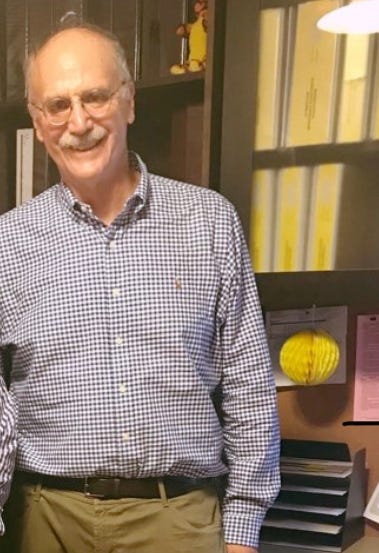
This time around, articles of documents provided a range of experiments that were performed by Wasserman at the institution. Although the program didn’t directly implicate studying Black/Hispanic Americans, scouting for the test subjects derived from the Department of Probation and the New York City Board of Education, sorting to find 126 Black or Hispanic boys between ages 6 to 10 in families with older siblings labeled as delinquents by the Family Courts. Wasserman and her team misled recruits into believing the research was to learn and study “what keeps children out of trouble.” They highlighted the reason for reaching out to the parents of these particular children was for the examination of “the physical and emotional well-being of children whose families have been involved in the court system.” Then another bombshell was added to these letters. Fenfluramine will be issued along with studying psychiatric health. “This test will evaluate the responsiveness of a natural brain chemical called serotonin. Fenfluramine causes the release of serotonin, and its effects are measured in this test.”

In reality, Fenfluramine banned in the United States in 1997, is a medication treatment for seizures associated with Valvular Heart Disease (VHD) and Pulmonary Hypertension (PAH). This medication has had major side effects of emotional instability, depression, and even schizophrenia.
Hence the letters emitted to the parents vaguely expressed the nature of these experiments. Instead enclosed in the letters was a reward of $125 for the parent’s efforts of advocating for their child in the “white”proclaimed fight to stop the spread of emotional trauma.
The researchers, going off on a hypothesis that Fenfluramine or “Fen-phen” can eliminate the genetic behavior disorders on 34 young Black and Hispanic boys, were also subjected to diet for 18 hours prior. During the test the boys were forced to sit with a catheter in their arm for six hours, then warned of possible side effects of headaches, nausea, and anxiety.

Talk around New York Psychiatric Institutions years later in 1996, led to an investigation of ethics on the research experiment with the Institutional Review Board (IRB) on the test subjects being 97% of Black/Hispanic race. Further, the Board only permitted for the researchers to make provisions to the ethnicity guidelines for the experiment.
When Wasserman and researchers responded to the controversy of generally using children, the team commented to their work as: “none of the boys suffered from significant side effects.”
Just like that.
With no repercussions, or long term monitoring of the Black and Hispanic boys used as guinea pigs on experimenting with harsh, hallucinogenic drugs mind, this callous research is one of the many government-funded studies to advocate the so-called genetic violent behaviors that damage the Black and Hispanic community.
Gail Wasserman and Michael R. Liebowitz, both still engage with positions at Columbia University, perceive there is a concept behind violence and depression genetically harming our people. Instead of crediting the trauma of generations from segregation, discrimination, and oppression, this team decides to add to the bigotry. Even after their form of the “Violence Initiative Program”, they continued with more inner-city behavioral investigations correlated with Psychopharmacologic Drug Advisory and other medicines of Neuropsychopharmacology.

From their insensitive methods to accomplish their hypothetical questions about minority communities, they are part of the reason that people of color ask me Why do you go to a psychotherapist? Were you assigned to one by a court or guardianship program?
This is a message to all psychiatric institutions of America to understand the genuine problem lies with the consequences from not involving the damage America has struck on Black Americans.


