

17 Real Product Manager Interview Questions and Answers
Prepare by using these questions and nail the interview.
I’ve been through a ton of product management interviews recently to find my next opportunity. They are a gauntlet of uncomfortable questions that dredge the depths of your soul — not always fun. It’s never the same question twice, but many of them seek the same answer in different ways.
Right after an interview, I would write down all the questions they asked and analyze them and my answers so I could improve on my performance for the next round; or failing that, the next company.
Here’s 17 of the most common questions I got, why the interviewers asked them, and how best to answer them.
Questions and Answers

1. Why did you leave (or are leaving) your last job?
Question’s Purpose PM is a high-pressure job with lots of moving parts that can go extremely wrong. They want to know if you were fired, swept out for poor performance, re-orged into irrelevancy, and so on.
How to Answer The truth can be tricky. If nothing is wrong and you’re leaving because the new company is a cool opportunity, then answering is easy. Just focus on what makes the new company so wonderful and why you are the perfect fit for it. Easy-peasy.
But if you’ve got some skeletons in the closet, then answering this question is challenging. Don’t lie. It can come back on you. Be truthful but focus on the positives, just like you would if you were giving stakeholders bad news.
- Fired “Ultimately, my manager and I had a very hard conversation and we both felt this wasn’t the right place for me. What I learned from the experience is X, Y, Z, and here’s how I can apply that to your company.”
- Re-orged “Change is the only constant at the company and I’m grateful for the time I got to spend there because I got to learn X, Y, Z, which made me a much stronger PM and in a good position to execute X, Y, Z at your company.”
- Poor performance “My last performance review wasn’t nearly as good as the ones before that. What I learned from that is…”
These are hard conversations. Answer without emotion, concisely, and in a way that makes it sound like it was a tough but valuable lesson you had to learn. Do you PM homework on the business so you can connect your hard-learned lesson to the new job opportunities.
Don’t let what happened at your last company be the end of you. Everybody at some point in their lives gets fired, re-orged, poor performance reviewed, and so on. It’s what you learned and how you come out of it that matters the most. Show that in the interview —it’s the only way to turn that negative into a positive.

2. Can you tell me a bit about yourself?
Question’s Purpose A good PM can tell an impactive, succinct story about something complicated — and what is more complicated than you? How concisely and passionately can you can tell your story?
How to Answer Create an elevator pitch that threads together the story of your resume. This is a powerful way to make a lasting statement about yourself.
Here’s one of my elevator pitches:
In a nutshell, my career is about helping and empowering developers to build amazing things. At company X, I was the team lead responsible for enabling our team to create world-class on-boarding materials for developers to create apps on our platform. At company Y, I led a team of tech writers and developers to build educational services and tools to teach developers how to build awesome integrations with our platform. And at company Z, I was the PM of dev experience that helped 3rd party devs go from zero to hero and learn build apps for our marketplace and make a ton of money.
Notice the structure of my response.
- Strong and emotionally impactive thesis statement that’s one sentence long and focuses on the users I’m trying to help.
- Supporting points that outline my experience.
- Ordered experienced that maps to my resume (which they may or may not have actually read)
- Brevity — takes one minute to say the whole thing.
Be aware that your elevator pitch is incredibly hard to put together and very challenging to make it sound like it hasn’t been put together — if you know what I mean. Spend as much time as you need to make it work because it’s critical. I spent days on it and continually refined it every time I said it to a prospective employer.

3. Why do you want this job?
Question’s Purpose What makes you passionate about the job? What motivates you as a human being? That’s what they are trying to extract out of you. They also want to know if you’ve done your homework and researched the job and the company.
How to Answer Passionate PMs want to change the world for the betterment of mankind. So your answer should identify why you want the job and then elevate that reason to a greater purpose.
For example, say you’re going after a technical PM job for a Fintech company. You’ll want the job because a.) you love working with super-cool tech, and b.) you love helping developers drive out the right things to build for customers, and c.) [greater purpose here] you will build services that make people’s lives easier and help them save money, donate to charity, or whatever.
See the formula: Your Reason + Your Passion+ Higher Purpose == Good Answer
Hey, let’s be honest with each other. This question should be easy for you. The answer should pop into your head when you read the job add. But if it doesn’t, then maybe you should reassess why you want the job. Sometimes when looking for a job desperation drives us, not passion. Be aware of your motivation. I fully understand the need of getting job, but being a PM is damn hard and incredibly stressful and it’s not worth the money if you aren’t PMing something you’re passionate about. That said, it’s COVID-19 times and you get what you get, so I hope it’s something you’re deeply passionate about.

4. Why are you a good fit for this job?
Question’s Purpose They want you to connect the dots between this opportunity and your experience. Honestly, I find this question lazy on their part. Obviously, they think I’m a good fit for the job otherwise they wouldn’t have called. I’d rather hear why they think I’m a good fit than I have to explain it to them. But that’s the way interviews go and you need a good answer.
How to Answer Draw a large T on a piece of paper. On the left side of the T, list the job’s requirements. On the right side of the T, list your experiences that map to the requirements. Take the top 3 most important requirements and chat about them and how your experience maps to them. Remember to tell a story. Don’t just say your requirements are A, B, C and I’ve done A, B, and C. Tell the story of how you overcame the odds and did A, B, and C.
For example, the following requirement is on every PM job description: “The ability to take a strategy and translate it into action.” Use that as your talking point for this answer and tell a story about how your last company handed you a convoluted one-page business doc with 37 bullet points and you turned that into a proper roadmap, rallied the troops, and began executing on it.
5. Tell me why you’re interested in this company?
Question’s Purpose Good PMs have solid research and analysis skills and they want to test this. How much do you know about the company, the role, and the area you’ll be potentially working in? What are the challenges the company is facing? A good PM will come to the interview armed with this knowledge.
How to Answer This is easy. Just do your job and research and analyze the company. Find something about the company and relate it to your passions for the job opportunity, then explore that with them.
For example, when I interviewed at a company in the education space my answer was something like:
I want to work here because the core of your company is about improving people’s lives through education. I am passionate about helping people become greater than they are and that’s reflected in my experience building products A, B, C.
As always with my answers, I’m trying to tell a story and interweave my passions. You need to do the same.
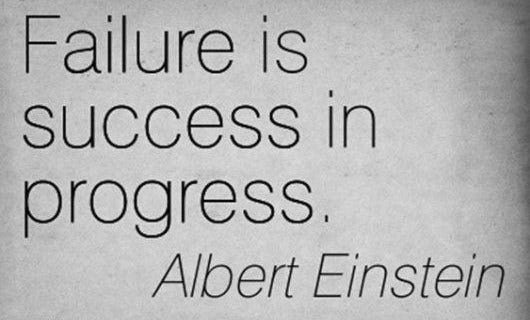
6. Tell me of a time when you failed at a project?
Question’s Purpose They want to gauge the level of your PM maturity and your honesty. Honesty is critical to being a PM. If you are not honest, then you are not trustworthy and they will not place an entire developer team and a critical project in your untrustworthy hands.
How to Answer Every PM under the sun has failed at a project and the interviewer knows that. The best answer isn’t about the failure itself, it’s about the lessons learned. A mature PM will have done a solid analysis/retro on any failure they experienced and have strong lessons-learned to take to the next project. So when answering this question, outline the failure so they have the context but spend most of the time explaining what you learned from it. Bonus points if you can connect those learnings to the new job’s challenges.
Don’t be afraid of that failure, embrace it and be excited to tell them what you learned from it.

7. Give me an example of when you failed to convince your manager of something?
Question’s Purpose The PM job has tons of push and pulls from every direction, including from your manager. They want to know how strong and independent you are, but they also want to know if you’re a team player.
How to Answer Your best answer follows the “Have a Backbone; Disagree and Commit.” management philosophy at Amazon. They want to see that you are strong enough to disagree with your manager, but also willing to commit wholeheartedly to their decision.
Focus your answer on what you and your manager disagreed over, what arguments you used to convince your manager, why the arguments didn’t work, and how you committed to the direction your manager wanted you to go in. Don’t make the story about how right you were and how stupid your manager was. That just makes you and your manager look bad.

8. What was the hardest decision you had to make? And why?
Question’s Purpose They want to know your thought process and if you can make hard trade-off decisions. Also, this question helps them understand your influence at your last company. Do your decisions affect people’s lives, products, and businesses? Or is your remit to little features that nobody notices?
How to Answer Think of the most challenging decision you had to make that had resounding consequences on people, product, and company processes. Describe the challenge and make sure that they know that before you made the decision you completely understood its ramifications. A good PM understands the trade-offs and can make the hard decision that has the least trade-offs and the best outcomes for the business.

9. How do you like to work? What’s your PM style?
Question’s Purpose They want to know what’s your favorite way to work. Are you a quiet PM type, cracking away at some Redash dashboard in a corner? Or are you out talking to customers, designers, and devs in order to gain insights and drive the business?
How to Answer Tell them you like to work collaboratively. That’s the only answer they want to hear. Whatever type of PM job it is, your answer should tell a story about how you like to work collaboratively with customers, designers, other PMs, developers, and so on. Nobody wants a PM that likes to work by themselves — that’s the antithesis of the job’s purpose. Tell a story about an important collaboration you had with a dev, designer, other product manager, data scientist, or a customer, and then tell them that’s how you like to work.
10. What is your most important KPI? And why?
Question’s Purpose Good PMs will have the KPI for their product, initiative, feature, etc, tattooed on their soul and will be able to articulate why that KPI is important.
How to Answer It’s not about the answer, it’s about why the answer is. Sorry, that’s confusing but bear with me. Just firing off a KPI number doesn’t mean anything to anybody. It’s about being able to articulate why that number means something and how that number is a true measure of the value of your project, initiative, feature, etc. Your best answer describes the KPI and outlines why it’s the best measure of success.
In my experience, I was often asked about the KPI and then I was asked what would be a better KPI. Truth is there is always a better KPI. So be prepared to discuss this, particularly if your interviewer is another PM. Be willing to agree if they come up with a better one, which I often did. But I was always very forward with them in telling them that the infrastructure wasn’t in place to measure that KPI and that’s why we went with the one I said. A good KPI is meaningless unless you can measure it.

11. What was your biggest success?
Question’s Purpose This question is a trap! It looks like a blank cheque to brag about yourself, but it’s not. It’s not your biggest success they’re after — it’s the biggest success you’ve delivered for the customer they want to hear about. Do you see the distinction?
How to Answer Don’t talk about how amazing you are. That should come out organically in your answer. Tell the story about the pain you were trying to solve and its dire consequences for the user. Tell them about how your team collaboratively worked together to come up with a solution and how that solution solved that pain. Be proud of the team. Be proud of their efforts. And be proud of the positive change you made in the customer’s life. That’s the best kind of answer. It lets them know you are collaborative, driven, and passionate for the customer. Anything is else bragging, which puts your perceived importance above the team and the customer, which is not good.

12. What do you do in your spare time? (hobbies)
Question’s Purpose Your hobbies tell them a lot about you. It says whether you are a Type A or Type B person. (Hint, they are not looking for a Type B person to be their PM.) They want somebody competitive, sets high goals for themselves, and works aggressively towards them and they want to see that reflected in your hobbies.
How to Answer Your hobbies should tell a story of your Type A personality traits. They don’t want to hear stuff like, “I have kids and they take all my time,” “I like to hike,” or “I like to read and I read a lot.” (who the hell doesn’t read a lot?) They want a story about a personal life-goal that you are working towards in your spare time. Like me for instance, I want to be a writer and I write fiction and non-fiction, and I study and take writing courses in my spare time to improve my skills and abilities.
Stick to this formula: Aspirational Life Goal + Activities (hobbies) Working Towards Goal == Good Answer.

13. What would you do in your first 90 days?
Question’s Purpose They want to hire somebody that has a plan to create value for the company ASAP vs somebody who doesn’t.
How to Answer Tell them that you have a rough agenda in mind that looks like this:
- First 30 days Building the right relationships with your co-workers and customers. Relationships and alliances are how you influence and get things done as a PM. These will be get-to-know-you coffee meetings, interviews, and so on.
- Next 30 days Problems and priorities. Deep dive into the company’s challenges, priorities, customers, and so on. This can involve interviewing the right people, reading up on roadmaps, studying white papers, and so on. This is you getting across the major problems your company is trying to solve and the order of their priority.
- Next 30 days Show value. Product manage a small feature, release, initiative or anything you can think of that moves the needle in the right direction for the customer.
You may disagree with what I’m suggesting here and that’s fine. The idea is that you have a rough action plan in mind that you can articulate to them.
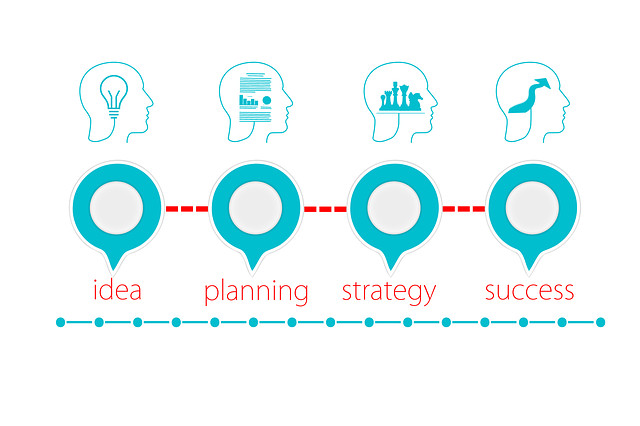
14. Where do you see yourself in 5 years?
Question’s Purpose Being a PM is all about having a vision and executing on a plan to achieve that vision. They want to see if you are a living embodiment of that. Do you have a vision for yourself that you are working towards?
How to Answer Best answer articulates where you want to be in five years and how they fit into that objective. The answer can be anything, but should stay within the realms of PM (your dream to become a lion tamer should stay out of the conversation).
PM careers usually follow one or two paths. First path, independent excellence in PM. Second path, PM leadership/management. Choose a path for your answer and then explain to them how the new job will align you with that journey.
Example,“In five years I’d like to be managing and helping other product managers to achieve their goals, and this company offers opportunity X, which will give me valuable experience in managing others.” Truly not the best example, but I hope you get the point, which is that your 5 year vision includes working for them.

15. What is your favorite product? And why?
Question’s Purpose This question dives down into how critically you think about a product’s business, its users and their pain points, and how innovative product design solutions can solve those pains and make money. (Yep, it’s trying to get across all that in one deceptively simple question.)
How to Answer Always have an answer prepared for this. If you really want to go overboard and have the perfect soup-to-nuts answer, take a look at these guys’ approach: https://igotanoffer.com/blogs/product-manager/favorite-product-interview-question#how-to-answer.
My answer is much more lightweight.
My answer is your favorite product can be any product, it doesn’t really matter, it’s all about the why of the product and how well you understand that why.
Can you identify and articulate the product’s customer and their unique pain points and how the product’s design solves those pains? And very importantly, how would you improve that product to better solve those pains?
My answer follows this formula, “I love how product X [some product] makes it easy for customer Y [customer persona] to do X [customer activity]. It would be amazing if they also build it to do Z [customer activity] because I believe it’s an underserved need.” Interviewers always ask questions about that underserved need and the customer, so I would have researched and memorized some data points for the conversation.
The key is to find a product you really do love, so when you tell the story about that product your passion for it comes out.

16. How do you motivate others?
Question’s Purpose PM is a leadership position and a key aspect of leadership is the ability to motivate others. How do you as a PM motivate your teams to deliver the best software for your customers?
How to Answer There are tons of motivation techniques. I think the best one to talk about is the technique of bringing your customer’s pains to the team in order to motivate them to build the best software. This ties directly in with your job’s purpose: to understand the customer’s deepest pains points.
Tell the interviewers about how you use customer research, interviews, and so on to motivate your teams. I usually say something like this:
I like to motivate people by bringing the customer’s pain as close as possible to the team. I’ll even bring the developers into the customer interviews. This directly connects the code they’re writing to the customer’s pains we are trying to solve. An example of where this really motivated the team was when…[example]
Honestly, it’s maybe not the best answer but you get the idea. Talk about how you use your PM skill sets to motivate teams.

17. Do you have any questions for me?
Question’s Purpose They want to know how serious and invested you are in this job. Also, a PM’s power is their ability to ask questions — good questions — so this is an opportunity for them to evaluate the quality of your questions.
How to Answer Prepare questions beforehand, never not ask questions at this point in the interview.
Some typical PM questions I ask: How do they measure success? What would success look like in this role? What would failure look like? How do you motivate your employees? How are you going to beat competitor X?
There is no wrong question here. Just dig as deeply into their company, their product, how design/eng/pm work together, company values, and whatever you can think of.
Sometimes I notice a theme to their questions and I’ll ask about it. Like, one company kept asking me about how I would resolve conflicts between managers, devs, PMs, and so on. So I asked them, “Hey, I noticed a lot of your questions are about conflict resolution in the workplace. Is that a major challenge for your company?” Turns out, yes it is. A recent re-org put people at odds with each other and the interviewers wanted to know how well I could handle an environment like that.
Just remember, be bold here. Ask the hardest questions you can think of.

Final thoughts
Remember: interviews are two-way streets. You are there to find out as much about them as they about you. Though it will never seem like it because they will out-number you, out-question you, and ultimately you’re the applicant and they the all-powerful company so the interview will seem completely one-sided.
But fuck that.
It’s your life for the next three or so years that’s in the balance, so challenge the hell out of them. Don’t wait for the five minutes they’ll give you at the end of the interview to ask questions — that’s never enough time. Ask questions as they ask you questions. Often, I’ll finish answering their question and I turn it around on them and ask them the same question. I do this because I want to get as many insights as I can into how their company operates, its people, and their processes. I totally advise doing this. Grill them. Grill them.
Remember, it’s a marathon, not a race. Interviewing takes tons of practice to get the flow right and your confidence up. Unfortunately, the best way to practice is by doing real interviews. You can do all the fake interviews you want with other PMs on Zoom, but the real lessons learned are in the actual interview. This means you’ll fail quite a few times before you get it right. It’s tough. But that’s how it goes.
And, of course, everything here is just my opinion. Feel free to disagree. I’d love to hear your perspective. Just highlight the bit where you differ and comment away.
I wish you the best luck job hunting.
🍀🍀🍀🍀


