
Darius Williams Aims to Demystify Vegan Soul Food
Even through closed restaurants and a pandemic, he’s pursuing his dream
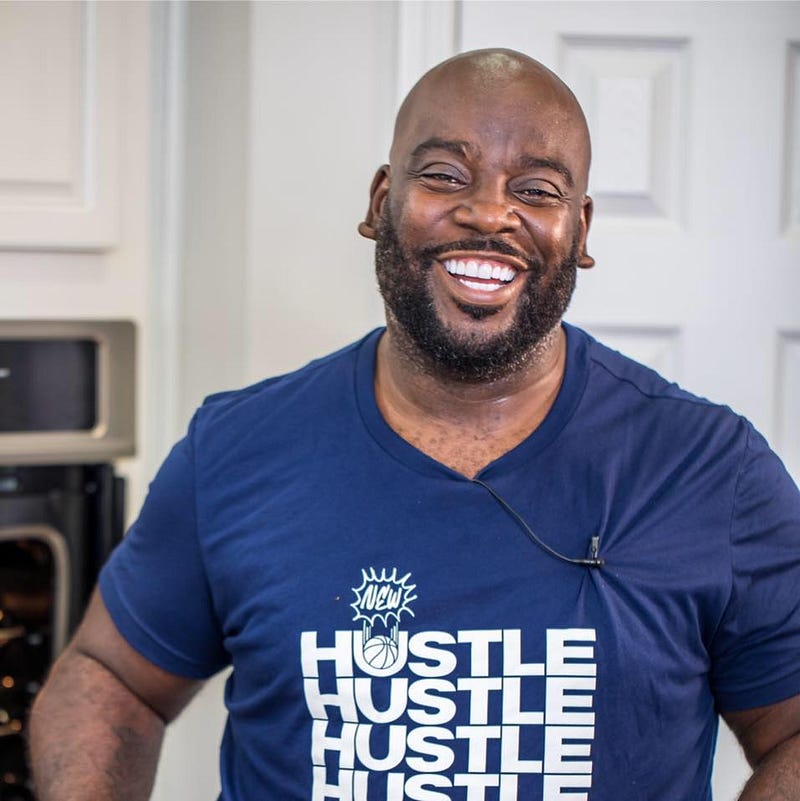
When Darius Williams moved to Atlanta five years ago, he thought he wanted to be the next Food Network star. A boisterous, gay Black chef, Williams’ personality and culinary skills were in his favor. Instead, the food blogger became a social media star on his own, Food Network not included.
Born and raised in Chicago, Williams spent time in New York City before relocating to Atlanta. While opening restaurants in Chicago and Atlanta, Williams also built his public brand on social media.
“I don’t have a book publisher or a book deal, but I do have a community,” Williams said. “A lot of this is about the connections made, and trying to make things accessible for people who are asking for them.”
With a Facebook fan base of 1 million, an Instagram following of nearly 500,000, and a YouTube subscriber network of nearly 200,000, Williams is cooking Black food his own way, leaning into his bravado and culinary creativity to do the work he believes in. It all started with his website and blog, DariusCooks.TV, which launched in 2012. His one-stop shop for recipes, videos, cookbooks, and even candles became an access point for his desired audience and helped launch him to social media popularity.
Williams certainly isn’t the only food blogger who’s benefited from the power of social media, but his connection with his community and offerings are unique. Williams said he’s committed to “just cooking good food” and has recipes and cookbooks available for keto, vegan, and restriction-free eaters, all of which allow him to connect to the diverse eating community in Black America.
“Listening is key,” Williams said. “They wanted an alternative to the vegan options that are out there. If you go look at some of the vegan cookbooks that are out there, Black folks are not eating Buddha Bowls. I’m not saying that stuff isn’t good, but it’s not always for us.”
Williams’ goal has been to introduce vegan food in a way that’s relatable to his Black base — through soul food. His recipes for vegan sweet potato curry (see below), vegan garlic braised collard greens and cabbage over creamy jalapeño grits, and vegan honey butter corn “porn” bread are all popular. And yes, Williams offers a video to teach you how to cook each and every one.
“I built a brand around the concept that you shouldn’t be in the kitchen all day, regardless of whether it’s vegan or keto or a regular meal. So my job is to sort of demystify what that looks like, and help people understand that they can cook what works for them, on their timeline.”
Leaning into his grandmother’s Kentucky roots, in 2017 and 2018, Williams opened soul food and seafood restaurants Greens and Gravy and Soul Crab. Building on his burgeoning internet following, the restaurants were welcomed by locals and an expected extension of his online cooking success.
His journey to build his own brand, however, hasn’t come without its challenges. In February, Williams abruptly closed all of his restaurants — Soul Crab locations in Atlanta and Chicago and Greens and Gravy in Chicago. In addition to legal issues related to a Williams-owned LLC, Williams cited mental health challenges.
“The flip side of going after your dreams that people don’t talk about is that there are real psychological things that can occur when you are just out there going for it,” Williams said. “The truth is for Black folks coming into the entrepreneurship game, we’re already at a disadvantage. So getting out there, opening a restaurant and starting a restaurant group on your own without any loans or any financial assistance just because you want to chase a dream…that can have its effects on you.”
‘The flip side of going after your dreams that people don’t talk about is that there are real psychological things that can occur when you are just out there going for it.’
Williams added that as a Black man, it was especially important for him to be honest and vulnerable for those who may not have access to mental health tools and information. “I’m super open and honest about triggers, about doctor’s visits, about medication, about hormonal changes. Because these are things that, you know, we don’t talk about.”
As the chef maneuvers through the next stage of his career during a pandemic that’s drastically changed the restaurant industry, he’s hoping for increased unity among Black bloggers, chefs, and restaurant owners.
“The burden is heavy,” he said, “and unfortunately, I think there’s always been a lack of unity amongst the restaurant community. There’s a lack of unity amongst the blogger community. There’s a lack of unity across the African American cookbook authors community. I want us to talk about what’s really going on.”
Citing a need for more collaborative spaces, Williams hopes Black voices continue to be amplified, and that Black food experts have a space to work together. “If there was a space where we were allowed to share the amount of ideas we have and learn from each other, that would come from that would be amazing.”
Notably, Black Food Folks is a popular space to get involved with people in the community. Still, in a world where multiple food organizations exist for various non-Black groups, Williams is hoping to see more of these types of support networks, especially for those trying to carve their own path.
“You’ve got so many people trying to do things on their own and so many lessons that people have to learn,” Williams said. “If we were able to come together from a unified standpoint and a vehicle that allows that sort of a catalyst, it could be remarkable.”
As Williams takes time for his mental health and considers his next steps, he’s still prioritizing his goals: cooking things that make people feel good. Recently, he began working with Carolina Pound Cake, which is now shipping cakes around the country. True to his commitment to cooking in all ways, Williams appears to just be getting started.
“The dream is real, and the work towards it continues.”
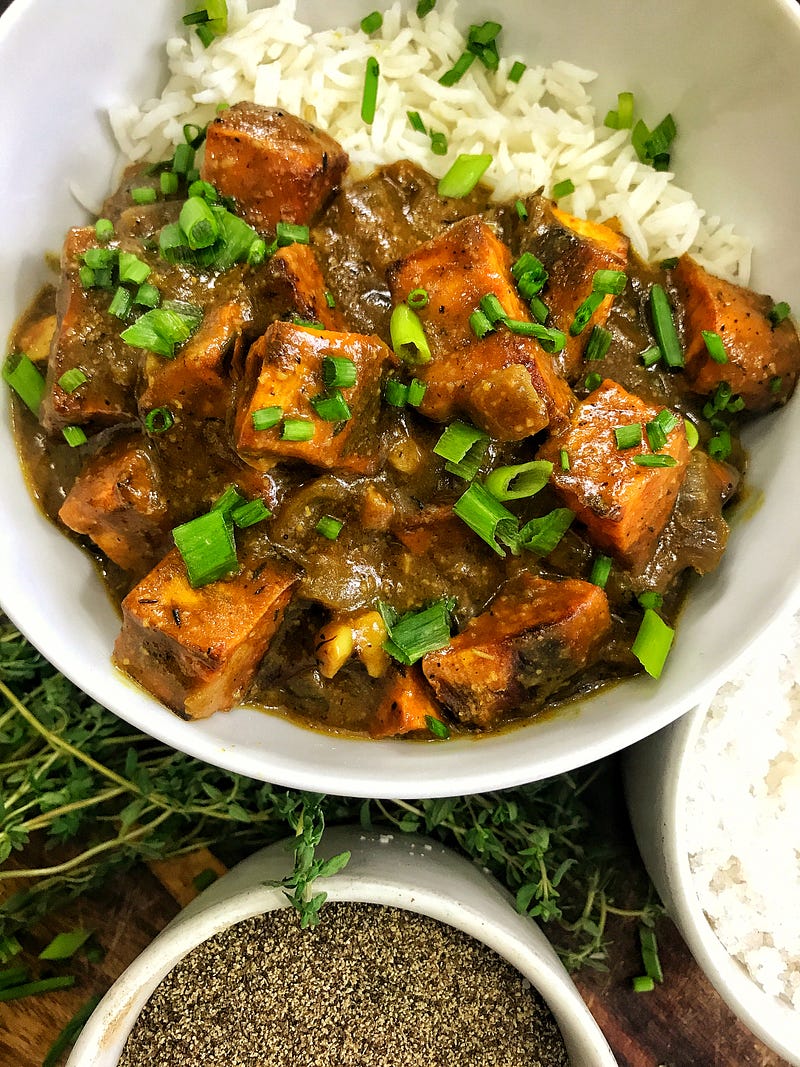
Vegan Sweet Potato Curry
Ingredients
- 1 large sweet potato, diced into about half-inch cubes
- 1 tablespoon plus 2 teaspoons olive oil, divided
- 1 cup onion, diced
- 1 cup bell pepper, diced
- 2 teaspoons chopped garlic
- 1½ tablespoons curry powder
- ½ teaspoon garlic powder
- 1½ cups vegetable stock
- ½ cup coconut milk
- 5 sprigs fresh thyme
- Salt and pepper
If you’re short on time:
- ½ tablespoon cold water
- ½ tablespoon cornstarch
Instructions
- Preheat the oven to 350°F.
- Toss the diced sweet potatoes with olive oil, salt, and pepper. Then roast in the oven until they’re golden brown. This should take anywhere from 12–15 minutes in a hot oven. If they’re a little extra crispy, who cares?
- Next, start the base of the curry. Sauté the onion and bell pepper in olive oil. Season with a bit of salt and pepper. Once the onions and bell peppers are soft, add in the garlic, curry powder, and garlic powder. Cook for about 2 minutes. If your pan is a bit dry, add in a little more olive oil.
- Then, add in the vegetable stock, coconut milk, and fresh thyme and cook until the mixture is nice and thick. This takes a while — about 30 minutes.
- If you’re short on time, mix together the cornstarch and water and after about 10 minutes of the curry cooking, add it. It’ll thicken immediately. Then, reduce the heat and simmer.
- To finish the dish, pour in the roasted sweet potatoes in the sauce. Serve over rice and garnish with chopped chives.