
16 Meditation Tips To Help You Succeed
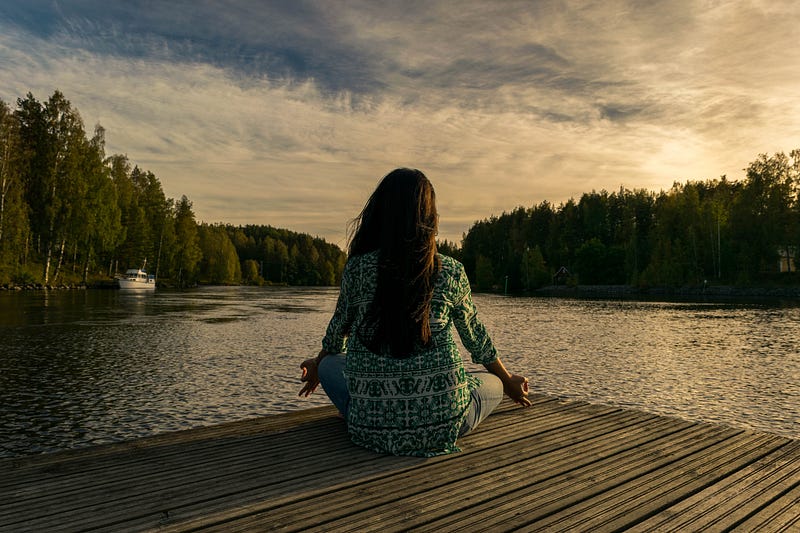
“Silence is essential. We need silence, just as much as we need air, just as much as plants need light. If our minds are crowded with words and thoughts, there is no space for us.”
- Thich Nhat Hanh
Meditation means different things to different people and many people do meditation for different reasons, what will work best for you will depend on your goals, so before you begin to meditate, consider what it is you want to get out of meditation. For example, you might want to get into a better sleeping routine, or you might struggle to relax and are using meditation as a method of doing that.
I meditate in order to connect with the inner world within me and unite with the divine within. I tried many types of meditations until I found the one that was best for me. I practise and study Dhyana and Kriya Yoga for over 7 years. It’s an ancient systematic spiritual discipline and meditation practise; its techniques are very powerful and help me to attain deep concentration in order to still the mind. if I still my mind, even for a moment, then I would experience divine union.
“Be still and know that I am God”
(Bible, Psalm 46:10)
Meditation can also help to harmonise our life, bring peace and equilibrium within the chaos of worldly existence as well as improved health and reduce stress.
Meditation requires self-discipline and commitment and many who try it, find it to be a struggle and give up, but those who persist meditation will bring about complete self-transformation such as expanded consciousness, inner peace and joy. I want you to succeed, that’s why I am sharing my top 16 meditation tips that have helped me on my meditation journey, hopefully, may help you on yours.
Here are my 16 meditation tips:
1. Try a variety of meditations to find what works best for you
The first thing you need to do is to try different meditations, to find what works best for you. There are many forms of meditation; the most practised ones are yoga meditation, transcendental meditation, Zen meditation, mantra meditation and mindfulness meditation, plus many more. As I have mentioned before, the techniques that work best for you will depend on your goals, so before you begin to meditate, consider what it is you want to get out of meditation. Consider how your mind and body feels after each technique. Is there one technique that makes you feel better than others? To find out more about many types of meditation and its practices, read a book called. Practical Meditation: A Simple Step By Step Guide by Giovanni Dienstmann
2. Make it a habit
Establish a practice that works well for you, decide on a regular place and time for your meditation, so that it becomes a new habit.
3. Create a sacred space
Create a sacred space to meditate or to connect with your inner self in an environment that cultivates peace and tranquillity, it can help you feel more relaxed. The sacred space could be a section in your living room, bedroom, garden or anywhere that gives you space and peace needed for the duration of the meditation. Add what you need in the sacred space like a lit candle, incense, flowers, crystals anything that will make you feel more comfortable and relaxed.
4. Start small
If you are new to meditating start with 2–5 minutes every day, once you feel comfortable, meditate longer for 15–45 minutes a day.
“In the beginning, therefore, don’t force yourself to sit for a long time. Strive for shorter, but deeper, meditations. Then gradually, as you become accustomed to going deep, lengthen the time you sit in meditation.”
— Paramhansa Yogananda
5. Sit comfortably
Get a comfortable chair with a cushion, it’s important that you are able to sit in a comfortable upright posture that feels natural to you. Sit forward slightly, to avoid leaning against the back of the chair, make sure your spine is straight, your legs are shoulder-width apart, your feet are flat on the ground, and palms are facing up on your lap. Also, make sure your chin is up and your eyes are closed.
6. Don’t meditate on a full stomach
It is not a good idea to meditate just after eating a big meal. The body will be heavy, the consciousness will be heavy and your meditation will not be great. It is advisable to meditate on an empty stomach or give at least 2–3 hours after a full meal or 30 minutes to 1 hr after a light snack.
7. Join a meditation class or group
It is easier to meditate with other people, go to a group meditation at least 1–2 times a week. You can find groups in your local area or on Meetup.com
8. Try guided meditations
If you have tried to meditation unaided without success. I recommend guided meditation. Guided meditation is led by an experienced meditation teacher, either in person at a meditation group or via video or audio. Once you feel comfortable with doing a guided meditation, try meditating without being guided. You will be able to meditate anywhere without having something external to rely on. You can find these FREE guided meditations available on Youtube and other platforms.
9. Focus on a mantra or prayer
If you have lots of thoughts in your mind and you find it hard to focus. Repeat silently to yourself a mantra or prayer. Mantras are a simple but powerful technique that uses the breath and the repetition of a mantra to still the mind and relax the body. To learn more, read the book, Passage Meditation by Eknath Easwaran.
Try So Hum Mantra Meditation, so hum mantra is a simple but powerful technique that uses the in-breath and out-breath with the mantra to help still the mind. Once your mind is fairly silent, drop the mantra and focus your attention on your breathing.
Watch the video: So hum mantra meditation
10. Breathe deeply
Learn how to breathe. After all, breath is the essence of life and being. Learning correct breathing techniques not only enhances clarity of mind but helps to restore the body’s natural flow of energy. Learn to let your breath go slow and deep into the centre of your being. Continue to follow your breath, feeling it go in and out. Just follow it with awareness. Stay awake and aware. It’s not about the breath but the awareness. Excerpt from The Life Purpose Workbook by Avis Williams
Breath from your diaphragm
Diaphragmatic breathing is initiated by contracting the diaphragm. By inhaling deep into the lungs, the abdomen expands rather than the chest, so your breath is complete.
Watch the video: How to do belly (diaphragmatic) breathing
11. Focus on a single point
This technique involves focusing on a single point or object. This style of meditation tends to be easier as you are specifically focused on one thing, such as a visual image, candle flame (Trataka), breath or sound. The single point meditation improves concentration and focuses the mind.
12. Let thoughts come and go
If you have thoughts or images enter your mind during meditation, observe your thoughts, and let them go.
“The goal of meditation isn’t to control your thoughts, it’s to stop letting them control you.”
— Anonymous
13. Be in the vibration of love
Be in the vibration of Love. Spend time doing activities that you are passionate about and that brings you highest joy. Being joyful raises your vibration and can connect you further with the divine and your inner self.
14. Learn about spiritual teaches and practices
Spend time learning about spiritual teaches and practices on how the mind, body and spirit can work together, to bring balance and harmony within oneself, learning has further my understanding of spirituality and taught me a lot about myself and how to live a spiritual life.
15. Write in a journal
I journal and write about my thoughts, feelings and experiences before and after the meditation, when I look back on what I have written I see aspects of myself that I did not notice before and also what worked in the meditation. Get this FREE digital notebook.
16. Don’t be too hard on yourself
Don’t blame yourself for getting distracted during meditation, or for not doing it right, we are far too hard ourselves, we expect too much too soon. Even if you don’t get the desired results straight away, keep practising, that’s the only way you will develop and increase your skills and get the maximum benefit.
“Don’t feel badly if you find yourself too restless to meditate deeply. Calmness will come in time, if you practice regularly. Just never accept the thought that meditation is not for you. Remember, calmness is your eternal, true nature.”
— Paramhansa Yogananda


