
Documents Reveal Apple’s Struggle to Define Its Stance on Right to Repair
‘Our strategy around all of this is unclear’
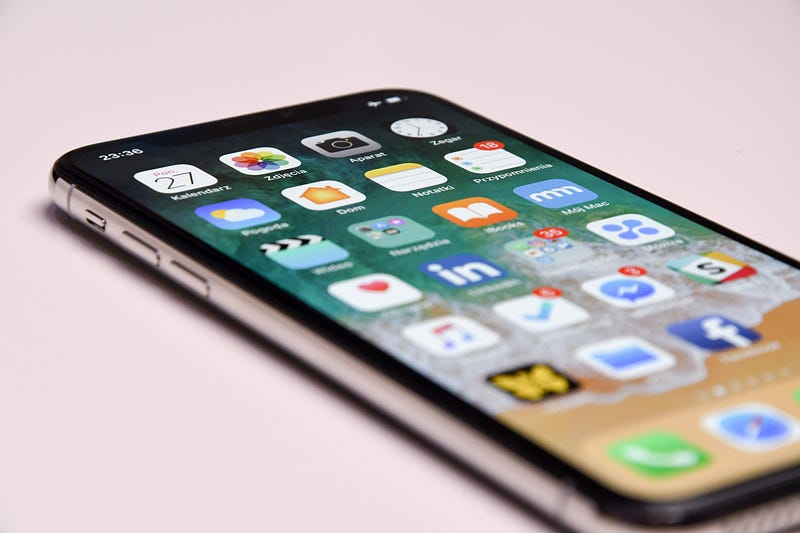
Internal emails between Apple employees reveal the company struggling to defend its position on Right to Repair, a movement that encourages people to fix their own devices. Ahead of yesterday’s Congressional antitrust hearing, which saw testimonies from CEOs Tim Cook, Mark Zuckerberg, Jeff Bezos, and Sundar Pichai, Apple submitted a trove of emails to the House Judiciary Committee that show spokespersons carefully crafting its “repair strategy.”
The emails were first reported on Thursday by iFixit, a DIY website that publishes guides to fixing gadgets and sells repair equipment. “These internal discussions reveal that what looks like Apple’s united front against Right to Repair is really an internal debate, rife with uncertainty,” wrote iFixit co-founder Kyle Weins.
Apple has long opposed Right to Repair, claiming that “unauthorized” repairs are a threat to security, its intellectual property, and consumer safety. Its crusade against DIY was interrogated by the New York Times editorial board in April 2019. Citing Apple’s high repair costs and various attempts to subvert third-party access to manuals, tools, and diagnostics, the Times concluded that Apple’s tactics were “unfair to consumers who might be able to obtain, or perform, lower-priced repairs.”
When the Times’ editorial board member Binyamin Appelbaum reached out to Apple for comment at that time, Apple’s press team fought to influence the story’s narrative. Steve Dowling, formerly vice president of communications at Apple, suggested they “emphasize safety over economics.”
“Look at what happened when a Wired reporter tried to open his iPhone with a screwdriver,” Dowling wrote in an email thread to Lori Lodes, former director of corporate communications at Apple, and Apple spokesperson Kristin Huguet. (The note was a possible reference to a series of Wired stories about Apple’s obscure screw-head shape.) “Explosions happen at landfills and recycling centers all the time because of improper disposal of electronics. Anecdotally, many of the safety incidents reported with mobile phones are related to faulty repairs.”
“The larger issue is that our strategy around all of this is unclear,” responded Huguet. “Right now we’re talking out of both sides of our mouth and no one is clear on where we’re headed.”
Days before the Times’ story was published, iFixit reporter Whitson Gordon noticed that two service manuals for 2019 iMacs had been posted to Apple’s support site. Whitson reached out to Apple for comment, asking if they were uploaded by mistake, but did not receive a response.
However, Thursday’s email dump revealed Apple scrambling to explain how the manuals wound up on their website. In an email to Dowling and Huguet, Lodes wrote that the “iMac manuals became available on Apple.com on Wednesday without any sort of clearance.” Lodes learned that Apple’s Environmental Technology team had posted the documents, and there was an internal discussion over whether to remove them.
“Right now, it’s pretty clear things are happening in a vacuum and there is not an overall strategy,” Lodes added. “Plus, with one hand we are making these changes and the other is actively fighting Right to Repair legislation moving in 20 states without real coordination for how updated policies could be used to leverage our position.”
These two incidents are a departure from Apple’s typical hardline stance on Right to Repair, the movement it’s aggressively lobbied against for several years — making only a few concessions when it comes to third-party repair shops.


