
15 High-Movement, Low-Space Activities to Keep Kids Active in the Winter
Winter is coming. Are you ready for it?
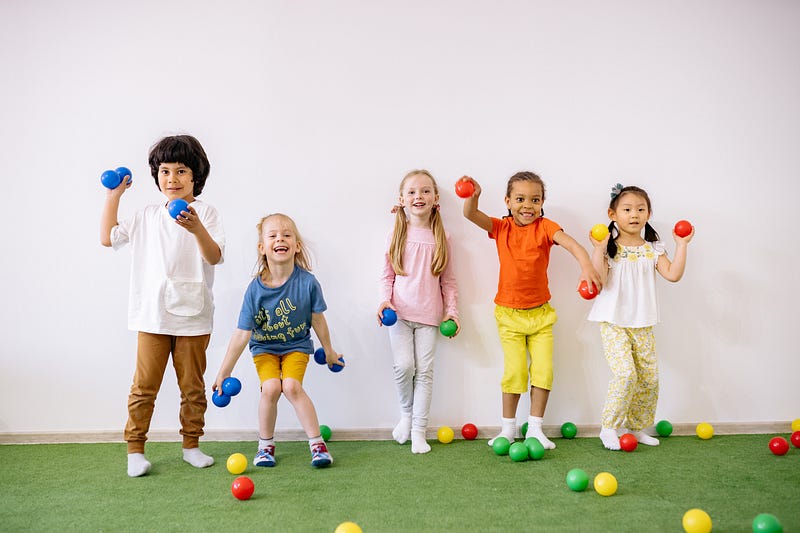
Active kids who love to play outside often have no problem finding things to do during the winter. Depending where you live, there is often snow around for building snow forts, places to go ice-skating, and numerous sledding opportunities.
But what do you do with high-energy kids when they’re bored inside and it’s too cold or messy to go outside?
Try any of these high-movement, low-space (and low-cost!) activities to try and keep kids moving in your indoor spaces.
1. Find a ball, and make it a contest
Set a laundry basket at one end of the kitchen, give the kids some soft or plastic balls, and have them try to make baskets from different parts of the room. You don’t even necessarily need actual balls: just crumple up wads of scratch paper. Often kids are not happy unless their activity includes a competitive element; this activity scratches that itch.
2. Water and food coloring
Get out cups or bowls or other smallish containers (clear plastic works best, although if your kids are slightly more mature you can use glass) and spoons. Fill a pitcher with water and offer the kids liquid or gel food coloring if you’ve got any on hand. They can color the water, stir it, mix it, make a big wet mess with it, whatever they want. You do have to be prepared to wipe up the spills, but if you give the kids towels and have them do it, it’s great practice for teaching them how to clean.
3. Make a city
Pull together all of your building supplies (boxes, buildings, forts, pillows, stackable books) and build a city throughout your house. Start in one room and build into the next. Use pieces of scratch paper or other paper to make roads; draw streets, street signs, and parking spaces on them. Add natural features — make trees, rivers/waterfalls, hills, out of any craft materials you have.
Then encourage the kids to move their toys through the city — make a school for their stuffed animals, a grocery store for their dolls, or even just a place to drive their toy cars through. At the end of the day, have them pick everything up, wash any dishes or other household items they used, and put everything back the way it was.
4. Fold paper airplanes and have races
This is another one that meets the need to be competitive, and also be in action. A simple “make paper airplane” search on Google or YouTube will keep you busy a long time. You can also encourage your kids to color, decorate, or put numbers or names on their planes. In addition to having airplane races and just throwing them across the room, you can use the laundry basket from item #1 and ask them to aim their planes at a target.
5. Block towers to the sky.
Use big Duplo blocks, or Legos, or even wooden blocks. If your kids don’t know what to build with blocks, you can encourage them simply to build a vertical block tower as high as they can or to the ceiling.
This activity has the added benefit of the possibility to make a lot of noise at the end: once any and all block towers are built, knock them over and enjoy the loud bangs as they fall (make sure nobody’s on the receiving end of the falling stacks, particularly with heavy wooden blocks). Film the destruction with your smartphone; that’ll buy you a few extra happy minutes. If you don’t have blocks, get creative: use plastic bowls, plastic cups, toilet paper rolls. Anything you can stack will work.
6. Racing buddies
Find six stuffed animals and 30–36 pieces of scrap paper. On one piece of paper, write the number 1, on the second, 2, through the number 6. Lay those papers out in a row. For each number column, put down four or five blank pieces of paper. Think of this as your game board, with a large grid of six by four pieces of paper.
Place one stuffy on the one through six pages, then find a die. Roll the die, and the stuffed animal on the number page that matches the number rolled gets to move forward one spot. Continue rolling the die until one animal moves the four or five papers to the “finish line.” Got a lot of stuffed animals and paper? Play the game with 11 players and two dice (the lowest you can roll with two dice is two, so number your papers from 2 to 12), and practice addition skills at the same time.
Of course, you can play this with pencil and paper and smaller “game pieces” of your choice, but something about the large format and physically moving the stuffed animals (everybody wants their favorite cuddly buddy to win) makes it more fun.
7. Bake or cook
Everyone can get involved when you’re baking treats they’ll want to eat when they’re done. Time to make cookies (and teach the kids some life skills in the kitchen while you’re at it)!
8. Plan and Throw a House Party
Tell the kids they are in charge of planning a party for you. They can pick a theme, plan a menu, design a playlist, decorate the house (let them tape things to walls — your paint will be okay in the short term). Have them write and design invitations for you and their stuffed animals. They can even invite friends to the party (if the weather and everyone’s health cooperates), or through Zoom or Facetime, and if you made cookies in #7, you’ve got dessert.
9. Be inventive with playing cards
Got a deck of playing cards? Build card houses. (Extra points for being able to blow or knock down card houses after making them.) Find a bowl or small pail and try to flip cards into it from 20 feet away. Play simple games like Speed or Hearts. Look up videos on card tricks and try to learn a couple. Board games work well too.
10. Hide and seek (with objects)
If there’s more of you stuck together in one house, and you have more room, you can of course play regular Hide and Seek. However, with just two players or a small house, it can be less than thrilling. One alternative is to have one player hide numerous small objects around the house, and then let others search for the items (think Easter egg hunt, only inside or in your yard).
You can play this with plastic eggs, Lego mini-figures, candies, coins (although make sure if you have younger kids you’re not leaving anything around that can end up as a choking hazard). Make them really hard to find and then play “Hot or Cold” with the kids to find them.
11. Even more fun with water
Fill a couple of different containers (yogurt containers, plastic bowls, etc., anything that isn’t glass) with water (re-use the colored water from #2) and put them in the freezer. When they’re frozen, put a bit of water in a tub or sink and pop the frozen water “icebergs” out into them. Make it a science lesson and measure how long the icebergs take to melt in cold vs. warm water, in still or running water, and which ones take the longest to melt.
You can also play “sink or float” by popping different items into the bath — bath toys, Legos, other toys you don’t mind getting wet, rocks, or other materials. Another fun activity to combine with bath time or water play is to fold paper boats and then to see if they float and if you can move them around the tub. Just make sure to take everything back out before draining the water.
12. House redecoration
Encourage the kids to move their own furniture around to create new configurations for their rooms or common rooms. While you’re shaking things up, encourage them to clean previously hidden areas (a parent can always dream), or to enjoy shaking things up with everyone sitting in different spots at the kitchen table or watching TV from different vantage points. At the end of the day, have them move everything back. Safety first: You have to supervise this activity to make sure nobody tackles furniture by themselves that is too big for them or that might be unstable, like bookshelves.
13. Make a fort
An oldie but a goodie, and something that is fun to do while the furniture is in different configurations. Build the fort, and then have a picnic in it. Have your kids each build a fort and then tell them to make and issue invitations for visits from other family members in the house, or tell them they are building art museums that they can decorate with their own projects.
Encourage your kids to make separate forts for different stuffed animals. How cozy can they make their new homes? Do you have any extra boxes? You can set those up as “homes” for stuffed animals or dolls or mini-figures. Make furniture out of cardboard and have the kids draw art, carpeting, and other decorations for the homes on the inside of the box. Don’t have great furniture for making forts? Here’s a fort hack: Set up a card table or two and drape sheets over them. Instant fort!
14. Dance-off
Give the kids control of your stereo, YouTube (with supervision when needed), or playlist, and encourage them to play the music they want and practice their best dance moves. They can also exercise to the beat: encourage skipping, galloping, or doing jumping jacks throughout the house. Be safe on the stairs, of course! Encourage them to do a routine or try new moves and offer to score those moves.
15. Set up a store
Do your kids make art? Draw comics? Write stories? Encourage them to indulge their creative sides, and then offer to go “shopping” at their store. This means they have to create their inventory, set up a store in their room or other common area (complete with displays, price tags, gift-wrapping services, a play register if you’ve got one, and wall signs or pretend newspaper or poster ads advertising their goods).
Have them set realistic prices and go shopping with a few one-dollar bills; buy some of their wares, have them add up the total and provide change, and ask them to gift-wrap or deliver your purchases. This activity takes a lot of time (when they won’t be badgering you for computer or screen time) and nets them some cash, so it’s a win-win.
Get yourself and those kids moving, and remember one of the first rules of parenting: if the kids are happy and engaged, let them keep going — even if it’s not quite what you had in mind or it’s not on your schedule. Keep busy, keep happy, and keep healthy!


