
14 Ways to Make Your Bathroom The Most Eco-Friendly Room in Your House
Can’t live without it, so you may as well spruce up your loo.
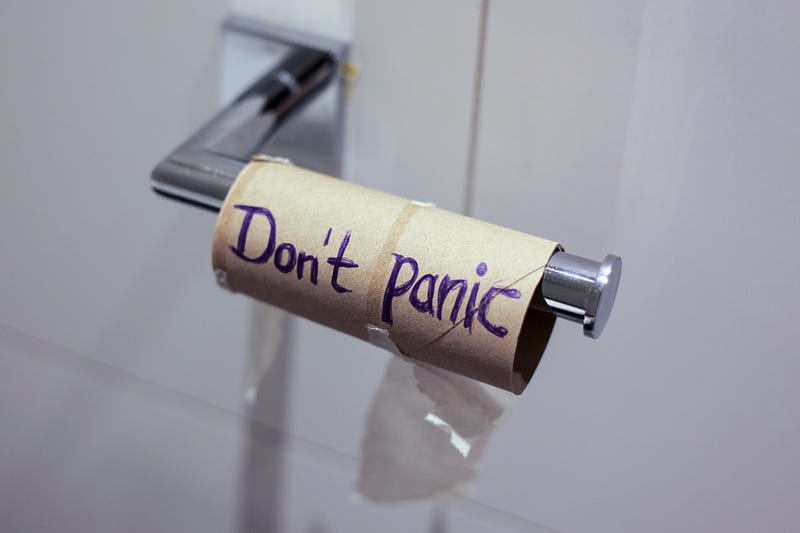
Little girls’ room. Little boys’ room. Washroom. Restroom. Hell, even bathroom is a euphemism, since almost none of them actually have baths these days.
It seems like we can’t call a spade a spade and talk about el baño directly. I’m willing to bet it’s the most-used but most-ignored room in your entire house. When giving friends tours of your mighty abode, you hardly ever stop in wonder to admire your own toilet; you simply point at the right door and pass right on by.
So here are 14 ways to make your bathroom the most eco-friendly room in your house — and, by extension, the pride of the entire street. Neighbours will be queueing up to use it… I promise.

1. Get a bamboo toothbrush.
I got one of these, but there are plenty of others. Your typical toothbrush is made of pure plastic and rubber — and for what reason? Bamboo toothbrushes are smooth, lovely to hold, and highly sustainable. You can brush your teeth in the knowledge that you are not only doing something good for the planet, but you are doing it in mahogany-esque style. They’re admittedly a little pricier than your average toothbrush, but I also found that it lasts far longer.
2. Use bar soap, not liquid soap.
Bar soaps seem to be a thing of the past these days, but they’re certainly making a resurgence. The world moved to the convenience and aesthetics of liquid soap dispensers over the 20th century, apparently — though bar soap actually seems to be better at removing particulates from your hands by friction. Get yourself a nice fancy dish and keep your bar in good nick (e.g. by cutting off grimy bits and washing the dish frequently), and there’s no loss. You’ve just saved the planet a plastic soap bottle. Well done!
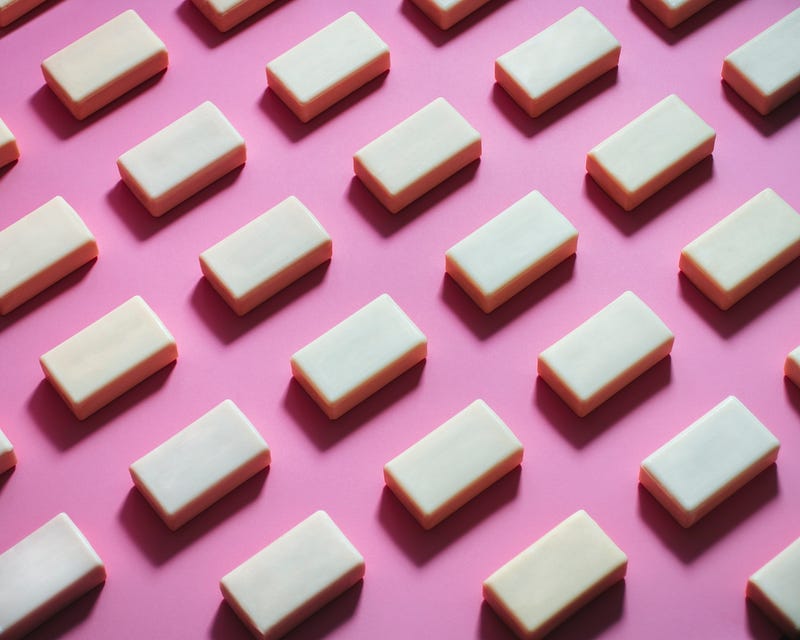
3. Get bars of shampoo and conditioner, too.
The same applies. We used to buy new bottles of shower gel, shampoo, and conditioner all the time in my house — there are five of us who live here, three of whom have long hair. We are slowly moving to bar shampoos and conditioners, though they are less intuitive to use. Again, it’s a case of adapting as the planet needs us to. For a good review of the best brands of shampoo bars, see this GoodHouseKeeping page.
4. Get eco-friendly (or even reusable!) toilet paper.
Ecofriendly toilet paper can be found everywhere now — even on my Instagram feed, where WhoGivesACrap seems to have bought some advertising real estate recently. But I can’t complain: who can, when 100% recycled fibres are up for grabs? Reusable toilet paper is a more contentious issue, but the cloth wipes can be cleaned totally hygienically for reuse next time, and it’s really no worse than reusable diapers for children.
5. Only have one roll of toilet paper on display at a time.
This is a clever psychology trick: the appearance of scarcity encourages more conservative use. Even if you’ve got a whole recently-hoarded pile of toilet paper available, only keeping one roll on display at a time will ensure that people don’t get carried away in the excitement of abundance. Play hard-to-get, and manipulate your guests to more eco-friendly toilet paper usage.
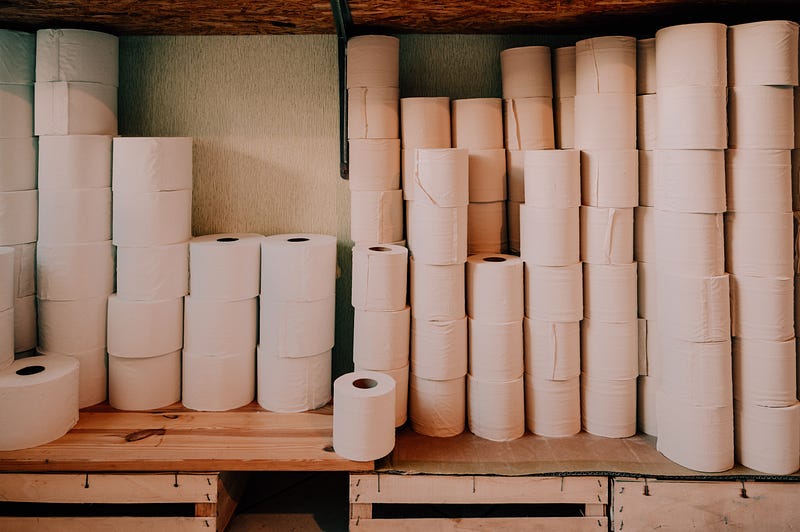
6. Reduce the amount of water per use by save-a-flush cistern bags.
The save-a-flush cistern bag is an absorbent bag that lives in the cistern of your toilet, taking up space that water would otherwise occupy. This saves around a litre of water for every flush — for absolutely no extra cost! The best bit is that many councils and utility companies will give you these for free if you ask, though you can also buy one if not.
7. Take shorter showers, and don’t take baths.
Your average bath is 30 gallons of water, while your average showerhead outputs 2.5 gallons of water per minute (known as a ‘2.5GPM’ showerhead). Thus, a shower is more eco-friendly than a bath if it takes under 15 minutes. Obviously, the shorter, the better — there are apps on your phone (not least of which is the simple Timer app, but others include Showr) that you can set for showers to motivate yourself to get out quicker. Four-minute showers are all the rage nowadays: you save time, save water, and save the planet.
8. Keep potted plants — or even get a moss bathmat.
Circular economies use everything they’re given. Mostly we talk about circular economies at institutional or national levels, but there’s no reason you can’t set one up in your own bathroom. Why not get potted plants or, if you’re ambitious (and love the feeling of moss on your toes), this living moss bathmat? They’ll take up the excess moisture in the air after your showers and act to purify the air in your bathroom — what’s not to love? Okay, so their actual impact on climate change will be negligible in the grand scheme of things, but they’ll also serve to remind you and your guests of the beauty of nature whenever it calls.
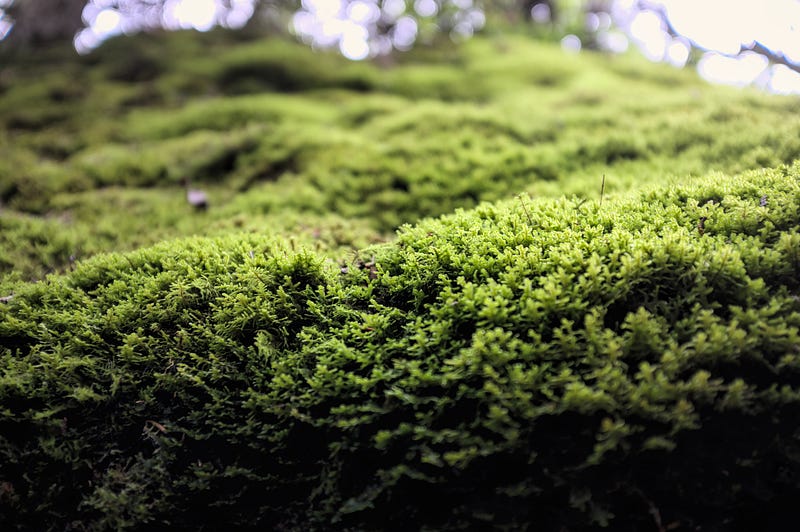
9. Don’t use disposable razors.
I mean, disposable anything sucks, but disposable razors are common ones. I know they’re cheap, but you also have to buy them all the time because they blunt after a couple of uses. Metal should be used sparingly when used at all, so why not invest in a solid and polished wooden-handled razor with some high-quality detachable blades? Plastic-free, and you’ll feel incredible using it. Check some out here. I’ve got this one from Bambaw.
10. Use no aerosols — only roll-on deodorants and antiperspirants.
Aerosols are small particles that can diffuse into the atmosphere. According to the IPCC, they can “scatter and absorb solar and infrared radiation in the atmosphere. Aerosols also alter warm, ice and mixed-phase cloud formation processes by increasing droplet number concentrations and ice particle concentrations. Aerosols have most likely made a significant negative contribution to the overall radiative forcing.” Heavy stuff… why not use an eco-friendly roll-on, instead?
11. Get rid of your shower curtain — or, at least, don’t get a new one.
Shower curtains are horrible, plasticy materials — and do you really need them? Most are made of PVC, polyvinyl chloride, which is a crude oil derivative. See some of the zero-waste options on this blog, or else just go with a glass screen (which never needs replacing, and is easier to clean!) or nothing at all! Let your moss bathmat absorb the water spraying out.
12. When it’s time, replace your toilet with a high-efficiency loo.
Did you know that about 30% of your home’s water use probably comes from toilet flushing? Most traditional toilets use high volumes of water to push waste down the plumbing and into the sewer, or wherever else it goes. Instead, you can get toilets that push water out at high velocities, rather than in high quantities, which has exactly the same effect for significantly less water used. Check out some of the stats, and perhaps consider going velocity-over-volume for your next installation.
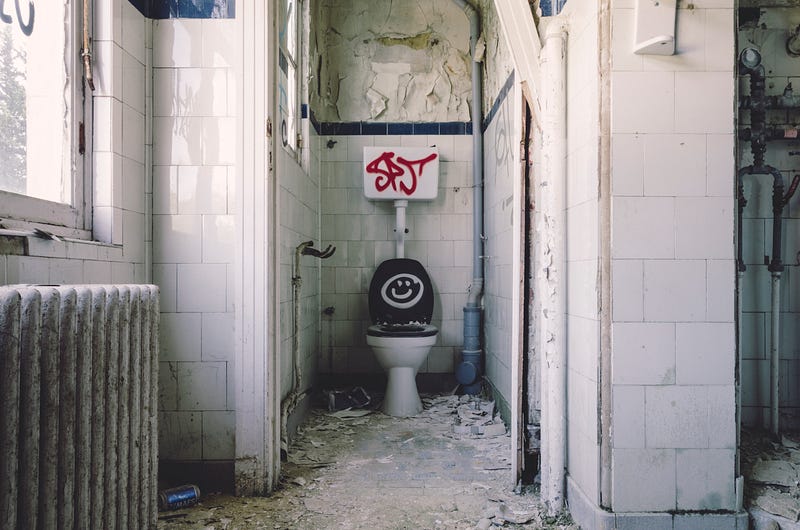
13. Turn off the taps whenever you can.
If no one has ever told you to turn off the tap when you’re brushing your teeth, consider yourself told. Apparently, this can save up to a few gallons of water per person per day (sheesh, how powerful are your taps?) — enough for around 100 four-minute showers a year. It’s really not that hard to turn off the tap.
14. Get good plumbing, and patch up any leaks.
Leaky pipes lose 3 billion litres of water per day, enough for an extra 20 million people to escape water poverty daily. If you’ve got a pipe in your house that you know is leaking but you’ve never bothered to fix, don’t just wrap the tape around it (you know that does nothing…). Call out a trusted plumber. Don’t be one of those people that doesn’t care; fix your damn pipes!
There you have it. 14 ways to keep your bathroom eco-friendly, green, and clean! Hope that helps ❤
Hit up my blog for other thoughts on sustainability, veganism, science, ethics, and society! I’d appreciate a follow, and make sure to click ‘Subscribe’ for email notifications every time I publish an article — usually a few per week!


