14 books billionaire Warren Buffett thinks everyone should read.
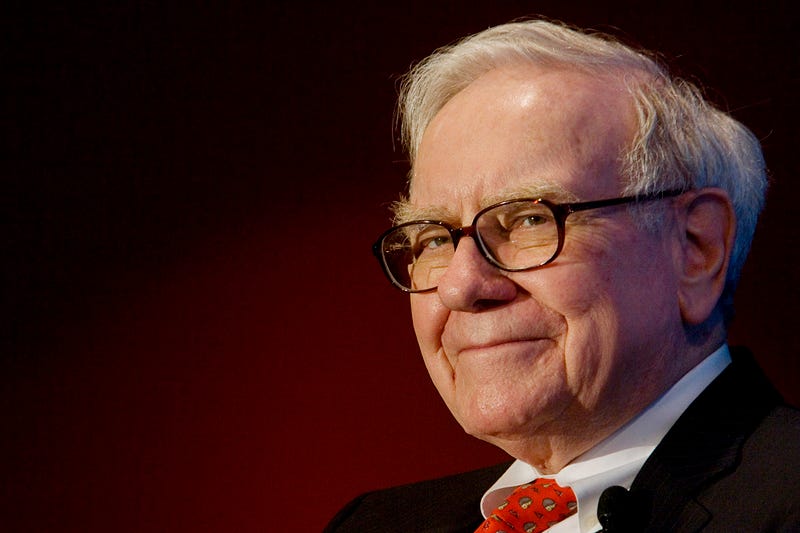
For Warren Buffett, the billionaire Chairman of the Berkshire Hathaway conglomerate, reading entails 80% of his working hours. He says that his job is basically collecting a lot of facts and information together, trying to correlate and bring out some useful leads occassionally.
He abhors the stock news and recommendations saying that we should not read other people’s opinions but rather read facts and decide for ourselves.
Over the past 20 years, Warren Buffett has been recommending books in his shareholder letters and interviews. These books provide the framework which can build up the rational investor in us.
Reading List
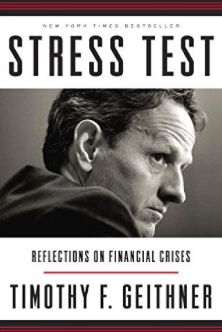
As president of the Federal Reserve Bank of New York and then as President Barack Obama’s secretary of the Treasury, Timothy F. Geithner helped the United States navigate the worst financial crisis since the Great Depression, from boom to bust to rescue to recovery. In a candid, riveting, and historically illuminating memoir, he takes readers behind the scenes of the crisis, explaining the hard choices and politically unpalatable decisions he made to repair a broken financial system and prevent the collapse of the Main Street economy. This is the inside story of how a small group of policy makers — in a thick fog of uncertainty, with unimaginably high stakes — helped avoid a second depression but lost the American people doing it. Stress Test is also a valuable guide to how governments can better manage financial crises, because this one won’t be the last.
Stress Test reveals a side of Secretary Geithner the public has never seen, starting with his childhood as an American abroad. He recounts his early days as a young Treasury official helping to fight the international financial crises of the 1990s, then describes what he saw, what he did, and what he missed at the New York Fed before the Wall Street boom went bust. He takes readers inside the room as the crisis began, intensified, and burned out of control, discussing the most controversial episodes of his tenures at the New York Fed and the Treasury, including the rescue of Bear Stearns; the harrowing weekend when Lehman Brothers failed; the searing crucible of the AIG rescue as well as the furor over the firm’s lavish bonuses; the battles inside the Obama administration over his widely criticized but ultimately successful plan to end the crisis; and the bracing fight for the most sweeping financial reforms in more than seventy years. Secretary Geithner also describes the aftershocks of the crisis, including the administration’s efforts to address high unemployment, a series of brutal political battles over deficits and debt, and the drama over Europe’s repeated flirtations with the economic abyss.
Buffett says that this book about the financial crisis is a must read for all managers.
2. ‘Jack: Straight from the Gut’ by Jack Welch
As CEO of General Electric for the past twenty years, he has built its market cap by more than $450 billion and established himself as the most admired business leader in the world. His championing of initiatives like Six Sigma quality, globalization, and e-business have helped define the modern corporation. At the same time, he’s a gutsy boss who has forged a unique philosophy and an operating system that relies on a “boundaryless” sharing of ideas, an intense focus on people, and an informal, give-and-take style that makes bureaucracy the enemy. In anecdotal detail and with self-effacing humor, Jack Welch gives us the people (most notably his Irish mother) who shaped his life and the big hits and the big misses that characterized his career. Starting at GE in 1960 as an engineer earning $10,500, Jack learned the need for “getting out of the pile” when his first raise was the same as everyone else’s. He stayed out of the corporate bureaucracy while running a $2 billion collection of GE businesses-in a sweater and blue jeans-out of a Hilton in Pittsfield, Massachusetts. After avoiding GE’s Fairfield, Connecticut, headquarters for years, Jack was eventually summoned by then Chairman Reg Jones, who was planning his succession. There ensued one of the most painful parts of his career-Jack’s dark-horse struggle, filled with political tension, to make it to the CEO’s chair. A hug from Reg confirmed Jack was the new boss-and started the GE transformation. Welch walks us through the “Neutron Jack” years, when GE’s employment rolls fell by more than 100,000 as part of a strategy to “fix, sell, or close” each business…and how he used the purchase of RCA to provide a foundation for the company’s future earnings. There were mistakes, too-and Jack confronts them openly.
In his 2001 shareholder letter, he had endorsed the book saying
“Welch has had such an impact on modern business that a tour of his personal history offers all managers valuable lessons.”
3. ‘Business Adventures: Twelve Classic Tales from the World of Wall Street’ by John Brooks
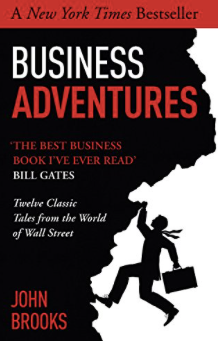
What do the $350 million Ford Motor Company disaster known as the Edsel, the fast and incredible rise of Xerox, and the unbelievable scandals at General Electric and Texas Gulf Sulphur have in common? Each is an example of how an iconic company was defined by a particular moment of fame or notoriety.
These notable and fascinating accounts are as relevant today to understanding the intricacies of corporate life as they were when the events happened.
Stories about Wall Street are infused with drama and adventure and reveal the machinations and volatile nature of the world of finance. John Brooks’s insightful reportage is so full of personality and critical detail that whether he is looking at the astounding market crash of 1962, the collapse of a well-known brokerage firm, or the bold attempt by American bankers to save the British pound, one gets the sense that history really does repeat itself.
In 1991 when asked by Bill Gates which is his favorite book, Warren Buffett send him his personal copy of the “Business Adventures”.
4. ‘Dream Big’ by Cristiane Correa
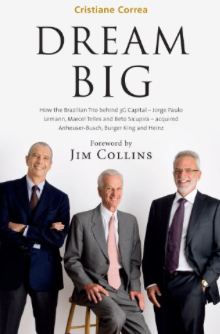
“My friend — and now partner — Jorge Paulo and his team are among the best businessmen in the World. He is a fantastic person and his story should be an inspiration to everybody, as it is for me.” — Warren Buffett In just 40 years this Brazilian trio built the biggest empire in the history of Brazilian capitalism and launched themselves onto the world stage in an unprecedented way.The management method they developed, which has been zealously followed by their employees, is based on meritocracy, simplicity and constant cost cutting.Their culture is as efficient as it is merciless and leaves no room for mediocre performance. On the other hand, those who bring in exceptional results have the chance to become company partners and make a fortune.Dream Big presents a detailed behind-the-scenes portrait of the meteoric rise of these three businessmen, from the founding of Banco Garantia in the 1970s to the present day.
Buffett recommended this book in his 2014 annual shareholder meeting. He worked with 3G capital for the purchase of HJ Heinz in 2013. He says the principles with which the firm grew- cost cuttings and meritocracy.
5. ‘First a Dream’ by Jim Clayton and Bill Retherford
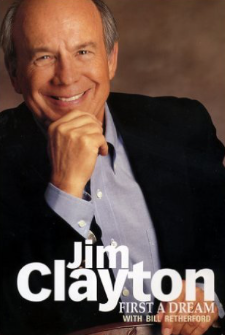
This is a captivating “rags to riches” story, as a young boy discovers during the Depression that hard work and sheer perseverance are the keys to living his dreams.
First A Dream is filled with practical, easy-to-understand, no-nonsense business lessons that the entrepreneur can apply to his or her own life — describing the qualities an effective leader must possess, the key methods to inspiring team members, and the development of culture and values that are critical to the success of a small business as well as a multibillion dollar conglomerate.
Clayton’s business Clayton Homes is the largest producer and seller of manufactured housing. In his 2003 shareholder letter he recommended the book saying that it was given as gift from the students at University at Tennessee. Soon after reading the book he was inspired enough to invest in the company.
6. ‘Take on the Street’ by Arthur Levitt
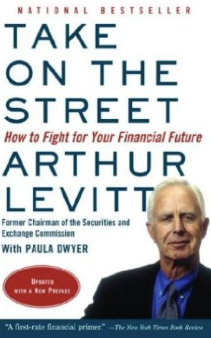
In Take on the Street, Arthur Levitt — Chairman of the Securities and Exchange Commission for eight years under President Clinton — provides the best kind of insider information: the kind that can help honest, small investors protect themselves from the deliberately confusing ways of Wall Street.
At a time when investor confidence in Wall Street and corporate America is at an historic low, when many are seriously questioning whether or not they should continue to invest, Levitt offers the benefits of his own experience, both on Wall Street and as its chief regulator. His straight talk about the ways of stockbrokers (they are salesmen, plain and simple), corporate financial statements (the truth is often hidden), mutual fund managers (remember who they really work for), and other aspects of the business will help to arm everyone with the tools they need to protect — and enhance — their financial future.
In 2002 shareholder letter he talks about how the accounting standards have eroded over the years. He recommends this book as it shows the whole of the Andersen Accounting’s downfall in manner which will remind every business to uphold valuable principles.
7. ‘Limping on Water’ by Phil Beuth and K.C. Schulberg
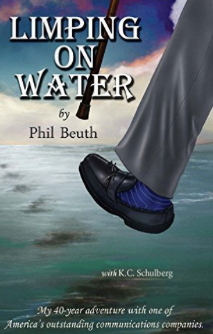
Phil Beuth spent his entire broadcasting career with one company. As the first employee of a fledgling media startup in 1955, Phil worked his way up over a 40-year span, as Capital Cities grew to become one of America’s most influential and successful media companies. Limping on Water is a Dickensian rags-to-riches tale of a disadvantaged boy, born with cerebral palsy who, through luck, pluck, strength of character, skill, persistence and loyalty, rose to become a top executive at one of America’s most respected and successful media companies, Capital Cities Communications; “The minnow that swallowed the whale.” Phil was born in a blue-collar neighborhood of Staten Island to parents of English and German stock in 1932. To state that his origins were humble is like saying the Yankees know a thing or two about baseball. The young struggling family was crushed by the tragic death of Phil’s father when Phil was just four, causing his mother to park her young, physically impaired son with her step-father, an embittered, war-wounded veteran (of the Spanish-American War!), who ran a ramshackle “Sanford and Son” junk business out of his backyard. What propelled this boy to raise himself by his orthopedic bootstraps to become a respected and honored leader in his field, a member of two Broadcasting Halls of Fame, head of Good Morning America and a Division President of ABC?
In his 2015 shareholder letter, Warren Buffett recommends for being such inspiration. He talks about the journey of Phil from being someone suffering from cerebral palsy to being one of the top executives in media. He says through the book Phil gives everyone a ringside seat to his story.
8. ‘The Most Important Thing Illuminated’ by Howard Marks
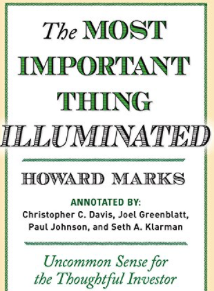
In May of 2011, Columbia Business School Publishing released Howard Marks’ The Most Important Thing, a book that distilled the wisdom of Marks’ celebrated client memos into a single volume, making his time-tested investing philosophy available to general readers for the first time. The book was greeted with wide acclaim from investors — professional, casual, aspiring, and armchair alike — and became a business bestseller. Now, Columbia Business School Publishing is proud to announce an innovative digital edition that allows you to read Marks’ words alongside comments, insights and counterpoints from four other renowned investors and investment educators: Christopher Davis, Joel Greenblatt, Paul Johnson and Seth Klarman. See what these investors think of such concepts as “second-level thinking,” the price/value relationship, patient opportunism, and defensive investing. There are also annotations from Howard Marks himself, highlighting some of the themes that run throughout the book, along with a previously unpublished bonus chapter on the importance of reasonable expectations. This edition features a foreword from Bruce Greenwald.
Buffett recommends this book because Marks heavily focuses on his mistakes which the investors can concentrate on to make sure that they dont make it themselves.
9. ‘Essays in Persuasion’ by John Maynard Keynes
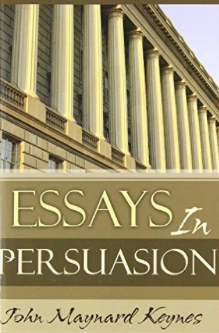
Essays In Persuasion written by legendary author John Maynard Keynes is widely considered to be one of the top 100 greatest books of all time. This great classic will surely attract a whole new generation of readers. For many, Essays In Persuasion is required reading for various courses and curriculums. And for others who simply enjoy reading timeless piees of classic literature, this gem by John Maynard Keynes is highly recommended.
Buffett says that reading about Keynes will make any reader smarter about securities and the markets. He says even after a century of his writings, they are still relevant in today’s markets.
10. ‘The Clash of the Cultures’ by John Bogle
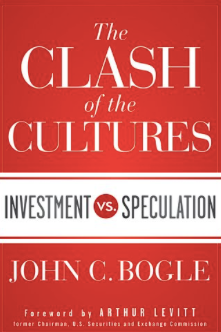
Over the course of his sixty-year career in the mutual fund industry, Vanguard Group founder John C. Bogle has witnessed a massive shift in the culture of the financial sector. The prudent, value-adding culture of long-term investment has been crowded out by an aggressive, value-destroying culture of short-term speculation. Mr. Bogle has not been merely an eye-witness to these changes, but one of the financial sector’s most active participants. In The Clash of the Cultures, he urges a return to the common sense principles of long-term investing. Provocative and refreshingly candid, this book discusses Mr. Bogle’s views on the changing culture in the mutual fund industry, how speculation has invaded our national retirement system, the failure of our institutional money managers to effectively participate in corporate governance, and the need for a federal standard of fiduciary duty. Mr. Bogle recounts the history of the index mutual fund, how he created it, and how exchange-traded index funds have altered its original concept of long-term investing. He also presents a first-hand history of Wellington Fund, a real-world case study on the success of investment and the failure of speculation. The book concludes with ten simple rules that will help investors meet their financial goals. Here, he presents a common sense strategy that “may not be the best strategy ever devised. But the number of strategies that are worse is infinite.”
11. ‘Where Are the Customers’ Yachts?’ by Fred Schwed
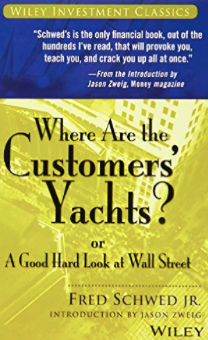
According to an old joke, a visitor to New York who was admiring the yachts of the bankers and brokers naively asked where all the customers’ yachts were. Of course, none of the customers could afford yachts, even though they dutifully followed the advice of their bankers and brokers. The customers had not got rich from the stock market. Although Fred Schwed had a deep understanding of and few illusions about the world of investment Where are the Customers’ Yachts? is very far from cynical. Schwed’s insight into the psychology of investment professionals and their customers is as relevant today as it was in 1940. He did not say that investment is pointless, or that private investors never make any money. Rather, he cast doubt on the ability of the financial services industry to provide any really valuable advice to its customers. Leo Gough’s interpretation of Where are the Customers’ Yachts? brings Schwed’s insights to life with modern examples. Readers will discover: * How to spend their income, not their capital; * That just because someone works in the stock market doesn’t mean they are a good investor; * Why exceptions are the rule; * How to ride the winner and avoid the collapses; * The secret of the ‘fat, stupid peasant’ approach. Gough explains why investment is ultimately about psychology rather than numbers. This lucid, concise and jargon-free book shows you how you can adopt Schwed’s original techniques and become a real investment ace. This interpretation of Fred Schwed’s Where are the Customers’ Yachts? illustrates the timeless nature of Schwed’s insights by placing them in a twenty-first century context and is an inspiring reworking of one of the most influential investment books ever written.
In his 2006 shareholder letter, he declares the book as the funniest ever written about investing. He says that it delivers all the truly important messages on the subject.
12. ‘The Outsiders’ by William Thorndike Jr.
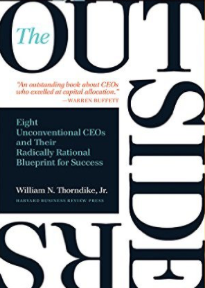
“It is impossible to produce superior performance unless you do something different.” John Templeton. What makes a successful CEO? Most people call to mind a familiar definition: a seasoned manager with deep industry expertise. Others might point to the qualities of today’s so-called celebrity CEOs charisma, virtuoso communication skills, and a confident management style. But what really matters when you run an organization? What is the hallmark of exceptional CEO performance? Quite simply, it is the returns for the shareholders of that company over the long term. In this refreshing, counterintuitive audiobook, author Will Thorndike brings to bear the analytical wisdom of a successful career in investing, closely evaluating the performance of companies and their leaders. You will meet eight individualistic CEOs whose firms’ average returns outperformed the S&P 500 by a factor of twenty in other words, an investment of $10,000 with each of these CEOs, on average, would have been worth over $1.5 million twenty-five years later. You may not know all their names, but you will recognize their companies: General Cinema, Ralston Purina, The Washington Post Company, Berkshire Hathaway, General Dynamics, Capital Cities Broadcasting, TCI, and Teledyne. In “The Outsiders,” you’ll learn the traits and methods striking for their consistency and relentless rationality that helped these unique leaders achieve such exceptional performance. Humble, unassuming, and often frugal, these “outsiders” shunned Wall Street and the press, and shied away from the hottest new management trends. Instead, they shared specific traits that put them and the companies they led on winning trajectories: a laser-sharp focus on per share value as opposed to earnings or sales growth; an exceptional talent for allocating capital and human resources; and the belief that cash flow, not reported earnings, determines a company’s long-term value. Drawing on years of research and experience, Thorndike tells eye-opening stories, extracting lessons and revealing a compelling alternative model for anyone interested in leading a company or investing in one and reaping extraordinary returns.”
In his 2012 shareholder letter he praises the book about CEO’s who excelled with their capital allocations.
13. ‘The Essays of Warren Buffett’ by Warren Buffett
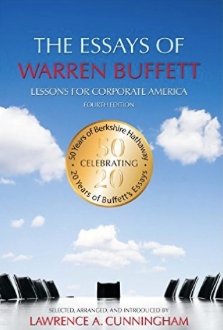
The year 2015 marks the fiftieth anniversary of Berkshire Hathaway under Warren Buffett’s leadership, a milestone worth commemorating. The tenure sets a record for chief executive not only in duration but in value creation and philosophizing. The fourth edition of The Essays of Warren Buffett: Lessons for Corporate America celebrates its twentieth anniversary. As the book Buffett autographs most, its popularity and longevity attest to the widespread appetite for this unique compilation of Buffett’s thoughts that is at once comprehensive, non-repetitive, and digestible. New and experienced readers alike will gain an invaluable informal education by perusing this classic arrangement of Warren’s best writings.
14. ‘The Making of the President’ by Theodore White
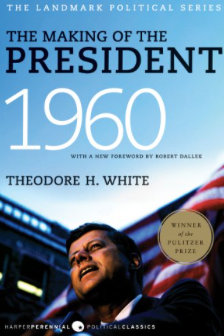
The Making of the President 1960 is the book that revolutionized — even created — modern political journalism. Granted intimate access to all parties involved, Theodore White crafted an almost mythic story of the battle that pitted Senator John F. Kennedy against Vice-President Richard M. Nixon — from the decisive primary battles to the history-making televised debates, the first of their kind. Magnificently detailed and exquisitely paced, The Making of the President 1960 imbues the nation’s presidential election process with both grittiness and grandeur, and established a benchmark against which all new campaign reporters would measure their work. The winner of the Pulitzer Prize for general nonfiction — and the first entry in White’s influential four-volume “narrative history of American politics in action” — this classic account remains the keystone of American political journalism.
In 2016, Buffett told that he loves reading some political books, espiecially this Pulitzer Prize winning classic published in 1961. The book has a style of political reporting that was never seen before.
Also read
- 14 books that billionaire Charlie Munger thinks everyone should read
- Will giving away free money work?
- $220 million revenue in 6 years. Lessons you can learn from this watch company.
- 5 stock pro’s to follow.