
The Psychology of Anti-Maskers is Multifaceted
Biases, personality, habits, emotional intelligence, and more underlie the reasons individuals reject public safety guidelines.
Really, really risky business
Not a hoax
Although a tornado of misinformation shrouds it in a dust cloud of pseudo-science and conspiracy theory debris, COVID-19 is very real. And very dangerous. The information we have already amassed globally — from scientists, the medical community, and first-hand accounts — is beyond grim.
People are dying in droves. Even so, people are going about their business with no protective facial coverings or masks.
This is as close to home as any life-or-death issue can get
In a push to “re-open the country,” some individuals are side-stepping social distancing guidelines implemented to save lives. This means grannies, medical professionals, kids, your neighbors, and your loved ones all remain at risk. While it’s clear the U.S. economy is in crisis, Dr. Anthony Fauci has unequivocally signaled premature relaxation could cause a second wave of outbreaks in the fall.
Why?
If this is as close to home as any life-or-death issue can get — aside, perhaps, from mass shootings — why wouldn’t someone take the simplest of steps to protect themselves, their families, and their communities?
It is perplexing. Are these individuals just ambivalent? Untethered from reality? Lack intelligence? Or are they misguided agitators or literally diehard “freedom” lovers?
why wouldn’t someone take the simplest of steps to protect themselves, their families, and their communities?
One way to approach these questions and piece together possible answers is through a psychological persona or profile. Clinical and social psychology offer ample theories of personality, cognitive biases, motivation, intelligence, emotional functioning during crisis, and more to organize possible thinking behind ignoring safety guidelines.
Global human needs and biases
We are all susceptible to these human biases. They are not unique to this persona, but do play a relevant psychological role.
Framing (behavioral economics)
Framing bias notes the habit of responding to various situations differently, varying with the framework around a particular situation.
Bandwagon effect
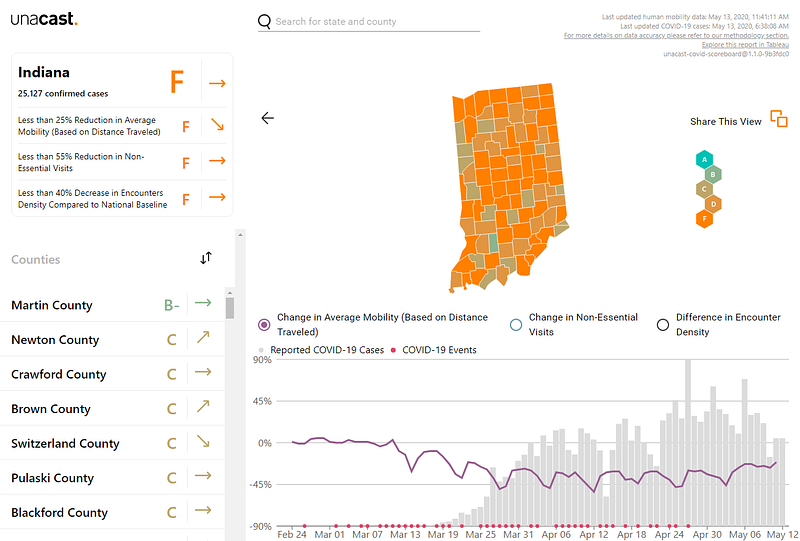
When a crowd sees others behaving a certain way, others follow. The larger the crowd, the greater the likelihood an individual will follow the group. Why? The assumption that others must know something you don’t. The bandwagon effect may account for some variation across communities and states in who is social distancing¹.
Optimism bias and American exceptionalism
It won’t happen to me. And, Americans always come out on top.
Confirmation bias
“I saw on the news that this is a hoax. That’s what I already believed, so the news is right.”
Characteristics and Life Experience
Social intelligence
Social intelligence, closely linked to emotional intelligence, is a family of psychological theories. Like emotional intelligence, social intelligence refers to sensitivity to the behaviors and feelings of others and their mutual interactions. Poor sensitivity to another person or group’s emotional state is likely to hamper empathy and self-sacrifice or discomfort in favor of supporting the community.
Emotional intelligence
Emotional intelligence — sometimes abbreviated as EQ — is a construct in psychological science interested in how an individual is aware of and responsive to their own emotions and those of others. An individual with low emotional intelligence is typically unable to identify and manage their own negative emotions. Given the visceral anger commonly displayed by detractors of social distancing and mandatory masks, emotional awareness and management appear poor.
Dunning-Kruger effect
The more deeply a person understands a subject matter, the more they question your own ability or knowledge in it. Dunning-Kruger effect is the inverse — you know very little on a topic, yet are confident you are knowledgeable and competent on it. The Dunning-Kruger Effect has been in the news a great deal since the 2016 election of Donald Trump as a correlate to fake news and propaganda.
Openness (Personality)
In the five-factor psychological model of personality, openness is defined as a willingness to experience novelty or new experiences. Given the politically conservative views of most anti-maskers, it is likely these individuals would rate low on the openness parameter. Why? Studies have shown conservative ideology corresponds with lower openness.
Moral foundations theory
The moral foundations vein of psychology pursues an understanding of political affiliation as a function of individual, moral frameworks.
Desensitization
Being exposed to (nearly) anything for a prolonged period of time leads to a highly predictable outcome — desensitization. In the treatment of Obsessive-Compulsive Disorder (OCD), one of the most effective forms of treatment involves this principle. Prolonged Exposure and Ritual Prevention (EXRP) helps clients gradually desensitize — or extinguish — anxieties relative to a particular trigger.
Desensitization occurs in other areas of life, of course. The evolution of a couple’s sex life is a (very normal!) example. You used to get all tingly when you’d kiss. After you’ve been together for 12 years, maybe it takes a bit more to feel that spark. That’s desensitization.
It’s now been months since the first urban outbreaks of COVID-19 in the US. We hear and see information about it daily. Humans can only be keyed up for so long at a time. In this case, desensitization may mean hearing those statistics about daily deaths aren’t as scary as they seemed at first.
Heuristics
Heuristics are similar. They’re a quick shortcut for our brains. You may not know it, but these shortcuts account for a huge part of our daily functioning. It’s how we connect the dots and use rules of thumb to react quickly. In order to expend less cognitive energy than we would otherwise, we have heuristics.
Another way to describe these two phenomena together are “going through the motions.” It’s behavior and thoughts you’re not even paying attention to much of the day most days.
Fight or flight and taboos
One final concept may be useful to consider as an influence on the persona. Terror management theory is a psychological Pandora's box. It is both evolutionary and social in theory, with a focus on the inescapable reality that all humans die — but do everything we can to delay it. This is related to fight or flight, which agitates human behaviors to preserve our survival.
And what’s something critical to our survival, currently under threat in many households across America? Money.
Because money is needed for survival, it is an inherently emotional part of the human experience (especially in relationships). Thus, where economic security is a salient threat, it is plausible individuals may psychologically process it as a survival threat, activating fight or flight. Adding to existential fear, Americans are socially discouraged from sharing these intense feelings. Isolation piles on. Shame about being afraid shows up.
Why has talking about money historically been discouraged?
- Toxic masculinity and/or patriarchal gender norms: men are meant to be in charge of money → men are not permitted to be emotional → ergo, money cannot be emotional because it is for men.
- Metal health stigmatization: talking about feelings is shameful, embarrassing, and impolite/taboo, so it is doubly taboo to discuss feelings and money.
Consequently, feeling existentially threatened yet unable to voice fear about it is a compound social problem. The aim of illuminating these social taboos and the complexities of socially acceptable behavior is to drive out an uncomfortable truth — that humans default to what is easy, pleasant, and has the least social friction. In a time of duress, humans revert to the behaviors of in-groups to which they belong, even where cognitive dissonance makes it uncomfortable.
Persona profiles
Using clinical intake interviews², Psychologists and other mental health professionals methodically collect and synthesize information when they begin working with an individual. That synthesis informs initial hypotheses about the client, their struggles, and how to help the client make changes in pursuit of better mental health.
To understand the psychology of a group, a persona is a starting point for possible explanations for why individuals may be making these decisions. This approach is both alike and dissimilar from psychological profiling used in forensic psychology:
Similarity: allows sketch of an outline to understand how a group of individuals behave similarly. The key limitation of analyzing a persona rather than a single individual is the substitution of amalgams and necessary data assumptions for specific characteristics and formative life experiences.
Dissimilarity: psychological profiles are used by forensic psychologists and law enforcement to investigate a crime. This is not an indictment of social distancing rebels as criminals. Psychological profiling is depicted in a fascinating way on Mindhunter , a Netflix original series about the origins of psychological profiling as an investigative tool within the FBI.
Footnotes
- How is your state faring at social distancing ? Indiana’s current rating: F. Screenshot of social distancing dashboard at unacast.com on May 2020.
2. A clinical intake interview is used by psychotherapy clinicians (Psychologists, Licensed Professional Counselors, Marriage and Family Therapists, etc.) to assess a new client at the beginning of a therapeutic relationship. What a given provider evaluates will differ depending on the setting (private practice vs. community mental health clinic, for example), what the clinician’s license type permits them to assess, what insurance will pay for (diagnostic assessments are commonly denied by insurance plans), and so on. Examples: Developmental history; Family and interpersonal history; Personality characteristics; Intelligence; Trauma history; Prior mental health diagnoses, treatment; Presenting problem (why the client sought therapy).


