
13 (+1) Episodes of Doctor Who Where the Implications Are Staggering
Everyone has their favorite “What ifs” with the Doctor
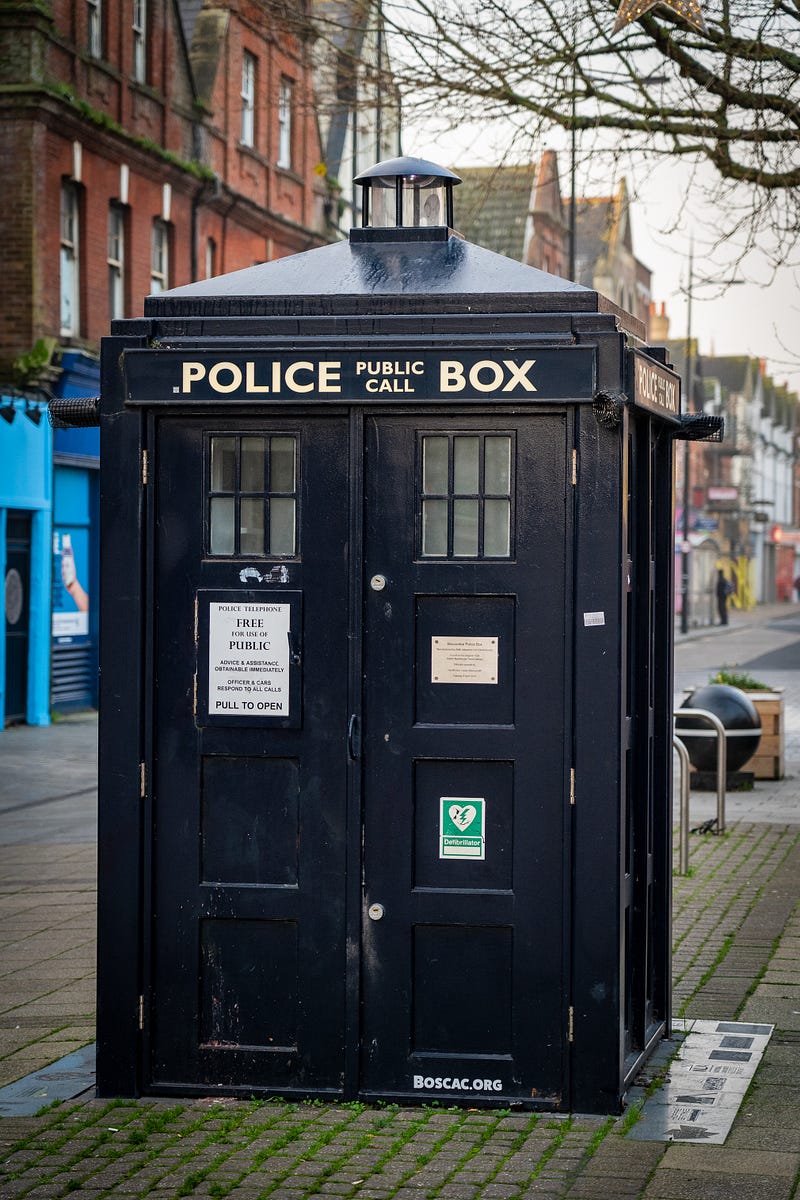
Certain claims in Doctor Who are so far-flung, they would completely disrupt the series if we took them to their final form — not to mention Earth, Gallifrey, humanity, Time Lords, and the timeline in general.
Here are 13 (+1 for the War Doctor) episodes — one for each developed show Doctor — which test the limits of series.
1. The Chase
In this episode, the Daleks are chasing the Doctor and his companions across time and space. They end up in a haunted house, thinking that the monsters therein are real. Dracula and Frankenstein’s Creature meet and scare the unsuspecting travelers.
Are we to believe that neither the Doctor, nor Ian, nor Barbara, nor Vicky can tell the difference between fictional characters (robots from an amusement park in the future) and reality?
This ties into the example with the Second Doctor.
2. The Mind Robber
The Master (no, not that Master) is a human who is brilliant at storytelling, and he has been brought to a foreign planet to weave webs of fiction. He must create dozens of different plot lines in real time, and when the Doctor and Jamie and Zoe stumble upon him, he thinks he has found a person who is clever enough to replace him.
Once again, the Doctor and his companions can’t tell the difference between reality and fiction, only this time, fictional twists to their story have a deep impact on them.
Perhaps the oddest is when Jamie’s face is wiped off, and the Doctor must reassemble his features, only he gets it wrong and another actor ends up playing Jamie for the rest of the episode.
What?
Yes, a solid move on the part of the producers and director, who had to cover for Frazer Heins hurting his leg and needing to take time shooting off. But what does this imply for the universe that the Doctor is in?
3. Planet of the Spiders
The Doctor and Sarah discover that a religious sect has stumbled upon how to travel to another world, one where talking spiders are the dominant life form. This is a regeneration episode, and the Doctor is exposed to so much radiation on the planet that his body gives out and dies.
Talking spiders can steer people like carts and take over their minds? Okay, that’s just terrifying. Of course it’s not much better when it happens with a Time Lord instead of a spider . . . .
4. Keeper of Traken
The Doctor and Adric are begged by the Keeper of Traken to come to the planet and save it from destruction. The Doctor eventually discovers that it is the Master who is trying to take over the planet, and foils his plan by stopping the transfer of power over to him.
Nyssa’s father, Tremas, is a kindly old man who is helpful to the Doctor. After the trio leave, we see the Master sneak up behind Tremas, take over his body, and make him young again.
Time Lords can do that?!
This form of regeneration took — Anthony Ainley was the Master into the Seventh Doctor’s reign — so it must be within their powers.
5. Four to Doomsday
The Doctor, Adric, Tegan, and Nyssa end up on an interstellar ship which is headed for the Earth and plans on repopulating it with the resident lifeforms — basically, big froggish things.
The aliens are able to make a perfect copy of anyone, program their personality into some robotics, and even store the person’s consciousness in a time-out drawer if that copy disobeys.
What if you could take a consciousness, box it up, and let it sit for thousands of years? What new form of cruelty would this unleash?
6. The Two Doctors
The Sixth Doctor and the Second Doctor team up for this funny but bizarre episode. Beings called Androgums try to catch, cook, and eat Jamie and Peri. The Second Doctor’s DNA is spliced with Androgum DNA, making him a base glutton.
Really? You can splice a Time Lord with any being, and you choose an Androgum, writers? The waste . . .
7. The Greatest Show in the Galaxy
Another meta-story with the Seventh Doctor and Ace encountering a Psychic Circus. The only audience it has are a family of three, but the Doctor discovers that these are actually the Gods of Ragnorak, who have insatiable desires for entertainment.
Any excuse for a bit of spoon-playing, right Sylvester McCoy? It’s comical in a not-so-comical framework to think that the Gods of Ragnorak would be amused by Seven’s childish antics. No. Just, no.
8. The Night of the Doctor
In this short, we see the Doctor in the Time War, being hated and feared for being a Time Lord. When he is close to death, the Sisters of Karn offer him elixirs which can make him have certain features when he regenerates — warlike features — which will make him successful in battling the Daleks.
Why aren’t Time Lords popping off to Karn all the time? The sisters seem willing to part with their elixir, and the regeneration brings us the War Doctor, so why doesn’t this happen regularly?
8a. The 50th Anniversary: The Day of the Doctor
We find that the War Doctor is only able to use the ultimate weapon when he is confronted by the Moment, played by Billie Piper. Doctors Ten and Eleven join forces and are willing to back up their predecessor, but Clara realizes they have another option for stopping the war, taking Gallifrey off the map.
The Doctor didn’t end the Time War by killing his own people and the Daleks? This episode completely negates most of Nine’s tenure, as well as a good chunk of Ten’s.
9. The Empty Child and The Doctor Dances
A little boy turns anyone he touches into a version of himself, wearing a gas mask fused to their faces and bearing a wounded hand. The Ninth Doctor, Rose, and Captain Jack Harkness uncover the real reason behind the transformation, and in this case, everyone is restored to being themselves and they all live.
But what about the boy’s extra sensory powers? He can call on the TARDIS outside phone, which isn’t hooked up to anything. He can type on a typewriter without being present. And his voice can come over a radio without reason.
What do these touches — brilliant though they are in the storytelling — say about the world of Doctor Who? Is Earth much more vulnerable to psychic powers than logic would suggest?
10. The Sound of Drums and Last of the Time Lords
The Master gets elected as the Prime Minister of Great Britain, having faked his human history. He uses the power to bring weaponized heads of children back to modern Earth, which wipe out and control huge parts of the population. The Doctor is advanced by hundreds of years in his current incarnation, shrinking him into tiny creature with big eyes.
And: to be restored to his youthful self, all it takes is every human soul thinking of the Doctor at the same time.
Okay. Even getting over the Toclafane, what can we make of the climax, Ten being brought back to his former glory by humans wishing it into existence? This seems like an awfully specific use of psychic power.
11. The Angels Take Manhattan
The Eleventh Doctor, Amy, Rory, and River must fight the new generation of Weeping Angels in America. In the end, Rory is zapped back into the past by an Angel, and Amy chooses to be taken too.
I love Moffat. I do. But this episode failed on every level for me.
What’s up with a statue being able to blow out a candle while being looked at, Weeping Angel or no? And why did the rules change about New York City? But mostly: is there ever a moment when somebody isn’t looking at the Statue of Liberty?
12. Listen
The Doctor theorizes what if there are creatures whose perfect defense is hiding — how would we ever know they are there? Clara debunks this theory when they travel back to Gallifrey and the Doctor is unconscious, and she realizes his memory of something in the dark under the bed is of her.
Only she doesn’t. Not really. This episode is too convincing with it’s first two arguments: Rupert Pink’s experience of something sitting on his bed while he’s under it. Watch the moment before it disappears carefully — the director definitely implies a monster of some sort.
Or, with the time traveling Pink who is stranded at the end of the universe, the storytelling doesn’t really allow for the noises being the ship settling. Everything adds up to there being creatures there.
13. Rosa
Rosa Parks is being stalked by a bigot from the future who is trying to “set things straight” by keeping her from sitting on the bus in her famous act of civil disobedience. The Doctor and companions thwart his plan by making sure that his sabotage doesn’t stick.
I bought Rosa, and the companions, and most of the Doctor in this episode. I even bought that sometimes, winning is about planning minutely rather than big shoot-outs. What I didn’t buy was the villain. So weak. So weak, an untrained companion figured out how to remove him from the picture before he could confront the Doctor directly.
Does the Doctor as a woman need these clipped-wing villains? Why can’t she fight her own battles? This episode displays the biggest, most show-stopping problem with the program: not letting the Doctor be as grand as the Doctor can be. Because if the Doctor isn’t larger-than-life, what is she?
I don’t consider all of these episodes problematic, and in fact, adore some of them. However, when the writers approach absurdity, for one reason or another, perhaps it should be pulled back. I hope you’re inspired to watch one or more of them, with an eye towards the oddness involved.
If you liked this article, you might also like:
I’d love it if you subscribed to my newsletter, or if you visited my Medium publication: Life and the Performing Arts.