
12 Quotes By Jane Goodall That Will Spur You Into Immediate Action
“We need to understand that what we do makes a difference.”
Jane Goodall is in a category of rare greatness that includes people like Ruth Bader Ginsburg and Nelson Mandela. These are people who tirelessly work for a just cause, never compromise their ethics and win people’s hearts in the process.
Goodall’s cause is the preservation of the natural world, a world that includes all of us humans.
We all know that human activity has wreaked havoc with our planet’s environment and climate. In the United States, the fires in California, Oregon and Washington are the latest devastating events bringing attention to this calamity.
Yet how much is each one of us doing to combat climate change and environmental degradation? Way too little.
What’s it going to take for us to start making significant and longlasting changes in how we live?
For me, it took listening to Jane Goodall’s Masterclass.
I finished listening to the last of Jane Goodall’s 29 Masterclass lessons just yesterday. I’ve decided that the first change I’m making, beginning today, is to cease eating beef and pork. That’s my starting point.
What will yours be?
“I have enormous fear for the future of this planet.”
We need to recognize the urgency of the problem. We need to remind ourselves of it every day. It needs to appall us because it is appalling.
Jane Goodall’s message is one of hope. At 83, she continues to work tirelessly every single day as a conservation activist. She does so because she has reason for hope, especially when it comes to the enthusiasm she sees in young people.
Still, she doesn’t minimize the extreme gravity of our planet’s situation:
“If people don’t make the changes, then in 50 years time I’m glad that I won’t be here.”
Realism is not incompatible with hope. Both are necessary to spur us into immediate action.
Thus, never think that our planet’s situation is so dire there’s nothing you can do about it. At the same time, you need to understand the urgency so that you don’t become complacent.
“Because without any question we are the most intellectual creature that ever walked on planet Earth, how is it possible that we’re destroying our only home?”
First, we need to recognize how outrageous it is that we’re shooting ourselves in the foot. Despite our intellect, we’re destroying our very home!
We must not seek happiness all the time, at any cost. Being the most intellectual creature in the world means that this pursuit will never satisfy us. Instead, it has lead us to adopt a wasteful lifestyle that ignores the effects of our choices on the world around us.
Our high intellect comes at a price: we must seek purpose in our lives. Deep fulfillment for us humans only comes from the pursuit of causes greater than ourselves.
When it comes to the environment, our purpose must be to help safeguard the only home we all share.
“I believe honestly and truly that it’s only when we learn to operate with head and heart in harmony that we can achieve our true human potential.”
Somehow, we’ve come to believe that our head must eclipse the heart in various matters.
For this reason, a lot of people have found it to be acceptable to experiment on pigs, rats and chimpanzees without any regard to how they’re treated or how many die.
When you operate with your head only, there’s no room for empathy, only for processes and results you think will maximize the bottom line. You don’t even stop to think, is there another way?
“It seems there has been some disconnect between the clever mind and the human heart, love and compassion.”
In order to save our planet, we must make room for empathy and compassion toward the living world in science and research, in the operation of corporations, and in the individual choices we make.
“We’ve let the planet down. There's no question about that and we owe it to future generations to work with them to try and heal some of the harm we’ve inflicted.”
Those of us in mid- to late adulthood in particular must take responsibility and think about the state of the planet we’re leaving for future generations.
If you’re a youth coach, think about your team members.
If you’re a teacher, think about your students.
If you’re a catechist or religious leader, think about the children in your congregation.
If you’re a parent, think of your children and their children.
If you’re none of the above, think of yourself as a child.
Promote leaders with environmentally responsible agendas, donate to reputable conservation non-profits, volunteer with local environmental initiatives, expose children to the beauties of the natural world, become better educated about conservation and the environment, make lifestyle changes…
There’s something everyone can do.
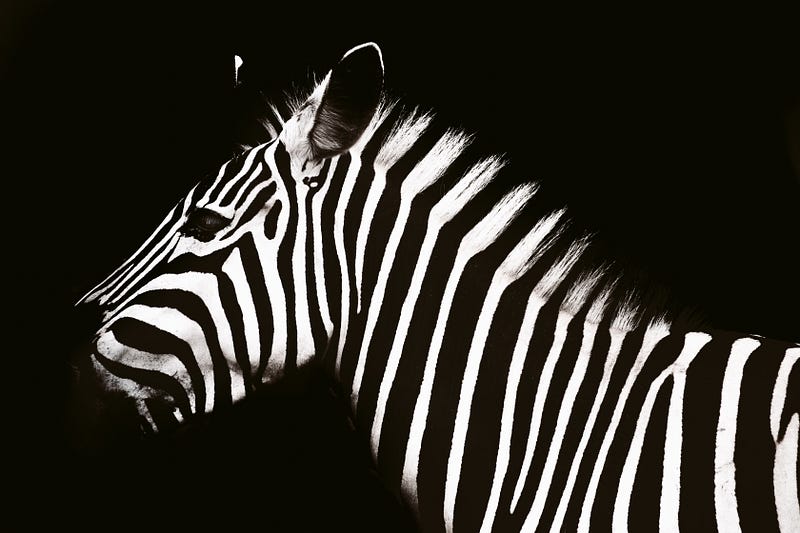
“There is not a sharp line dividing us from the other animals… We are part of an amazing animal kingdom, and there’s still so much to learn about it — and about ourselves.”
One of the most striking things about Jane Goodall is her love for and empathy toward all living creatures.
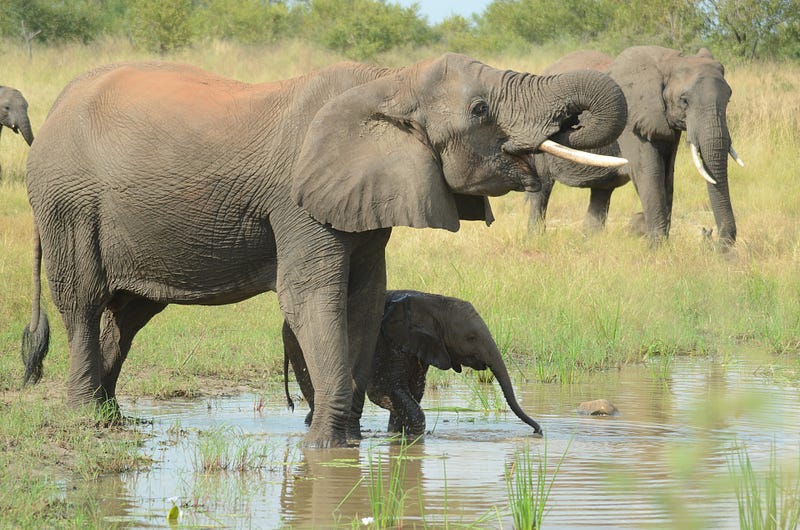
All through her lessons, she tells little stories about various animals: the pet pig who traversed a hedge and alerted people its owner was in trouble; David Graybeard, the chimpanzee that first allowed Jane into his world; the little male sparrow at the Denver airport trying to impress a mate; the elephants that go crazy when bees fly up their trunks.
Her eyes light up with joy and amazement when she tells these stories.
We must abandon the notion that we’re not part of the natural world, that it’s us humans and then everything else. Jane Goodall feels this unity at her core and is able to convey this feeling clearly.
It’s imperative we never lose sight of the fact that we’re members of the animal kingdom. It’s a truth that should inspire us to learn more about its secrets, and, in the process, about ourselves.
It’s time to drop our sense of superiority. It’s time we change the destructive role we’ve been playing in the natural world all living beings share.
“We have been far too arrogant. The animal kingdom of which we are a part is filled with secrets.”
“If you don’t talk to people and if you don’t try and find a way to communicate with them at some level, how can you expect there to be change? There will never be change.”
We need to put our differences aside and communicate with the intention of finding common ground. Jane Goodall is an expert at this.
Goodall has studied how chimpanzees communicate with one another for all manner of functions, such as to repair relationships after a fight, to alert others to danger and to convey pleasure and fear.
We humans possess a hugely complex and magical language, both verbal and written. We must put them to good use.
Jane Goodall has worked closely with oil company executives, villagers who clear the forest to grow crops, scientists who did research on chimpanzees living in deprivation, workers in zoos where animals were kept in deplorable conditions. As she says:
“As long as you don’t compromise your own values, as long as you don’t do anything that you know is wrong, a series of compromises is ok.”
We must learn to listen to the needs and concerns of others to find a way into their world and find solutions. We can’t just condemn and be outraged, and only communicate with those who agree with us.
“Every single one of us matters, every single one of us has a role to play in society, in the world. Every single one of us, whether we want to or not, makes a difference of some sort every single day.”
We must start with individual action, followed by local action.
We tell ourselves all the time: how will what I do make a difference if 7 billion other people don’t change their behavior?
First, this is an easy way out. It’s no more than a bad excuse to do nothing.
Second, it isn’t true that no one else is changing their behavior. A lot of people are. Be part of the group that’s changing, and the group will grow and grow.
Third, even if you don’t want to, you will make a difference. Your choices will determine what type of difference you make.
Jane Goodall’s message is empowering. Every single day we have a new opportunity to do good, to grow our positive impact, to influence others in a beneficial way.
The more privileged and wealthy you are, the more choices you have. Here are just a few of them, since the list is endless:
- Take short showers.
- Wear a sweater and turn down the heat. Open the windows and turn down the AC.
- Plant native species. Refrain from using chemical pesticides or fertilizers on your lawn. Water the lawn less.
- Do I really need three winter jackets? How about I spend more money on a good quality one from a company that uses environmentally friendly practices?
- Buy more local food. Eat less meat. Eat no meat or pork. Go vegetarian. Start somewhere!
- Expose your children to the natural world, in real life, books, documentaries, and other media.
- Go for the hybrid car model instead of the less fuel-efficient one with leather seats and a fancy dashboard that costs the same amount of money.
- Is it really that much easier to grab a single-use plastic water bottle and a single-serving packet of crackers to put in my son’s lunch box instead of filling a reusable bottle with water and a reusable container with crackers coming from a large bag?
- Consume and buy fewer things that use up natural resources. Consume and buy more experiences that are shared by many and have minimal environmental impact.
- If you’re very wealthy, ask yourself, do I really need a huge second home? Do I really need an enormous house and land that use up so much energy and water for a family of four?
- Support elected officials who prioritize conservation and will support measures to combat climate change and environmental degradation.
As Jane Goodall puts it:
“We have got a window of time.”
We can’t let this window close on us. We have got to keep it open and expand it so much we can stop causing damage to our planet and eventually begin to reverse it.
*Want to ponder with me? Subscribe and do so monthly: The Honest Ponderer*


