
ENTREPRENEURSHIP
12 Fascinating Facts About Jack Ma and the Rise Of Alibaba
How an English teacher conquered China’s e-commerce
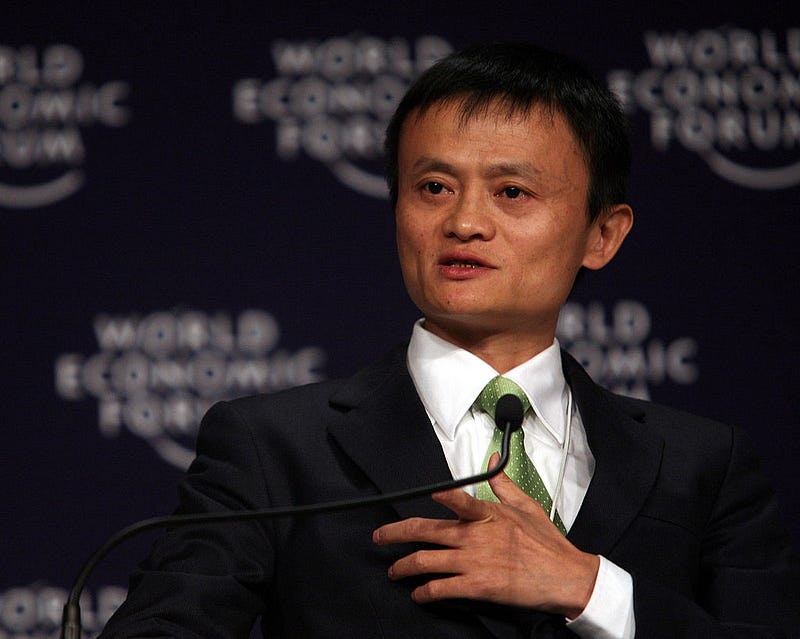
Have you heard about Alibaba, the giant Chinese e-commerce company? Alibaba has often been described as China’s answer to Amazon. It is now a massive behemoth weighing hundreds of billions of dollars.
Recently, its Chinese leader, Jack Ma, had troubles with the Chinese government. But it’s worth highlighting the incredible achievements this charismatic CEO accomplished.
Here are 12 fascinating facts I learned about Jack Ma and the rise of Alibaba in the book: “Alibaba: The House That Jack Ma Built” by Duncan Clark.
1. In China, the retail sector is much less developed than in the US
This fact surprised me. In my mind, China was filled with little shops everywhere. But it is not the case. This is due to the price of land. In China, the land belongs to the State and a few cooperatives. And the government earns lots of fiscal income from it. Since fewer shops are available in China compared to the US, Chinese e-commerce developed quickly.
2. The SARS outbreak boosted e-commerce in China
I thought that the COVID-19 epidemic boosted worldwide e-commerce like never before. But this is an old movie for China. Chinese e-commerce was first boosted by the SARS outbreak in the years 2002–2004.
3. Jack Ma first worked as an English teacher
Learning English in China is a big deal. And Jack Ma put a lot of grit into that skill. He knew that many foreigners were visiting a Hotel near Hangzhou’s famous West Lake. At 14, he woke up every day before dawn and rode his bicycle for forty minutes to this Hotel. There, he would greet foreign tourists, and give them a free tour of West Lake. And they taught him English. This experience was life-changing for him. It’s where he met his first mentors. And it led him into an initial career as a University English teacher.
4. Jack Ma has an infectious enthusiasm and capacity to charm
This was influenced by growing up in a household where both his parents practiced comedic routines. Jack Ma is one of the rare top speakers in the world to be as popular in Mandarin and English language. In international entrepreneur conferences, Jack often emerged as the star of the show.
5. Jack Ma has a special gift to motivate employees
He often gave his employees nicknames inspired by martial arts. From day one, he gave away a lot of equity to them. And he encouraged them to carry out or delegate tasks rather than waiting for orders from the top.
6. Jack Ma had a unique way of hiring
When building up his team, Jack preferred hiring people a notch or two below the top performers in their schools. The college elite, Jack explained, would quickly get frustrated when they encountered the difficulties of the real world.
7. The dot-com crisis actually profited to Alibaba
A few months before the dot-com bubble collapsed, Alibaba had successfully obtained substantial funding. The crisis stopped venture capitalists from funding Alibaba’s competitors. And Alibaba had a lot of cash reserves while they struggled.
8. Alibaba created eBay’s Chinese rival in secret
In 2003 eBay acquired EachNet, the leader of online auctions in China. Alibaba’s response was Taobao, a secret project led in the original Lakeside apartment where Alibaba had been founded. Only a handful of employees knew about this project. It took eBay 3 months to realize the threat.
9. Alibaba’s online auctions site humiliated eBay in China
From a market share of more than 90 percent in 2003, eBay’s market share fell by half the following year, and would eventually disappear as Taobao took the lead.
10. eBay China made outrageous mistakes
eBay’s Chinese auctions site charged fees while Taobao did not charge anything. It migrated the website’s servers to the United States, which slowed the website tremendously. And it implemented a disastrous chain of command, ruining the entrepreneurial spirit of its Chinese employees.
11. Alibaba created AliPay before eBay’s Paypal had a chance to compete
eBay panicked when they learned Alibaba had created AliPay, an online paying solution. They struggled to create a competitor amid complex government regulations. eBay ended up creating 2 rival means of payment: AFT and PayPal, which confused customers. In 2016, Alipay handled 3 times the volume of PayPal and one-third of the global online payments market.
12. Yahoo invested $1 billion in Alibaba
Yahoo’s funding represented a 40 percent stake. It was the final blow to beat eBay, Google, and other deep-pocket competitors. But various scandals eroded the relationship between Jack and Yahoo’s leaders. And Alibaba eventually bought back its shares.
I hope you enjoyed these little-known facts about Jack Ma and Alibaba. I certainly had a blast while reading them in the book “Alibaba: the house Jack Ma built”.
While Alibaba took a hit when it was the target of a regulatory crackdown by the Chinese government in 2021, Jack Ma’s journey remains one of the most inspiring success stories of China’s e-commerce.
On February 1st, 2022, I’ve embarked on a 100 days writing challenge. This is post number 8.


