avatarTodd Lincoln, MBA

Free AI web copilot to create summaries, insights and extended knowledge, download it at here

5318

Abstract

   <div>
          <div>
            <h2>Why the “Disposition Effect” Makes You Sell Winners and Hold Losers</h2>
            <div><h3>The irrational fear of “locking in a loss” will cost you money.</h3></div>
            <div><p>medium.com</p></div>
          </div>
          <div>
            <div style="background-image: url(https://miro.readmedium.com/v2/resize:fit:320/1*HSA98fizfpCeg1HP8F2J0w.jpeg)"></div>
          </div>
        </div>
      </a>
    </div><h1 id="52b2">#2) The Sunk Cost Fallacy</h1><p id="2760">The sunk cost fallacy is when investors justify additional future investment in something because they’ve already invested a meaningful amount into it, despite evidence suggesting this decision is probably wrong.</p><div id="f8cd" class="link-block">
      <a href="https://medium.com/@Todd.Lincoln/how-the-sunk-cost-fallacy-can-compound-your-investing-losses-a0709c770dd2">
        <div>
          <div>
            <h2>How the “Sunk Cost Fallacy” Can Compound Your Investing Losses</h2>
            <div><h3>Don’t throw “good money” after “bad money.”</h3></div>
            <div><p>medium.com</p></div>
          </div>
          <div>
            <div style="background-image: url(https://miro.readmedium.com/v2/resize:fit:320/0*37pOTi9z9OAXrl4g)"></div>
          </div>
        </div>
      </a>
    </div><h1 id="f507">#3) Loss Aversion</h1><p id="010b">Loss aversion is the tendency of investors to find losses much more painful than equivalent gains are delightful. Put another way, the pain of losses is much larger than the pleasure of gains.</p><div id="b681" class="link-block">
      <a href="https://medium.com/@Todd.Lincoln/how-loss-aversion-makes-investing-painful-and-costly-5be22c725797">
        <div>
          <div>
            <h2>How “Loss Aversion” Makes Investing Painful (And Costly)</h2>
            <div><h3>If you’re “trying not to lose money,” you’re doing it wrong.</h3></div>
            <div><p>medium.com</p></div>
          </div>
          <div>
            <div style="background-image: url(https://miro.readmedium.com/v2/resize:fit:320/0*4N1GACbwxZ2fV17U)"></div>
          </div>
        </div>
      </a>
    </div><h1 id="5aec">#4) The Endowment Effect</h1><p id="a959">The endowment effect is the tendency of investors to value stocks they already own as more valuable than they really are.</p><div id="484f" class="link-block">
      <a href="https://medium.com/@Todd.Lincoln/why-the-endowment-effect-makes-you-overvalue-your-investments-a0b47be7d2ab">
        <div>
          <div>
            <h2>Why the “Endowment Effect” Makes You Overvalue Your Investments</h2>
            <div><h3>Stop loving your portfolio just because it’s yours.</h3></div>
            <div><p>medium.com</p></div>
          </div>
          <div>
            <div style="background-image: url(https://miro.readmedium.com/v2/resize:fit:320/0*QpTKcOVar7VOw5s2)"></div>
          </div>
        </div>
      </a>
    </div><h1 id="f1ea">#5) The Bandwagon Effect</h1><p id="70c0">The bandwagon effect is the tendency of investors to do or believe things because many other people are doing or believing the same thing.</p><div id="e77f" class="link-block">
      <a href="https://medium.com/@Todd.Lincoln/why-the-bandwagon-effect-is-a-smart-investors-worst-enemy-c435994697b6">
        <div>
          <div>
            <h2>Why the “Bandwagon Effect” Is a Smart Investor’s Worst Enemy</h2>
            <div><h3>Your “FOMO” will cripple your investing profits.</h3></div>
            <div><p>medium.com</p></div>
          </div>
          <div>
            <div style="background-image: url(https://miro.readmedium.com/v2/resize:fit:320/0*QcsRGVSUWk__7ECt)"></div>
          </div>
        </div>
      </a>
    </div><h1 id="810e">#6) Authority Bias</h1><p id="7acd">Authority bias is the tendency of investors to give more weight and influence to the opinions of people in authority, believing them more likely to be correct.</p><div id="8b57" class="link-block">
      <a href="https://medium.com/@Todd.Lincoln/are-your-investment-decisions-influenced-by-authority-bias-6fa91fca5eb5">
        <div>
          <div>
            <h2>Are Your Investment Decisions Influenced by “Authority Bias”?</h2>
            <div><h3>Avoid people who are “often wrong, never in doubt.”</h3></div>
            <div><p>medium.com</p></div>
          </div>
          <div>
            <div style="background-image: url(https://miro.readmedium.com/v2/resize:fit:320/1*iuXLXPZ9CVSdoV26F6y4oA.jpeg)"></div>
          </div>
        </div>
      </a>
    </div><h1 id="cf7a">#7) Narrative Bias</h1><p id="a37e">Narrative bias is the tendency of investors to view investments through the lens of a narrative, forming a simple story and ignoring data that doesn’t fit the story.</p><div id="0dde" class="link-block">
      <a href="https://medium.com/@Todd.Lincoln/how-narrative-bias-short-circuits-your-investing-logic-9f24112b26e7">
        <div>
          <div>
      

Options

  <h2>How “Narrative Bias” Short Circuits Your Investing Logic</h2>
            <div><h3>Just because it’s a good story doesn’t mean it’s a good stock.</h3></div>
            <div><p>medium.com</p></div>
          </div>
          <div>
            <div style="background-image: url(https://miro.readmedium.com/v2/resize:fit:320/1*zfSqYsj5YJf52GKOkQBPhA.jpeg)"></div>
          </div>
        </div>
      </a>
    </div><h1 id="6729">#8) Confirmation Bias</h1><p id="ec6a">Confirmation bias is the tendency of investors to search for, interpret, focus on, and remember information in a way that confirms their original point of view.</p><div id="a9fb" class="link-block">
      <a href="https://medium.com/@Todd.Lincoln/how-confirmation-bias-hurts-your-investing-decisions-profits-1522b8488eec">
        <div>
          <div>
            <h2>How “Confirmation Bias” Hurts Your Investing Decisions &amp; Profits</h2>
            <div><h3>Learn how to remove your blinders and see the full picture.</h3></div>
            <div><p>medium.com</p></div>
          </div>
          <div>
            <div style="background-image: url(https://miro.readmedium.com/v2/resize:fit:320/0*tIbTr-hnyygju0VQ)"></div>
          </div>
        </div>
      </a>
    </div><h1 id="4419">#9) The Familiarity Effect</h1><p id="ddb9">The familiarity effect is when investors take a liking to something simply because they’ve been exposed to it. Also called the “mere exposure effect,” it means that being familiar with something makes you favor it.</p><div id="fa7e" class="link-block">
      <a href="https://medium.com/@Todd.Lincoln/why-the-familiarity-effect-makes-you-ignore-6-500-stocks-7e6776a9295e">
        <div>
          <div>
            <h2>Why the “Familiarity Effect” Makes You Ignore 6,500 Stocks</h2>
            <div><h3>Stop giving special preference to the stocks you already know.</h3></div>
            <div><p>medium.com</p></div>
          </div>
          <div>
            <div style="background-image: url(https://miro.readmedium.com/v2/resize:fit:320/1*vlsu-VCceNAXRkbe6sGjQA.jpeg)"></div>
          </div>
        </div>
      </a>
    </div><h1 id="529a">#10) The Gambler’s Fallacy</h1><p id="ee57">The gambler’s fallacy is the tendency of investors to think that future probabilities are somehow altered by past events, when in reality they are unchanged.</p><div id="ec6c" class="link-block">
      <a href="https://medium.com/@Todd.Lincoln/how-the-gamblers-fallacy-distorts-your-investing-forecasts-936eb19a7f5">
        <div>
          <div>
            <h2>How the “Gambler’s Fallacy” Distorts Your Investing Forecasts</h2>
            <div><h3>Don’t assume future probabilities are altered by past events.</h3></div>
            <div><p>medium.com</p></div>
          </div>
          <div>
            <div style="background-image: url(https://miro.readmedium.com/v2/resize:fit:320/0*lx6kRejQf9EQ4ozM)"></div>
          </div>
        </div>
      </a>
    </div><h1 id="53a7">#11) Recency Bias</h1><p id="5aff">Recency bias is the tendency of investors to focus on recent trends and events, and unjustly assume they are more likely to happen in the future.</p><div id="ffac" class="link-block">
      <a href="https://medium.com/@Todd.Lincoln/how-recency-bias-can-make-you-a-lazy-investor-d17f3e562c93">
        <div>
          <div>
            <h2>How “Recency Bias” Can Make You a Lazy Investor</h2>
            <div><h3>Don’t assume today’s trend will last forever.</h3></div>
            <div><p>medium.com</p></div>
          </div>
          <div>
            <div style="background-image: url(https://miro.readmedium.com/v2/resize:fit:320/1*KsQXuC_NloAk-w4eKIoi0w.jpeg)"></div>
          </div>
        </div>
      </a>
    </div><h1 id="bd5c">#12) The Law of the Instrument</h1><p id="65f9">The law of the instrument describes an investor’s tendency to overly rely on familiar tools, methods, or strategies while undervaluing other approaches. This bias is commonly known as, <i>“If all you have is a hammer, everything looks like a nail.”</i></p><div id="ba13" class="link-block">
      <a href="https://medium.com/@Todd.Lincoln/how-the-law-of-the-instrument-punishes-stubborn-investors-b0aca910477d">
        <div>
          <div>
            <h2>How “The Law of the Instrument” Punishes Stubborn Investors</h2>
            <div><h3>If all you have is a hammer, everything looks like a nail.</h3></div>
            <div><p>medium.com</p></div>
          </div>
          <div>
            <div style="background-image: url(https://miro.readmedium.com/v2/resize:fit:320/1*WoZsV4ekkTIRqobWznMUHw.jpeg)"></div>
          </div>
        </div>
      </a>
    </div><p id="0ac7"><i>Disclaimer: This article is provided for informational or educational purposes only and is not any form of individualized advice. All information is obtained from sources believed to be reliable but cannot be guaranteed for accuracy or completeness. Use this information at your own risk.</i></p></article></body>

12 Common Mistakes That Can Destroy Your Investing Profits

Learn how successful investors avoid cognitive traps and build a winning mindset.

Photo by JESHOOTS.com from Pexels

Trading coach Van Tharp often says, “Psychology accounts for 100% of your investment success.”

It turns out there’s some good evidence to support him.

The hard truth is that despite a profitable long-term upward trend in the stock market, the average investor performs quite poorly.

What’s Holding Investors Back?

Unfortunately, there’s a lot of evidence showing the average investor gets tripped up by common mistakes which really hurt his long-term profits.

Look first at this chart which shows how the average investor has performed vs. a range of other investment classes over the last 20 years.
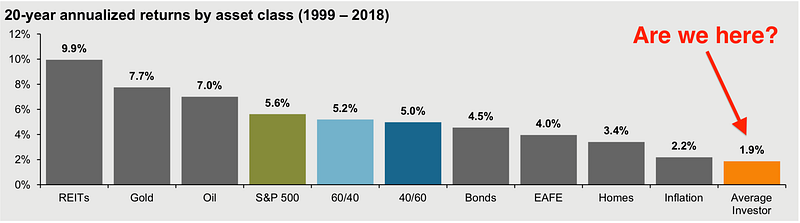
J.P. Morgan

As you can see, the results are not good. The average investor underperforms nearly every asset class on the market and just barely outpaces inflation.

Now, let’s take another view.

How does the average mutual fund investor perform vs. the S&P 500:
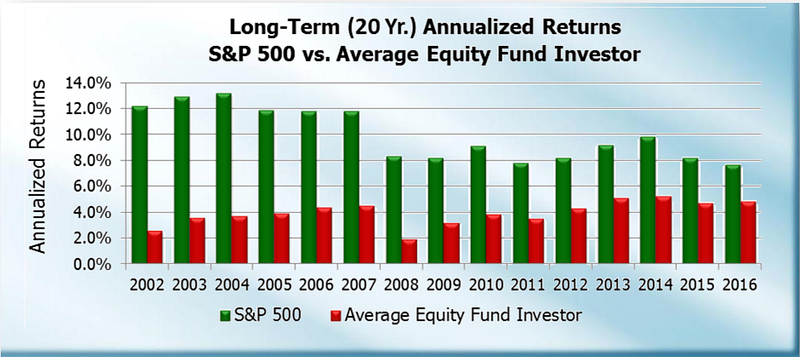
Dalbar

Looking at the red bars (the average investor) vs. the green bars (the S&P 500), the average investor has constantly trailed the performance of the S&P 500 by a wide margin.

What’s especially surprising about this graph is that even with mutual funds, when the stock picking is done by the pros and the investor has no input, investors still perform poorly.

How is this possible? Why does the average investor perform so poorly?

The biggest mistakes that hold investors back can be categorized into five major areas:
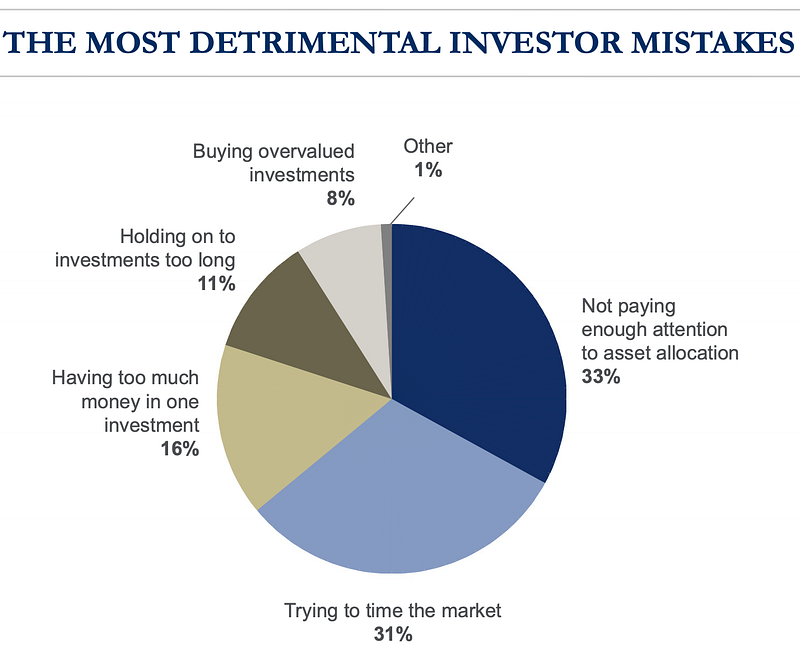
Raymond James

While I could dig into each of these specific mistakes, I believe that these, and many others, are driven largely by underlying cognitive traps.

It’s much more impactful to focus our energy there.

If you can overcome the major cognitive traps underlying these mistakes, it will take your investing to the next level.

12 Cognitive Traps to Avoid (And What to Do Instead)

I poured through research on over 200 psychological biases to find the top 12 cognitive traps that most impact your investing success.

They cover a wide range of decision making, belief, social, memory, and behavioral biases.

What Is a Cognitive Bias?

A cognitive trap is another word for a cognitive bias, which is a well-established and well-researched area of investing psychology.

Let’s start by understanding what a cognitive bias really is.

A cognitive bias is a systematic pattern of deviation from rationality in judgment.

In the context of stock market investing, a cognitive bias is a pattern of irrational decision making that leads to a suboptimal outcome.

Put simply, cognitive biases are predictable mental mistakes that lead to poor results.

For each of the 12 cognitive biases discussed below, I provide three important insights:

  • What is it? (A simple explanation of the cognitive bias.)
  • How does it apply to investing? (How this bias applies to investing, with examples.)
  • What should you do instead? (How to think instead, so you don’t fall victim to this bias in the future.)

Click on any article to learn how to recognize and avoid the cognitive bias:

#1) The Disposition Effect

The disposition effect is the tendency of investors to hold onto assets that have lost value and sell assets that have gained value.

#2) The Sunk Cost Fallacy

The sunk cost fallacy is when investors justify additional future investment in something because they’ve already invested a meaningful amount into it, despite evidence suggesting this decision is probably wrong.

#3) Loss Aversion

Loss aversion is the tendency of investors to find losses much more painful than equivalent gains are delightful. Put another way, the pain of losses is much larger than the pleasure of gains.

#4) The Endowment Effect

The endowment effect is the tendency of investors to value stocks they already own as more valuable than they really are.

#5) The Bandwagon Effect

The bandwagon effect is the tendency of investors to do or believe things because many other people are doing or believing the same thing.

#6) Authority Bias

Authority bias is the tendency of investors to give more weight and influence to the opinions of people in authority, believing them more likely to be correct.

#7) Narrative Bias

Narrative bias is the tendency of investors to view investments through the lens of a narrative, forming a simple story and ignoring data that doesn’t fit the story.

#8) Confirmation Bias

Confirmation bias is the tendency of investors to search for, interpret, focus on, and remember information in a way that confirms their original point of view.

#9) The Familiarity Effect

The familiarity effect is when investors take a liking to something simply because they’ve been exposed to it. Also called the “mere exposure effect,” it means that being familiar with something makes you favor it.

#10) The Gambler’s Fallacy

The gambler’s fallacy is the tendency of investors to think that future probabilities are somehow altered by past events, when in reality they are unchanged.

#11) Recency Bias

Recency bias is the tendency of investors to focus on recent trends and events, and unjustly assume they are more likely to happen in the future.

#12) The Law of the Instrument

The law of the instrument describes an investor’s tendency to overly rely on familiar tools, methods, or strategies while undervaluing other approaches. This bias is commonly known as, “If all you have is a hammer, everything looks like a nail.”

Disclaimer: This article is provided for informational or educational purposes only and is not any form of individualized advice. All information is obtained from sources believed to be reliable but cannot be guaranteed for accuracy or completeness. Use this information at your own risk.

Investing
Money
Stock Market
Finance
Psychology
Recommended from ReadMedium