
Diversity & Inclusion | Gender Equity
12 Actions Every Man Can Do To Support Gender Equity
Gender inequity still exists. Be an ally and help fight it.
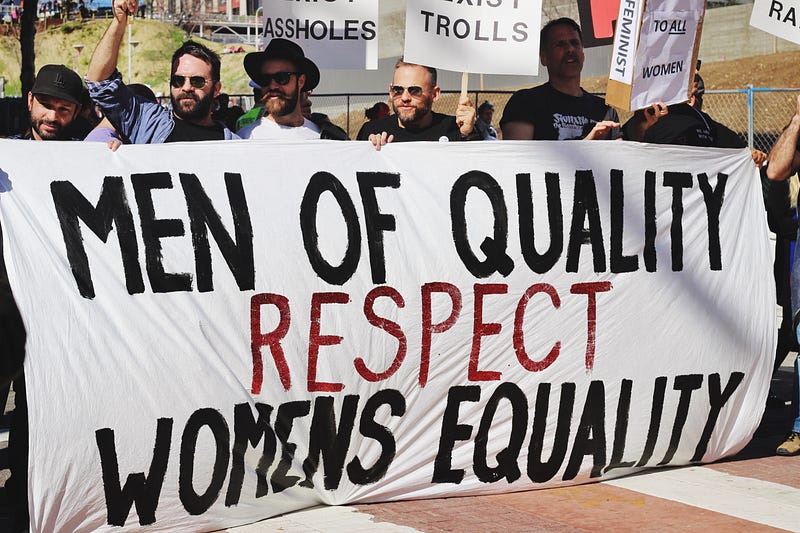
Being a woman presents many challenges in 2020, not least of them, being affected more by Covid-19.
“Across the globe, women earn less, save less, hold less secure jobs, are more likely to be employed in the informal sector. They have less access to social protections and are the majority of single-parent households. Their capacity to absorb economic shocks is therefore less than that of men.” — The Lancet, The Indirect Impact of Covid-19 on Women
If that isn’t bad enough, according to McKinsey’s Women in the Workplace 2020 report, one in three mothers has considered leaving the workforce or downshifting their careers because of COVID-19.
Covid-19 is having a big effect on gender equity and not in a good way. CEOs are being urged to take action so that gender equity doesn’t go backward.
But let’s not leave it all to the CEOs to fix. What can you do as a man, on a personal basis, to support gender equity?
Don’t panic, it’s not too hard, just some simple things that you can do in the course of your normal day.
1. Listen
When women talk about gender equity, really listen. Ask what it is like to be a woman in the workforce and what barriers they have faced. You’ll be surprised at the disrespectful behavior the women you work with have experienced. In return, share what it’s like being a man in the workplace.
2. Observe
In meetings, notice what is happening. How many men are in the room? How many women? Think about what it is like for women to be the only woman in the room. Watch what is happening. Are the women being interrupted or talked over? Does the same thing happen to the men? Are women’s ideas ignored, men’s praised? Notice if a woman raises a point, and it is ignored, only to be repeated by a man and taken seriously. Speak up if you see any of this. It’s exhausting being in a meeting and have to fight to have a voice.
3. Notice assumptions
Notice assumptions about seniority. Often female managers report taking a male team member to a meeting for development purposes and having everyone assume that he is the boss. When meeting new people, be conscious of gender stereotyping, and avoid making assumptions.
4. Make sure everyone is at the table
At project or committee meetings, look at who is there. Are women who should be at the meeting absent? Think about the seniority and skills of the people selected and whether a female stakeholder is missing. If so, arrange to have her included. It’s hard to have a voice when you aren’t at the table.
5. Ensure everyone gets recognized equally
At the end of a project, notice who gets thanks and is awarded credit for their work. Often women are missed out when praise and credit for work are distributed. Alternatively, a woman’s contribution may be minimized whereas a man’s contribution is overstated. Point it out if you see this happening.
6. Challenge stereotyping
When you are involved in a project, look at the assumptions and stereotypes around roles. For example, if a man organizes meetings, follows up with action points, and keeps everyone on time with the contributions, he is presumed to be managing the project. If a woman does the same, her work is presumed to be administrative. If you hear a woman’s role being downplayed, speak up.
7. Refuse to discuss personal appearances
Women’s clothes, body shape, hair, and attractiveness is often commented on in the workplace, much more than a man’s. What has this got to do with skills, experience, and the ability to do the job? If you hear these types of comments, say something or at least refuse to join in.
8. Examine your unconscious bias
We all have unconscious bias, women included. We are all a product of our culture, education, and personal experiences. The secret is to notice unconscious bias and do your best not to act on it.
For example, studies show that when recruiters received identical CVs, the CVs with male names were rated more favorably.
Notice your own unconscious biases. Think of the following roles and observe what image pops into your head: CEO, judge, homemaker, nurse, manager, thought leader, doctor, airline pilot, physicist. If you thought of the CEO as a man and the nurse as a woman, you are not terrible. You are just human. Women are prone to similar stereotyping. Just remember to base your decisions on facts, not assumptions or stereotypes.
9. Correct assumptions about who is responsible
If people assume you are leading a project or meeting and inappropriately address their comments to you, rather than your female colleague, look at your colleague and allow her to answer. This approach works well if you are somewhere when you can’t openly call out the bias, for example, with clients.
10. Challenge inappropriate use of words
Bossy and aggressive are often adjectives applied to women who have leadership qualities that are deemed praiseworthy in a man. Men delegate, but women are bossy. Examine your language, and if you hear someone describing a woman as bossy, call it out.
11. Be an ally
When a woman objects to any of the behaviors above, support her. You may be surprised that some women face several of the above situations in one week. Many women don’t want to call out this behavior for fear of being branded as a man-hating feminist, overly sensitive, too hard to work with, or not having a sense of humor.
12. If you have women in your team, ask them about the challenges they face
Continue to develop, lead, coach, and mentor women in your team. Yes, we differ from men, but we are similar in more ways than we are different. Ask the women reporting to you if they experience any disadvantage just because they are female. If they are, help them with strategies to overcome it.
And finally, examine your feelings about what you have just read. Are you dismissing it as nonsense or exaggerated hype? Do you feel uncomfortable and threatened? Some of these feelings are normal — the workplace is changing more quickly than most of us can cope with easily.
Most women I know have experienced some or all of what I have described. Social media echoes these findings. Gender inequity is real.
Do you want your colleagues, your partner, your daughters, your nieces, your cousins, your aunts, your mum, and your female friends (and depending on your age, maybe your grandmothers), to work in a world of inequality, bias, and stereotyping?
If not, you can actively become an ally by refusing to accept poor behavior towards women in the workplace.
Previously published on LinkedIn — June, 2019 — Wendy Scott


