
GUIDE TO CHILE
11 Adorable Animals from Chile You Absolutely Must See
Wooly, hairy, scary, we’ll cover them all!
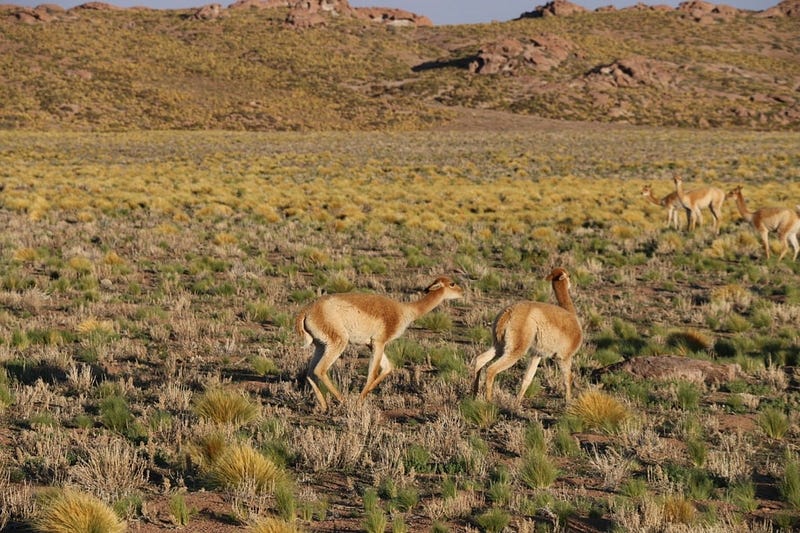
A tale as old as time: fighting over the females
My husband is an expert at spotting wildlife. It’s probably a skill he developed while guiding tourists who eagerly want to see the local wildlife.
During one of his tours in the San Pedro de Atacama Desert, I learned about vicuñas. And then suddenly on the way back from a private tour, we lucked out!
A large herd of vicuñas was grazing near the side of the road. They hardly paid any attention to us as we stopped in the middle of the dusty road.
And then we saw why.
Two male vicuñas were fighting each other while the females eyed them as if to see which one would come out on top and win mating rights.
One vicuña would charge while the other one zig-zagged to get avoid getting kicked. (The males try to kick each other in the nuts so that the loser is too sore to mate!)
And every once in a while, they would make these funny, guttural calls.
The more dominant male kept trying to chase the other one away. But the challenger kept circling back and sniffing the bums of the females until the other vicuña ran at him and the fight started all over again.
We even caught a little bit of it on film.
Seeing wildlife in its natural habitat is always one of my highlights when traveling. And seeing the vicuñas fighting is one of my favorite memories of spotting animals in Chile so far (it’s a lot more interesting than watching animals graze).
Although Chile doesn’t have a huge amount of wildlife compared to some other countries, it still has some impressive animals.
Here are 11 cute, woolly and scary animals you need to keep an eye out for when you visit:
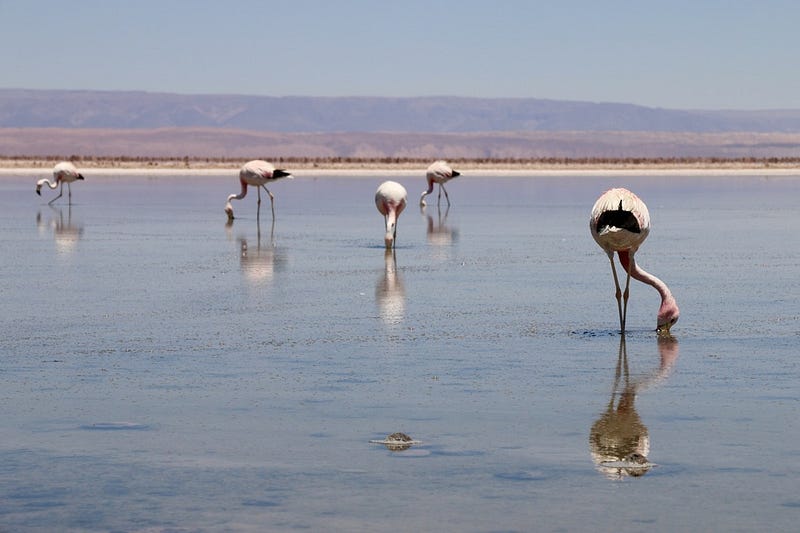
1. Pretty in pink flamingos in the salt flats
Surprisingly, you can see flamingos in the north and south of Chile.
In the north, you can see the Chilean flamingo, Andean flamingo and James’s flamingo. And one place where you’re guaranteed to see hundreds of unfazed flamingos feeding while you stare and snap your social media-worthy photos is the Atacama Salt Flats in Los Flamencos National Reserve.
In the south, the only flamingos you’ll see are Chilean flamingos. They spend the spring and summer in the far south of Patagonia around the Chacabuco Valley of the Aysen region. You’re most likely to spot them between October to March.
Seeing the flamingos on the salt flats is one of my favorite tours — even though it was brutally hot! They’re so elegant looking. Almost like ballerinas.
And it’s very easy to book a tour with a company in San Pedro de Atacama either online or in person when you arrive (if you want to shop around for the best prices).
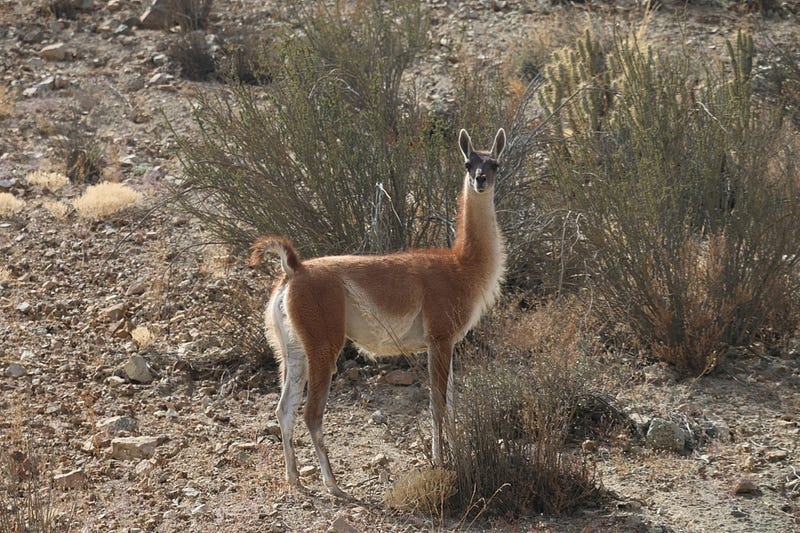
2. It’s not a llama, it’s not an alpaca… it’s a guanaco!
If these copper-colored, long-necked animals remind you of a llama, it’s because they’re from the same camel family as llamas and alpacas.
But unlike their tame camelid cousins, guanacos aren’t domesticated. Once hunted for their thick wool, guanacos are now protected. The biggest threat to guanacos today is being hunted by their main predator the puma, or starvation, which is being caused by droughts and overgrazing by farm animals.
They’re not always easy to spot. But you’ll find the largest wild population of guanacos in the far south in Tierra del Fuego.
Or you might just get lucky while you’re driving around in the foothills of the Andes and come across a herd.
That’s exactly what happened to us.
We were taking a lot of back roads through the mountains in the fourth region of Chile as we drove back to Santiago from San Pedro de Atacama. When unexpectedly, we came across a small herd of guanacos.
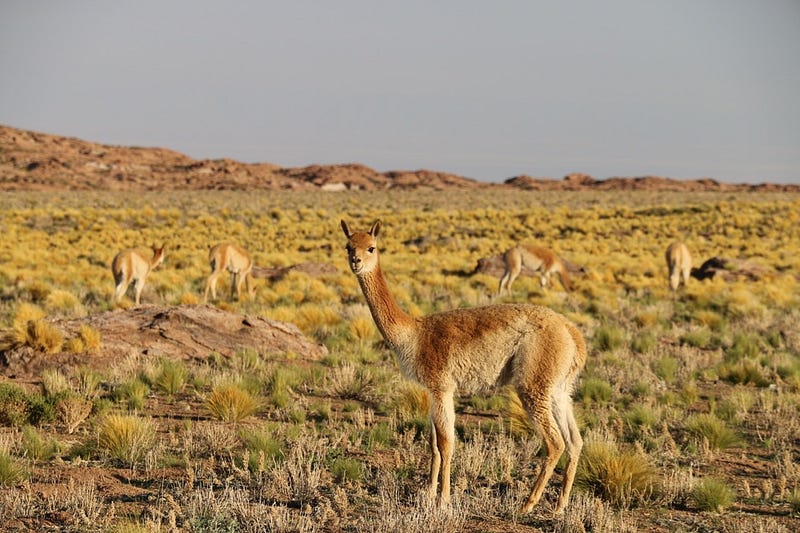
3. A very happy-looking vicuña
I don’t know what it is, but vicuñas and their larger cousins, guanacos, always seem to look happy. It’s as if they have some kind of secret.
It could be that despite being the smallest of all camelids, vicuñas have a sense of pride in their dense silky fleece. It’s highly valued and used to be solely “reserved for the Incan nobility.”
Chile has a smaller population of vicuñas as they mostly live in Peru. And thanks to conversation efforts, there’s now a healthy population of vicuñas.
But illegal wool trading is still putting pressure on these cute, graceful animals.
If you want to see this woolly wildlife, you’ll need to spend some time in the high grasslands in the Andes as they mostly live at high elevations of 10,000 feet or higher.
That’s where my husband and I spotted them when we were driving back from a tour near San Pedro de Atacama.
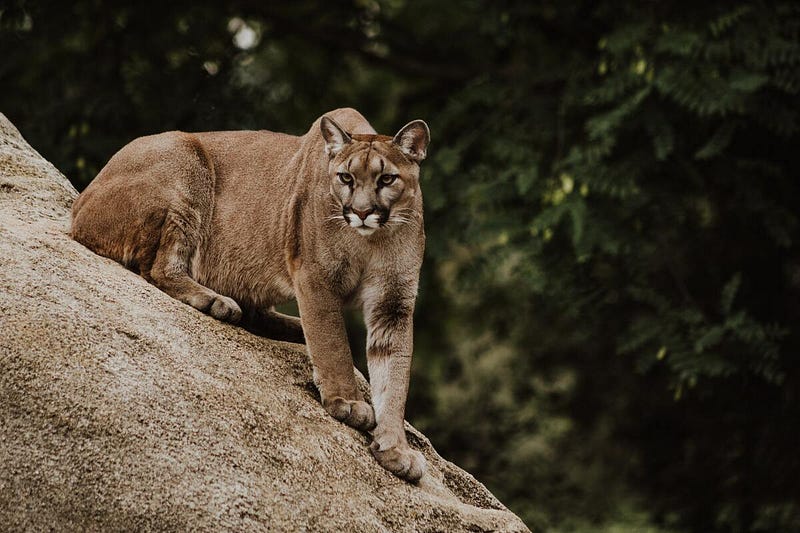
4. The elusive, ghost-like Andean puma
I’m (almost) positive that I saw a puma once while hiking in the south. But we didn’t have any binoculars and it was so far away it could have been a trick of the light.
One of the many names these mountain lions are called is “Patagonia’s ghost” (for good reason).
Pumas are protected in Chile but farmers sometimes kill them to protect their farm animals so the big cat population is dwindling.
You do have a good chance of spotting a puma in Torres del Paine National Park because they feed (warning: only click on that link if you want to see a puma feeding) on the big population of guanacos.
They also like to eat vicuñas, farm animals (in the south), red foxes, alpacas, and huemul deer.
Some tour companies like Swoop Patagonia even offer “pretty much guaranteed sightings” of the big cat.
So if seeing a puma in the wild (and not in a boring zoo) is on your bucket list, Patagonia is a popular spot to try.
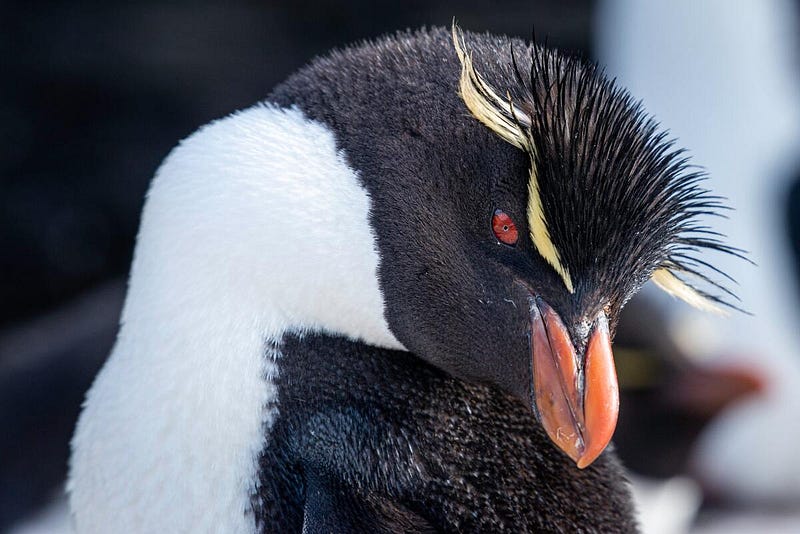
5. Cute little (and not so little) penguins in Chile
There are actually five different penguin species in Chile: the Rockhopper, the Macaroni (spelled like pasta), the Magellanic, the Humboldt and the King penguin.
#1 — Rockhopper penguin:
This dashing species has long black and yellow feathers on its head. Although there are 15 breeding sites around Chile and Argentina, the only place where you can see them is Isla Pinguino near Puerto Deseado off Argentina.
#2 — Macaroni penguin:
Also sporting yellow feathers, these penguins belong to the same crested family as the Rockhoppers. But they live on islands that are far too remote for tourists so you’re out of luck with seeing them in person.
#3 — Magellanic penguin:
These cute, playful aquatic birds live in Playa Mar Brava on Chiloe Island in Chile. I’m pretty sure my husband and I saw these during a penguin tour while we explored Chile’s second-largest island (I need to find the photos of that tour).
#4 — Humboldt penguin:
These flightless birds are not only similar in size to Magellanic penguins, but Humboldt penguins also breed in similar locations around Puerto Montt and Chiloe Island.
#5 — King penguin:
These big birds are second in size only to the more famous Emperor penguins. And lucky for you, since 2010, a small colony has made Inútile Bay by Tierra del Fuego their breeding ground so it’s been turned into a national park to protect them.
According to Tales from the Lens, you can see them with or without a tour.
Swoop Patagonia has actually created a handy dandy map (click on the link and scroll to the bottom of the page to see it) that shows you where you can see all the penguin cuteness around Patagonia on both the Chile and Argentina side.
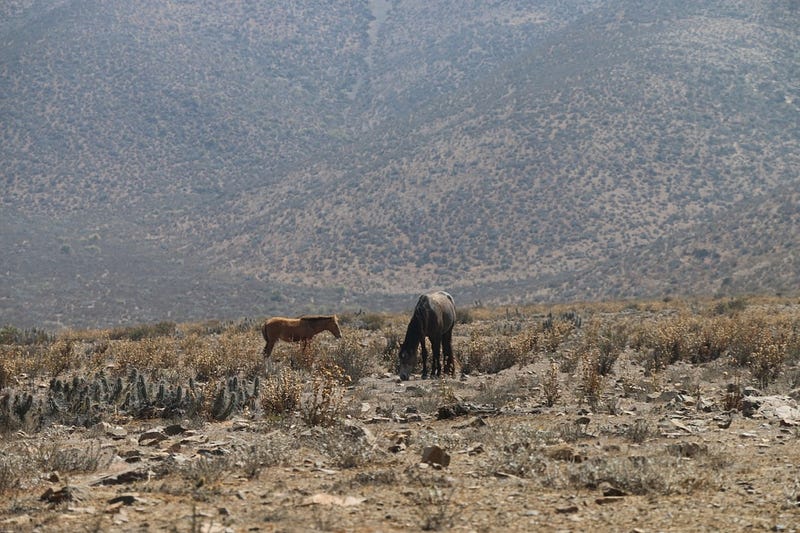
6. A horse lover’s dream — wild horses in Patagonia
I just had to include horses on this list because I love them. One of my favorite things about Chile is that it’s a horse country and a lot of Chileans own a horse (or more).
Even more cool, is a wild herd of horses in the far south of Cape Horn. Locals call these wild horses “Baguales,” which simply means “wild” or “untamed horse”.
These horses are actually considered a specific breed of wild horses. They’ve been living in Chile without human interference for about 100 years. It’s estimated that there are about 5,000 horses that are living on about 1.7 million acres around Mount Darwin.
If you’re a horse lover and would like to observe these beautiful animals, check out this article by Walter Raymond about wild horses in Chile.
I hope to see these horses on a future trip to Chile or perhaps join a 1-day expedition to track a different, smaller herd located in Torres del Paine.
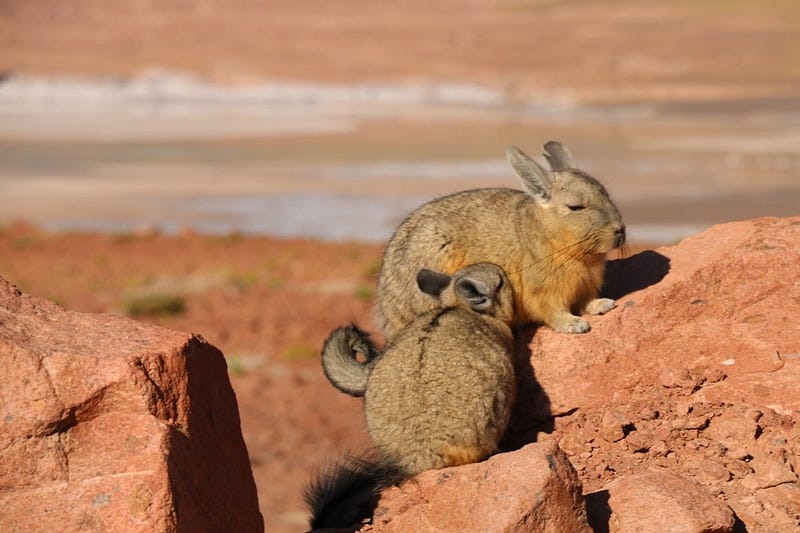
7. Cute, chubby mountain viscacha
If a bunny and a squirrel had a baby, it would probably look a little like a viscacha. They’re fluffy, and plump, have a long bushy tail and are kinda cute (for a rodent).
To see these social, adorable rabbit-like animals, you’ll need to go into the Andes as they live in rocky mountain areas.
I was fortunate enough to see a small group of unconcerned viscacha sunbathing on the rocks while on a road trip.
Their biggest predator is the Andean mountain cat, a small wild cat that could definitely star in cute cat videos.
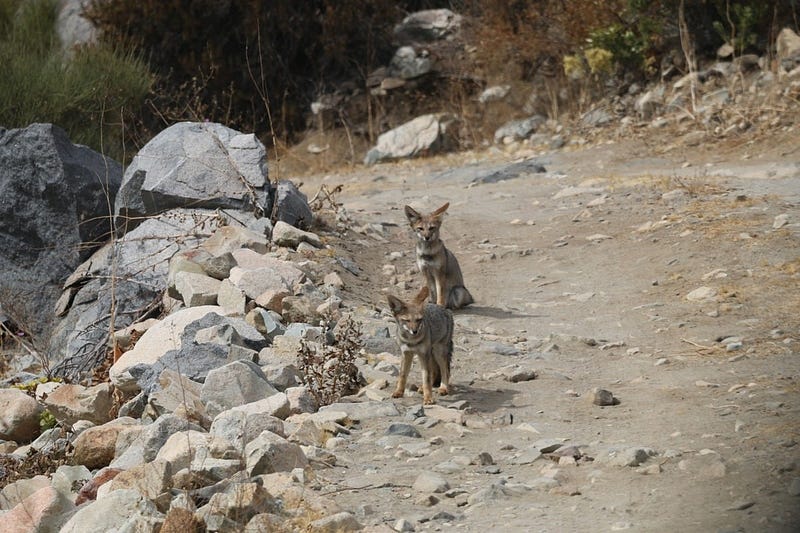
8. The South American gray fox
This small, gray-furred mammal is also called the “Patagonia fox” or the “Chilla fox”. They have very large ears, a reddish-brown head and feet and gray fur on their back and fluffy tails.
Although these foxes live in various biomes throughout Chile, Animalia says that these animals “generally inhabit plains and low mountains and prefer shrubby open areas.”
There are two other species of foxes in Chile: the red fox and Darwin’s fox.
Like many of the wildlife on this list, we just happened upon them while we were driving on some back roads. You’re most likely to spot this cute fox either in the Patagonia steppe or taking back roads between the north of Chile and Santiago.
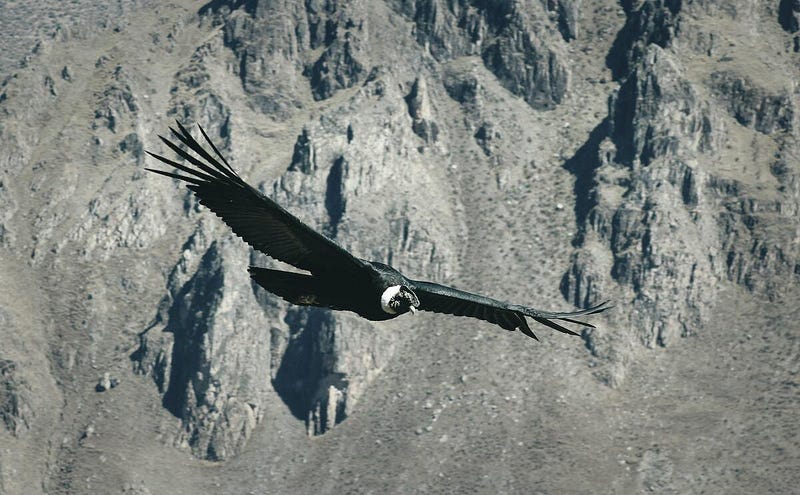
9. Chile’s national bird the majestic Andean condor
While not exactly brimming with a cuteness factor (it is a vulture after all), these are impressive birds nonetheless.
With a wing span of over 3 metres (10 feet), the Andean condor holds the proud title of the largest raptor in the world. It’s also the national bird of four South American countries: Chile, Ecuador, Colombia and Bolivia
These bulky birds that struggle to stay aloft are also “an indigenous symbol for power and health.”
If bird watching is your thing, then your best chance of spotting one of the world’s most enormous flying birds is to go hiking or horseback riding in the Chilean Andes in the central region of Chile near Santiago.
But you could also get lucky anywhere along the Andes.
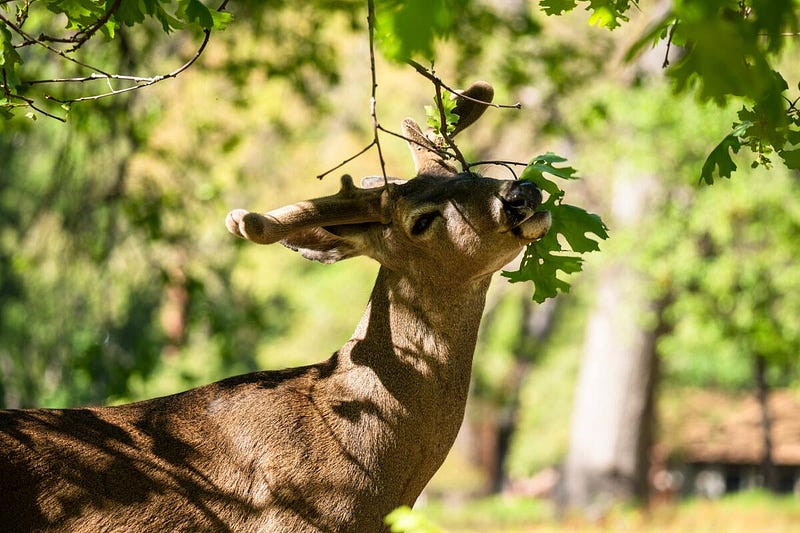
10. Chile’s national (and endangered) animal the Huemul Deer
Unfortunately, I don’t have an actual photo of this deer (you can see one here) but it’s super cute and sadly, it’s also endangered.
The Huemul deer is also called the South Andean deer and it lives in the Andes in Chile and Argentina. As Chile’s national animal, you’ll find it joining the Andean condor on Chile’s coat of arms.
As the only large herbivore in sub-Antarctic Patagonia, the Huemul is important ecologically. This small deer is “the most endangered hoofed animal in South America” with fewer than 1,500 animals roaming around Chile.
It’s not only threatened by prey animals such as pumas, foxes and domestic dogs but also by illegal poaching.
However, since 2015 a conservation organization Rewilding Chile has been buying up key wilderness areas and private land to create the National Huemul Corridor to help the population come back.
I have yet to see one of these endangered species myself but I’ve read that the best way to spot a Huemul deer is on wildlife spotting excursions.
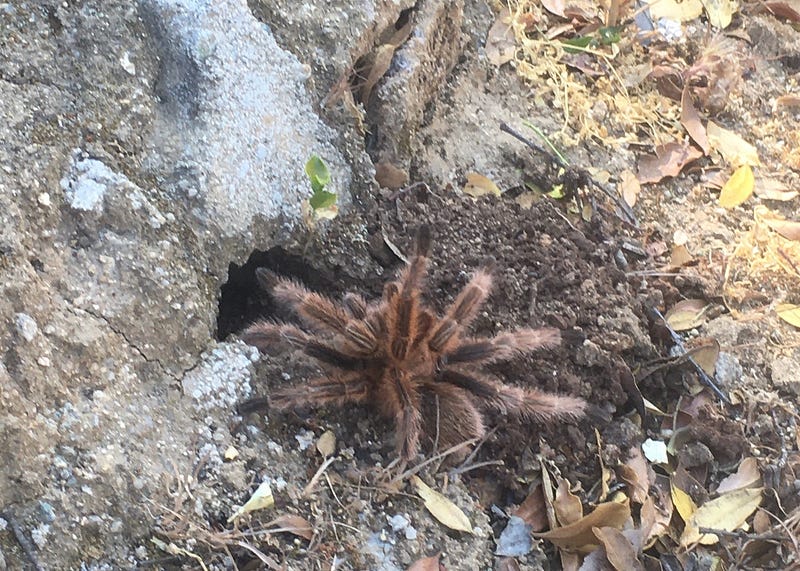
11. A very hairy, scary-looking spider
Okay, not my idea of cute or cuddly. I don’t like being in a small space with spiders.
But it’s on the list because some people would find them adorable. Robert Irwin for one.
(If you need a laugh, watch this hilarious video of Robert getting Jimmy Fallon to hold a “cute” and “adorable” tarantula while Kevin Hart freaks out in the background).
This big spider is a Chilean Rose Tarantula and apparently, they make great pets (ugh!) because they’re mild-mannered. Chileans call them “araña pollito,” which translates to “chicken spider” because they’re small and fuzzy like a baby chick.
I didn’t even know Chile had spiders this big (shiver).
When I first discovered these spiders, I was camping in a tent further down the hillside. These furry spiders come out of their little burrows (see the burrow in the photo) at night to hunt.
While I was getting close enough to snap a few photos, it reared up on its back legs and waved its front legs at me. During my research for this article, I discovered this is a warning sign that the spider is about to bite.
Glad I backed off!
The best way to spot wildlife in Chile
There are a lot of amazing and adorable animals from chile to spot in the wild.
Most of the time, I’ve spotted wildlife when we were driving in the Andes and just happened to come across them.
However, if you’re on a timeframe, your best bet is to go on a wildlife excursion with a knowledgeable guide and it will increase your odds of seeing the wildlife you want.
Just make sure the guide or company you hire is practicing responsible ecotourism and won’t endanger wildlife in any way — especially threatened or endangered species.
Don’t be that person who will do anything to get the perfect photo without giving thought to the impact you’re having on Chile’s beautiful wildlife.
Instead, choose ways to see wildlife that will help it to thrive in its natural environment for many generations to come.
Have you traveled to Chile? If so, what wildlife have you spotted in Chile?
This article is part of a series of 30 blog posts I’m writing about traveling to Chile. If you’d like to read more from this series, visit Guide To Chile.
Hannah Visser Pavez is a writer, blogger, and digital marketer. She splits her time between Canada and Chile with her Chilean husband. She’s also working on a children’s fantasy series that she hopes to finish before her nieces and nephews grow up.