
109 of the Best Writing Quotes
Become Better Instantly
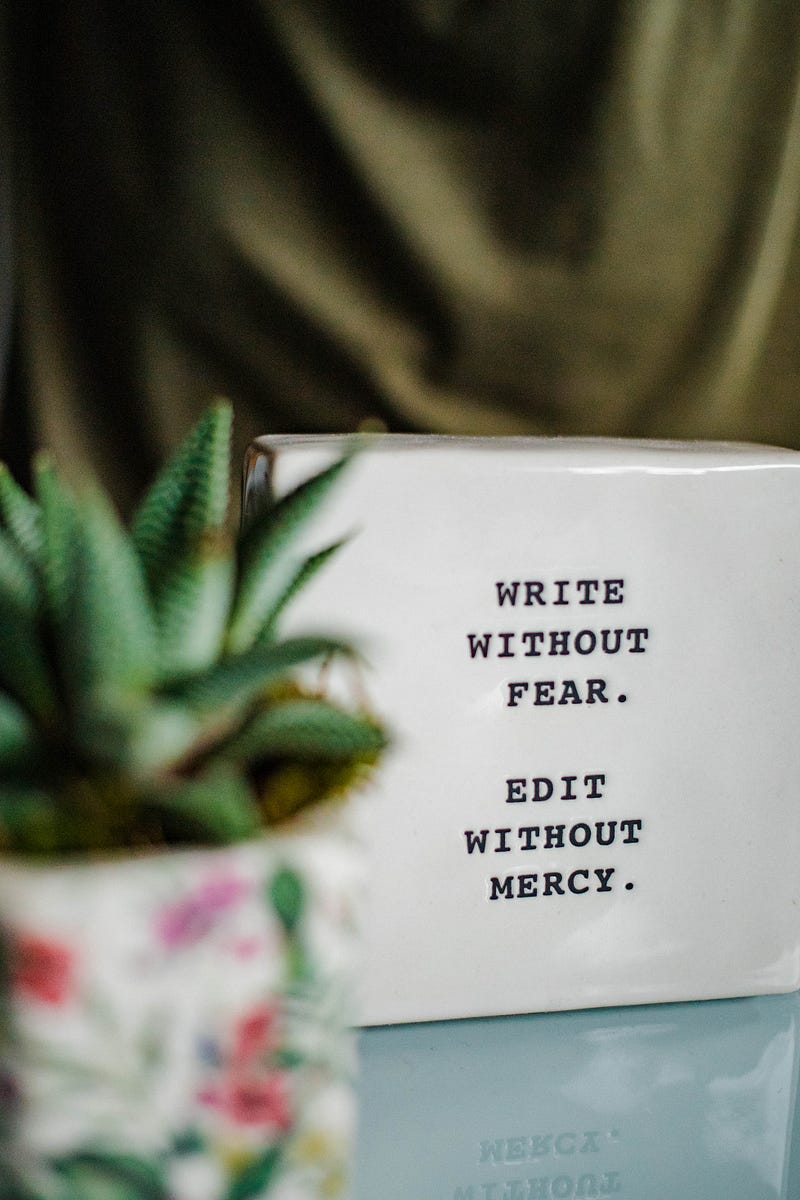
These Quotes gave me:
- Motivation
- Inspiration
- Hope
- Knowledge
- Power
I hope they will do the same to you!
Read them carefully because all it might take for your writing career to explode is just one quote from a master author!
1. Write drunk, edit sober.” — Ernest Hemingway
2. “Read a thousand books, and your words will flow like a river.” ― Lisa See
3. “writing comes out of a superior devotion to reading.” — Eudora Welty
4.“You should write because you love the shape of stories and sentences and the creation of different words on a page. Writing comes from reading, and reading is the finest teacher of how to write.” — Annie Proulx
5. “If you don’t have time to read, you don’t have the time (or the tools) to write. Simple as that.” — Stephen King
6. “Read, read, read. Read everything “— William Faulkner
7. “I kept always two books in my pocket: One to read and one to write in.” — Robert Louis Stevenson
8. “The Six Golden Rules of Writing: Read, read, read, and write, write, write.” — Ernest Gaines
9. “Find a subject you care about and which you in your heart feel others should care about. It is this genuine caring, not your games with language, which will be the most compelling and seductive element in your style.” — Stephen King
10. “The greatest part of a writer’s time is spent in reading, in order to write; a man will turn over half a library to make one book.” — Samuel Johnson
11. “If there’s a book that you want to read, but it hasn’t been written yet, then you must write it.” — Toni Morrison
12. “Everybody walks past a thousand story ideas every day. The good writers are the ones who see five or six of them. Most people don’t see any.” — Orson Scott
13. “When I sit down to write a book, I do not say to myself, ‘I am going to produce a work of art.’ I write it because there is some lie that I want to expose, some fact to which I want to draw attention, and my initial concern is to get a hearing.” — George Orwell
14. “Write what disturbs you, what you fear, what you have not been willing to speak about. Be willing to be split open.” — Natalie Goldberg
15. “How vain it is to sit down to write when you have not stood up to live.” — Henry David Thoreau
16. “If the book will be too difficult for grown-ups, then you write it for children.” — Madeleine L’Engle
17. “The story must strike a nerve in me. My heart should start pounding when I hear the first line in my head. I start trembling at the risk.” — Susan Sontag
18. “Sometimes the ideas just come to me. Other times I have to sweat and almost bleed to make ideas come. It’s a mysterious process, but I hope I never find out exactly how it works. I like a mystery, as you may have noticed.” — J.K. Rowling
19. “Ideas are cheap. It’s the execution that is all important.” — George R.R. Martin
20. “If you wait for inspiration to write you’re not a writer, you’re a waiter.” — Dan Poynter
21. “To gain your own voice, you have to forget about having it heard.” — Allen Ginsberg
22. “One day I will find the right words, and they will be simple.” — Jack Kerouac
23. “No tears in the writer, no tears in the reader. No surprise in the writer, no surprise in the reader.” — Robert Frost
24. “It is only by writing, not dreaming about it, that we develop our own style.” — P.D. James
25. “If it sounds like writing, I rewrite it. Or, if proper usage gets in the way, it may have to go. I can’t allow what we learned in English composition to disrupt the sound and rhythm of the narrative.” — Elmore Leonard
26. “Your writing voice is the deepest possible reflection of who you are. The job of your voice is not to seduce or flatter or make well-shaped sentences. In your voice, your readers should be able to hear the contents of your mind, your heart, your soul.” — Meg Rosoff
27. “I don’t want just words. If that’s all you have for me, you’d better go.” — F. Scott Fitzgerald
28. “Start writing, no matter what. The water does not flow until the faucet is turned on.” — Louis L’Amour
29. “First, find out what your hero wants, then just follow him.” — Ray Bradbury
30. “All you have to do is write one true sentence. Write the truest sentence that you know.” — Ernest Hemingway
31. “Focus more on your desire than on your doubt, and the dream will take care of itself.” — Mark Twain
32. “Being a writer is a very peculiar sort of job: It’s always you versus a blank sheet of paper (or a blank screen) and quite often the blank piece of paper wins.” — Neil Gaiman
33. “It doesn’t matter how many book ideas you have if you can’t finish writing your book.” — Joe Bunting
34. “If I waited for perfection, I would never write a word.” — Margaret Atwood
35. “A blank piece of paper is God’s way of telling us how hard it is to be God.” — Sidney Sheldon
36. “Get it down. Take chances. It may be bad, but it’s the only way you can do anything really good.” — William Faulkner
37. “One thing that helps is to give myself permission to write badly. I tell myself that I’m going to do my five or 10 pages no matter what, and that I can always tear them up the following morning if I want. I’ll have lost nothing — writing and tearing up five pages would leave me no further behind than if I took the day off.” — Lawrence Block
38. “Abandon the idea that you are ever going to finish. Lose track of the 400 pages and write just one page for each day, it helps. Then when it gets finished, you are always surprised.” — John Steinbeck
39. “You can fix anything but a blank page.” — Nora Roberts
40. “There is nothing to writing. All you do is sit down at the typewriter and bleed.” — Ernest Hemingway
41. “The first draft is just you telling yourself the story.” — Terry Pratchett
42. “Get through a draft as quickly as possible.” — Joshua Wolf Shenk
43. “The first draft of everything is shit.” — Ernest Hemingway
44. “There is no real ending. It’s just the place where you stop the story.” — Frank Herbert
45. “I would advise any beginning writer to write the first drafts as if no one else will ever read them — without a thought about publication — and only in the last draft to consider how the work will look from the outside.” — Anne Tyler
46. “Be willing to write really badly.” — Jennifer Egan
47. “On first drafts: It is completely raw, the sort of thing I feel free to do with the door shut — it’s the story undressed, standing up in nothing but its socks and undershorts.” — Stephen King
48. “I do not over-intellectualise the production process. I try to keep it simple: Tell the damned story.” — Tom Clancy
49. “You fail only if you stop writing.” — Ray Bradbury
50. “Just write every day of your life. Read intensely. Then see what happens. Most of my friends who are put on that diet have very pleasant careers.” — Ray Bradbury
51. “You don’t start out writing good stuff. You start out writing crap and thinking it’s good stuff, and then gradually you get better at it. That’s why I say one of the most valuable traits is persistence.” ― Octavia E. Butler
52. “I believe myself that a good writer doesn’t really need to be told anything except to keep at it.” — Chinua Achebe
53. “It is by sitting down to write every morning that one becomes a writer.” — Gerald Brenan
54. “We have to continually be jumping off cliffs and developing our wings on the way down.” — Kurt Vonnegut
55. “The nearest I have to a rule is a Post-it on the wall in front of my desk saying ‘Faire et se taire’ from Flaubert. Which I translate for myself as ‘Shut up and get on with it.’” — Helen Simpson
56. “My breakthrough with the first book came through persistence, because a lot of publishers turned it down.” — J.K. Rowling
57. “Any man who keeps working is not a failure. He may not be a great writer, but if he applies the old-fashioned virtues of hard, constant labor, he’ll eventually make some kind of career for himself as a writer.” — Ray Bradbury
58. “It is worth mentioning, for future reference, that the creative power which bubbles so pleasantly in beginning a new book quiets down after a time, and one goes on more steadily. Doubts creep in. Then one becomes resigned. Determination not to give in, and the sense of an impending shape keep one at it more than anything.” — Virginia Woolf
59. “A professional writer is an amateur who didn’t quit.” — Richard Bach
60. “When your story is ready for a rewrite, cut it to the bone. Get rid of every ounce of excess fat. This is going to hurt; revising a story down to the bare essentials is always a little like murdering children, but it must be done.” — Stephen King
61. “You write to communicate to the hearts and minds of others what’s burning inside you, and we edit to let the fire show through the smoke.” — Arthur Plotnik
62. “Half my life is an act of revision.” — John Irving
63. “It is perfectly okay to write garbage — as long as you edit brilliantly.” — C. J. Cherryh
64. “I’ve found the best way to revise your own work is to pretend that somebody else wrote it and then to rip the living shit out of it.” ― Don Roff
65. “So the writer who breeds more words than he needs, is making a chore for the reader who reads.” ― Dr. Seuss
66. “Not that the story need be long, but it will take a long while to make it short.” — Henry David Thoreau
67. “I would write a book, or a short story, at least three times — once to understand it, the second time to improve the prose, and a third to compel it to say what it still must say. Revision is one of the exquisite pleasures of writing.” — Bernard Malamud
68. “A writer is a world trapped in a person.” — Victor Hugo
69. “Let me live, love, and say it well in good sentences.” — Sylvia Plath
70. “Either write something worth reading or do something worth writing.” — Benjamin Franklin
71. “Writing is the only thing that, when I do it, I don’t feel I should be doing something else.” — Gloria Steinem
72. “The very reason I write is so that I might not sleepwalk through my entire life.” — Zadie Smith
73. “The good writing of any age has always been the product of someone’s neurosis.” — William Styron
74. “No matter what people tell you, words and ideas can change the world.” — Robin Williams
75. “Words can be like X-rays if you use them properly — they’ll go through anything. You read and you’re pierced.” — Aldous Huxley
76. “You can make anything by writing.” — C.S. Lewis
77. “Writers live twice.” — Natalie Goldberg
78. “You must stay drunk on writing so reality cannot destroy you.” — Ray Bradbury
79. “Substitute ‘damn’ every time you’re inclined to write ‘very;’ your editor will delete it and the writing will be just as it should be.” — Mark Twain
80. “Find your best time of the day for writing and write. Don’t let anything else interfere. Afterwards it won’t matter to you that the kitchen is a mess.” — Esther Freud
81. “Here is a lesson in creative writing. First rule: Do not use semicolons. […] All they do is show you’ve been to college.” — Kurt Vonnegut
82. “The difference between the almost right word and the right word is the difference between the lightning bug and the lightning.” — Mark Twain
83. “The main rule of writing is that if you do it with enough assurance and confidence, you’re allowed to do whatever you like. (That may be a rule for life as well as for writing. But it’s definitely true for writing.) So write your story as it needs to be written. Write it honestly, and tell it as best you can. I’m not sure that there are any other rules. Not ones that matter.” — Neil Gaiman
84. “Exercise the writing muscle every day, even if it is only a letter, notes, a title list, a character sketch, a journal entry. Writers are like dancers, like athletes. Without that exercise, the muscles seize up.” — Jane Yolen
85. “Style means the right word. The rest matters little.” — Jules Renard
86. “My aim in constructing sentences is to make the sentence utterly easy to understand, writing what I call transparent prose. I’ve failed dreadfully if you have to read a sentence twice to figure out what I meant.” — Ken Follett
87. “And one of (the things you learn as you get older) is, you really need less. You can’t waste time.” — Ursula K. Le Guin
88. “Part 1. I notice that you use plain, simple language, short words and brief sentences. That is the way to write English — it is the modern way and the best way. Stick to it; don’t let fluff and flowers and verbosity creep in.
Part 2. When you catch an adjective, kill it. No, I don’t mean utterly, but kill most of them — then the rest will be valuable. They weaken when they are close together. They give strength when they are wide apart.
Part 3. An adjective habit, or a wordy, diffuse, flowery habit, once fastened upon a person, is as hard to get rid of as any other vice.” — Mark Twain
89.“You miss 100% of the shots that you never take” — Wayne Gretsky
90. “You can’t let praise or criticism get to you. It’s a weakness to get caught up in either one.” — John Wooden
91. “I love my rejection slips. They show me I try.” — Sylvia Plath
92. “I would advise anyone who aspires to a writing career that before developing his talent, he would be wise to develop a thick hide.” — Harper Lee
93. “I used to save all my rejection slips because I told myself, one day I’m going to autograph these and auction them. And then I lost the box.” — James Lee Burke
94. “The artist doesn’t have time to listen to the critics. The ones who want to be writers read the reviews, the ones who want to write don’t have the time to read reviews.” — William Faulkner
95. “I think that you have to believe in your destiny; that you will succeed, you will meet a lot of rejection and it is not always a straight path, there will be detours — so enjoy the view.” — Michael York
96. “I tell writers to keep reading, reading, reading. Read widely and deeply. And I tell them not to give up even after getting rejection letters. And only write what you love.” — Anita Diamant
97. “I could write an entertaining novel about rejection slips, but I fear it would be overly long.” — Louise Brown
98. “I had immediate success in the sense that I sold something right off the bat. I thought it was going to be a piece of cake and it really wasn’t. I have drawers full of — or I did have — drawers full of rejection slips.” — Fred Saberhagen
99. “Every secret of a writer’s soul, every experience of his life, every quality of his mind, is written large in his works.” — Virginia Woolf
100. “If the book is true, it will find an audience that is meant to read it.” — Wally Lamb
101. “A word after a word after a word is power.” — Margaret Atwood
102. “The purpose of a writer is to keep civilization from destroying itself.” — Albert Camus
103. “Good fiction’s job is to comfort the disturbed and disturb the comfortable.” — David Foster Wallace
104. “After nourishment, shelter and companionship, stories are the thing we need most in the world.” — Philip Pullman
105. “All stories have to at least try to explain some small portion of the meaning of life.” — Gene Weingarten
106. “If a nation loses its storytellers, it loses its childhood.” — Peter Handke
107. “The difference between fiction and reality? Fiction has to make sense.” — Tom Clancy
108. “If I had to give young writers advice, I would say don’t listen to writers talking about writing or themselves.” — Lillian Hellman
109. “If you want to change the world, pick up your pen and write.” — Martin Luther