
100 Years after the 19th Amendment, What’s the State of Women’s Rights?
These 19th-century suffragists’ words indicate we’ve come far, but have a long way to go still
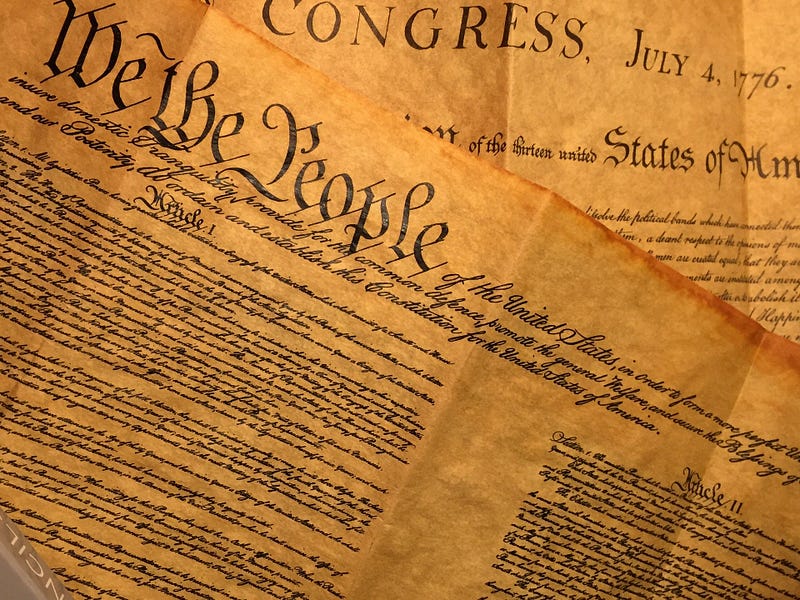
This month marks the 100th year since the 19th Amendment, which granted women the right to vote, was ratified. The year, of course, was 1920. Knowing that both of my grandmothers would’ve been in their forties on that year brings home just how recently that was.
The 19th Amendment states that:
The right of citizens of the United States to vote shall not be denied or abridged by the United States or by any State on account of sex.
Congress shall have power to enforce this article by appropriate legislation.
Short and sweet, to the point. But getting these sentences into the US Constitution was not a brief battle. It took decades of activism and persistence. In particular, it took great courage on the part of women who defied the social order of their day, an order that not only men, but also women fiercely guarded.
The quotes that follow shed light on the women’s movement already afoot in the mid 19th century, the political obstacles it faced, and the prevailing views then. These women’s words also help us reflect on how much things have changed and how much farther we have to go.
Sojourner Truth: Age-old arguments against women’s rights
After the Civil War, there was competition, if you will, for the right to vote. Apparently, having to share their power with both Blacks and Women was too much to ask of white men.
Some activists dove into the cause of black men’s right to vote, while others advocated for women’s suffrage. A few pushed for both. One such individual was evangelist Sojourner Truth.
Sojourner Truth, to me, is one of the most inspiring figures in American history. Not only was she, of course, both a Black person and a Woman, her words and life story are immensely forceful, as her 1851 address at the Ohio Women’s Rights Convention vividly conveys.
The speech, of which various versions exist, directly counters society’s “well-meaning” arguments against women’s rights. Such arguments appealed to notions of women’s femininity, their essential role as mothers, and religiosity.
In this excerpt, Sojourner Truth asks: What does femininity have to do with women’s rights?
“The man over there says that women need to be helped into carriages, and lifted over ditches, and to have the best place everywhere. Nobody ever helps me into carriages, or over mud puddles, or gives me any best place! And ain’t I a woman?”
What about motherhood? In Truth’s experience, never had that role been protected either:
“I have borne thirteen children, and seen them most all sold off to slavery, and when I cried out with my mother’s grief, none but Jesus heard me! And ain’t I a woman?”
Sojourner Truth also cleverly turns the argument that Christ was a man on its head:
“Then that little man in black there, he says women can’t have as much rights as men, ’cause Christ wasn’t a woman! Where did your Christ come from? From God and a woman! Man had nothing to do with him.”
Elizabeth Cady Stanton: The balance of power in politics and business
“So long as man feeds woman she will try to please the giver and adapt herself to his condition. To keep a foothold in society, woman must be as near like man as possible, reflect his ideas, opinions, virtues, motives, prejudices and vices… She must accept things as they are and make the best of them.” Elizabeth Cady Stanton, 1868 address at the Woman Suffrage Convention in Washington, DC
The balance of power still remains in the hands of men. Take these two facts:
- 24.2% of total Members in the House and Senate are women. That’s 131 out of 541 Members. Moreover, a total of 366 women have served in Congress in the entire history of the United States Congress.
- 7.4% of Fortune 500 company CEOs are women. That’s a total of 37 women. These numbers come from a Fortune website article titled The number of female CEOs in the Fortune 500 hits an all-time record. As if this all-time record was something to celebrate. It’s actually a depressing statistic. “Not even 1 out of 10 Fortune 500 CEOs are women” should have been the title of the article.
Susan B. Anthony: The balance of power in the home
“This oligarchy of sex, which makes fathers, brothers, husbands, sons, the oligarchs over the mothers and sisters, the wife and daughters, of every household — which ordains all men sovereigns, all women subjects, carries dissension, discord, and rebellion into every home of the nation.” Susan B. Anthony’s speech after being convicted of voting in the 1872 Presidential election
Thankfully, American society has made significant progress in the balance of power in the home. Daughters go to school and college. Women own property and wives have protections in case of divorce or abuse.
Even today, though, when men take care of their own children, many still call it “babysitting”. Household chores and child care duties are disproportionately performed by women. Society still expects women to give up their jobs or take unpaid time off to care for their young children or ill family members.
We may not have an “oligarchy of sex”, but rebellion is still taking place in many homes.
Yes, the centennial of the 19th Amendment is a reason to celebrate the rights we owe to activists of the past. It’s also an opportunity to ask ourselves:
Are women still finding too many obstacles prompting them to “accept things as they are and make the best of them?”