100% Human
Tired of seeing articles created by bots?
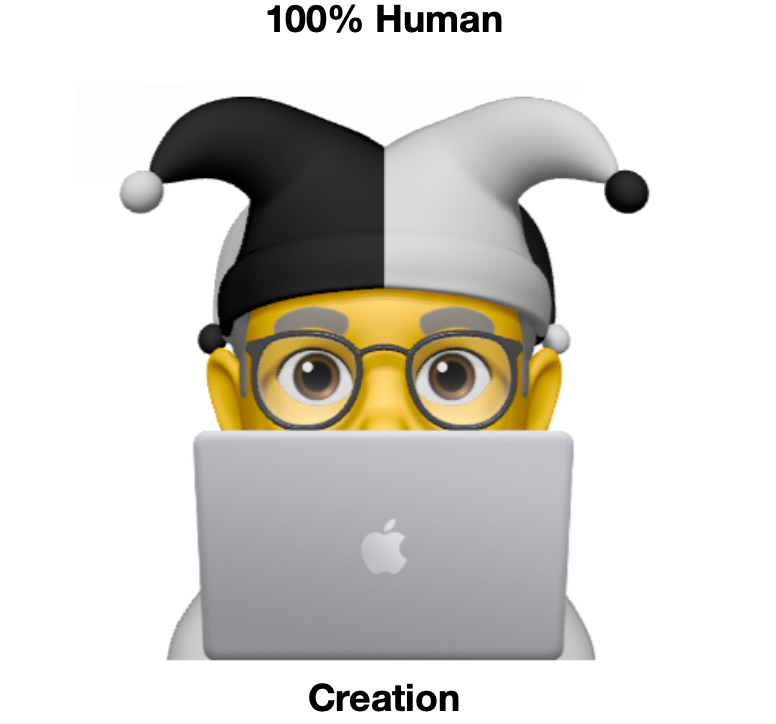
I am a human. I declare the following is true regarding my writing:
I will not use Artificial Intelligence (AI) to write any story.
No matter the deadline for writing the article. Actually, as a lifelong procrastinator, I can attest that I am more creative as a deadline approaches. It is my superpower. I will not submit to the desperation required to produce easy content for monetary gain. That in my humble opinion is a reflection of lazy thinking.
I will not use AI to create an outline.
An outline reflects the order of ideas and subplots as I see them. My stories are not a reflection of a machine mind.
However…
I am not a Luddite. I have written software. I have set up computer systems and networks in multiple countries. I have helped set educational standards for technology.
As a technology educator, I totally support this statement on AI from the International Society for Technology Education policies on AI:
To prepare students for the careers of today — and tomorrow — educators must explore and integrate artificial intelligence (AI) into K-12 classrooms. AI is already making its way into classrooms in the form of adaptive software, recommendation engines and digital assistants and is a critical element of any STEM curriculum. And generative technologies like ChatGPT, while causing a stir, present an opportunity to transform learning — as long as educators and learners understand how to strike the proper balance between the risks and benefits. — https://beta.iste.org/artificial-intelligence-in-education
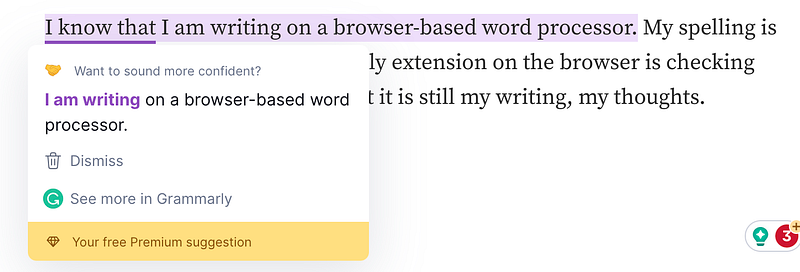
I am writing on a browser-based word processor. My spelling is checked as I write. The Grammarly extension on the browser is checking my sentences as I write them. But it is still my writing, my thoughts.
I search for information online. I hope that I am using trusted sources. If I ask an A.I. tool to research a topic, I will verify, before I trust.
There is a lot of confusion about the quality and origin of information online. Relying on AI for information can be as problematic as using any information found online.
For example, lawyers suing an airline in New York, gathered information using ChatGPT. The AI returned previous and related cases to support his argument in the case. The documentation was presented to the judge and the other side of the case in the discovery process. It seemed impressive, but the information was false.
I asked OpenAI’s ChatGPT 3.5 “What is the air quality in the caverns of the planet Mars?” It told me that as of 2021 there were no known caves or caverns on Mars. I liked that answer. ChatGPT did not create an answer based on a science fiction novel.
I will verify the sources of my information.
AI can be a great tool if used properly. For this article, I asked ChatGPT “Research the age of guano and include a bibliography”. The bibliography is important. ChatGPT gave me references at the end of each paragraph. Even then, I did my due diligence and cross-checked the references. Are the references legitimate sources or made up like in the court case?
It turned out that all of the references were linked to original source material. Good going ChatGPT, actual research. However, I wanted to know about the “Age of Guano,” not how to find the age of guano (in caves).
How many of the articles on social media and even on Medium are created by AI? I would like to think I can trust the presenters of the information. However, writers should remember that trust is easily broken and difficult to repair.
With the advent of OpenAI’s ChatGPT, there was an uptick in the submission of scripts and articles of all types to publications. Did the submission authors use ChatGPT as a tool or crutch?
Therefore, at the end of each of my human-made stories, either fact or fiction, I will include the following graphic for my readers.