
10 Years of Intermittent Fasting — A Review
Does it live up to the hype in the long term?
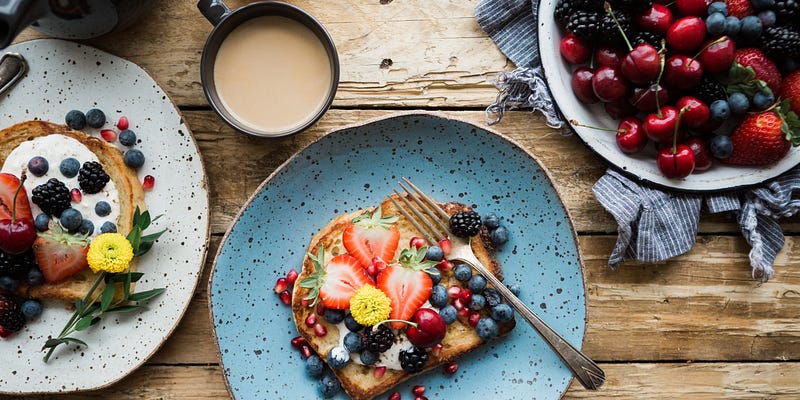
I admit it: I love food. And lots of it.
And while I’ve always watched what I eat and mostly stay away from sweets and heavily processed foods, the sheer abundance and calorie density of the food available to me became more and more of an issue as I was approaching my 30s.
I had tried enough extreme, short-term diets before to know first-hand that the yoyo-effect always got the better of me. And while I was not overweight (yet), I knew that I had to find a long-term sustainable eating pattern that would help me keep the body I had for the years to come.
Sometime in 2011, after hours of research, I came across a guy called Martin Berkhan, and his website Leangains.com. The name alone was enough to pique my interest — after all, who does not want lean (muscle) gains? And while I did not follow many of his workout-related tips, his dietary recommendation called Intermittent Fasting changed my life for the better.
Fast forward almost 10 years and I’ve practiced Intermittent Fasting for 99% of the time. I can confidently say that I know most there is to know about it, and more importantly, I know what works for me.
So first, I’ll briefly recap what Intermittent Fasting (IF) is. Then, I’ll dive into some of the science behind it and my personal experience behind each scientifically established fact. After that, I’ll aim to answer some of the most common questions I’ve been asked over the years, and at last, I’ll provide a short summary and conclusion.
What Is Intermittent Fasting (IF)?
Intermittent Fasting, also called time-restricted eating, is simply limiting food intake to a specific window during a given time frame.
There are many popular variants, all expressed in numbers (eating time:fasting time), such as 5:2, 6:1, 14:10 or — my personal choice — 16:8.
To find out which is which, simply add up the numbers: If the sum is 7, it refers to a week, meaning the individual numbers refer to days. If the sum is 24, it refers to a day, the individual numbers being hours.
Therefore, 5:2 means regular eating for 5 days a week, followed by a full fast for the last 2 days of the week. While I know people who do that, 6:1 is much more common in my circles.
As for the daily routine, I know a handful of people who’ve settled for the most extreme version called OMAD — short for “one meal a day”. So depending on your meal duration, that’s likely a 23:1. However, the vast majority of people who practice IF do so on a 16:8 split, the most common “feeding window” being between noon and 8 pm.
The Science Behind and Main Benefits of IF
Intermittent Fasting has been around for quite a few years now, and there have been a number of scientific studies on the topic (here, here, here, and here).
While the general consensus of the studies seems to be that there clearly can be some upside but that IF is not the silver bullet often made out to be, the main benefits seem to be somewhat universally accepted.
IF helps with weight loss.
That seems to be true. Studies have clearly shown that intermittent fasting can help lose significant weight. The caveat: Evidence that it’s more effective than simple caloric restriction without time restriction (i.e. simply eating less at any time) is not conclusive.
My take: Confirmed. I have lost around six pounds in the first few months when I started, and have kept the weight off better than many of my peers. Agreed, the sample size here is one, but from a personal point of view, I’d say this one is true.
IF is better than caloric restriction to maintain lean mass and only burn fat.
The goal of most diets is to lose weight. Ideally, all or most of that lost weight should be body fat. You don’t want to lose lean mass (muscle). Studies confirm that IF is better at maintaining lean mass during weight loss than classic caloric restriction.
My take: Hard to say, as I’ve obviously not done any A/B testing. Combined with a strict workout regimen, my subjective impression would be that I’ve mostly lost body fat.
IF helps with focus and energy.
Our bodies need energy to digest food — hence the reason we’re often tired after a meal. In the popular 16:8 method, skipping breakfast should therefore allow for more energy and focus during the morning hours.
My take: Confirmed — partially. I have absolutely noticed the lack of a dip in my morning energy, something I often had before starting with IF. In fact, on the rare occasion I do have breakfast nowadays, I often feel sluggish all morning. However, there’s a caveat: I eat a large lunch more often than before I started with IF. Therefore, there’s an argument that I’ve simply shifted the dip to later in the day.
IF helps with heart rate, blood pressure, type 2 diabetes, and cholesterol.
At least one study finds this statement to be true — but there’s a catch: The data are much more conclusive in rodent studies than in actual human trials. So while likely not completely misleading, the results should surely be taken with a grain of salt.
My take: Again, the lack of A/B testing makes my personal findings somewhat irrelevant. Having said that, my personal values regarding the above findings put me in a very healthy category: My resting heart rate is <60bpm and my average blood pressure is 118/82. When last measured, my HbA1c was 5.4, and my cholesterol was 3.4 (H.D.L. 1.2 / L.D.L. 1.7). And while all those values are influenced by a plethora of factors outside of IF, I’d like to believe that IF has helped keep them at the healthy levels they are.
IF can improve your fitness.
Studies have shown that working out in a fasted state can improve muscle protein synthesis as well as benefit metabolic adaptation. In plain English, that means that you could improve your endurance and muscle growth quicker when working out during your fasting window than when working out in a fed state.
My take: While I cannot prove that IF has accelerated gaining muscle or significantly improved my 1-Rep-Max when lifting, it certainly has not had a negative impact on either. I have steadily improved both areas, in spite of working out on an empty stomach most of the time. There is a personal caveat: While I work out well 10–12 hours after my last meal (meaning between 6 am and 8 am), that’s not the case in the last few hours of my fasting window. Trying to work out on an empty stomach just before my fast ends has proven really hard for me, and regularly led to either a subpar performance or me not finishing the workout as planned. My solution to this is eating a banana 20 minutes before starting a workout, or simply working out 2–3 hours after my first big meal, which puts me in line with many people who feel strongest roughly 10 hours after waking up.
IF provides hormonal benefits.
While there are certainly others, the most obvious hormones influenced by IF are the “hunger hormones”: Ghrelin, which tells your body you’re hungry and need food, and Leptin, which is produced by fat cells and signals your body you’ve had enough food. (A much more detailed explanation can be found here). The simplified theory here is that Ghrelin and Leptin are antagonists that require each other to be active in order for the body to function optimally. Because food is abundant and we can stay in a “fed” state indefinitely nowadays, however, Grehlin (read “hunger”) rarely shows up in many people anymore. On the other side of the spectrum, obese people seem to be immune to Leptin, hence never feeling “full”. Fasting re-establishes the healthy balance of the two by regularly triggering Ghrelin. Besides making you feel hungry, your body seems to benefit on different levels from the presence of Ghrelin.
My take: I can’t speak to the scientific effects of Ghrelin in my body, as I have not measured any of the relevant values. However, I do appreciate the feeling of hunger, actually signaling my body that I need food, as opposed to just eating because mealtime has arrived. As for Leptin, the fact that I often feel full before I’ve reached the number of calories I roughly aim for in a day speaks for healthy activity.
Bonus fact:
IF is harder than simple caloric restriction (CR).
The most straightforward (or maybe traditional?) way to lose weight is simple caloric restriction (CR), as in, eat less — or less calorie-dense food. If you ingest fewer calories than you burn, you’ll lose weight (extremely simplified statement). Multiple studies have found the dropout rate to be higher in IF test subjects when compared to CR test subjects, suggesting that IF is a harder diet to follow through with.
My take: I’ve experienced the opposite, possibly based on the fact that I do well with extreme measures. I’ve always found it much harder to restrict how much or what I eat, as opposed to simply not eating at all during a prescribed time. Also, I know dozens of people who successfully adopted IF, but I don’t know a single person who has managed to stick to permanent caloric restriction.
Questions I’m Often Asked
Can I eat however much I want during my feeding window?
No.
The idea is to eat less in your feeding window than you would usually eat during 24 hours. If you’re simply cramming the exact same amount of calories into a smaller window, the benefits of IF will be severely limited. It’s likely not going to be 2/3 of your previous average simply because you skip a meal. I know it’s not for me. But if you can reduce intake by even 10% permanently, that’ll go a long way.
Can I eat whatever I want during my feeding window?
No.
Similar answer as above: If you’re replacing 3 healthy meals totaling say 2500kcal over 24 hours with 2500kcal of sweets and snacks only consumed during an 8-hour window, you’re shooting yourself in the foot. Besides one of the main goals being a reduction in total calories consumed, a calorie does not equal a calorie. Avoid sugar in any form, stay away from heavily processed foods whenever possible. To kickstart your efforts, limit your carbs: IF + Keto can be very powerful, and it’s the most effective weight-loss method I have personally found.
My Grandma always said that breakfast was the most important meal of the day…
…and that might have been true in your Grandma’s time. With much less calorie-dense food, a significantly lower living standard and general availability of food of any kind, and likely much more physically challenging work, there used to be a pretty good argument for loading up on energy before heading out to work in the morning. In times where we have all the food that we want and more calories than we should have at our fingertips, likely have had a calorie-dense dinner 10 hours before, and many of us drive into an office with an elevator to then sit on a chair for a few hours… you get the point. Times change, and sayings expire.
Will coffee break my fast?
No — if you drink it black.
A cup of black coffee contains less than 5 calories and does not break the fast. However, more than one cup, and especially when adding milk or sugar is a different story: That should only happen in your feeding window.
Can I have fruit juice during my fast?
No.
Fruit juice can be quite dense in calories and should be avoided during the fasting window. Pro tip: Squeeze half a lemon into a glass of water if you need a bit of flavor. At less than 6 calories, it won’t break the fast but is just a tad more exciting than just plain water.
Are there proven benefits to choosing a specific feeding window during a day?
Scientifically speaking, there is not enough evidence to suggest a certain feeding window is superior to others. For me and many others, it’s more of a convenience factor, and a way to make 16:8 socially acceptable: Skip breakfast, because you’re more likely to have company during lunch or dinner.
Can I do intermittent fasting when I (insert special circumstances here)?
Ask your doctor.
While I personally know dozens of people who practice it and have not heard of any issues with intermittent fasting when done right, each body works differently. If you have the slightest doubt if this is right for you, ask a professional before trying anything.
Summary and Personal Conclusion
Intermittent Fasting (IF) is a type of diet where calorie consumption is limited to a certain time of day (or week). The most typical form, also known as the Leangains-Diet, follows a 16:8 pattern, meaning all the calorie intake in a 24-hour day happens in an 8-hour window.
While not per see superior to simple caloric restriction (CR), a.k.a. eating less (or less calorie-dense) food, IF is scientifically proven to help with weight loss and to provide many of the benefits associated with a restrictive diet. One of the main benefits is its simplicity, and, after a while, convenience: It’s the same thing every day (or week), requires little planning, and easily integrates into most lifestyles.
Personally, I have been on the 16:8 diet for almost 10 years now, and the advantages for me are obvious: Better control of my weight without losing significant lean mass, more energy and focus in the morning, and potential hormonal and general health benefits.
As an added personal bonus, keeping my feeding window between noon and 8 pm removes the temptation of jumping onto breakfast when at hotels or during morning meetings: Especially when not self-prepared, breakfast presents some of the biggest nutritional issues I see, from white bread to fruit juice and sugary jams.
On the downside, it’s nice to share breakfast with friends occasionally, and most of all, I love the contents of a typical breakfast: eggs, toast, granola, the goods. Luckily, the occasional exception to your fasting regime won’t do much damage, so don't miss out on that once-a-quarter breakfast with your besties. As for the actual food: I brunch almost daily, simply eating at noon what others typically eat for breakfast.
I’m approaching 40. With Intermittent Fasting, I see myself getting to 50 in a much healthier state than without it. Which makes the decision to continue a no-brainer for me.
Disclaimer: I am not a medical professional, and all the observations above are based on personal experience only. Do not change your diet without consulting a professional.

You just read another post from In Fitness And In Health: a health and fitness community dedicated to sharing knowledge, lessons, and suggestions to living happier, healthier lives.
If you’d like to join our newsletter and receive more stories like this one, tap here.


