
true crime
10 Wicked True Crime Stories That Will Keep You Up at Night
This is a journey into the world’s most enthralling cases
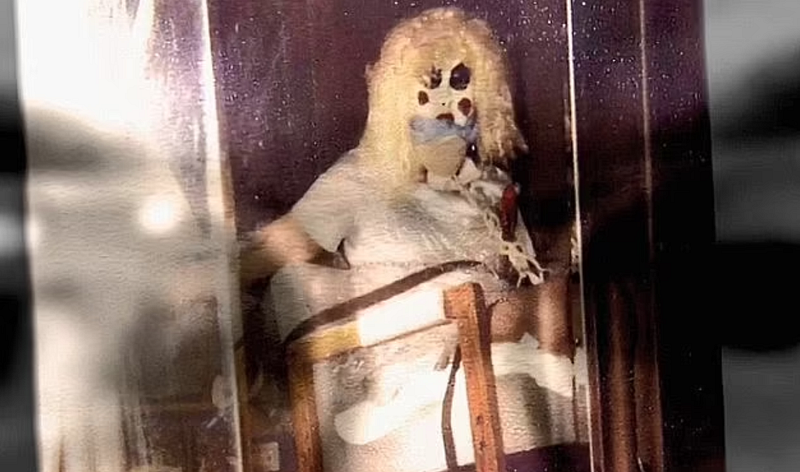
We have a compelling journey for all those intrigued by the darker side of human nature, wrapped up in real-life narratives that feel more like fiction. So brace yourself as we unveil an anthology of 10 true crime stories as fascinating as they are harrowing. And remember, these are not just stories; they are stark realities, unsettling reminders of the fact that crime is very much part of our world, often lurking where least expected. Turn down the lights, pull up your blanket, and plunge headlong into tales that will make your heart and mind whirl.
“Murder is sordid. But the truth is fascinating. It’s the intriguing combination that hooks so many readers.” — Unknown
1: Southern Fatality
Blanche Taylor Moore — known for her charm and Southern hospitality — was a regular churchgoer and supermarket worker. However, beneath this facade, she was a serial killer who used arsenic as her weapon of choice.
Moore’s killing spree spanned over 17 years, from 1966 to 1986. Her victims were close to her, including her father, two husbands, and a boyfriend. The common thread among these deaths was the presence of lethal amounts of arsenic in their systems, which led investigators to suspect foul play.
Moore’s modus operandi was chillingly simple. She would slowly poison her victims over time, often through food and drink. This method made it difficult to detect the poison, as the symptoms of arsenic poisoning can mimic other illnesses. It was after a boyfriend fell ill and a savvy doctor ordered a toxicology report that the truth began to unravel.
Once the authorities began to dig deeper into Moore’s past, they discovered a trail of death and deceit. Exhumations of her previous husbands revealed high levels of arsenic, confirming their suspicions. The police arrested Moore in 1989, and during her trial, she maintained her innocence, blaming the arsenic levels on environmental factors.
Despite her claims, the jury found Moore guilty of first-degree murder in 1990. She was sentenced to death and remains on death row to this day. Blanche Taylor Moore’s story reminds us that evil can lurk where we least expect it, even behind the most ordinary faces.


2: Handsome Devil
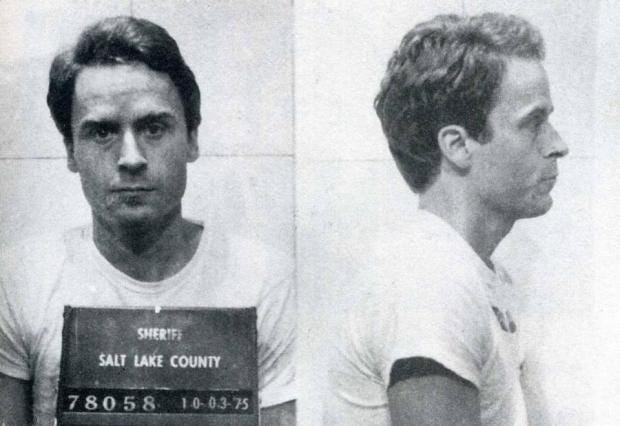
Ted Bundy, born Theodore Robert Bundy, is one of the most notorious serial killers in American history. His charm and good looks belied a deeply disturbed mind, making him a figure of intrigue and terror. Bundy’s criminal activities spanned several years in the 1970s, during which he committed a series of heinous crimes that shocked the nation.
Bundy often lured his victims by pretending to be injured or in need of help, exploiting their empathy to draw them into his trap. Once he had gained their trust, he would overpower them, leading to their untimely demise. His ability to manipulate and deceive is a terrifying reminder of the potential darkness lurking beneath the surface of seemingly ordinary individuals.
Despite his gruesome crimes, Bundy managed to evade capture for a long time, in part due to his ability to change his appearance and his knack for escaping from custody. He escaped jail twice, adding to his infamy and the public’s fascination with his case. His escapes not only demonstrated his cunning but also allowed him to continue his murderous spree, causing further devastation.
Bundy’s trial was a media spectacle, mainly due to his decision to represent himself in court. His confident demeanor and articulate speech during the proceedings further amplified the public’s fascination with him. The contrast between his outward charm and his monstrous actions made him a chilling figure in the annals of true crime.
Ted Bundy was finally sentenced to death and executed in the electric chair in 1989. His crimes, manipulative behavior, and the terror he instilled have made him the subject of numerous books, documentaries, and films. Bundy’s story serves as a chilling reminder of the depths of human depravity and the potential for evil that can reside in the most unsuspecting individuals.
3: The Right to Remain Dead Silent
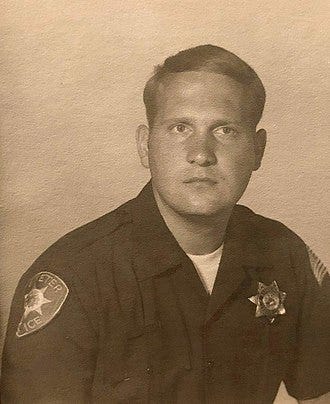
Joseph James DeAngelo, also known as the Golden State Killer, is a former police officer and auto mechanic whose criminal activities spanned over a decade, from the late 1970s to the mid-1980s. His crimes, which include at least 13 murders, 50 sexual assaults, and over 100 burglaries, were committed across California, earning him various nicknames such as the East Area Rapist and the Original Night Stalker.
A chilling level of planning and brutality characterized DeAngelo’s crimes. He would often break into homes in the dead of night, wearing a mask and shining a flashlight into the eyes of his victims to disorient them. His meticulous nature extended to his methodology, as he would often stake out his victims’ homes for days or even weeks before striking, learning their routines to ensure he could catch them off guard.
Despite the scale and severity of his crimes, DeAngelo eluded capture for over four decades. His ability to evade law enforcement was partly due to his background as a police officer, which gave him an understanding of investigative techniques. Deangelo’s experience, coupled with the fact that his crimes were committed before the advent of DNA profiling, allowed him to remain a free man for many years.
DeAngelo’s reign of terror finally came to an end in 2018 when he was identified and arrested through the use of innovative forensic genealogy techniques. Investigators matched DNA from crime scenes to a distant relative of DeAngelo’s who had submitted their DNA to a genealogy website. This breakthrough led to his arrest and subsequent conviction on multiple counts of murder and kidnapping.
4: In the Shadows
The Night Stalker, also known as Richard Ramirez, was a notorious serial killer who terrorized Los Angeles residents in the mid-1980s. His crimes were particularly chilling due to the seemingly random nature of his victims and the brutal methods he employed.
Ramirez’s reign of terror began in the summer of 1984 and lasted until his capture in August 1985. During this time, he committed a series of burglaries, assaults, and murders that left the city in a state of fear. His victims ranged in age from six to 82, demonstrating a chilling lack of discrimination.
Ramirez often broke into homes in the middle of the night, earning him the moniker ‘The Night Stalker.’ He was known for his sadistic tendencies, frequently torturing his victims before killing them. His crimes exhibited a unique blend of violence and sexual perversion, which added an extra layer of horror to his actions.
Despite his brutal crimes, Ramirez managed to evade capture for over a year. His ability to slip through the fingers of law enforcement contributed to the fear and paranoia that gripped Los Angeles during this time. A group of civilians recognized Ramirez from a police sketch, and they brought him to justice.
Ramirez’s trial was a media circus, with his devil-may-care attitude and apparent lack of remorse adding to the public’s fascination and disgust. The courts convicted Ramirez of 13 murders, 5 attempted murders, 11 sexual assaults, and 14 burglaries. He died of natural causes while on death row in 2013.

5: Brotherly Love
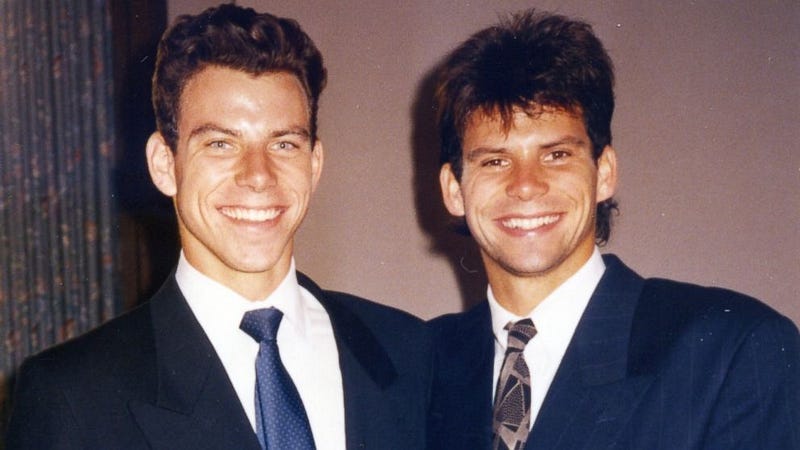
The Menendez Brothers, Erik and Lyle, were thrust into the public eye following the brutal murder of their parents, Jose and Kitty Menendez, in their Beverly Hills mansion in 1989. The brothers, then aged 18 and 21, initially escaped suspicion, portraying themselves as grieving sons who had lost their parents to a violent, unsolved burglary.
The brothers led a lavish lifestyle following their parents’ death, spending their inheritance on luxury cars, expensive watches, and opulent vacations. This conspicuous consumption raised eyebrows, leading investigators to take a closer look at the brothers’ possible involvement in their parents’ murder.
Their trial was one of the first broadcast on Court TV, turning the Menendez Brothers into household names. The defense argued that the brothers had suffered years of physical and sexual abuse at the hands of their parents, leading them to a breaking point. This narrative of abuse was a significant aspect of the trial, sparking a nationwide conversation about child abuse and its potential consequences.
Their defense team couldn’t convince the jury that the brothers’ abuse justified the brutal murders. In 1996, after a lengthy and highly publicized trial, the Menendez Brothers were convicted of first-degree murder and conspiracy to commit murder. The courts sentenced the brothers to life in prison without the possibility of parole.
Even after their conviction, the Menendez Brothers’ case fascinates the public. The brothers have gained some sympathy over the years as more people have come to believe their claims of abuse. Their story has been the subject of numerous documentaries, movies, and books, keeping their chilling tale alive in the public consciousness.
- The first recorded use of Forensic Entomology — the study of insects for investigative purposes — was in a Chinese book titled “Hsi Duan Yu” (the Washing Away of Wrongs) in 1235 A.D. Once the United States adopted the practice, it significantly shaped many investigations, including the infamous Al Capone case.
- Before we had the term ‘serial killer,’ newspapers often referred to them as ‘habitual criminals’ or ‘criminal maniacs.’ The specific term “serial killer” was first coined in the 1970s by FBI Profiler Robert Ressler.
- Ransom Notes used to be a significant piece of criminal cases, especially in kidnappings. The Lindbergh Case in 1932 is remembered for the series of ransom notes, each with peculiar spelling mistakes, that tipped off detectives and led them straight to the kidnapper.
- The True Crime genre often aids in solving decades-old cold cases. A notable example is the Golden State Killer. This case was re-opened and solved thanks to Michelle McNamara’s exhaustive research and subsequent book, “I’ll Be Gone in the Dark.”
- Criminal profiling, a mainstay tactic in many authentic crime narratives, didn’t become a formal part of FBI operations until the 1970s. This technique uses the behavior exhibited at the crime scene to predict the offender’s traits and future actions.
6: Cannibalistic Tendencies
Jeffrey Dahmer, often referred to as the ‘Milwaukee Cannibal,’ was a notorious American serial killer and sex offender. His chilling crimes, which spanned from 1978 to 1991, involved the murder of 17 young men and boys. Dahmer’s modus operandi was particularly gruesome, involving rape, dismemberment, and necrophilia. His crimes shocked the nation and continue to be a subject of study in criminology and psychology.
Dahmer’s descent into criminality began in his adolescence. He became interested in animals’ anatomy and started collecting roadkill, which he dissected at home. This morbid fascination later evolved into a sexual fetish that would underpin his heinous crimes. Dahmer committed his first murder at the age of 18, just weeks after his high school graduation.
His victims, most of whom were African American, were lured to his home under various pretexts, such as posing for photographs. Once there, they were drugged and strangled, and their bodies dismembered. Dahmer often kept the victims’ skulls or other body parts as souvenirs, a practice known as trophy keeping in criminal psychology.
Dahmer’s crimes were finally uncovered in 1991 when one of his intended victims managed to escape and flagged down two police officers. The subsequent search of Dahmer’s apartment revealed a house of horrors, with photographs of dismembered bodies and human remains found throughout.
Despite the shocking nature of his crimes, Dahmer’s trial was notable for his calm demeanor and detailed confession. He pleaded guilty but insane to the charges. However, the court ruled him legally sane and sentenced him to 16 consecutive life terms in prison. A fellow inmate killed Dahmer in 1994, just two years into his sentence.
Jeffrey Dahmer’s case has had a lasting impact on American society and the criminal justice system. It raised questions about police procedures, as several earlier encounters with law enforcement had failed to uncover his crimes. His story has been the subject of numerous books, documentaries, and films, serving as a chilling reminder of the depths of human depravity.
7: Killer Clown
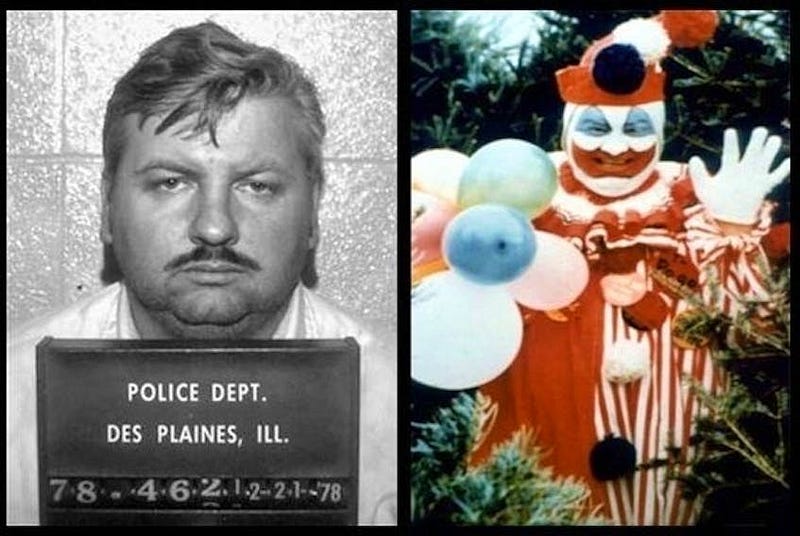
John Wayne Gacy, often referred to as the ‘Killer Clown,’ was a notorious American serial killer and sex offender. His moniker derived from his charitable services at fundraising events, parades, and children’s parties where he would dress as ‘Pogo the Clown,’ a character he devised himself.
Gacy’s reign of terror spanned six years in the Chicago suburbs, from 1972 to 1978. He was responsible for the sexual assault and murder of at least 33 young boys and men. His victims were typically lured to his home with promises of work or money before they were assaulted, strangled, and buried in the crawl space beneath his house.
Despite his heinous crimes, Gacy maintained a facade of respectability in his community. He owned a successful construction business and was active in local politics, even once having his picture taken with then-First Lady Rosalynn Carter. This dual life added a chilling layer to his crimes.
Gacy’s gruesome activities were eventually uncovered in December 1978 when police began investigating the disappearance of 15-year-old Robert Piest. The teenager’s mother last saw him at a pharmacy where Gacy had been discussing a potential job offer with him.
Upon searching Gacy’s house, police discovered a class ring and clothing that belonged to several missing young men. The investigation led to the horrifying discovery of 29 bodies buried in the crawl space beneath his home. Police found four other bodies discarded in nearby rivers.
During his trial in 1980, Gacy often appeared calm, at times even joking with the press. He pled not guilty because of insanity, but the jury rejected his plea. He was found guilty of 33 murders, and the jury sentenced him to death.
Gacy spent 14 years on death row, during which he began painting as a form of recreation. Many of his paintings were of clowns, some self-portraits of him as Pogo. These paintings have since become collector’s items.
John Wayne Gacy was executed by lethal injection at Stateville Correctional Center on May 10, 1994. His chilling crimes and the dual life he led continue to be the subject of numerous books, documentaries, and films, making him one of the most infamous serial killers in American history.
8: Hollywood Horrors
Charles Manson, born on November 12, 1934, was an infamous American criminal and cult leader. He formed what became known as the Manson Family, a quasi-commune in California in the late 1960s. Manson’s followers committed a series of nine murders at four locations in July and August 1969.
Under Manson’s influence and instruction, his followers were responsible for the murder of actress Sharon Tate and several others. Manson believed in what he called ‘Helter Skelter,’ a term he took from the Beatles song of the same name. He interpreted it as an impending apocalyptic race war, which he thought the murders would help initiate.
Manson was not physically present during the murders but was nonetheless convicted of first-degree murder and conspiracy to murder the deaths of seven people. The prosecution contended that while Manson never directly ordered the murders, his ideology constituted an overt act of conspiracy.
During his trial, Manson’s bizarre behavior became the spectacle of the nation. He carved an ‘X’ into his forehead, which he later turned into a swastika. He often gave rambling, incoherent testimonies and made grandiose statements about his perceived martyrdom.
Despite being sentenced to death in 1971, Manson’s sentence was commuted to life with the possibility of parole after California invalidated the state’s death penalty statute in 1972. He served out his life sentence at California State Prison, Corcoran, and died in 2017.
Manson’s life and crimes have been the subject of countless books, documentaries, and films. His ability to manipulate his followers and incite them to commit horrific crimes has made him a figure of terrifying fascination for many, and his name remains synonymous with the dark side of the 1960s counterculture.
Even in prison, Manson maintained a certain level of notoriety. He received more mail than any other inmate in US history. His interviews with notable journalists, including Diane Sawyer, showcased his unrepentant attitude and continued ability to manipulate.
Despite the brutality of his crimes, Manson has been somewhat romanticized in popular culture. Various music, film, and fashion subcultures have appropriated his image and ideas. This controversial legacy continues to fuel debates about the nature of evil and the power of persuasion.
Manson’s influence extended beyond his immediate followers. His case had a profound impact on the American legal system, leading to changes in laws regarding the death penalty and the rights of defendants. His trial was one of the first to use the concept of ‘vicarious liability’ in a murder case.
Charles Manson remains one of the most chilling figures in American true crime history. His ability to control and manipulate, his charismatic yet terrifying persona, and the horrific crimes committed by his followers continue to captivate and horrify, making his story one that genuinely keeps you up at night.

9: Sex Worker’s Revenge
Aileen Wuornos, often dubbed as ‘America’s first female serial killer,’ was a figure who sent chills down the spine of the nation. Born in Michigan in 1956, Wuornos had a troubled childhood marked by abuse and abandonment, which many believe played a significant role in shaping her future criminal behavior.
Wuornos’ life took a dark turn in the late 1980s when she embarked on a murderous spree that lasted approximately a year. Working as a prostitute along Florida’s highways, she lured men under the guise of sexual services. However, instead of providing the promised services, Wuornos would shoot her victims at point-blank range, rob them, and then abandon their bodies.
Her victims, seven in total, were all middle-aged men who had stopped to help a seemingly distressed woman on the side of the road. Wuornos’ method of operation was chillingly consistent, which made her crimes all the more terrifying. She would claim self-defense, stating that these men had attempted to rape her, thereby justifying her actions in her mind.
Wuornos’ reign of terror came to an end in 1991 when she was arrested at a biker bar in Florida. The evidence against her was overwhelming, including the possession of her victims’ items and a palm print left at one of the crime scenes. Her trial was a media circus, with Wuornos often displaying erratic behavior and making shocking statements.
Despite her claims of acting in self-defense, Wuornos was found guilty of six of the seven murders and was sentenced to death. She spent a decade on death row before being executed by lethal injection in 2002. Her life and crimes have since been the subject of numerous books, documentaries, and the 2003 film ‘Monster,’ in which Charlize Theron won an Academy Award for her portrayal of Wuornos.
Wuornos’ story is a chilling tale of a woman driven to the edge by a life of hardship and abuse. It serves as a stark reminder of the potential consequences of a society that fails to protect its most vulnerable members. Her crimes, while horrific, also raise questions about the nature of evil and the capacity for violence within the human psyche.

10: Deacon from Hell
The BTK Killer, whose real name is Dennis Rader, is a notorious figure in the annals of American crime. His self-given moniker stands for ‘Bind, Torture, Kill,’ a chilling testament to his brutal modus operandi. Rader’s reign of terror spanned over three decades, from 1974 to 2005, during which he claimed the lives of ten people in and around Wichita, Kansas.
Rader’s crimes were not only marked by their brutality but also by his audacious communication with the police and media. He would send letters detailing his crimes, often with symbolic items or ‘trophies’ taken from his victims. This cat-and-mouse game with authorities added a layer of horror to his already gruesome acts.
Despite his horrific crimes, Rader managed to lead a seemingly everyday life. He was a family man, a church leader, and held a steady job, starkly contrasting his hidden, dark persona. This dual life further amplified the chilling nature of his crimes, proving that monsters can lurk behind the most ordinary facades.
Rader’s capture in 2005 was a result of his hubris. After years of silence, he began communicating with the police again, this time using digital media. Unbeknownst to him, a floppy disk he sent could be traced back to his church, leading to his arrest. His subsequent confession and nonchalant recounting of his crimes sent shockwaves through the nation.
Numerous books, documentaries, and films have examined Rader’s case as a grim reminder of the depths of human depravity. His ability to evade capture for so long and his chillingly calm demeanor continue to horrify and fascinate, making the BTK Killer one of the most unsettling figures in true crime history.
These true crime stories remind us of the often dark depths of human potential, presenting an eerie paradox of fascination and repulsion. From seemingly ordinary individuals overtaken by compulsions to harm and control to medical professionals turned inventive killers, the myriad of characters and twisted motivations are as varied as they are alarming. It serves as a reminder that sometimes, the most horrifying monsters are not those lurking in the shadows or beneath your bed but rather existing unassumingly in the plain daylight. These stories may keep us up at night, but they also inspire us to seek truth, demand justice, and strive for a better tomorrow.
Resources
- Reddit’s True Crime Community: An engaged group of enthusiasts sharing, discussing, and deconstructing a wide range of true crime cases.
- Crime Junkie Podcast: An amazing series covering all sorts of true crime stories, from missing persons to murder cases.
- The-Line-Up: Offers a collection of chilling true crime stories that will give you goosebumps.
- National Crime Museum Crime Library: A library that features some incredible true crime stories.
- ArcaMax True Crime Comic Strip: An avenue for true crime enthusiasts looking for something a little different.
- Oxygen True Crime: A media platform that reports on true crime stories from all around the world.
- Criminal Podcast: Showcasing gripping tales of true crimes, this podcast is for those who like to listen to their true crime stories.
- Investigation Discovery’s Crime Feed: Offering articles, news, and reports on true crime, from high-profile cases to lesser-known mysteries.
- Vanity Fair True Crime: Dive into a collection of true crime reports and features with a touch of high society gloss.
- Rolling Stone’s True Crime Section: Known for its in-depth journalism, Rolling Stone shines a light on true crime stories.