avatarDanielle Herring

Free AI web copilot to create summaries, insights and extended knowledge, download it at here

7093

Abstract

ps steamed natural rice. 1 cup lentil puree. 1 tablespoonful chopped onion. 1 tablespoonful vegetable butter. 1 tablespoonful brown flour. 3 tablespoonfuls vegetable broth. ⅓ cup chopped walnuts. A sprinkle of sage. Salt to taste. Put the butter, onion, and sage into a small saucepan and simmer for a few moments. Add the brown flour, then the vegetable broth and stir over the fire until smooth. Add the cooked rice and mix with a fork. Mix all ingredients, pack lightly in an oiled bread tin, and bake until hot through and brown on top. (p. 88)</p></blockquote><p id="55cd">The same cookbook provided <a href="https://archive.org/details/foodcookery00ande/page/52/mode/2up">instructions</a> for creating the brown flour incorporated into the lentil and rice loaf.</p><blockquote id="d571"><p>BROWN FLOUR. Sift flour into a baking pan, put into a good oven, and cook to a nice brown, stirring often, so that it may be uniform in color and not scorched. Sift again into a crock, and keep for future use. (p. 53)</p></blockquote><figure id="1c12"><img src="https://cdn-images-1.readmedium.com/v2/resize:fit:800/0*e59nwyBixfRAGNe6"><figcaption>Key to Profit in the Garden <a href="https://commons.wikimedia.org/wiki/File:Key_to_profit_in_the_garden_(1897)_(20541554372).jpg">Wikimedia Commons </a>Public Domain</figcaption></figure><h1 id="ad6f">#4 Stewed Carrots</h1><p id="00e4">Another vegetable side dish, <a href="https://archive.org/details/foodcookery00ande/page/104/mode/1up">stewed carrots</a> makes a nice compliment to other savory fall dishes. <a href="https://archive.org/details/historyofamerica0000smit/page/146/mode/2up">Stewing</a> as a verb originated in 17th and 18th century European recipes, but stewing is a <a href="https://www.google.com/books/edition/Cooking_Green/Gt-_nKicWAIC?hl=en&amp;gbpv=1&amp;pg=PA79&amp;printsec=frontcover">cooking method</a> at least as old as the creation of pottery. The earliest evidence of the utilization of this method was found in <a href="https://www.bbc.co.uk/ahistoryoftheworld/about/transcripts/episode10/">archaeological discoveries</a> of ancient Japanese cookware.</p><blockquote id="a8ee"><p>STEWED CARROTS. 2 cups sliced young carrots. 1 ½ cups water. 1 teaspoonful salt. 2 teaspoonfuls vegetable butter. 1 teaspoonful flour. Add the water and the salt to the sliced carrots, and let boil gently until they are done and the liquid is reduced to ½ cup. Rub the butter and flour together in a small saucepan, add a little of the broth, and stir smooth. Add the rest of the broth and boil it up. Add the cooked carrots, reheat, and serve. (p. 104)</p></blockquote><figure id="0732"><img src="https://cdn-images-1.readmedium.com/v2/resize:fit:800/0*mEtiOgqWuHNu7rwR"><figcaption>1897 The American Kitchen Magazine <a href="https://www.google.com/books/edition/The_American_Kitchen_Magazine/UNlOAAAAYAAJ?hl=en&amp;gbpv=1&amp;pg=RA1-PP79&amp;printsec=frontcover">Google Books</a></figcaption></figure><h1 id="fc04">#5 Raised Potato Rolls</h1><p id="3e4d">Commercially available nut-based dairy alternatives were becoming available at the time of the writing of this <a href="https://archive.org/details/guidefornutcooke00lamb/page/174/mode/2up">recipe</a> for potato rolls, which incorporated this substitute into the ingredients list.</p><p id="9618">Vegetarians began to promote <a href="https://www.google.com/books/edition/The_Vegetarian_Magazine/PjugAAAAMAAJ?hl=en&amp;gbpv=1&amp;pg=PA15&amp;printsec=frontcover">dairy alternatives</a> as healthier and more nutritious towards the end of the 19th century.</p><p id="e3c3">The cookbook also provided instructions on how to create a <a href="https://archive.org/details/guidefornutcooke00lamb/page/72/mode/2up">homemade version</a> of this dairy alternative.</p><blockquote id="0209"><p>RAISED POTATO ROLLS. Take 1 pint of mashed potatoes, 1 pint of nut cream, 1 compressed yeast-cake (1 ounce), 1 teaspoonful of salt, and flour enough to make a moderately stiff batter. Mix the potatoes, cream, yeast and salt, and then add the flour. Cover the bread pan, and put in a warm place to rise. If too hot, the sponge will scald; therefore the pan should never be put where the hand can not be held without comfort. When the sponge is light, add more flour to make it stiff enough to knead without sticking to the hands and board. Knead for ten or fifteen minutes, then roll it out about half an inch thick, and cut with a biscuit cutter. Lay two together, put them in an oiled baking pan, and let them rise to twice their height. Then brush the tops with oil and bake in a moderate oven about twenty minutes. Sweet potatoes mashed may be substituted for the Irish potatoes if desired. (p. 175–176)</p></blockquote><figure id="c7a1"><img src="https://cdn-images-1.readmedium.com/v2/resize:fit:800/0*12KzFiDSIZCifW4u"><figcaption>Pyrus Communis <a href="https://commons.wikimedia.org/wiki/File:Illustration_Pyrus_communis_cleaned01.JPG">Wikimedia Commons</a> Public Domain</figcaption></figure><h1 id="090b">#6 Baked Pears</h1><p id="904a">Pears are both <a href="https://trade.usapears.com/availability-seasonality/">fall-appropriate</a>, and have a rich history of thousands of years of <a href="https://extension.wsu.edu/maritimefruit/tree-fruit/pears/">cultivation</a> for culinary use. This Edwardian <a href="https://archive.org/details/modernmeatlessco00housiala/page/76/mode/2up">recipe</a> for baked pears with cinnamon makes an ideal dessert for any fall feast.</p><blockquote id="45ed"><p>BAKED PEARS 12 pears. ¼ cup water. ¾ cup sugar. Stick of cinnamon. Wash ripe pears, core with corer, fill center with sugar, pack in a baking pan on their sides, add water, place in a hot oven. When almost done, add to juice remaining half cup of sugar and cinnamon stick, and if necessary, more water. Allow pears to simmer in syrup in a slow oven for about fifteen minutes to mellow them. Serve hot or cold. (p. 77)</p></blockquote><figure id="6772"><img src="https://cdn-images-1.readmedium.com/v2/resize:fit:800/0*SHSF3YkBvyxZHHrg"><figcaption>Amygdalus Communis <a href="https://commons.wikimedia.org/wiki/File:Illustration_from_Medical_Botany,_digitally_enhanced_from_rawpixel%27s_own_original_plates_62.jpg">Wikimedia Commons</a> Public Domain</figcaption></figure><h1 id="d999">#7 Ice Cream</h1><p id="98a8">Vegan ice cream might be seen as a modern invention, but one of the <a href="https://www.google.com/books/edition/History_of_Soy_Ice_Cream_and_Other_Non_D/caJkAQAAQBAJ?hl=en&amp;gbpv=1&amp;dq=almond%20milk%20ice%20cream&amp;pg=PA22&amp;printsec=frontcover">earliest documentations</a> in American cookbooks of this dairy-free dessert dates to 1899. This <a href="https://archive.org/details/guidefornutcooke00lamb/page/411/mode/1up">recipe</a> makes use of non-dairy milk and paired with sugar and vanilla, a perfect complement to cooled baked pears in the previous recipe.</p><blockquote id="6c11"><p>Take 1 quart of rich nut cream, either almond or peanut. If made from peanuts, the nuts should not be roasted very brown, only a yellow color. Add 1 cup of granulated

Options

sugar, and 2 teaspoonfuls of vanilla. Turn the cream into a double boiler, and cook for twenty or thirty minutes. Add the sugar before cooking, then cook, and add the vanilla, and freeze. (p. 411)</p></blockquote><figure id="be79"><img src="https://cdn-images-1.readmedium.com/v2/resize:fit:800/0*2kBZm6jLnM_5w6O7"><figcaption>Spring 1897 John A. Salzer Seed Co. Catalog <a href="https://archive.org/details/CAT31282709/page/n93/mode/1up">Internet Archive</a> Public Domain</figcaption></figure><h1 id="1d74">#8 Pumpkin Pie</h1><p id="1592">Most American Thanksgivings would not be complete without pumpkin pie, although this <a href="https://www.google.com/books/edition/The_Vegetarian_Cook_Book/3sNEAQAAMAAJ?hl=en&amp;gbpv=1&amp;pg=PA76&amp;printsec=frontcover">recipe</a> traces to Victorian Britain, the combination of cinnamon and nutmeg found in the pie filling often make their way into modern American versions of this dessert. <a href="https://www.sciencedirect.com/topics/agricultural-and-biological-sciences/nutmeg#:~:text=Historical%20Cultivation%20and%20Usage,nutmeg%20is%20known%20as%20Jaiphal">Nutmeg</a> and <a href="https://unitproj.library.ucla.edu/biomed/spice/index.cfm?displayID=5#:~:text=In%20the%20Middle%20Ages%20and,for%20coughs%20and%20sore%20throats">cinnamon</a> were introduced into European cuisine in the middle ages, where they were popular additions to <a href="https://www.atlasobscura.com/articles/medieval-cookie-recipe">desserts</a>.</p><blockquote id="fbdb"><p>PUMPKIN PIE. Peel, remove the seeds, and cut the pumpkin into small pieces; put in a sauce kettle with a little water, and stew, covered, on the back of the stove till tender. When tender, take off the cover, and allow most of the moisture to evaporate. Strain through a colander. Stir together a quart of strained pumpkin, a teaspoonful of salt, 2 teaspoonfuls each of ground cinnamon and nutmeg, 3 tablespoonfuls of corn starch, and sugar to taste. Bake with a bottom crust and rim till it is solid in the center. (p. 76–77)</p></blockquote><p id="df24">The same cookbook included a <a href="https://www.google.com/books/edition/The_Vegetarian_Cook_Book/3sNEAQAAMAAJ?hl=en&amp;gbpv=1&amp;pg=PA74&amp;printsec=frontcover">recipe</a> for creating a pie crust without dairy or lard.</p><blockquote id="ee05"><p>PIE CRUST. For enough crust for a good size pie, take a pint of Hecker’s Prepared Flour, or prepare ordinary flour by mixing with it, dry, 3 teaspoonfuls cream of tartar, 1 ½ of soda, and a little salt. Sift it into a bowl. Have ready two large mealy potatoes, boiled, and cold, break up and rub them with the flour till thoroughly incorporated. Moisten with very cold water to a heavy consistency, stirring with a large wooden spoon. Turn out on the moulding board, and roll out lightly for the pie crust. Work the dough as little as possible, otherwise the crust will be tough. A half pint of boiled rice, cold, may be used instead of the potato. (p.74)</p></blockquote><figure id="0aa4"><img src="https://cdn-images-1.readmedium.com/v2/resize:fit:800/0*mB0tq5sbe87sj4jI"><figcaption>1666 Walnuts and Hazelnuts by John Dunstall <a href="https://commons.wikimedia.org/wiki/File:John_Dunstall_Walnuts_and_Hazelnuts_1666.jpg">Wikimedia Commons</a> Public Domain</figcaption></figure><h1 id="3527">#9 Nut Cakes</h1><p id="01ac"><a href="https://www.google.com/books/edition/The_Vegetarian_Cook_Book/3sNEAQAAMAAJ?hl=en&amp;gbpv=1&amp;pg=PA82&amp;printsec=frontcover">Nut cakes</a>, which bear close resemblance to modern <a href="https://www.oxfordreference.com/display/10.1093/oi/authority.20110803095636982#:~:text=The%20word%20was%20introduced%20into,of%20koek%2C%20%27cake">cookies</a> round out the dessert menu.</p><p id="51d4">This recipe is an example of new innovations entering late 19th century cooking. <a href="https://www.worldbakers.com/flour-mixes-offer-consistency-and-convenience/#:~:text=Prepared%20flour%20mixes%20are%20ready,%2C%20flavors%2C%20and%20other%20ingredients.">Prepared flour</a> like the <a href="https://www.heckersceresota.com/Heckers/heckers-products/">brand</a> mentioned in the recipe, included <a href="https://www.smithsonianmag.com/science-nature/great-uprising-how-powder-revolutionized-baking-180963772/#:~:text=In%201846%2C%20the%20introduction%20of,bakers%20often%20used%20sour%20milk.">rising agents</a> like <a href="https://bakerpedia.com/ingredients/cream-of-tartar/#:~:text=Therefore%2C%20it%20was%20first%20discovered,first%20product%20resembling%20baking%20powder">cream of tartar</a> and baking soda.</p><blockquote id="c21c"><p>NUT CAKES A teacupful of meats of hickory nuts, English walnuts, or almonds, chopped fine in a wooden bowl; 1 teacupful of sugar, a pinch of salt, a little flavoring of almond or vanilla, ½ cupful water, and 3 teacupfuls of Hecker’s Prepared Flour. Put these ingredients into a China bowl in the order named, the flour being gradually sprinkled in, and at the same time stirred in. Roll out thin, and cut with a cake cutter, and bake quickly. (p. 82)</p></blockquote><figure id="85f6"><img src="https://cdn-images-1.readmedium.com/v2/resize:fit:800/0*1m_a6PiccCnk1D0R"><figcaption>1914 The Woman’s Magazine <a href="https://www.google.com/books/edition/The_Woman_s_Magazine/f4IeAQAAMAAJ?hl=en&amp;gbpv=1&amp;pg=RA9-PA34&amp;printsec=frontcover">Google Books</a></figcaption></figure><h1 id="8613">#10 Homemade Cereal Coffee</h1><p id="8c0b">For a beverage to compliment the desserts, early 20th century vegetarian-approved cereal coffee completes this dinner menu. Coffee imitations like this <a href="https://archive.org/details/foodcookery00ande/page/52/mode/2up">recipe</a> date back to the <a href="https://youtu.be/JQuZS61SezE?si=5u1Q4bHFPO4pIME2">17th century</a>, experimentation with other plant ingredients, typically grains or roots, were roasted to imitate the flavor of coffee.</p><blockquote id="d1ef"><p>HOMEMADE CEREAL COFFEE. ⅔ cup corn meal. 2 cups bran. ½ cup molasses. ½ cup boiling water. Mix the dry ingredients in a bowl. Add the hot water to the molasses, and mix well. Pour the wetting on the grain, rub between the hands, and mix thoroughly. Put into a baking pan, and bake in a good oven until well burned, stirring often, so that the color may be uniform and almost black. Remove from the oven, and use the same as ordinary coffee. (p. 52)</p></blockquote><p id="fb5f">Vegetarians and vegans in the United States have created their own Thanksgiving traditions by experimenting with culinary customs to create new and old dishes. Try some of these recipes for Thanksgiving to add another taste of plant-based history to your table.</p><p id="6e8f"><b><i>Thank you for reading!</i></b></p><p id="d3bb">Next Week:<i> Commercial Meat Substitutes that Pre-date Tofurky: The Pioneering Work of George Washington Carver</i></p><p id="1839">For more vegan, vegetarian, and botanical histories, follow Plant Based Past on Medium.</p><p id="970b">You can sign up for email alerts to receive the next story when it becomes available, just by clicking the envelope icon.</p></article></body>

10 Vegan Recipes from the Past You Could Serve for Thanksgiving Dinner
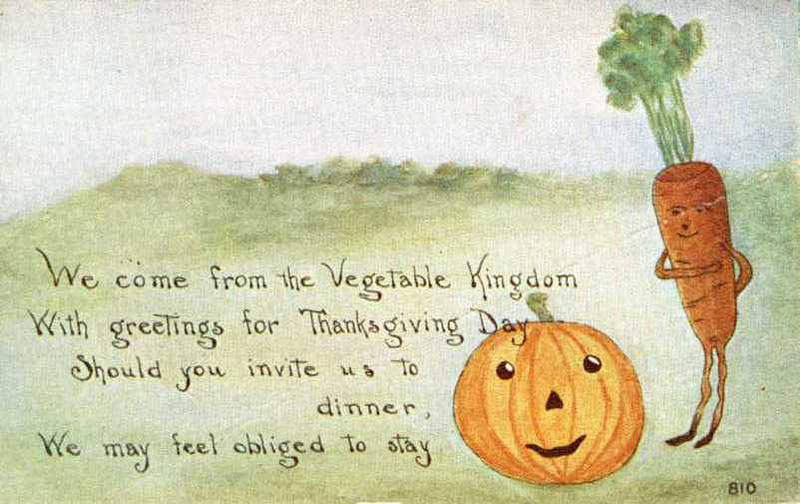
Thanksgiving Postcard circa 1900–1909 Newberry Library Public Domain

President Lincoln declared Thanksgiving as an official holiday in the United States, where it was first celebrated as a nation-wide holiday on November 26, 1863. Traditional Thanksgiving meals center on meat, leaving vegetarians in the past with a conundrum — how could they create a festive dinner similar to what their meat-eating neighbors created for this holiday? A look at vegetarian cookbooks and periodicals reveal that vegetarian Thanksgivings are nothing new.

Inspired by these past menus, I compiled a list of 10 vegan recipes from the past you could serve at a modern Thanksgiving dinner with a plant-based and history-inspired twist.
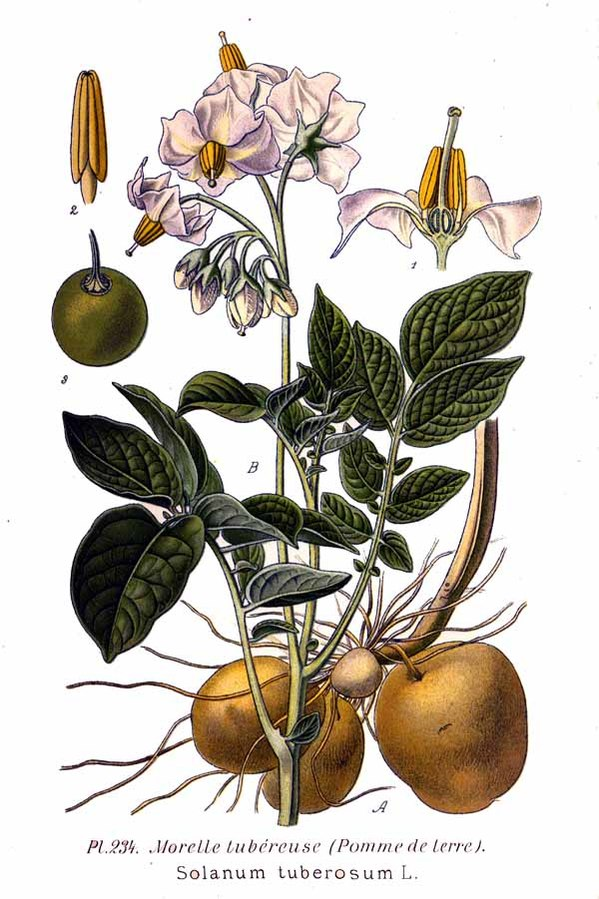
Solanum Tuberosum L Wikimedia Commons Public Domain

#1 Potato Balls

Potato balls make for a good savory bite to start off this meal, the original recipe calls for a specific brand name Nutter, a nut-based butter alternative for frying the potato mixture. Nutter is part of early vegetarian food history. It was a British product produced by the Mapleton Nut Food Company founded by two brothers in 1897. It was recommended in vegetarian cookbooks as a substitute for animal-derived fat and could be found advertised in vegetarian periodicals.

Mapleton products even reached mainstream consumers with advertisements in more general interest magazines. The company promoted vegetarianism to the public by offering meatless cooking guidebooks with sales of their products.

29. Potato Balls 4 medium sized potatoes, 1 large onion (chopped), 1 dessertspoonful pure olive oil, breadcrumbs. Cook onion and potatoes, then mash. Mix ingredients, using a few breadcrumbs and making it into a very soft paste. Roll into balls and fry in ‘Nutter,’ or nut butter.
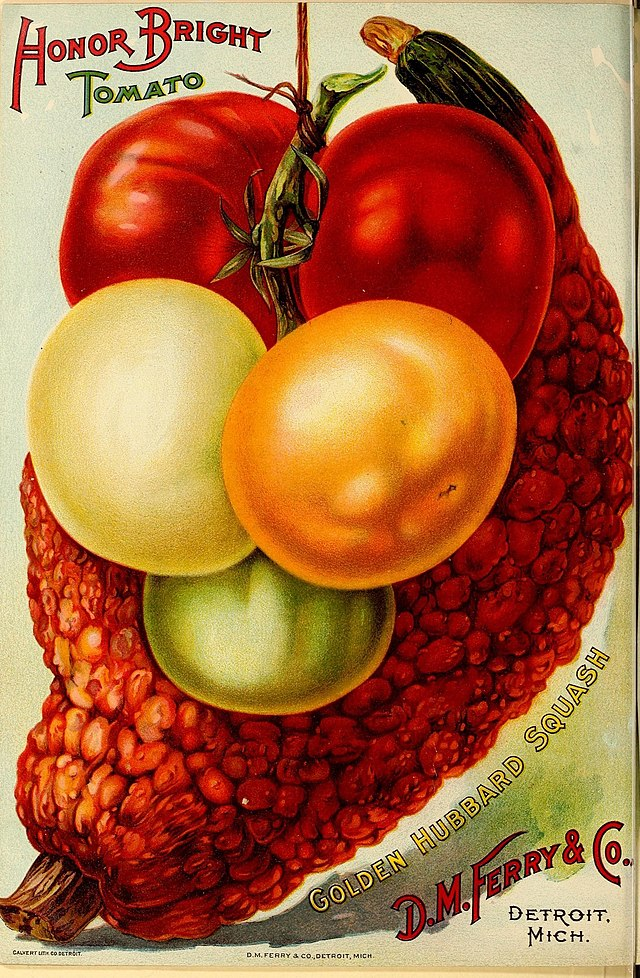
Seed Annual Wikimedia Commons Public Domain

#2 Steamed Squash

Hubbard squashes, a staple of modern supermarkets in the fall, were introduced into the American market in the 1850s by James J. H. Gregory. He received the first seeds for this cultivar from his neighbor Elizabeth Hubbard. This Victorian recipe for steamed squash utilizes Hubbard squash to create a uniquely autumnal vegetable side dish.

Select a good, ripe, Hubbard squash. (They are ripe when the shell is so hard that it is difficult to pierce with a thumb-nail.) Wash, can cut into convenient pieces, remove the seeds, and pare away the stringy portion next to the seed cavity, but leave the shell on. Place in a steamer or steam-cooker, and cook until it can be pierced to the shell easily with a fork. Then scrape from the shell, and mash or press through a vegetable press. Season with salt and nut cream. Place on a baking dish, and bake a nice brown on top. (p. 275–276)
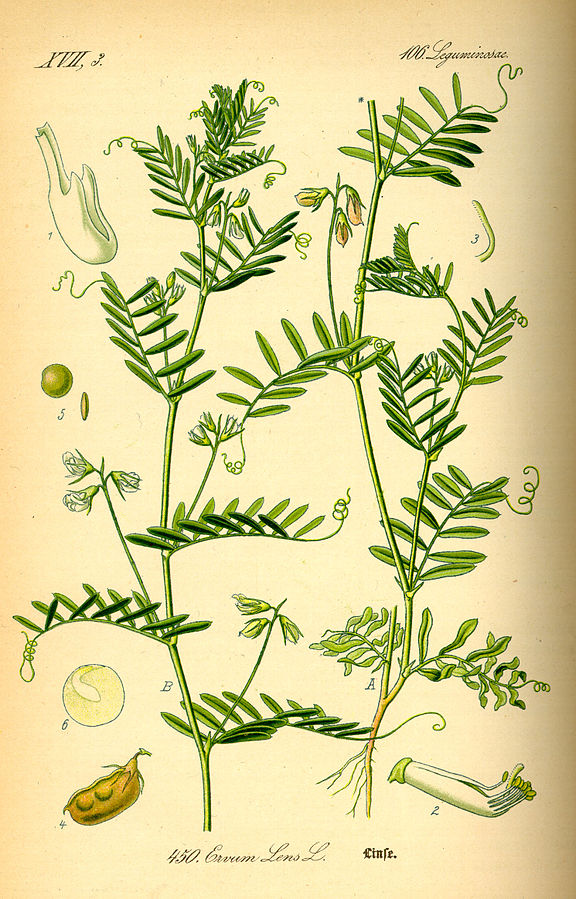
Lens Culinaris Wikimedia Commons Public Domain

#3 Lentil and Rice Loaf

A variety of alternative roasts or mock meats serve as the main course in vegetarian Thanksgivings past and present. The brown flour added to this recipe adds a layer of rich, nutty flavor. Browning flour to add depth to the flavor of a dish has a long history that spans multiple cultures, from South American máchica, to brown roux in Cajun cuisine. Brown flour in the form of Italian grano arso was a staple of peasant cooking for centuries. Early American cookbooks also mention brown flour as an important kitchen staple.

LENTIL AND RICE LOAF. 2 cups steamed natural rice. 1 cup lentil puree. 1 tablespoonful chopped onion. 1 tablespoonful vegetable butter. 1 tablespoonful brown flour. 3 tablespoonfuls vegetable broth. ⅓ cup chopped walnuts. A sprinkle of sage. Salt to taste. Put the butter, onion, and sage into a small saucepan and simmer for a few moments. Add the brown flour, then the vegetable broth and stir over the fire until smooth. Add the cooked rice and mix with a fork. Mix all ingredients, pack lightly in an oiled bread tin, and bake until hot through and brown on top. (p. 88)

The same cookbook provided instructions for creating the brown flour incorporated into the lentil and rice loaf.

BROWN FLOUR. Sift flour into a baking pan, put into a good oven, and cook to a nice brown, stirring often, so that it may be uniform in color and not scorched. Sift again into a crock, and keep for future use. (p. 53)
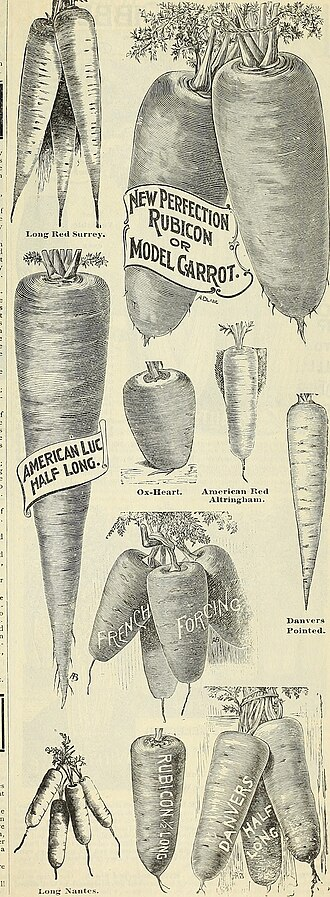
Key to Profit in the Garden Wikimedia Commons Public Domain

#4 Stewed Carrots

Another vegetable side dish, stewed carrots makes a nice compliment to other savory fall dishes. Stewing as a verb originated in 17th and 18th century European recipes, but stewing is a cooking method at least as old as the creation of pottery. The earliest evidence of the utilization of this method was found in archaeological discoveries of ancient Japanese cookware.

STEWED CARROTS. 2 cups sliced young carrots. 1 ½ cups water. 1 teaspoonful salt. 2 teaspoonfuls vegetable butter. 1 teaspoonful flour. Add the water and the salt to the sliced carrots, and let boil gently until they are done and the liquid is reduced to ½ cup. Rub the butter and flour together in a small saucepan, add a little of the broth, and stir smooth. Add the rest of the broth and boil it up. Add the cooked carrots, reheat, and serve. (p. 104)
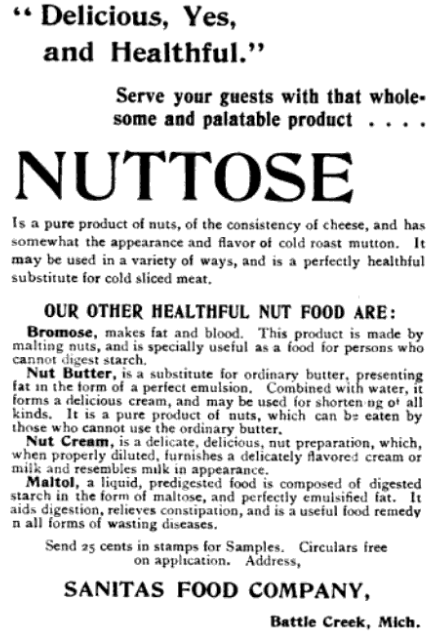
1897 The American Kitchen Magazine Google Books

#5 Raised Potato Rolls

Commercially available nut-based dairy alternatives were becoming available at the time of the writing of this recipe for potato rolls, which incorporated this substitute into the ingredients list.

Vegetarians began to promote dairy alternatives as healthier and more nutritious towards the end of the 19th century.

The cookbook also provided instructions on how to create a homemade version of this dairy alternative.

RAISED POTATO ROLLS. Take 1 pint of mashed potatoes, 1 pint of nut cream, 1 compressed yeast-cake (1 ounce), 1 teaspoonful of salt, and flour enough to make a moderately stiff batter. Mix the potatoes, cream, yeast and salt, and then add the flour. Cover the bread pan, and put in a warm place to rise. If too hot, the sponge will scald; therefore the pan should never be put where the hand can not be held without comfort. When the sponge is light, add more flour to make it stiff enough to knead without sticking to the hands and board. Knead for ten or fifteen minutes, then roll it out about half an inch thick, and cut with a biscuit cutter. Lay two together, put them in an oiled baking pan, and let them rise to twice their height. Then brush the tops with oil and bake in a moderate oven about twenty minutes. Sweet potatoes mashed may be substituted for the Irish potatoes if desired. (p. 175–176)
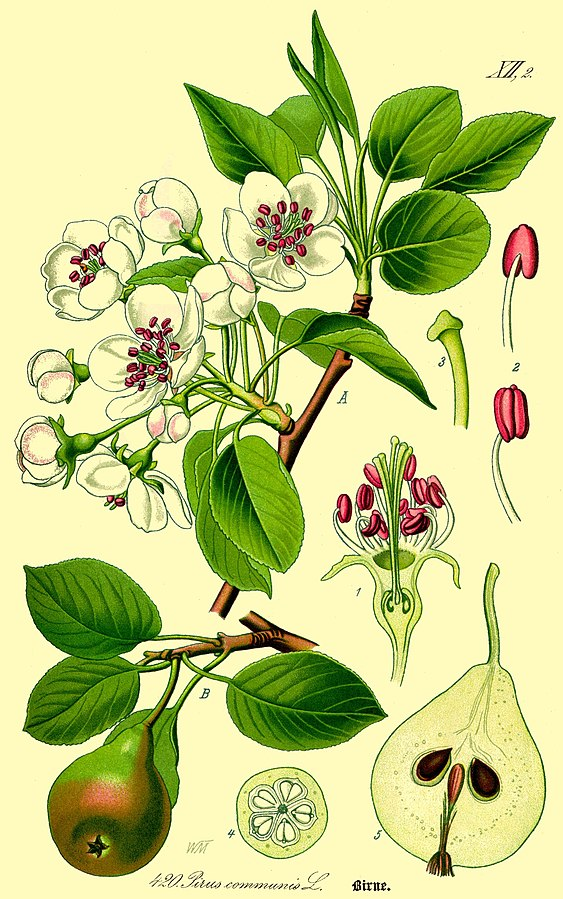
Pyrus Communis Wikimedia Commons Public Domain

#6 Baked Pears

Pears are both fall-appropriate, and have a rich history of thousands of years of cultivation for culinary use. This Edwardian recipe for baked pears with cinnamon makes an ideal dessert for any fall feast.

BAKED PEARS 12 pears. ¼ cup water. ¾ cup sugar. Stick of cinnamon. Wash ripe pears, core with corer, fill center with sugar, pack in a baking pan on their sides, add water, place in a hot oven. When almost done, add to juice remaining half cup of sugar and cinnamon stick, and if necessary, more water. Allow pears to simmer in syrup in a slow oven for about fifteen minutes to mellow them. Serve hot or cold. (p. 77)
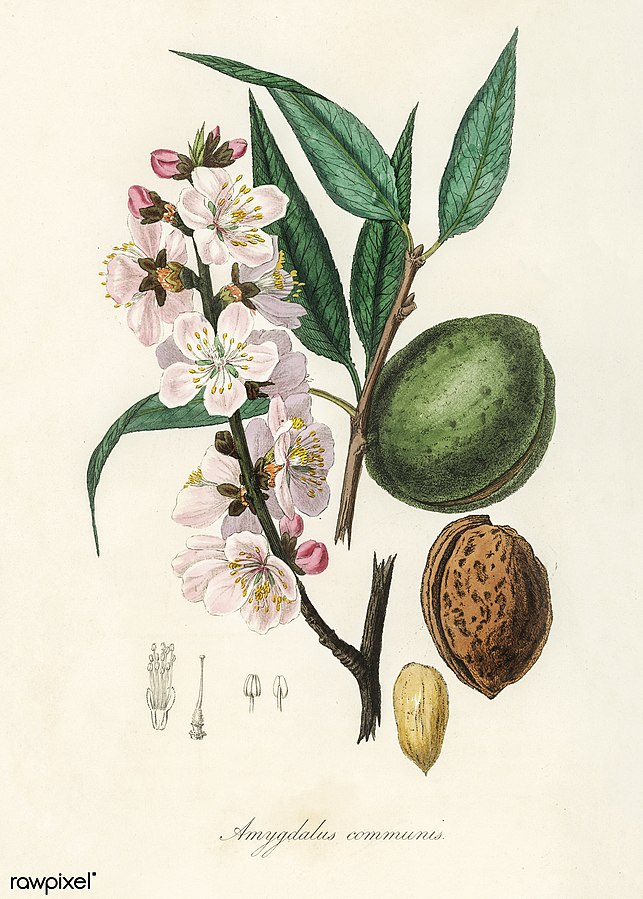
Amygdalus Communis Wikimedia Commons Public Domain

#7 Ice Cream

Vegan ice cream might be seen as a modern invention, but one of the earliest documentations in American cookbooks of this dairy-free dessert dates to 1899. This recipe makes use of non-dairy milk and paired with sugar and vanilla, a perfect complement to cooled baked pears in the previous recipe.

Take 1 quart of rich nut cream, either almond or peanut. If made from peanuts, the nuts should not be roasted very brown, only a yellow color. Add 1 cup of granulated sugar, and 2 teaspoonfuls of vanilla. Turn the cream into a double boiler, and cook for twenty or thirty minutes. Add the sugar before cooking, then cook, and add the vanilla, and freeze. (p. 411)
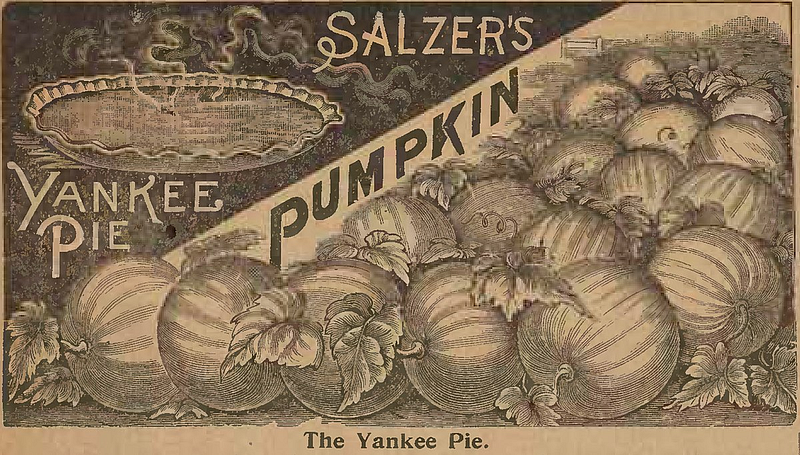
Spring 1897 John A. Salzer Seed Co. Catalog Internet Archive Public Domain

#8 Pumpkin Pie

Most American Thanksgivings would not be complete without pumpkin pie, although this recipe traces to Victorian Britain, the combination of cinnamon and nutmeg found in the pie filling often make their way into modern American versions of this dessert. Nutmeg and cinnamon were introduced into European cuisine in the middle ages, where they were popular additions to desserts.

PUMPKIN PIE. Peel, remove the seeds, and cut the pumpkin into small pieces; put in a sauce kettle with a little water, and stew, covered, on the back of the stove till tender. When tender, take off the cover, and allow most of the moisture to evaporate. Strain through a colander. Stir together a quart of strained pumpkin, a teaspoonful of salt, 2 teaspoonfuls each of ground cinnamon and nutmeg, 3 tablespoonfuls of corn starch, and sugar to taste. Bake with a bottom crust and rim till it is solid in the center. (p. 76–77)

The same cookbook included a recipe for creating a pie crust without dairy or lard.

PIE CRUST. For enough crust for a good size pie, take a pint of Hecker’s Prepared Flour, or prepare ordinary flour by mixing with it, dry, 3 teaspoonfuls cream of tartar, 1 ½ of soda, and a little salt. Sift it into a bowl. Have ready two large mealy potatoes, boiled, and cold, break up and rub them with the flour till thoroughly incorporated. Moisten with very cold water to a heavy consistency, stirring with a large wooden spoon. Turn out on the moulding board, and roll out lightly for the pie crust. Work the dough as little as possible, otherwise the crust will be tough. A half pint of boiled rice, cold, may be used instead of the potato. (p.74)
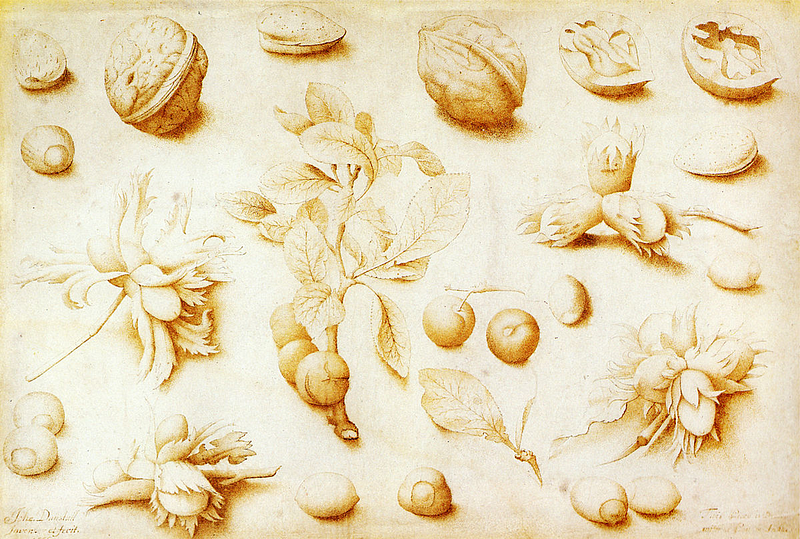
1666 Walnuts and Hazelnuts by John Dunstall Wikimedia Commons Public Domain

#9 Nut Cakes

Nut cakes, which bear close resemblance to modern cookies round out the dessert menu.

This recipe is an example of new innovations entering late 19th century cooking. Prepared flour like the brand mentioned in the recipe, included rising agents like cream of tartar and baking soda.

NUT CAKES A teacupful of meats of hickory nuts, English walnuts, or almonds, chopped fine in a wooden bowl; 1 teacupful of sugar, a pinch of salt, a little flavoring of almond or vanilla, ½ cupful water, and 3 teacupfuls of Hecker’s Prepared Flour. Put these ingredients into a China bowl in the order named, the flour being gradually sprinkled in, and at the same time stirred in. Roll out thin, and cut with a cake cutter, and bake quickly. (p. 82)
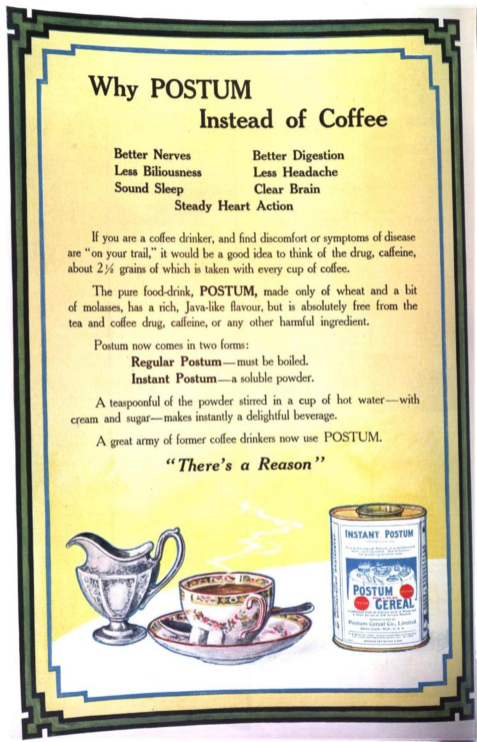
1914 The Woman’s Magazine Google Books

#10 Homemade Cereal Coffee

For a beverage to compliment the desserts, early 20th century vegetarian-approved cereal coffee completes this dinner menu. Coffee imitations like this recipe date back to the 17th century, experimentation with other plant ingredients, typically grains or roots, were roasted to imitate the flavor of coffee.

HOMEMADE CEREAL COFFEE. ⅔ cup corn meal. 2 cups bran. ½ cup molasses. ½ cup boiling water. Mix the dry ingredients in a bowl. Add the hot water to the molasses, and mix well. Pour the wetting on the grain, rub between the hands, and mix thoroughly. Put into a baking pan, and bake in a good oven until well burned, stirring often, so that the color may be uniform and almost black. Remove from the oven, and use the same as ordinary coffee. (p. 52)

Vegetarians and vegans in the United States have created their own Thanksgiving traditions by experimenting with culinary customs to create new and old dishes. Try some of these recipes for Thanksgiving to add another taste of plant-based history to your table.

Thank you for reading!

Next Week: Commercial Meat Substitutes that Pre-date Tofurky: The Pioneering Work of George Washington Carver

For more vegan, vegetarian, and botanical histories, follow Plant Based Past on Medium.

You can sign up for email alerts to receive the next story when it becomes available, just by clicking the envelope icon.

Vegan
Vegetarian
Food
Thanksgiving
Food History
Recommended from ReadMedium