avatarTom Kuegler

Free AI web copilot to create summaries, insights and extended knowledge, download it at here

2267

Abstract

"4dbb">Active Voice: <i>“The writer wrote the sentence.”</i></p><p id="9fa3">Passive Voice:<i> “The sentence was written by the writer.”</i></p><p id="e7ad">See how the “active voice” sentence was shorter than the “passive voice” sentence?</p><p id="ad31">Passive voice sentences typically need extra words like “was,” or “are” to make sense. Change passive sentences to active ones from now on.</p><h1 id="bb88">3. Use The Rule Of 3</h1><p id="ee2d">The Father, The Son, and the Holy Spirit. That is the holy trinity in Christianity. Do you ever notice how mentioning three things in short succession can make a sentence sing?</p><p id="0f89">Yesterday I went to the grocery store, the mall, and to Chipotle.</p><p id="da11">Something about it just feels right, right? I use this a lot in my own writing without thinking about it. Try including more trios in your sentences.</p><h1 id="0f0e">4. Plug Your Article Into A Word Counter</h1><p id="d6f4">Use a tool like <a href="https://wordcounter.net/">WordCounter.net</a> to calculate how many words your blog post has in each sentence on average.</p><figure id="6acb"><img src="https://cdn-images-1.readmedium.com/v2/resize:fit:800/1*9rYBFFb5UqpsOrFkRwufdw.png"><figcaption></figcaption></figure><p id="86f9">You’ll see on the right hand side you can calculate that, right?</p><p id="1622"><a href="https://techcomm.nz/Story?Action=View&amp;Story_id=106">Common English guides</a> suggest you should average 15–20 words per sentence, so if your current blog post meets those requirements, then you’re good.</p><h1 id="0bc6">5. Omit Needless Words</h1><p id="df55">One of my favorite lessons from <a href="https://www.amazon.com/Elements-Style-William-Strunk-Jr/dp/194564401X"><i>The Elements of Style</i></a> is the phrase <b>“Omit needless words!”</b></p><p id="e633">When you go to edit a sentence, ask yourself this simple question..</p><blockquote id="9fa2"><p>“If I’m paying $1 for every word I write, would I delete any from this sentence?”</p></blockquote><p id="1bd9">The answer is probably yes. Taking this ruthless approach to your sentences will dramatically slash word counts.</p><h1 id="7c62">6. Write How You Talk</h1><p id="c47a">This is super fun, isn’t it?</p><p id="8f17">Writing how we talk can mak

Options

e the reader feel like they’re in the room with us. But wait, should you do this a lot in your blog posts?</p><p id="70fa">Hm, sorta.</p><p id="1bdb">Every now and then you can go BAM, and spice things up with a conversational tone. This isn’t college English anymore. Write like a human being, you’re not being graded right now.</p><h1 id="6396">7. Use Super Short Sentences On Occasion</h1><p id="8651">I love short sentences.</p><p id="a7cc">They’re great.</p><p id="ba65">They can be used to break up a bunch of long sentences. They can control the flow of the article. They’re like water to a weary desert traveler.</p><p id="27e2">Our eyes like short sentences. So give them to your readers on occasion.</p><h1 id="bac7">8. Use Alliteration</h1><blockquote id="4031"><p>“He sells sea shells by the sea shore.”</p></blockquote><p id="c565">That’s alliteration. All those S’s in the sentence make the sentence sing.</p><p id="66e9">Every now and then you should write a sentence using this strategy. Your reader will love it without knowing why.</p><h1 id="34ec">9. Get More Personal</h1><p id="bf8d">This is more of a general writing tip. Do not be afraid to get personal.</p><blockquote id="6cf3"><p>“I cried.”</p></blockquote><p id="9154">That’s a hell of a sentence to write. It only needed two words. It’s powerful only because it’s personal and features a dramatic emotional response.</p><p id="a1e9">If you do not get personal in your sentences, you’re missing a big opportunity to keep the reader reading.</p><h1 id="49ef">10. Please Use Contractions</h1><p id="500d">We are. Do not. You are. Have not.</p><p id="9ebc">I don’t want to see these in your articles. I’m not a fucking robot. I’m a human being who uses contractions in every other sentence when I speak to somebody.</p><p id="3db8">I know that high school and college taught you to not use contractions, but once again this ain’t fucking high school and you aren’t being graded.</p><h1 id="5275">Bonus #11: Use Curse Words</h1><p id="191f">Fuck it.</p><p id="5de5"><i>Get my free 5-day Medium writing course <a href="https://morning-darkness-5176.ck.page/e579cd216b">right here</a>. It’ll teach you how to write five posts per week and become a top writer on Medium. :)</i></p></article></body>

10 Tips That’ll Help You Write Way Better Sentences

A 4-minute guide to better writing

Photo by Markus Spiske on Unsplash

I’ve edited thousands of blog posts in my day.

For two years I looked over submissions at my publication, the Post-Grad Survival Guide, and I’ve also looked over hundreds of posts from my very own online course students.

After reading tens of thousands of sentences, I certainly know my way around one.

Here’s ten tips that’ll help you write better sentences.

1. Use 2–3 Prepositions Only Per Sentence

Here are some of the most common prepositions:

  • On
  • In
  • At
  • For
  • To

If your sentence has more than three prepositions, you need to find a way to delete a few. ◀️ Take this previous sentence, for example.

“If your sentence has more than three prepositions, you need to find a way to delete a few.”

“If your sentence has more than three prepositions, you MUST find a way to delete a few.”

To cut down on prepositions, I can exchange “need to” with “must.”

See what I mean? Sentences are like movies. The longer they get, the more boring they generally become.

Cut down on prepositions to limit your word count and create better sentences.

2. Use Active Verbs

I’m all about limiting the amount of words you write. Just get to the point. Using active verbs can help.

According to Grammarly, “Active voice means that a sentence has a subject that acts upon its verb. Passive voice means that a subject is a recipient of a verb’s action.”

Active Voice: “The writer wrote the sentence.”

Passive Voice: “The sentence was written by the writer.”

See how the “active voice” sentence was shorter than the “passive voice” sentence?

Passive voice sentences typically need extra words like “was,” or “are” to make sense. Change passive sentences to active ones from now on.

3. Use The Rule Of 3

The Father, The Son, and the Holy Spirit. That is the holy trinity in Christianity. Do you ever notice how mentioning three things in short succession can make a sentence sing?

Yesterday I went to the grocery store, the mall, and to Chipotle.

Something about it just feels right, right? I use this a lot in my own writing without thinking about it. Try including more trios in your sentences.

4. Plug Your Article Into A Word Counter

Use a tool like WordCounter.net to calculate how many words your blog post has in each sentence on average.
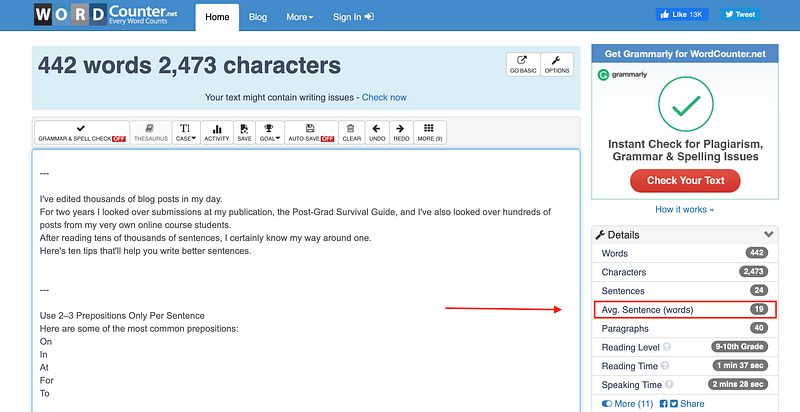
You’ll see on the right hand side you can calculate that, right?

Common English guides suggest you should average 15–20 words per sentence, so if your current blog post meets those requirements, then you’re good.

5. Omit Needless Words

One of my favorite lessons from The Elements of Style is the phrase “Omit needless words!”

When you go to edit a sentence, ask yourself this simple question..

“If I’m paying $1 for every word I write, would I delete any from this sentence?”

The answer is probably yes. Taking this ruthless approach to your sentences will dramatically slash word counts.

6. Write How You Talk

This is super fun, isn’t it?

Writing how we talk can make the reader feel like they’re in the room with us. But wait, should you do this a lot in your blog posts?

Hm, sorta.

Every now and then you can go BAM, and spice things up with a conversational tone. This isn’t college English anymore. Write like a human being, you’re not being graded right now.

7. Use Super Short Sentences On Occasion

I love short sentences.

They’re great.

They can be used to break up a bunch of long sentences. They can control the flow of the article. They’re like water to a weary desert traveler.

Our eyes like short sentences. So give them to your readers on occasion.

8. Use Alliteration

“He sells sea shells by the sea shore.”

That’s alliteration. All those S’s in the sentence make the sentence sing.

Every now and then you should write a sentence using this strategy. Your reader will love it without knowing why.

9. Get More Personal

This is more of a general writing tip. Do not be afraid to get personal.

“I cried.”

That’s a hell of a sentence to write. It only needed two words. It’s powerful only because it’s personal and features a dramatic emotional response.

If you do not get personal in your sentences, you’re missing a big opportunity to keep the reader reading.

10. Please Use Contractions

We are. Do not. You are. Have not.

I don’t want to see these in your articles. I’m not a fucking robot. I’m a human being who uses contractions in every other sentence when I speak to somebody.

I know that high school and college taught you to not use contractions, but once again this ain’t fucking high school and you aren’t being graded.

Bonus #11: Use Curse Words

Fuck it.

Get my free 5-day Medium writing course right here. It’ll teach you how to write five posts per week and become a top writer on Medium. :)

Writing
Creativity
Art
Social Media
Marketing
Recommended from ReadMedium