
10 Timeless Pieces Of Advice From Warren Buffett To Boost Your Career
And you don’t even need to be an investor
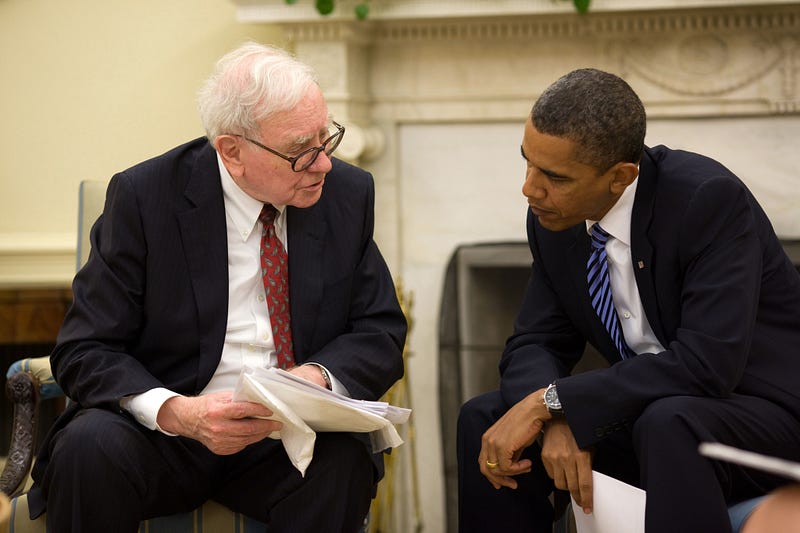

Warren Buffett is one of the most successful investors and businessmen that walk this earth. With a net worth of more than $80 billion, he’s definitely up top. And he has spent most of his time as a philanthropist and advisor for those who are willing to learn.
I came across his lectures, lessons, and advice a lot while researching how I can invest my money, what I should do, how I should approach the whole idea, and all that.
You will find many business-related articles on the net sharing his wisdom. And if you don’t care about becoming an investor or shareholder, chances are, you’ll miss out on great advice that still applies to you.
But if you read closely what he has to say, you will see that his advice is not only worth its weight in gold for wannabe entrepreneurs and financing enthusiasts. If you just switch a few nouns around, his lessons ring true for many different occasions.
Here are some of his most valuable financing lessons, broken down into what makes them so valuable.
1. First, understand, then act
This first one may be a no-brainer. Warren Buffett more precisely said:
“Never invest in a business you cannot understand.” — Warren Buffett
Instead of “investing in a business”, we can say “investing in an idea”. Never invest in an idea you cannot understand.
You can often see people who want to become artists, musicians, or try other creative outlets, and one of their first impressions is that they need to invest money in the best gear available in order to become successful.
Someone who’d like to draw will quickly think that he’ll need the latest graphic tablet with an integrated screen for thousands of dollars to become a good artist.
Similarly, a new guitarist will come to think that he’ll need expensive 120 Watt amplifiers from Marshall and a signed e-guitar from Gibson to produce adequate sound.
This is not true. You don’t need fancy gear. A good musician can even make the crappiest guitar sound beautiful. And great artists can make your jaw drop with an old ballpen and a crumbled piece of paper.
Instead of investing your hard-earned money into such an endeavor, first, make sure that your mind is up for the challenge and that you can stick with it.
If you can spend some spare money, invest in lessons and training, rather than expensive gear. Gear may break at some point, but lessons you’ve learned will always stick with you.
Which brings us to Warren Buffett’s next piece of advice, and the one most often cited:
2. Invest in yourself
Warren Buffett himself said many times that this is the best piece of advice he could ever give someone.
“The most important investment you can make is in yourself.” — Warren Buffett
You are your greatest asset. Any investment you make that helps you grow your skills and learn new things is worth doing.
And you can always monetize your knowledge. Whether you learned programming in C# through an intensive training course, or you learned a second language and are now proficient enough to work as a freelance translator (there’s always need).
By investing your money in growing your own skills rather than buying new tools, you will become a more valuable asset for a long time to come.
The famous saying “give a man a fish and you’ll feed him for the day. Teach him how to fish and you’ll feed him for a lifetime.” carries a similar meaning.
By focusing on your own skillset and spending a little time each day to learn something new, you can open up new business opportunities for yourself, dive into new markets, and discover new possibilities.
3. Focus on one thing
Some of us may be good at doing several things at once. But when it comes to picking a career or something that you’d like to pursue seriously, you should not divert your energy elsewhere.
In the world of investment, many people are often advised to “diversify” their assets, as in to say: “Don’t put all your eggs in one basket.”
For Warren Buffet, this advice is a fool’s errand. He responded with:
“Diversification is protection against ignorance. It makes little sense if you know what you are doing.” — Warren Buffett
If you do one thing right, there is no need for any backups or a plan B. They only drain you of energy you could better invest in what you are doing.
And for people like me, this means to focus on one thing and stick with it. One thing I personally lack at times is the necessary commitment and discipline to stick with one thing. I don’t get the results I expect right away, so my motivation drops, and I do it less and less until I completely give up on it.
Success doesn’t come overnight and we have to put a lot of effort into it if we want to succeed. Don’t get discouraged if you don’t immediately rise to the top by doing one thing once. Do it twice or thrice. Keep at it. Focus.
And don’t get distracted into doing something else on the side. If you distract yourself too much from your main goal, you will waste time and it will take you even longer to reach your goal, possibly discouraging you further.
4. Price and value don’t mean the same
We often struggle to find the right thing for the right price. But according to Warren Buffett, we should not prioritize the price at all. Instead, we should focus on the value we get from it.
“Price is what you pay. Value is what you get.” — Warren Buffett
This is again a universal truth that does not only count for investment businesses. Try to not look only at the price tag, but also the value that’s underneath. Because those two are not always in line with each other.
You may find two courses on Udemy for marketing. One is priced at $40 Dollar for a 2-hour course, the other may cost $250 for roughly the same amount of time.
While the $40 course is a lot cheaper judging by the price tag, what about the quality? You may well end up learning outdated lessons, or lessons that you could have taught yourself by spending an hour on Google.
Meanwhile, the more expensive course would have hurt your budget a lot more, but the lessons and tips shared here can make up for it tenfold in your future.
It may be worthwhile to ignore the price (whether it’s a cheap or an expensive one) and solely try to estimate the real value you get from paying it.
This also applies when you need to evaluate your own worth as a freelancer
You may feel like pricing your work cheaper has more benefits, like more clients willing to pay and thus more income overall. But you could well be underselling your real value. You may be earning some money for your stellar work, but do you really earn the amount you’re worth?
If your quality is sufficient, a higher price may not necessarily deter businesses who follow the same advice. Some may even decide not hire you because you are “too cheap”. Though it may seem counterintuitive to ask for more than your competition, it can be worth it in the end.
5. Don’t neglect good quality for the sake of saving money
The following piece of advice is part of Warren Buffett’s personal investment strategy, but it applies to more than just buying a business.
“It’s far better to buy a wonderful company at a fair price than a fair company at a wonderful price.” — Warren Buffett
This quote follows a similar concept to the last advice regarding price and value. It may be your first instinct to choose the cheaper option. But cheap doesn’t always mean better.
When our coffee machine broke, (a cheap $10 coffee maker from the store), we went to buy a new one. I had my eyes on one of the Nescafé coffee machines, but it was priced at over $50, so we decided to go with another $10 coffee machine instead, thinking that coffee is coffee and we could use the money better elsewhere.
Over the course of roughly 3 years, the cheap coffee machine broke down, we replaced it with another cheap one for $15 following our philosophy and the cycle repeated several times. In the end, we spent over $100 on cheap coffee machines that continued to break after a few months of use.
Finally, we went with an expensive one, and not only is it still working, but the coffee also tastes subjectively better.
We could have saved some money there if we understood the difference between price and value.
Cheap offers aren’t always worth it
You probably are familiar with teleshopping and these “incredible” offers they throw at you. “This amazing mattress would cost $250, but we love you, so you can buy it right now for only $180!”
This is a common marketing trick. The mattress was never worth $250 to begin with and the company certainly doesn’t pay as much to manufacture or import it. But they want to suggest a great offer and a limited chance to get it, so you feel urged to make the purchase.
So don’t get fooled by reduced price offers, value packages, and the likes.
Don’t buy a mediocre “company”, just because they offer you a wonderful price. Look under the hood. Then make your judgment call.
6. Learn to say “No”
This is a lesson you will also learn from people who want to help you to become a better entrepreneur, freelancer, or employee.
Especially when we’re new in a job, we want to please the upper echelon. We tend to agree to any favors that people may ask from us. We load up more work than we can handle, end up being stressed out, and don’t get the gratitude or recognition we expected.
“The difference between successful people and really successful people is that really successful people say no to almost everything. You’ve gotta keep control of your time, and you can’t unless you say no. You can’t let people set your agenda in life.” — Warren Buffett
The most difficult thing, especially when you try your hands at being your own boss through freelancing and entrepreneurship, is to stand your ground. You need clients. So you agree to most of the offers you get, no matter how ridiculous they are, objectively speaking.
If we say “yes” too often, we don’t get the recognition we expect. On the contrary. We come off as someone who does everything and anything again and again.
Sooner or later, someone will abuse this fact. And we pay the price in unpaid overtime, more work than we get paid for, and fixing other people’s problems for free. Our personal morale and private life will suffer greatly, and we don’t come any closer to the success we dream of.
Learn to say no. Some may write you off as unreliable or selfish. But those people were no good company to your cause anyway. To others, your sudden exclusivity may even be appealing. You know your worth and you stand your ground. And people will accept the fact that they have to pay up for your service.
In every office, there’s the guy who does everything for everyone. He comes in early and leaves last. Don’t be that guy. He’s not happy when he gets home.
7. Don’t trust others blindly — especially those that want to “help you”
Almost everyone has a hidden agenda. And if you’re as naive as I am, you too will often fall for people who seemed like saints, while they simply stuck their own agenda down our throat.
“Wall Street is the only place that people ride to in a Rolls Royce to get advice from those who take the subway.” — Warren Buffett
This does not only apply to Wall Street, sadly. We may not be driving a Rolls Royce, but you will see a lot of “successful” people trying to sell you their secret formula to success while they sit in the subway.
Just look at the articles feed of this site. How many people do you come across who post a new “Here’s how I made $1000 in one week with writing about my toilet routine”-article every single day?
Who doesn’t want to earn $1000 a month with basically doing nothing of importance? Clickbait. You click, and they get the money they need for their monthly pass. And by the end of said article, you know nothing new.
This article here might not be much different in a sense. But I really hope that it gives you new insight. If just one piece of advice was worth your time, I did a good enough job.
And I’m not trying to get you into signing my newsletter to read every article I write for the next 5 years. I don’t even have a newsletter.
Just be careful who you trust and whose advice you take. Try to look at what they do and how they do it. If they preach the same stuff over and over again, they might be in urgent need of a new monthly pass they hope you pay them.
It may well be that you’re helping them more than they are helping you.
8. Invest in the things that align with your own values
Warren Buffet mainly bought stocks of companies he personally likes and whose concepts he agrees to. He said:
“Why not invest your assets in the companies you really like? As Mae West said, ‘Too much of a good thing can be wonderful.’” — Warren Buffett
Making money with something feels great. But if your heart and soul aren’t in it, you will lose that initial flame rather quickly. If you want to be a writer, don’t neglect the topics you truly love for topics that please the market.
Don’t let the hero of your novel die a horrible death if you don’t like the idea, just because a recent reader poll says that most readers love when a hero dies.
Don’t rewrite a sentence you think is great just because someone else told you they don’t like it.
Whatever you do, you should always put yourself and your own satisfaction first. If you feel stuck in a job you hate, don’t waste time moaning about it. Don’t think there’s no exit. There always is. It may not be easy, but if you focus, you can make a career change. Find something you love doing.
Doing something is ten times easier if we love doing it.
For me as a freelance writer, this means I don’t accept contracts that I personally don’t feel are right. Funnily enough, I wrote an extensive article about one such occasion where I refused good money because the client was “nuts” to say it nicely:
For content writing, it means I don’t write about something that I don’t really care about, just because others may care in the thousands and click on it.
I don’t write any “here’s how I made $5000 in 24 hours “ articles, because it feels wrong. Some may actually have made that big money. But for 95%, I strongly doubt it.
Don’t sell your soul to make a few extra bucks. Only buy companies that you are fond of.
9. Don’t dwell on past failures for too long
You may have lost a client because you asked for “too much money” (in their opinion) or an article you wrote disappeared in the depths of the internet without gaining any traction.
Or you did something that you later regretted deeply. Sh*t happens. Warren Buffet is no stranger to failure either.
“In the business world, the rearview mirror is always clearer than the windshield.” — Warren Buffett
We all know the saying “hindsight works 20/20”. It’s easy to recognize a mistake after the fact. And it’s just as easy to dwell on past failure too much. Learning from our mistakes is one thing. It’s healthy and it’s the main drive to be better on our next attempt.
But if we dwell too much on past failure, we may subconsciously set ourselves up for more failure in the future. Instead of spending your time with what went wrong, write it off as bad luck and try to improve on your procedure for another attempt.
To keep with Warren Buffett’s rearview mirror analogy: If you drive too fast and pass a great opportunity on the road, you may end up staring at it growing smaller and smaller in the rearview mirror.
But if you look back for too long, you may accidentally pass a second opportunity that comes into view in front of you.
Don’t look back for too long.
10. Don’t put success and money over everything else
Truth be told, it seems easy to say for someone who holds more than $80 billion, but it’s still true. For Warren Buffett, the money itself is no real indicator of success as a human being:
“If you get to my age in life and nobody thinks well of you, I don’t care how big your bank account is, your life is a disaster. Of the billionaires I have known, money just brings out the basic traits in them. If they were jerks before they had money, they are simply jerks with a billion dollars.” — Warren Buffett
There’s nothing wrong in having the dream of becoming a millionaire or billionaire even. We all strive for success. And the worse you had it in life financially, the more excited do you get when imagining great wealth.
The important thing here is to keep your heart in the right spot. Don’t be a total sell-out just to make money.
You surely know the saying “money can’t buy happiness”, which often gets refuted with “but it’s certainly more comfortable to cry in a Lamborghini than on a rusty bicycle.”
Well, I don’t really care where you’re crying. The bottom line is, you’re crying. Something in your life went awfully wrong. And all the money in the world will not be enough to fix that.
Emotionally, I agree with this piece of advice. I am amazed at all millionaires and billionaires. But only those who show human decency and admirable character treats are those who I also respect. Warren Buffett is one of them.
Elon Musk would be another example of someone who’s doing his best to achieve something good.
On the other hand, I despise Jeff Bezos for all the negative headlines surrounding Amazon and how poorly its employees are being treated to keep the money rolling into his personal bank account.
I wish you all the success in the world, but please stay a decent human being.
Conclusion
Warren Buffett is one of the most successful people in the world. Yet he impresses with human decency and a great personality. The advice he shares, albeit being targeted at people who’d like to become investors like him, holds true for many aspects of our lives. I am glad I stumbled upon him.
For me, these reminders help both with my work as a freelance writer, as well as my life as a consumer who all too often listens to the wrong people and saves money at the wrong end.
I hope you also found something in it to take home and reflect on.
Thank you for reading.