
10 Things Most People Don’t Know About Running Effective Meetings
Learn how to get the outcomes you want from your meetings

How good are you at running meetings? Be honest. Are your meetings effective and efficient? Are the right people invited? Do you get the outcomes you want?
Effective: producing a decided, decisive, or desired effect — Merriam Webster Dictionary
Efficient: productive of desired effects especially capable of producing desired effects with little or no waste (of time or materials) — Merriam Webster Dictionary
If you answered yes, congratulations, you are among the few leaders who know how to run an effective meeting.
It’s challenging to run meetings well if there is no meeting protocol within your organization. Preparing for an effective meeting takes time, and if no-one else does it, sometimes there is little incentive.
So why bother? Because meetings can be a huge time waster if they are not targeted to a specific outcome but a massive push to your projects if done correctly.
If you would like to up your game around meetings, here is how to do it:
1. Know why you need a meeting
Make sure you know what tangible outcomes you want to achieve in your meeting. Otherwise, what is the point of it?
According to research conducted by Udemy 60% of workers said meetings distracted them from their core work. Make sure if you are arranging a meeting it is necessary.
Do you want input about a technical topic or a project sign-off? Are you agreeing on timelines or parameters of a project?
If it is just an update, could it be done with an email instead? Do you have a monthly project catch-up just for the sake of it?
Is it really a meeting or just a presentation? If you are planning to talk through a slide deck, could you just send the presentation instead?
Takeaways: Decide if you really need a meeting. If so, be clear on what you want to achieve.
“Meetings are a symptom of bad organization. The fewer meetings the better.” — Peter Drucker.
2. Invite the right people at the right time in the right place
Invite the right people
Now you know that the meeting is necessary and the outcomes you want, invite the people who can add value.
There is no point in having a meeting with people who cannot contribute to the outcomes. Similarly, there is no point in meeting without people who need to be consulted before you can progress with your project.
Make sure you have all the technical expertise you need.
For example:
- HR or payroll if you are making changes to pay or organizational structure
- Health & Safety and Compliance if you are changing operating procedures
- Line Managers and Rosters if you are arranging something like training that will take large amounts of staff away from their day job at the same time
- Finance if you need a budget sign off
If you are unsure whether people need to be invited or just advised of the outcomes, ask them.
Once you’ve worked out who needs to attend, make sure they are all available. Avoid sending a meeting invite without checking availability, or you risk non-attendance.
Takeaway: Make sure everyone you need is at the meeting. If you don’t know, ask.
“A manager’s ability to turn meetings into a thinking environment is probably an organizations greatest asset. “— Nancy Kline.
At the right time
If you choose 3 pm on a Friday afternoon for a heavy two-hour meeting, don’t be surprised if people decline.
Think about the start and finish times of all the attendees. Are some of the attendees parents who will have to get off to pick up their kids? Do some people travel for quite a distance and usually leave at four?
You are more likely to get a good turnout on the day if you take into account the best time for the people you want to come.
According to Doodle’s The State of Meeting Report, a whopping 70% of people prefer meetings in the morning, between 8 am and 12 pm.
Takeaway: Think of other people’s convenience, and they are more likely to attend.
In the right place
Once you have the date and the attendees, decide where you will hold the meeting and make sure you book the room.
Decide whether people who are in a different location can attend by Zoom.
Since the advent of Covid, people are much more willing to attend meetings via Zoom, and it saves a lot of travel time and cost.
People may well be willing and able to fit in a Zoom meeting where a long-distance hike to your location may be unmanageable.
Takeaway: People are more likely to attend if they don’t have to travel.
“Approach each meeting with a purposeful, high-energy, ready-to-make-a-contribution attitude, and watch how fast leadership’s perception of you follows your behavior.” — Jack Welch.
3. Send the agenda well before the meeting
When you send a meeting invite, make sure you send an agenda at the same time. Make it clear what the meeting’s outcomes are and if there is any preparation or reading to be done in advance.
Some people need more time to prepare than others. If you are a fly-by-the-seat of your pants person who thinks by writing on the whiteboard, remember that everyone is not like you.
It’s a good idea to send a reminder the day before the meeting to remind people to prepare or read the relevant information.
If anyone has to give a de-brief or input information, make that clear on the agenda. Many years ago, I was standing in for the HR Manager. I would be called into the senior team meeting two minutes before the meeting and asked for a de-brief.
Needless to say, this made me very uncomfortable as I didn’t even know the meeting was happening and had no time to prepare.
Takeaway: Send the agenda well in advance. Make any reading or pre-work clear and give people time to prepare.
“You should never go to a meeting or make a telephone call without a clear idea of what you are trying to achieve. “— Steve Jobs.
4. Prep the meeting room
When you plan the meeting, make sure you allocate ten minutes in your calendar beforehand to set up the room. Remember to book the room in advance too.
Make sure there are enough chairs, you’ve got a clean whiteboard and pens, you’ve got your presentation set up by the time people arrive.
This gives you time to make sure the tech works and avoids wasting precious meeting time setting up.
Takeaway: Being ready at the start of the meeting avoids wasting time, is polite, and is more professional.
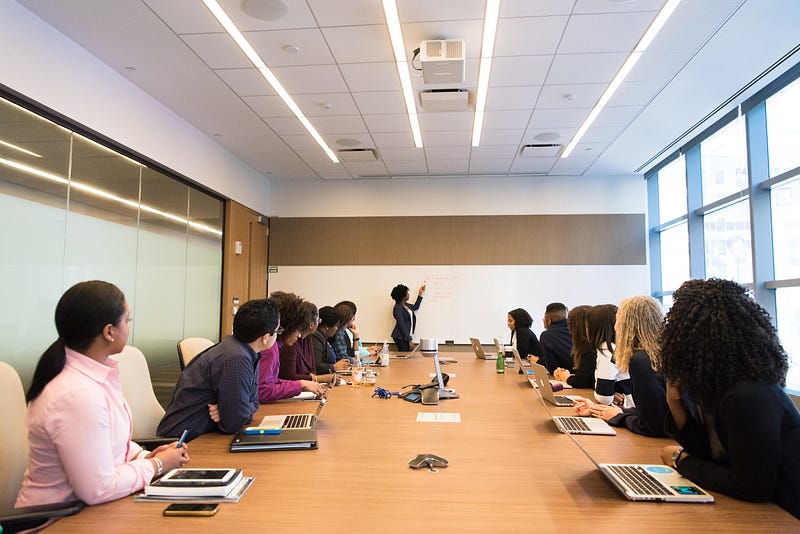
5. Start the meeting on time
Get a reputation for starting meetings on time. I’m a big believer in getting to things on time. Let people come in late and make their apologies. You can catch them up on anything they have missed at the end of the meeting.
If you wait for people, they will be late next time. Waiting ten minutes doesn’t seem long, but if you have four people in the room waiting, that’s forty minutes wasted at the average hourly rate.
Takeaway: Starting on time respects the people that have arrived on time and avoids wasting time.
6. Have a chairperson and a timekeeper
Get into the habit of having a chairperson and a timekeeper in your meetings. If you are in an organization that does not have a formal meeting protocol, you may need to do it yourself.
The chairperson makes sure that discussions stay on track, you keep to time, and that everyone gets a say. Set up expectations at the beginning of the meeting by setting ground rules.
Typical ground rules are:
- Stay on topic and park anything else on a flip chart for later
- Confidentiality
- One person talking at a time
- Phones off or on buzz
- Keep to time
- Treat others and their comments with respect
Takeaway: Have a chairperson, ground rules, and a timekeeper. Take control of your meeting before someone else does.
“You have a meeting to make a decision, not to decide on the question.”— Bill Gates
7. Make sure everyone gets a say
Some people are more extroverted than others and love meetings. Others don’t like meetings but still have something to say. Some voices are louder than others, and some personalities are stronger.
Make sure that everyone gets a chance to have their say. Otherwise, what is the point of having them at the meeting?
When I was conducting Everyday Sexism workshops, one of the talking points was that women often get talked over in meetings. As a result of the workshops, I learned that this happens to some men as well. The brash, loud people speak over everyone, and the input of others is lost.
You can use several ploys to make this happen.
If someone is taking more than their airtime, say, “Thanks, those ideas are fantastic. I’d like to hear from someone else now.”
If you have set up the premise that you are the chairperson and stated that you will make sure everyone gets their say, this shouldn’t be a surprise.
More tips:
- Avoid asking if anyone has any further input as the introverts, or quieter people might not speak. Instead, go round the room and ask each person for any extra input.
- If two people are speaking at once, call out, “One person speaking at a time. Let’s hear from X and then Y.”
- In meetings with two or three powerful personalities, you may have to resort to the talking stick. Whoever is holding the ‘thing’ — it doesn’t matter what it is, it could be a pen or a stapler — gets to talk. The others have to wait for their turn. This may seem childish, but so is talking over everyone else and not letting other people speak.
Takeaway: If people are at your meeting, they are there for a reason. Make sure they get to speak.
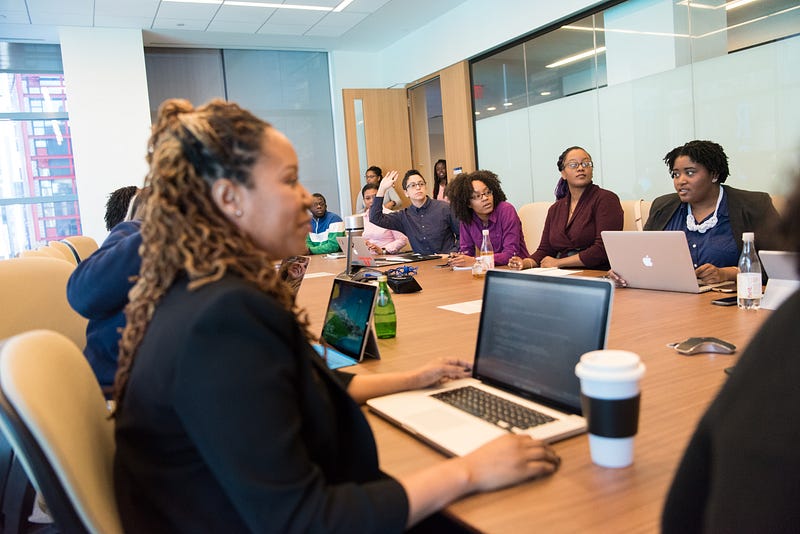
8. Leverage the diversity of the attendees
Often in a meeting, a woman will suggest an idea, and it is ignored. Sometimes several times. A man will then say the same thing, and it is taken notice of, and the idea is attributed to that man.
Listen very carefully and make sure that all ideas are listened to and, secondly, correctly attributed. I have seen this play out many times, and every woman I have ever spoken to knows what I’m talking about.
This likely happens to the quieter men in the group too.
It’s proven that organizations perform better when the leadership is more diverse. Make sure you take advantage of all the experience in the room.
“A recent study by the Boston Consulting Group (BCG) has found that diversity increases the bottom line for companies. The study found that increasing the diversity of leadership teams leads to more and better innovation and improved financial performance.” — A Study Finds That Diverse Companies Produce 19% More Revenue, Forbes
Takeaway: Leverage the diversity of ideas in the room to benefit your project. If you ignore someone’s input, they will stop contributing.
“Everyone you will ever meet knows something you don’t.” — Bill Nye.
9. Have a rota of people to take notes and send out action points with deadlines
Have someone taking down notes, action points, and timelines.
If it’s a regular meeting, people can take turns. If it’s a one-off and it’s your meeting, ask someone else to take notes. Pick the person who has the most to gain from the discussion and get their agreement before the meeting.
Another alternative is to write the action points on the whiteboard and take a photo.
It’s essential to send out action points with someone allocated to each task and a timeline. If you don’t, nothing will get done. Send out the action points as soon as you can after the meeting so that people have enough time to do their tasks. Some people won’t do anything unless they get something in writing.
Takeaway: Circulate action points corresponding to your desired outcomes with timelines and the person responsible.
“Meetings are at the heart of effective organization, and each meeting is an opportunity to clarify new issues, set new directions, sharpen focus, create alignment, and move objectives forward.” — Paul Axtell.
10. Finish on time and set a date for the next meeting
Ensure the meeting finishes on time and set up the date for the next meeting there and then. Most people bring their phones to the meeting so you can get an agreement on a suitable date.
Also, re-iterate the action points, who is responsible, and time lines. Confirm who will send out the list of action points and by when.
Takeaway: Get the next meeting booked in to keep your project on track.
“The brain will only absorb what the butt can endure.” — Unknown.
Summary
You can easily run effective meetings with a little planning. Running effective meetings will help your career progression because effective meetings fuel project outcomes.
- Decide if you really need a meeting and if so, be clear on what you want to achieve.
- Make sure everyone you need is at the meeting. If you don’t know if they should be there or not, ask.
- Think of other people’s convenience, and they are more likely to attend.
- People are more likely to attend if they don’t have to travel.
- Send the agenda well in advance. Make any reading or pre-work clear and give people time to prepare.
- Being ready at the start of the meeting avoids wasting time, is polite, and is more professional.
- Starting on time respects the people that have arrived on time and avoids wasting time.
- Have a chairperson, ground rules, and a timekeeper. Take control of your meeting before someone else does.
- If people are at your meeting, they are there for a reason. Make sure they get to speak.
- Leverage the diversity of ideas in the room to benefit your project. If you ignore someone’s input, they will stop contributing.
- Circulate action points corresponding to your desired outcomes with timelines and the person responsible.
- Get the next meeting booked in to keep your project on track.
I hope you found this helpful.
I write about leadership & training, and I’ve designed The New Leader’s Starter Kit to help leaders better communicate with their teams. Get your free copy here — The New Leader’s Starter Kit takes you through how to run One-to-Ones and Constructive Feedback sessions & develop effective listening skills — a printable one-to-one form, feedback form and listening skills checklist included.