
10 Coping Mechanisms I Developed Due to Childhood Stress
Do you or your (grand) children display any of these signs of an unhealthy childhood?
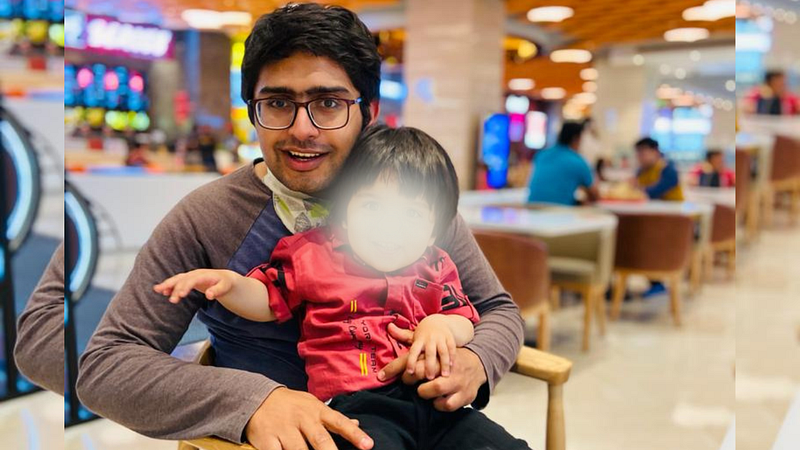
Until a few years ago, I believed I had a great childhood. But as I grew up, I realized my memories were distorted, painting an idealized picture of my past.
Living with my 1-year-old nephew and stumbling upon child psychology helped me gain a clear picture.
I had theories from the books and a practical living example (my nephew) right there before me. Because of his behavior, I could establish the link between him and my childhood.
There were several factors behind my childhood stress. My dad was strict, angry, and sometimes violent. My mom was often sad, and our home was filled with constant arguments.
At school, I faced daily beatings from the teachers. We struggled financially, and my parents made me feel ashamed for not doing well in my studies.
I never received any encouragement or appreciation, but continuous discouragement and many other small things were hard to put into categories.
I was told what to do all the time, yelled at, and not allowed to do normal kid stuff like making a mess, being loud, or climbing around.
These things are important for kids to grow up healthy. While I was gaining more and more information about child psychology, it didn’t take me long to realize that I was reacting to my nephew’s behavior the way my parents reacted to mine.
If kids go through a lot of stress when they’re young, it can affect them as they grow up. We need to pay attention to how our children act and make sure we don’t pass on any bad habits or behaviors from our past.
Research shows that childhood stress can lead to ADHD. And I have had almost all the symptoms of ADHD, such as inattention, impulsivity, and sometimes hyperactivity.
Read the article carefully and make sure that your child doesn’t have any of these coping mechanisms. Recognizing and addressing these issues early on can help children grow into healthier and happier individuals.
And if you don’t have a child, maybe this article will help find if you have one or more of these coping mechanisms.
1. Stealing for Escape
When I was 13, I started taking money without permission. You might wonder what I did with that money. Well, I spent it on toys and snacks.
It brought me a sense of excitement, helping me escape from the challenges of reality. Those toys became my refuge, keeping my mind away from troubling thoughts.
At different ages, we find different ways to cope with stress.
Even just a year ago, food played a crucial role in relieving my stress. Whenever stress crept in, I found relief in opening a food delivery app, making it a daily ritual to order comforting junk food.
Even the research shows that children with a history of stealing were likely to have an abuse history or domestic stress.
So, if you stole as a child or your child has stolen something, it’s a good time to look at the environment of your house. Make sure you provide a safe environment for your children to grow so that they can become adults with a positive self-image.
Stay calm in their presence and never shout in front of them. Also, the better your relationship with your spouse and other family members, the better will be your home environment, making it a safe space for your child.
2. The Therapeutic Power of Putting Pen to Paper
Artistic expression, even if seemingly unnecessary, can be a therapeutic outlet for emotions and thoughts.
If a child keeps doodling, it may be because they are trying to calm their emotions, which could be because of stress and anxiety.
Children’s drawings of their families can tell us a lot about how they feel at home. A study found that kids who drew themselves small and far away from their parents were likelier to live in chaotic homes with lots of noise, mess, and few rules.
So, next time you see your child’s drawing, take a closer look. It might tell you more than you think.
And it’s not just for kids. Have you ever found yourself just scribbling random things in your notebook? There is a chance you’re just bored, but it also happens if you have high stress.
Studies have shown that unplanned, random sketches can also provide a window into our subconscious, similar to how art therapy works to enter this area of our minds.
For example, whenever my nephew is sad or angry, he starts drawing what’s on his mind. It’s his way of expressing the feelings he finds hard to communicate verbally.
One day, I had to go to the market urgently. My nephew wanted to go with me. I couldn’t take him because markets here are very crowded and I was taking the scooter which doesn’t feel safe for taking a 4-year-old.
I came back in 10–15 minutes and in that time he had drawn the entire event in his drawing book. He drew me leaving on the scooter, and himself crying.
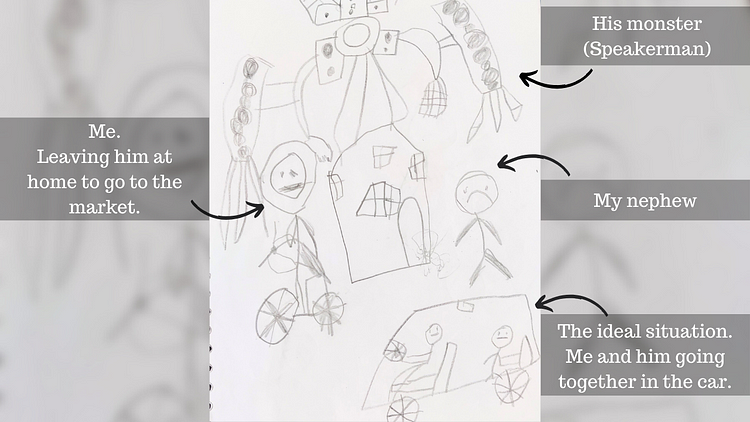
Among all the coping mechanisms I’ve developed over the years, I’ve found only two to be beneficial. This is the first one on the list because doodling can reduce psychological stress.
3. Diving Into Make-Believe Lands to Forget Real Life
Childhood trauma survivors construct a false self-image to cope rather than self-isolate. And I was doing the same, just never realized it.
Creating an alternate identity or fantasy world can help you break free from real life and feel stronger.
I didn’t just write fictional stories. Since I was a kid, I told a few of my best friends that I was a superhero and made a great storyline for it. It was my alternate reality, and it was the only reason the school was tolerable.
I shared the stories of my adventures as a late-night superhero with my two friends, and every day they eagerly waited for me to reveal what superhero deeds I did last night.
I used to keep my mind busy at home crafting my story for the next day and excitedly waiting for lunch break and school to end so that I could tell my story without the teacher asking me to not make noise.
I was dumb enough that I did it until I turned 12, and my friends were dumb enough to believe me after some resistance.
But what can I say? I was the master of my craft.
This habit seems harmless, but it isn’t.
If children spend too much time lost in their imaginary worlds, they may need help to develop proper social skills. This can hinder their ability to build healthy relationships.
Children who prefer to be alone a lot can face many problems like:
- They might feel sad, anxious, or not good about themselves.
- They might have a hard time making friends or get bullied.
- They might also struggle in school, have trouble with their teachers, and not want to go to school.
On the other hand, if you encourage your children to use their imagination in a structured way, it will enhance your child’s creativity, emotional intelligence, and sense of self.
The problem was that my parents never paid attention. My imagination could have turned into healthy habits, like fictional writing or storytelling. Instead, I used them to lie to my friends and feel good about myself.
Ultimately, you decide who your child will grow into.
4. Using Sensory Activities to Self-Soothe
When I was a kid and not saving the world, I worked as a scientist to create different formulas that would increase my power and help me fight crime. Creating those formulas meant making different mixtures by mixing a lot of stuff.
And I loved doing it. I was constantly mixing things, boiling them, freezing them, and having no clue why. It just felt interesting.
I have also had several accidents because of this habit. Once I was burning a doll’s honey pacifier with a matchstick, and the burning liquid plastic fell on my fingers, causing severe pain.
Once again, I was melting a bunch of candles in a glass of steel on a burner, holding it with tongs. Suddenly, it caught fire. I thought if I spun around quickly while holding it, the wind would put out the flames.
Unfortunately, it didn’t work, and the entire glass of burning, melted wax ended up falling on my hand.
I threw the glass away in the garbage bin outside. My mother is still wondering where the glass went. And it wasn’t the only utensil that was sacrificed in my experiments.
In my life, there have been countless times when my tendency to experiment for comfort ended up causing me pain and misery.
What I didn’t know is that engaging in sensory activities like this offers a distraction and a way to focus the mind on something concrete.
Sensory play is any activity that stimulates our senses — touch, sight, hearing, smell, and taste. It helps children interact with and make sense of the world that surrounds them.
The problem was my sensory activities were dangerous.
Children are curious by nature. Involve them in your day-to-day life. Let them help you with cooking, cleaning, and all the other things around the house so that their sensory play requirements are fulfilled. Just make sure the activities are age-appropriate.
Even though they slow you down, the bonds you form in these moments will last a lifetime.
Listen to their stories. Let them explore the world. Give them a life they want to live so that they don’t lose themselves in their imaginary world.
5. Disappearing Fingernails
People usually start biting their nails during childhood. It’s a behavior often associated with stress or anxiety.
It was also one habit that goes away with a lot of effort and time. It took me over two years to completely get rid of it. If your child bites their nails regularly, engage them more in physical play, as it helps regulate emotions better.
Just saying don’t bite your nails will do nothing for them.
And if you have this habit, just remember that it takes time. You've accumulated this habit over the years, and it’ll take you some time (maybe even years) to get rid of it.
6. Unconscious Coping Mechanisms
Similar to nail-biting, the act of pulling out hair could be a coping mechanism for various negative emotions or sensations, like stress, anxiety, boredom, or loneliness.
If I am stressed and I don’t pay attention to what I am doing (I get zoned out sometimes), I start plucking my hair. Sometimes it’s my eyebrows; sometimes it’s the hair on my hands and legs.
My wife stops me every time I start doing this, and it’s also a wake-up call now for me to accept that something is stressing me out.
Physical activity and good nutrition are the key ingredients to overcoming stress and anxiety, and that’s what helped me.
As soon as I stop working out and don’t focus on good nutrition for two to three days, my coping mechanisms creep back in. And it gets worse the more I ignore these things.
If your child has this habit, outside play is brilliant because not only they are physically active, but they get exposure to the sun and when you’re in the sun, your body makes more serotonin. This makes your child feel calm and happy.
Do it for your and your child’s mental health.
7. Addicted to the Screen
In this era of Netflix and binge-watching, I don’t think many people are aware that watching excessive television is a sign of stress.
I never feel the urge to binge-watch for hours if everything is right in my life. It’s when I am stressed that I feel the TV pulling me towards it.
This happens because watching too much TV is a great escape from real life. Even as a kid, I knew watching too much TV was bad for my health (especially my eyes), but if I could get away with it, I would watch TV all the time.
My parents tried everything to stop me, like hiding the remote and locking the TV cabinet, but I had a solution for everything.
Most times, I’d sit too close to the TV and keep the volume low, and whenever someone came near, I’d quickly turn it off and even lock the door so I could clean up and hide any signs of my crime.
My nephew is the same. I was very harsh on him sometimes because he would not get away from the TV. But soon I realized that it was his coping mechanism as well.
I was busy with my work, and he had no one to play with. Maybe he missed his parents. Due to all the stress (and boredom), he would sit in front of the TV for the entire day in an almost zombie-like state.
There are several potential health risks from binge-watching, including behavioral addictions, sleep problems, sedentary behaviors, and psychological distress.
So, the next time you find yourself stuck in front of the TV, get up, go for a walk, and contemplate your life.
And if your child won’t stop watching TV, you need to spend more time with them. From years of experience, I’ve seen that when a child has two options where they can either spend time with you or with the TV, they’ll always choose you.
8. Escapism in Words
Writing can be a healthy and creative way to express emotions, explore different perspectives, and gain a sense of control over one’s narrative.
As Catherine Drinker Bowen said:
“Writing, I think, is not apart from living. Writing is a kind of double living. The writer experiences everything twice. Once in reality and once in that mirror which waits always before or behind.”
As a kid, I loved to sit with a diary and a pen, and I used to write for hours. I used to create fictional heroes in my mind when I was just seven years old.
But I started writing these down when I was nine. I wrote many superhero stories, and all my characters had a tough childhood. Back then, I didn’t realize why I tended to depict tough childhoods at such a young age.
It was a great escape, as I got to live in the world I created. I was in control of what all the people would do in my story, and it felt comforting.
Like drawing, this habit needs strong parental supervision.
Guided creativity, either in drawing or writing, will help your child in the long run. And while reading their stories, you can find out what’s going on inside their tiny heads.
It may seem like a waste of time, but it isn’t. Just do it, and you’ll not regret it. If nothing, it’s a powerful bonding experience. If you pay attention to what’s going on in their lives, they’ll feel like they matter.
I know I would have.
9. Decluttering My Way to Calm
This is a habit I picked up in my late teenage years and it’s another coping mechanism that doesn’t have a downside, that I know.
Many people, when they get stressed, try to clean their surroundings because it feels like their surroundings are under their control, and it also gives them a sense of accomplishment.
I still occasionally declutter my surroundings. By doing this, I not only gain some control, but my room is clean by the end of it.
But make sure you don’t get obsessed with cleaning because it can easily turn into an OCD issue.
Research has shown that when we feel mentally overwhelmed, our living spaces tend to become cluttered. A messy space can make it hard to think clearly, but having a clean home can help make your mind feel better.
Is your room messy or clean?
10. The Physiological Stress Response
I keep bouncing or moving my legs while sitting and even when I wake up in the middle of the night.
A few years ago, I learned that if your legs won’t stop bugging you and they feel weird, like tingly or creepy, and you always want to move them, that’s restless legs syndrome (RLS) in a nutshell.
Just the habit of bouncing your legs when you sit doesn’t count as a symptom of RLS. It means that you have an uncontrollable urge to move your legs, and it’s hard for you to overcome this urge.
It’s like your brain and nerves want you to dance while you just wanna relax. It’s worse when you’re tired or resting, but getting up helps a bit. It’s also a symptom of ADHD.
I have had it for years. It doesn’t even get on the list of coping mechanisms, but it could be a physiological stress response.
If your kid has this problem, look at your behavior and the environment you are providing to your kid. A stable home is the most important thing for a kid and for that, you need to give them love and time.
But if you have this problem, you can’t go back in time and heal your past traumas and anxiety. So, you can do the only thing that’s in your hands — focus on your physical health.
The more physically active you are, the better your mental health becomes. And honestly, by the end of the day, you are so tired you sleep like a baby.
Exercising and a healthy diet are the only things that have helped me.
To Summarize
- Stealing sometimes becomes a way for children to cope with stress or challenging environments at home. Provide a stable environment for healthy development.
- Let your children express themselves through art and pay attention to their works of art. Guide imagination, don’t restrict it.
- Creating fantasy worlds and alternate identities allows children to escape reality and feel empowered, but make sure fantasy worlds don’t replace reality. Teach social skills too.
- Sensory play and experiments can calm and distract anxious minds. But make sure they are safe and always involve them in day-to-day activities so they can find calm in simple things.
- Habits like nail biting may indicate underlying stress. Engage them with physical activities rather than criticizing them.
- Hair pulling and skin picking can be unconscious coping mechanisms stemming from stress or boredom. Outdoor play and nutrition can help overcome these habits.
- Excessive TV numbs reality. Kids will choose you over screens if you make time for them.
- Writing unleashes creativity amid chaos. Always supervise and find ways to bond through it.
- Cleaning surroundings can create order and can give you a sense of control. Just make sure you don’t become obsessive.
- Restless Leg Syndrome can be a stress response and the causes may run deeper than habits. Heal anxiety with exercise and healthy routines.
If you see your child doing strange things, don’t judge. It might be their way of coping with something big. Talk to them, show them love, and help them find better ways to handle stress.
In the end, it’s not very complicated. All a child needs is love, time, and attention. That’s it.
❄️ You may also like
✨ Feeling overwhelmed?
Get your FREE checklist for building unshakeable resilience and navigating life’s challenges with ease.
