
10 Strategies to Write Better
Improve Your Skills. Apply These Tips Immediately!

When it comes to writing, there is a set of rules you need to take into account to create good texts.
In this short guide, we will provide you 10 valuable strategies you can use to write better. We have learned these in a hard way, but we are happy to share this information with you.
These are 10 Strategies You Can Use to Write Better.
#1. Fear of white page # 2. Grammar mistake # 3. Abuse of repetitions # 4. Fluency # 5. Improper language # 6. Getting closer to readers # 7. Creating an atmosphere # 8. Orientation in text # 9. Argue information # 10. Dare!
# 1. Fear of the White Page
How many times have you had ideas/topics, but get stuck before you start writing any words?
When that happened to me, I went from discouragement to annoyance in an instant. The more I thought about how to start, the harder I struggled. Besides, I encountered more or less embarrassing moments.
Has this happened to you too? Here’s what you can do:
- First, you need to clarify your goal. You can choose from the list below what best suits your situation. About what you write better?
You give: — news, as a result of a question, — a point of view, — a critique, — a study?
You ask: — for information, — for confirmation, — for a service, — for criticism, — for authorization?
- Suppose you choose “give a point of view.” Take a sheet of paper and place in the center of the page the desired goal: to give a point of view.
- Write at random everything that comes to your mind, without self-censorship.
- Stimulate your research by consulting a dictionary of synonyms. Keep all the spontaneity by noting the words that come to mind.
This way, you can always look for better wording: - try to draw a pattern; - use symbols, colors, arrows, visual signs to highlight ideas and make it easier to use later; - add any extra association as soon as you think there is a link between several ideas; - copy the diagram whenever you feel it is necessary to balance the page and make a pleasant synthesis; - number the ideas in the order in which they will be able to constitute paragraphs of a written document.
#2. (Avoid) Grammatical Mistakes
We know very well that what we write displays the thinking we have. (especially when it comes to more personal articles)
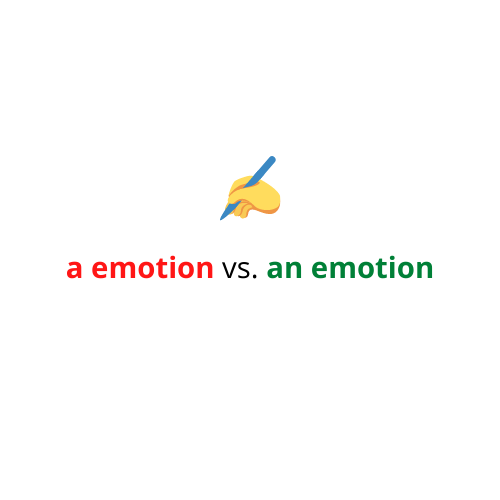
If we want good results, we must take into account the effect that what we write can have. If we ignore grammatical correctness, we risk losing from the start.
Why? Because mistakes accuse!
#3. Abuse of Repetitions
When the text we write contains too many repetitions, it can convey about the writer that we are lazy. Or we lack good taste.
- A rich vocabulary has its value.
- The best way to avoid the abuse of repetitions is to use a vocabulary of synonyms.
#4. Fluency
Remove erroneous or negligent constructions from expression.
- The easiest way to check that the text you have written is legible is to read it aloud.
Oriental wisdom recommends the path of temperance and balance for you to live happily. The same is true in writing. To be fluent, avoid excesses of any kind.
#5. Improper Language
Modes of expression matter a lot depending on the audience you are addressing.
Nowadays, writers opt a lot for standard terms in the language of young people. Such as slang terms or simplified grammatical constructions.
Here are some ideas depending on what you want to convey:
For familiar content
- use familiar expressions; - use slang; - be voluntarily neglect some grammar rules; - barbaric language may contribute to style rendering.
Used when: - want to get in touch with the reader when you want to insist on popular, regional culture or a particular language; - to keep the “naturalness” of dialogues and testimonies.
For a natural content
- this language can circulate freely in all media; - contains common words from the dictionary; - simple forms of expression; - phrases with simple structure (subject + predicate + complement).
Used to convey: - spontaneous, friendly messages It is the most commonly used language
For technical content
- conventional, this language inhibits personal expression; - contains technical words; - simple forms.
Used in: - articles that need documentation; - warnings, informative articles, guides, etc.
For literary content
- requires the use of selective vocabulary; - grammatical constructions are complex; - language can sometimes be archaic; - fair and precise expression; - rare words.
Used for: - any literary writing.
So, with this information, you will be able to find out how not to use inappropriate language — all depending on what you want to convey to your readers.
# 6. Getting Closer to Readers
One of the means used to get close to the reader is to address him directly.
Here are some suggestions:
It is considered to address directly to the reader any sentence that: - contains an order, a tip, a suggestion; - comes from dialogue, brought in quotes; - ends with an exclamation; - contains a question.
It is considered personalized words : - personal pronouns (subjects or complements) that refer to a person; - subjective adjectives that refer to a person; - first name and proper nouns.
However, you must avoid too much familiarity!
Having a personalized relationship with your reader will impose an emotional framework. But seeking complicity can, in some cases, hurt.
Thus, the degree of personalization of the content must be related to the degree of familiarity (language) used.
As an idea:
- The direct question highlights the spontaneity.
- The exclamation release any restraint.
# 7. Creating an Atmosphere
The atmosphere you create when you write is very important because this can make the readers become your followers.
The atmosphere you want depends on: - the choice of terms (popular or academic); - the construction of sentences (sophisticated or straightforward); - the use of grammatical forms (frequent or very rare).
To create the perfect atmosphere depends on the strategies we’ve talked about before. Just use the proper language and follow the next two steps.
# 8. Orientation in Text
The reading circuit we offer facilitates the movement in the text.
From one point to another, we must free readers from wandering. How? By offering an exploration of the text to find the information of interest faster.
- Subtitles and intertitles provide this strategy.
Just as a map presents an overview of the country visited, the reading circuit should promote the text.
What is particularly striking, original, must stand out and attract the reader.
- For this strategy are used: border, pictures, graphics, infographics, etc.
- ”The road traveled around a thing” — this is the role of the introduction: to describe in a few words the inside of the text. This way, you would summarize the essential information.
- You can use the title to make the reader curious. The strategy is to increase interest with the title to satisfy it in the text.
# 9. Argumentative Writing
By providing accurate information, the reader will in turn gain confidence in what you are writing. This way, you will have more chances to get long-term followers.
To be able to argue an article correctly, we can ask the following questions:
*What information do I have? *what is the origin of this information? *is the source of the story credible?
Checking the authenticity of the information you have helps you gain more confidence.
# 10. Dare!
Now we know some secrets about the correct communication of the information we want to send. All that’s left is to dare to use them.
Here is a recap:
- Respect language, grammar, vocabulary, punctuation, etc. - Use the information you have and verify its authenticity; - Create a relationship with your readers; - Take care of the graphic elements in the article; - Use the appropriate language.
Boldness accepts many aspects and carries many definitions.
From the moment we have the right to freedom of expression and create a strong strategy, boldness can become a voice that knows how to be heard!
I hope these strategies will guide you in the way you need it! These to be said and written, I wish you all the best in the world!
Do you know any other tips that we forgot to mention in the article? Don’t hesitate to leave your opinions in the comment section.


