
10 Strategies to Beat the Winter Blues and Boost Your Mood
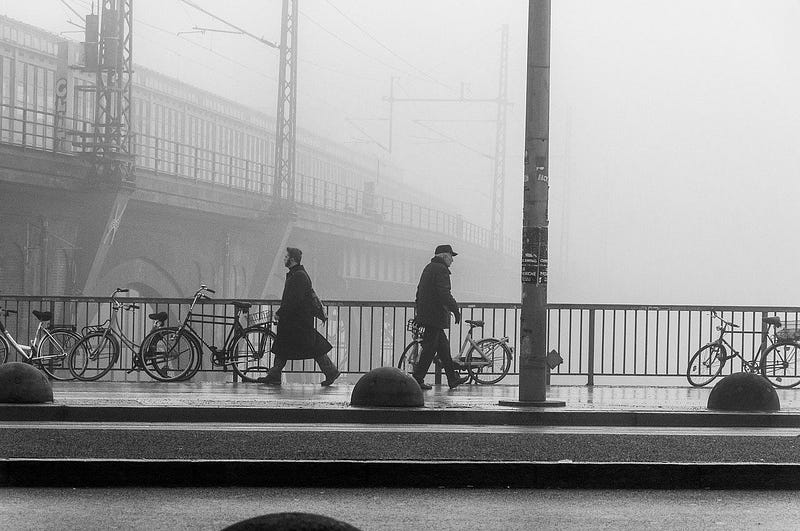
Brrr, we’re still in the midst of winter with its cold, rainy days, and occasional glimpses of sunshine. There’s a good chance you might feel a bit down, a mood specific to this chilly season.
You know how it is, nature has its well-established rhythm, and the pragmatic approach is to not bother swimming against the current. It’s wiser to go with the flow and reach where you want to be. So, what do we do in times like these?
Personally, I’ve always admired the wisdom of Taoist practitioners, especially when it comes to health. Their goal has always been to live a long life at its maximum potential.
Their practice has stood the test of time for thousands of years.
“Winter is the time when energy withdraws inward. People should keep pace with the rhythm of nature, maintain their internal balance, and focus on conserving vital energy.”- Sun Si Miao
If you want to learn more about the quoted character, you can do a quick search here.
I promise to ‘translate’ the text and its ideas later. Let’s not start speaking Chinese and eating rice with chopsticks right now. I just want to present the conclusions and practices that have resulted from personal experience.
In Northern Europe, February still brings winter. We still have a bit of light, and warm weather accidentally appears in our lives and changes its mind quickly. So, let’s get to the first thing:
The Power of Natural Light
What’s missing the most is natural light. It influences us both physically and psychologically. It’s a deep and arrogant belief that if we have air conditioning in the summer, heaters in the winter, and lights at night, we can defy nature and swim against the current.
Time spent outdoors, especially in green spaces, has a positive impact on stress, blood pressure, and overall health. I’ve noticed how beneficial it is to be outdoors, especially during the day and in sunny moments!
When outdoors, people become more active, I believe you’ve observed that! Whether it’s a simple walk, a mountain hike, or a bike ride. The good part is that an increase in time spent outside limits the time spent in front of the TV or computer.
Exposure to natural light can improve mood by increasing serotonin levels and obtaining vitamin D.
Light is good!
Harvard researchers believe there is a connection between sunlight and the happiness we feel when we step outside.
It has been proven that light improves mood, and sunlight provides the most benefits.
The sun not only energizes you but can even help in the physical healing process. There’s a study proving that when exposed to sunlight, patients recovering from surgical procedures show reduced levels of stress and pain, and the amount of medication they need is also decreased.
Additional recommendation: If you can’t go outside, sit next to an open window to benefit from light and fresh air.
Small and Achievable Goals:
In winter, it’s good to set small and achievable goals to avoid the feeling of productivity loss during the winter.
The body has its rhythm, and whether you like it or not, the subconscious perceives it as a period of regeneration and hibernation.
You realize how disconnected from the reality of the body it is to choose to start the year strong with going to the gym, especially to lose weight or regain physical fitness. In fact, all those who have businesses with gyms sell subscriptions beyond the gym’s capacity for the whole year at a discount, and they know very well that after 2–3 months, only 10 percent of subscribers continue to practice.
Usually, it’s those who have almost daily physical activity.
It’s healthy to practice maintenance exercises, but it doesn’t start in January! March is the best month to start a successful body ‘reset.’
Having small and achievable goals allows you to develop a mindset of a ‘doer.’ In the book Atomic Habits, an example is mentioned for someone who wanted to do strength exercises, and the proposal was to start with one push-up a day.
Sure, you won’t gain muscle mass with one push-up a day!
Now the goal is not to gain muscle mass! The goal is to train the mindset that supports the mental needs for a serious workout that maintains muscle mass and those desired biceps.
Enjoy the Things that Bring You Joy:
My secret weapon is the fact that there are small things that make me feel good and steal a smile from the corner of my lips even on a bad day.
When you’re driving and catch a green light at the traffic signal, you’ve moved forward. You’ll always remember how long you waited at the red light! If there’s a nice song on the radio, maybe it doesn’t matter how long you waited at the red light! It’s the same here!
Why not indulge in those things that bring you joy? Such as trying an exotic (simple) recipe or buying some nice flowers?
Or simply trying something new: for example, arriving home in the evening via a new route?
Limiting Phone Usage:
Screens constantly entice us, and this cannot be denied. Therefore, there need to be some limits to control the temptation. The first step is disabling notifications from apps, which helps me avoid unnecessary glances at the phone.
In the same category, I don’t put TVs or phones in the bedroom. Blue light affects the natural circadian rhythm.
Sleep.org suggests putting your phone aside 30 minutes before bedtime for a peaceful night.
The Power of Movement:
Physical exercises are crucial for a good mood and to ward off the melancholy typical of winter.
An alternative can be other forms of movement, such as dancing, yoga, or qigong practice. I’ve been practicing qigong for years. Initially, it was out of necessity, but now I do it for joy! A short walk outside is also okay! I still keep the habit of going for a walk when it’s snowing!
If you don’t resonate with that, and you’re more active, you can try the Tabata system; there are plenty of options on YouTube.
For the very energetic, simulating punches in the air can be an option if they don’t have a punching bag to release their excess energy.
The idea is to have an enjoyable movement that brings a sense of joy.
Boundaries, milestones and expectations
Here, the idea is to schedule things that you know will bring you joy. Going to a movie, a theater show or a concert are all things that I enjoy.
Meeting favorite authors or visiting an art exhibition are other things that inspire me.
Stay Warm and Cozy:
It’s the cold season! So, pay attention to keeping warmth in your home and your soul. It’s the perfect time to use blankets, candles, hot tea, and other things that create a pleasant atmosphere. A good book of literature is a suitable choice. It’s the moment when batteries recharge naturally.
Avoid Absorbing World Issues:
Since we’re talking about the natural recharging of batteries, I wholeheartedly encourage avoiding reading and consuming information about various global issues and crises. Lately, the media no longer informs but simply delivers reasons for stress, victimization, or anger.
No thanks, I don’t consume that! Being realistic doesn’t mean consuming the toxic approaches of those who want my attention to sell their detergent, political, or fast-food ads.
More sensitive individuals may end up feeling guilty for protecting themselves from the constant negativity in the media! They have the healthiest reaction!
Generally, after 3 days, one media-generated crisis is replaced by another. Because this is unhealthy for those who make the media.
Avoid Self-Isolation:
In these conditions, healthy social relationships become crucial. Self-isolation is not for everyone. I know about Christian monks from Eastern Europe, who need approval from a hierarchical superior if they want to practice their forms of asceticism.
People need people. We evolved among people to truly become human. Humanity is cultivated among people. Escaping into the forest is not a solution!
I have always been inspired by meetings with friends. I am a fierce introvert who joyfully consumes tiramisu and good coffee. I attend these gatherings because they inspire me to write, to seek answers, and solutions.
Reflect on Past Days:
Another way to recharge during winter is to reflect on uninspired choices from the past, on moments I’m not proud of how I reacted, and on others’ choices that saddened me.
I acknowledge my sadness for what happened, I don’t deny it.
What does an emotion want? An emotion just wants to be felt! So, I experience the emotion and that’s it. Then, I am free to live my life.
If it lasts longer, then it’s not about others’ choices; it’s just about me, and it means I am in the toxic triangle of emotions. But I know how to handle that.
Regarding the others, my approach is more in line with the Stoics.
If I did something I am not proud of now, I know that back then I did my best with the stories and histories within me. I apologize, repair what I can, and try to bring compensation that equals a fair repair of my past deeds.
Often, I choose to pray for those I’ve wronged, those who remained upset with me, or those who made choices that saddened me.
In other words, a form of practicing compassion, both for myself and for others.
Conclusion:
These were some approaches that have worked for me. We are practically at the end of winter. I believe it will be timely to soon talk about the energies of spring and how we can manage them in our favor!
Feel free to ask any questions you may have! It helps me formulate better-documented and more useful information!