10 Steps To Conquer Procrastination
We’ve all been there. We’ve wanted to start/complete a goal and keep putting it off, give up midway or leave it for another day. Days turn into weeks and weeks into months; before you know it, a big chunk of time has passed, and nothing gets done. However, you have more power than you think.
So, how do you overcome procrastination? Here are my top 10 tips for overcoming procrastination:
- Acknowledge that you’re procrastinating
- Develop A Positive Mindset
- Tune out of distractions
- Use the Eisenhower Matrix
- Don’t delay until tomorrow
- Don’t add too many things to your to-do-list
- Break big goals down into small goals
- Don’t let fear hold you back
- Time Box your day so you max out your day
- Celebrate the small wins
Acknowledge you’re procrastinating — Self Awareness
Be honest with yourself because you will understand why and how you procrastinate. Self-awareness is your competitive tool in the 21st Century.
The more you know yourself, the better because greater clarity leads to better choices. This way, you focus your energy and effort on what matters rather than on what others expect you to do.
After a short while, you might start thinking about some steps you want to take.
Tips
- Get to know yourself every day. A bit every day is better than doing it all in one go.
- The quality of the questions you ask determines the quality of the results.
- At the end of each day, ask yourself: What worked for me today, what didn’t, and what could I do differently
- The more you know, the better the decision-making process
- Keep a journal to make notes each day and have fun because this is your journey, and you want to make it memorable.
2. Develop a Positive Mindset
It concerns the mindset of the way you program your mind regarding setbacks or challenges. If you have a “why me” attitude, it is inevitable that you will avoid any “pain” and try to protect yourself from “harm” or material loss every single time you experience a setback.
Is life changing too fast for you? Don’t Panic. Be flexible with your options and solutions. When you think of abundance, you will see plenty of opportunities.
When you tune into negativity or cynicism, you’re far more likely to move into fear, panic and scarcity.
Tips
- Watch the thoughts because they matter
- Be Hopeful. Hope inspires you to find opportunities
- Follow positive people
- Fill your mind with positivity. It matters
3. Tune out of External Noise
We’re bombarded all the time with information online and offline. As a result, it can be challenging to focus and concentrate. That’s why it’s important to limit what you expose yourself to daily, especially since most willing expose themselves to the news, radio, social media and mobile phone calls.
It’s important to tune out so you can tune into things that matter. This way, you’ll be able to focus more on your goals, get more done, and feel better. You’ll also develop better ideas and execute bigger and better plans.
The more awareness you have around this, the better because you’ll be able to see the impact external noise has on you. It could be in several ways, from procrastination, impacting your moods, influencing your thinking and shaping your behaviour, to name a few.
Tips
- Switch off news
- Stay away from negative people
- Keep your busy on improving yourself
- Exercise
- Meditate
- Take regular time out
4. Use Fear to Your Advantage
Fear can be positive if you can use it to your advantage. Many fear the unknown, so they do what they’ve always done. However, you don’t get different results by repeating the same process. To achieve great results, you’ve got to be willing to challenge the status quo and try other things.
For many, fear holds them back in many ways. It can impact their thoughts, actions and behaviours. For others, fear drives them on even further to achieve bigger and better. They use fear to fuel new aspirations, set more extensive and audacious goals and aim higher.
Use uncertainty and change as positive tools to help you shape the next steps you want to take. Of course, you’ll experience different emotions because you are human. However, this is part of the learning process.
Tips
- Don’t fight the learning
- Be unafraid of new steps
- Enjoy the process
- Learn with each step. You might want to journal the learning
- Turn learning into fun
5. Use The Eisenhower Matrix
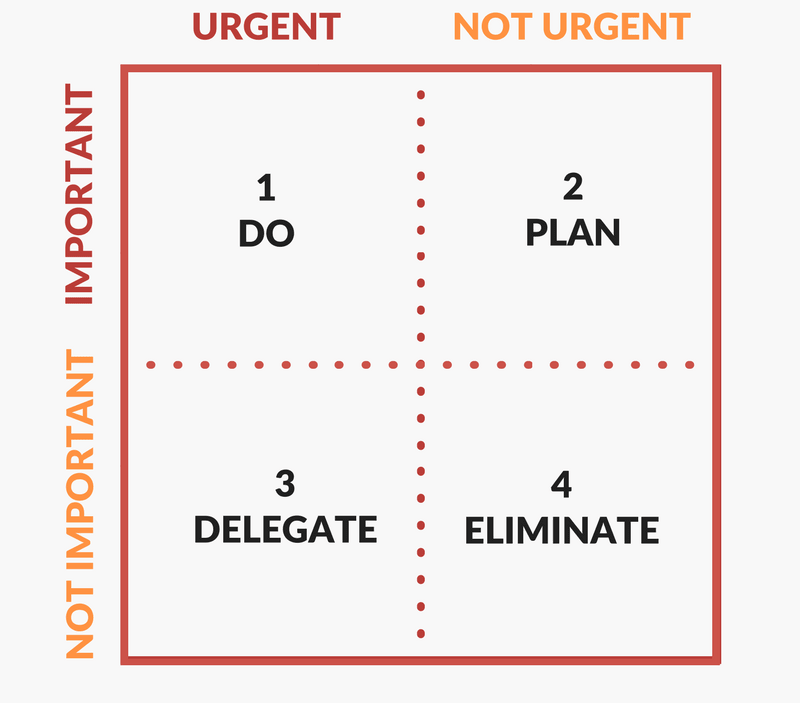
Also known as the Urgent-Important Matrix, it is a time management tool that helps people prioritise tasks based on urgency and importance.
This matrix divides tasks into four categories, helping you decide whether to focus on a task now, schedule it for later, delegate it, or not spend any time on it at all.
The Matrix
Here’s a brief explanation of each quadrant:
- Urgent and Important (Quadrant 1): These are critical and essential tasks. You need to do these tasks immediately.
- Necessary but Not Urgent (Quadrant 2): These tasks are important but not urgent. It would help if you planned to do these tasks, as they contribute significantly to your long-term goals.
- Urgent but Not Important (Quadrant 3): These are urgent but unimportant tasks. If possible, delegate these tasks to someone else.
- Neither Urgent nor Important (Quadrant 4): These tasks are neither urgent nor essential. You should avoid spending time on these tasks, as they don’t contribute to your goals.
Practical Application:
- Morning (Quadrant 1): Tackle the urgent and important tasks without delay.
- Afternoon (Quadrant 2): Focus on important but not urgent tasks.
- Delegating (Quadrant 3): Identify tasks that can be delegated and find suitable people to delegate them to.
- Eliminate (Quadrant 4): Throughout the day, consciously avoid tasks that fall into this category to maintain productivity.
By following this exercise regularly, you can manage your time more effectively and focus on achieving your long-term goals.
6. Don’t delay until tomorrow
Procrastination, the art of delaying tasks until tomorrow, is a common trap many fall into. Postponing tasks disrupts your productivity and adds unnecessary stress and strain to your life. By cultivating a mindset of tackling tasks immediately, you can prevent the accumulation of responsibilities and maintain a sense of tranquillity and accomplishment.
Tips
Here are three top tips to avoid delay:
a) Break large tasks into smaller, manageable parts and tackle them one step at a time.
b) Develop a routine where you dedicate specific times of the day to work on your tasks without distractions.
c) Reward yourself after completing tasks on time, fostering a positive reinforcement cycle that encourages you to avoid delays in the future.
7. Don’t add too many things to your to-do-list
If you add too much to your to-do list daily, you will feel overwhelmed, which may impact your mental well-being, especially with burnout.
Instead, it is wise to streamline your to-do list by focusing on the top three priority tasks that align with your daily or weekly goals.
Tips
- Firstly, employ the “Rule of Three” by selecting the three most critical tasks to complete daily, encouraging a more focused and productive approach.
- Secondly, cultivate the habit of breaking down larger tasks into manageable sub-tasks, preventing overwhelming feelings and promoting a steady progression towards your goals.
- Lastly, make a conscious effort to regularly reassess and adjust your list, removing items that are no longer relevant or postponing less urgent tasks, thus maintaining a realistic and adaptable action plan.
8. Breaking big goals down into small goals
Breaking goals into manageable tasks helps you maintain focus, avoid feeling overwhelmed, and keep you motivated as you witness consistent progress.
Furthermore, it allows you to concentrate on one component at a time, leading to more refined results and a well-rounded accomplishment.
Tips:
1) Start by outlining a clear, comprehensive plan that breaks your main objective into sub-goals, each with its actionable steps.
2) Prioritise tasks based on their significance and impact on the broader goal, ensuring you’re always working on something moving you closer to your objective.
3) Celebrate the small victories along the way, as this keeps you motivated and fosters a positive mindset, which can be instrumental in achieving big goals.
9. Time Box your day so you max out your day
Timeboxing helps maximise productivity and cultivate a sense of fulfilment.
This method, which involves allocating a fixed time slot to each task and diligently sticking to it, enables individuals to create a structured, focused, and optimised daily agenda, steering clear of the seemingly unavoidable time sinks that tend to scatter one’s energies.
Tips:
1) Prioritise your tasks based on their urgency and importance, allowing you to concentrate on what matters
2)Allow brief, regular breaks to prevent burnout and maintain a high focus throughout the day.
3) Remain adaptable, recognise unexpected events can occur, and be prepared to realign your time boxes accordingly to maintain a balanced and productive day.
10. Celebrate the Small Wins
In pursuing big goals, it’s important to celebrate small wins, which nurtures a positive outlook and fosters motivation and resilience.
Each small win is a stepping stone, propelling you closer to your ultimate goal. It keeps the momentum going, nourishing the spirit with a sense of achievement and encouraging continuous effort.
Thus, pausing, acknowledging, and celebrating these tiny milestones is pivotal, making the journey joyful and fulfilling.
Tips:
- Maintain a Wins Journal: Regularly jot down even the tiniest accomplishments in a journal. This practice helps you recognise the small wins and motivates you when you revisit your achievements.
- Share Your Joy with friends, family, or your support network. Sharing amplifies the joy and often brings in words of encouragement and praise that can be uplifting.
- Reward Yourself: Treat yourself with a small reward whenever you achieve a minor goal. It could be anything from enjoying your favourite dessert, spending time in your hobby, or a small shopping spree. Rewards create a positive reinforcement loop that encourages consistent effort.
The first step is always the hardest, but you can achieve impressive results with a little effort.
Follow me for more valuable tips.
Pervin
linktr.ee/AimHighLtd


